Newsletter Subscribe
Enter your email address below and subscribe to our newsletter

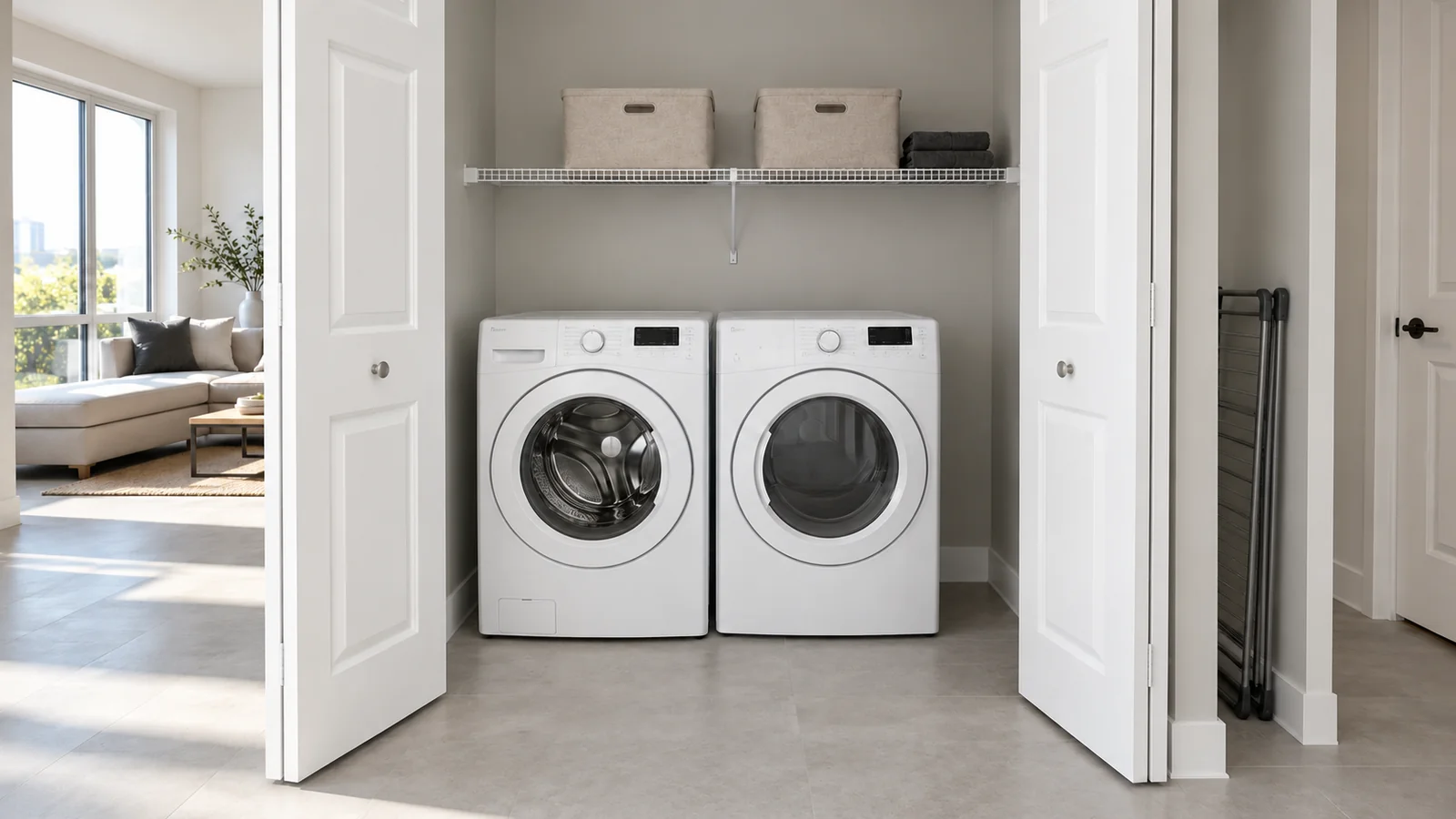
Apartment laundry closet storage deserves a closer check when you rent. A slim cart may fit between closed machines yet be impossible to withdraw, while a beautiful basket can catch the existing shelf supports every time you lift it. I would choose the portable pieces only after the retained fittings and ordinary tasks have a workable plan. This is the specification stage for a contemporary Japandi closet: supplied white equipment, an existing shelf and quiet removable materials, with no new cabinetry or assumed permission to alter the walls. You will compare containers, a possible cart and portable drying or folding equipment against actual use, care and packed storage. There is no requirement to buy every category. The useful outcome is a short accepted set, a clear reason for each rejected option and a setup you can reset after laundry or pack when the tenancy ends.
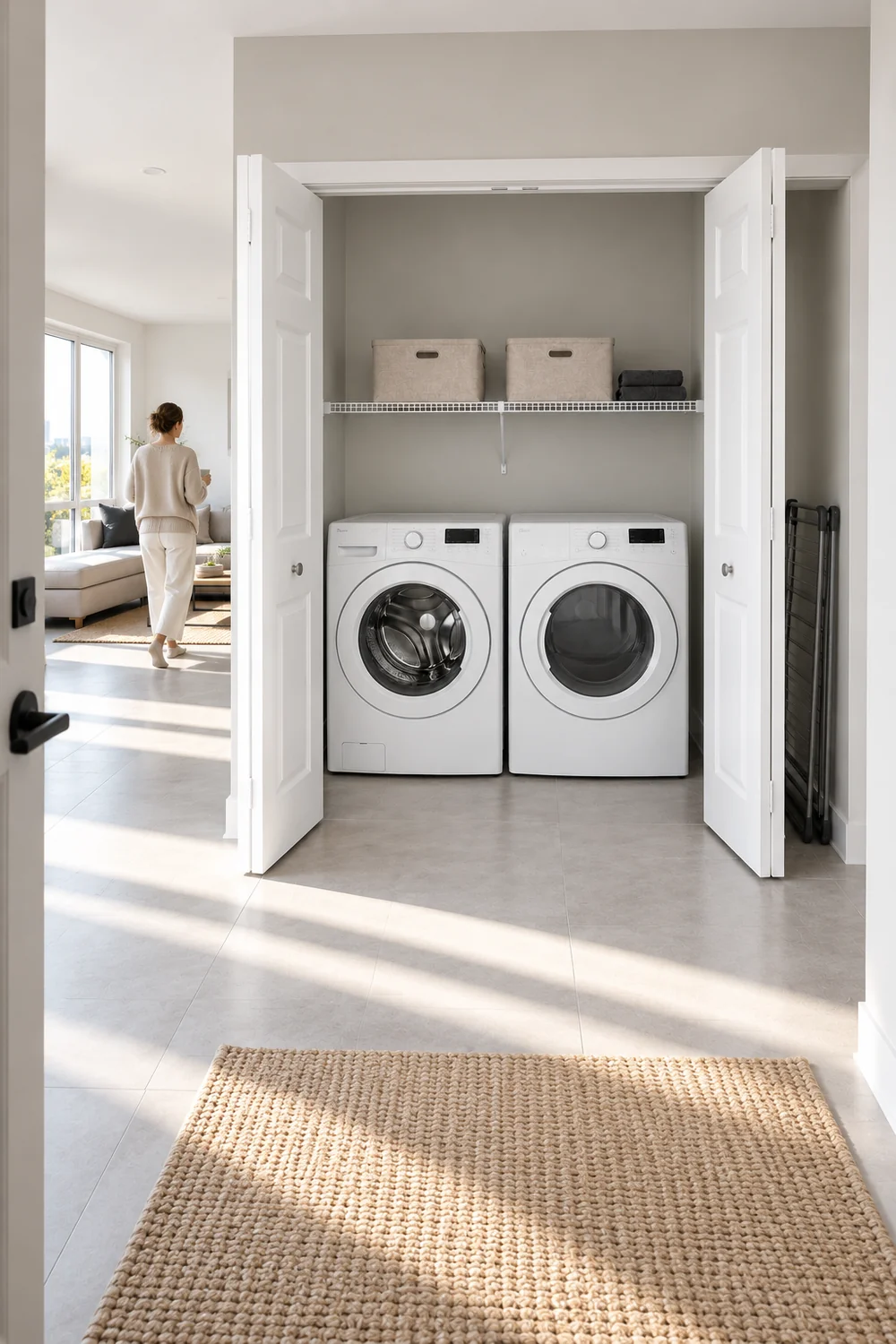
Bring the existing plan, photographs and equipment information to the comparison. Record the machines and shelf that stay, the loading position and every opening you agreed to preserve. I would give each potential purchase a row with its job, intended location, maximum outside envelope, opening or removal space, candidate dimensions and unresolved questions. Include the place the item goes when empty. A laundry closet is a poor place to discover that a folding rack has no closed storage location or that a basket needs to be put on the floor before the machine can be opened.
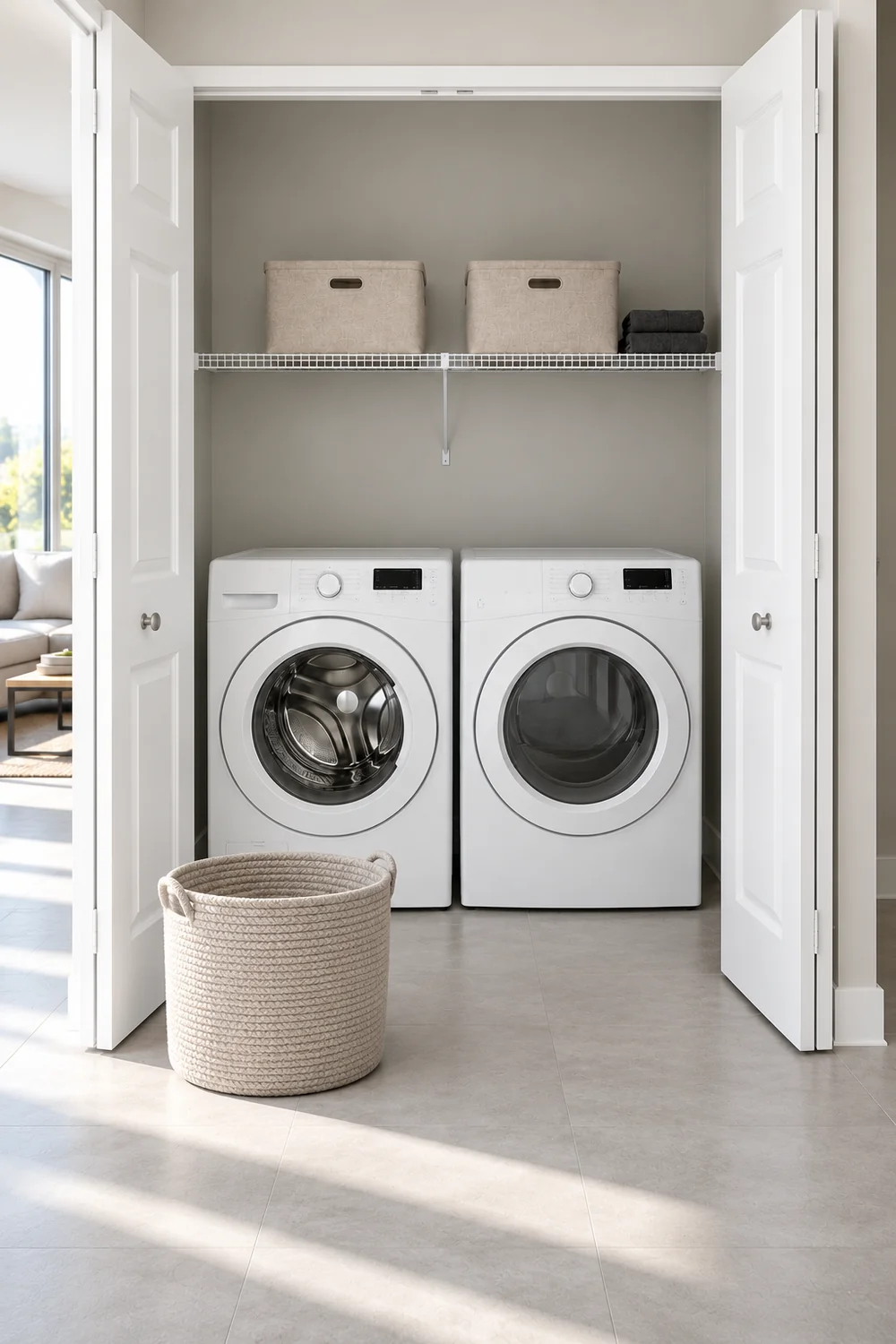
Use three verdicts: pass, hold and reject. Pass means the actual product information and a practical rehearsal support the intended job. Hold means a necessary detail is missing, such as the full handle width or an assembly instruction. Reject means the candidate conflicts with a fixed limit or requires a condition you cannot provide. I would not convert a hold into a pass because the colour is perfect. Ask the seller for the missing information or choose an alternative. The absence of a product drawing is uncertainty, not evidence that the piece is compact enough.
Keep equipment clearances and ventilation requirements with the correct appliance instructions. Do not infer them from the gap that happens to be visible in a photograph. This selection does not change services, appliance positions or installed ventilation. Report a concern through the appropriate property process. For each storage candidate, check whether the maker requires wall fixing, a particular support or another installation condition. A freestanding appearance is not permission to omit a required fixing. If the rental cannot provide that condition, the item is unsuitable for this brief, even if other shoppers describe it as a rental solution.
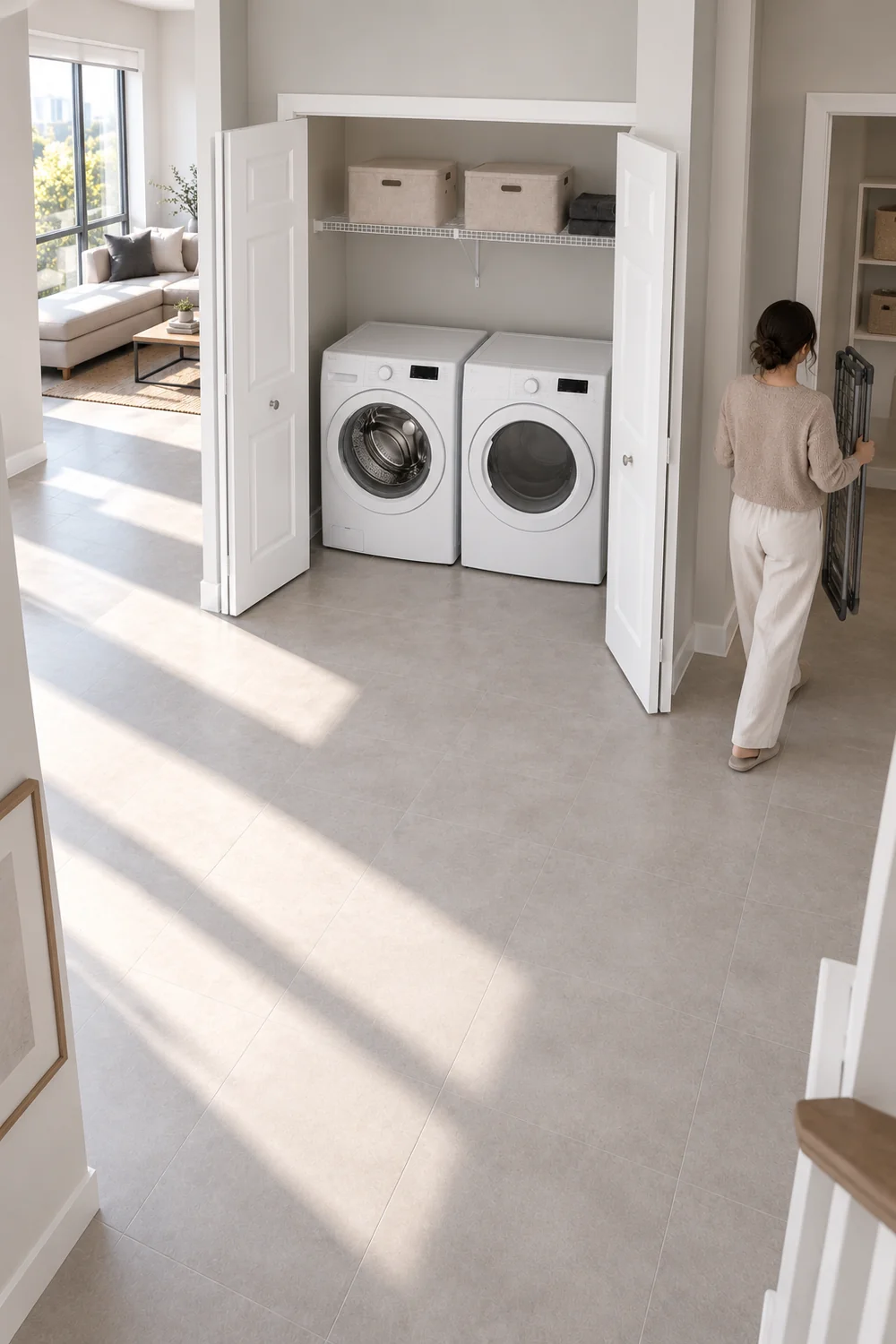
Make the checks tangible with the objects you already use. Represent a candidate's full footprint without operating equipment against a temporary obstruction, then remove the representation before laundry. Test the access and reach you intend to preserve. Use a folded garment and your current basket to understand the task rather than guess from a staged photograph. These rehearsals cannot prove the structural capacity of a shelf or the stability of a product. They help you decide whether a candidate deserves further checking before you spend money or bring it into the closet.
Measure the usable position between the supports, including projections that could catch a rigid rim or handle. Then consider the container's complete outside dimensions and the room needed to lift it free. A stated internal capacity does not tell you its outside size. I would compare a smaller rigid bin with a fabric container using the actual contents for the job. The rigid option may keep its shape during removal; the fabric option may be lighter but can bulge when filled. Neither is automatically better because it looks more minimal. The usable fit matters more than a perfectly filled elevation.
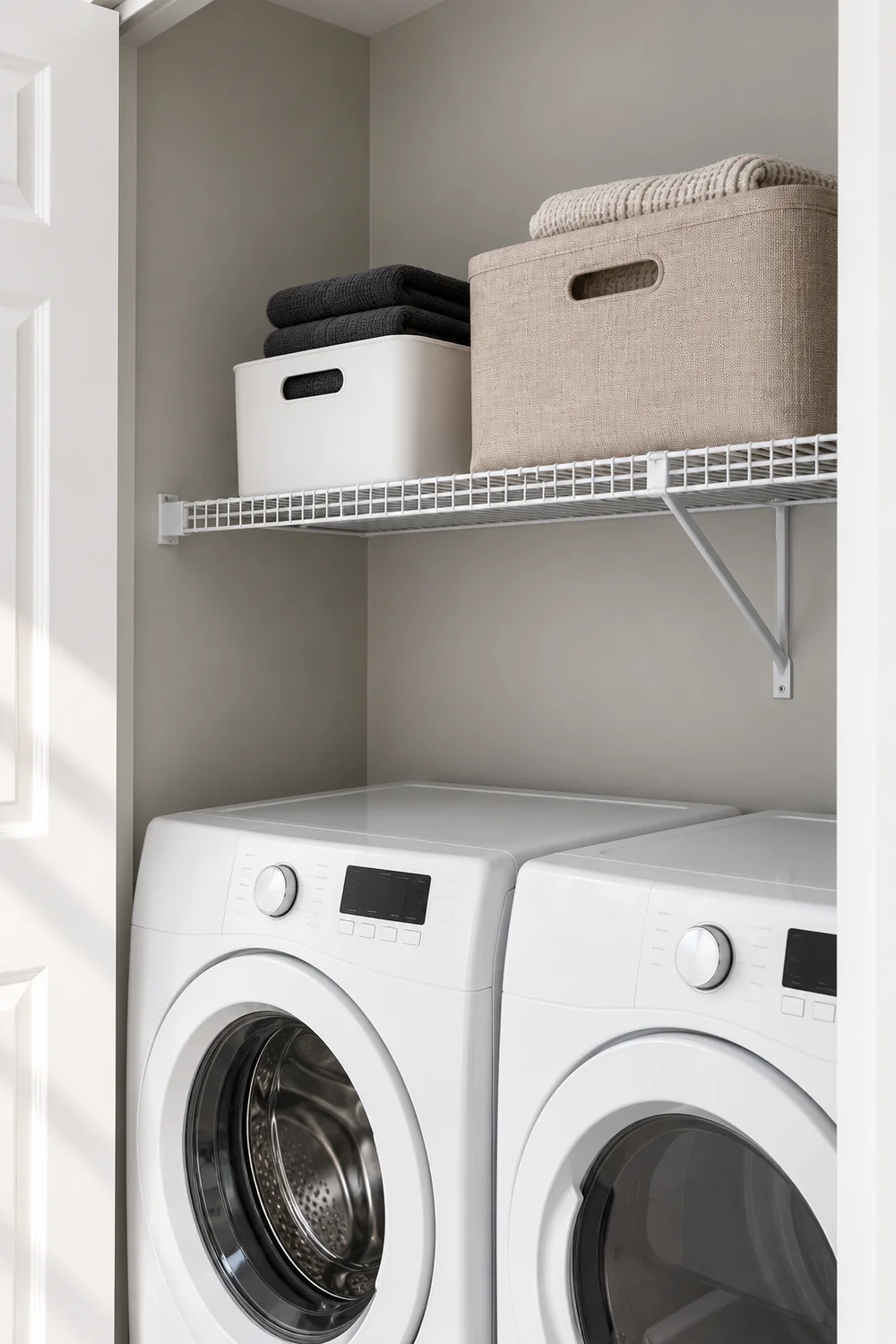
Choose by contents and care. Dry cloths may suit a washable fabric bin if the product is intended for that use. A different storage task may need a more readily wipeable container. Keep laundry products in their original packaging and follow their storage labels. In particular, keep laundry packets out of children's sight and reach. Do not decant supplies into clear jars or rely on an ordinary fabric basket as secure storage. If the available shelf cannot provide the required arrangement for the products in your home, resolve that storage question before styling the shelf.
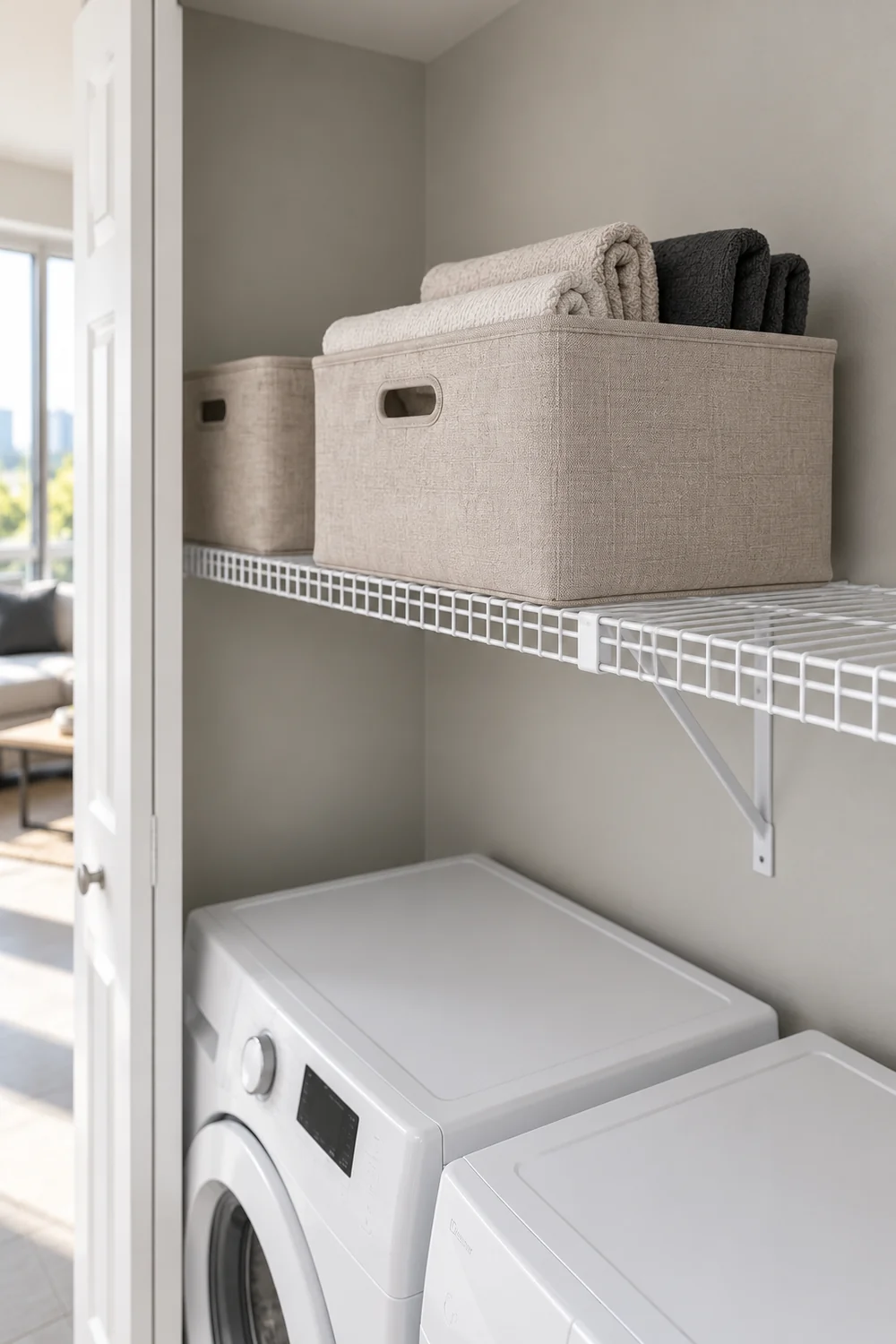
The open and closed storage ideas in the Japandi utility room examples help with the appearance of the accepted groups. I would use related forms while allowing different containers for different jobs. A soft mushroom bin can hold dry textiles while a plain white container suits another appropriate group. Leave some of the white wire shelf visible rather than wedge in oversized baskets. Its existing structure can belong to the composition. You are choosing loose objects for the shelf, not constructing an imitation cabinet around it.
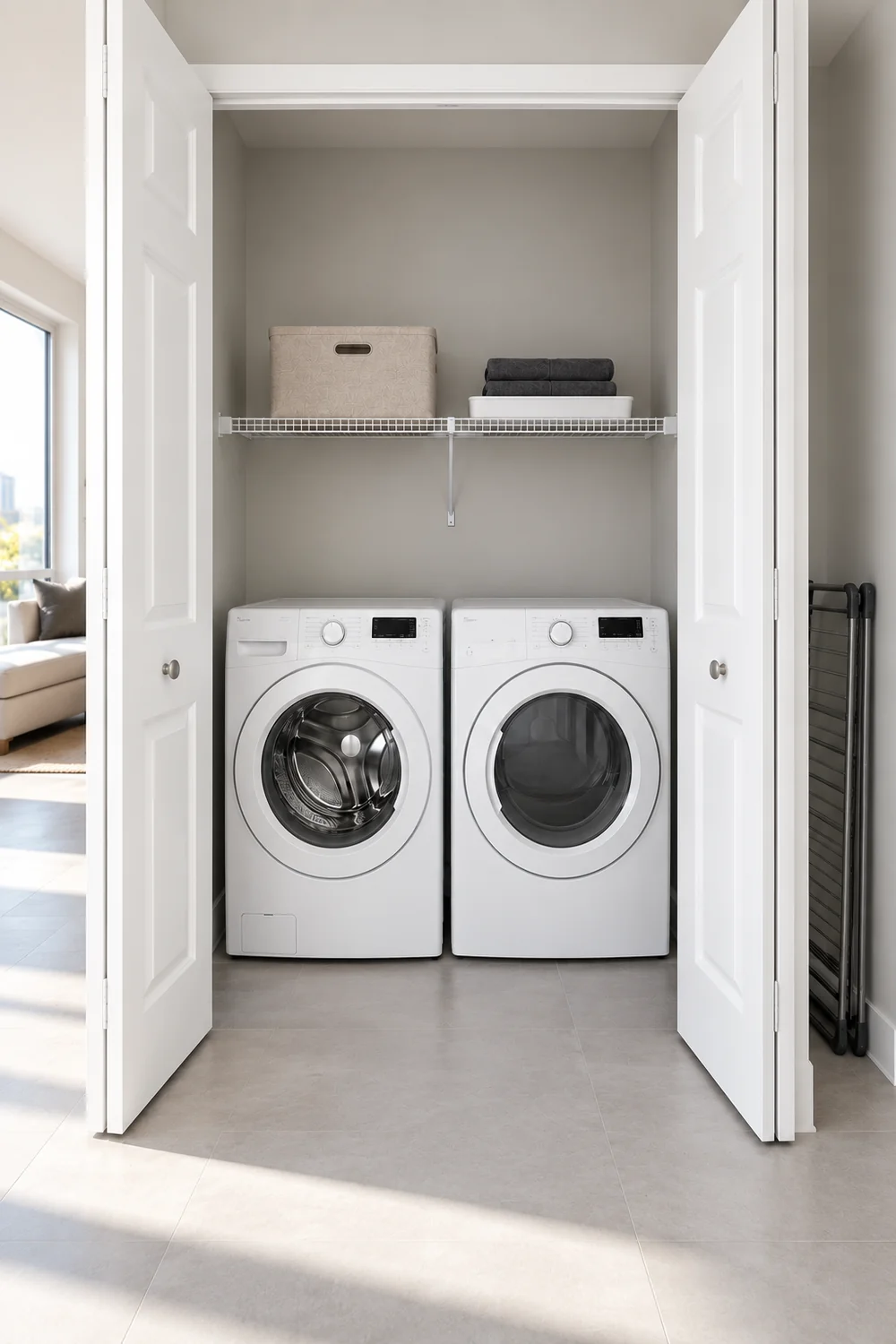
Before approving a container, record how it is removed, where it rests during use and how it is cleaned. Check the shelf's confirmed condition and permitted load separately. A bin being able to hold a quantity does not establish that the existing shelf can support it. Avoid adding unverified liners, boards or hanging fittings to create a flat base. If a container cannot sit as its instructions require on the retained shelf, choose another option or another appropriate location. The accepted row should describe a complete usable arrangement, not simply a product name and an attractive colour.
A cart is an optional answer to a defined storage job, not a requirement for every gap. Compare its complete width, depth and height, including handles, wheels and any upper rail. Ask for those details when the listing only gives the tray dimensions. I would check the route used to withdraw it as carefully as its parked position. A cart can fit beside a machine and still be unusable if a door, handle or change in floor level prevents it coming out. It should not need the supplied appliance moved each time you want a cloth.
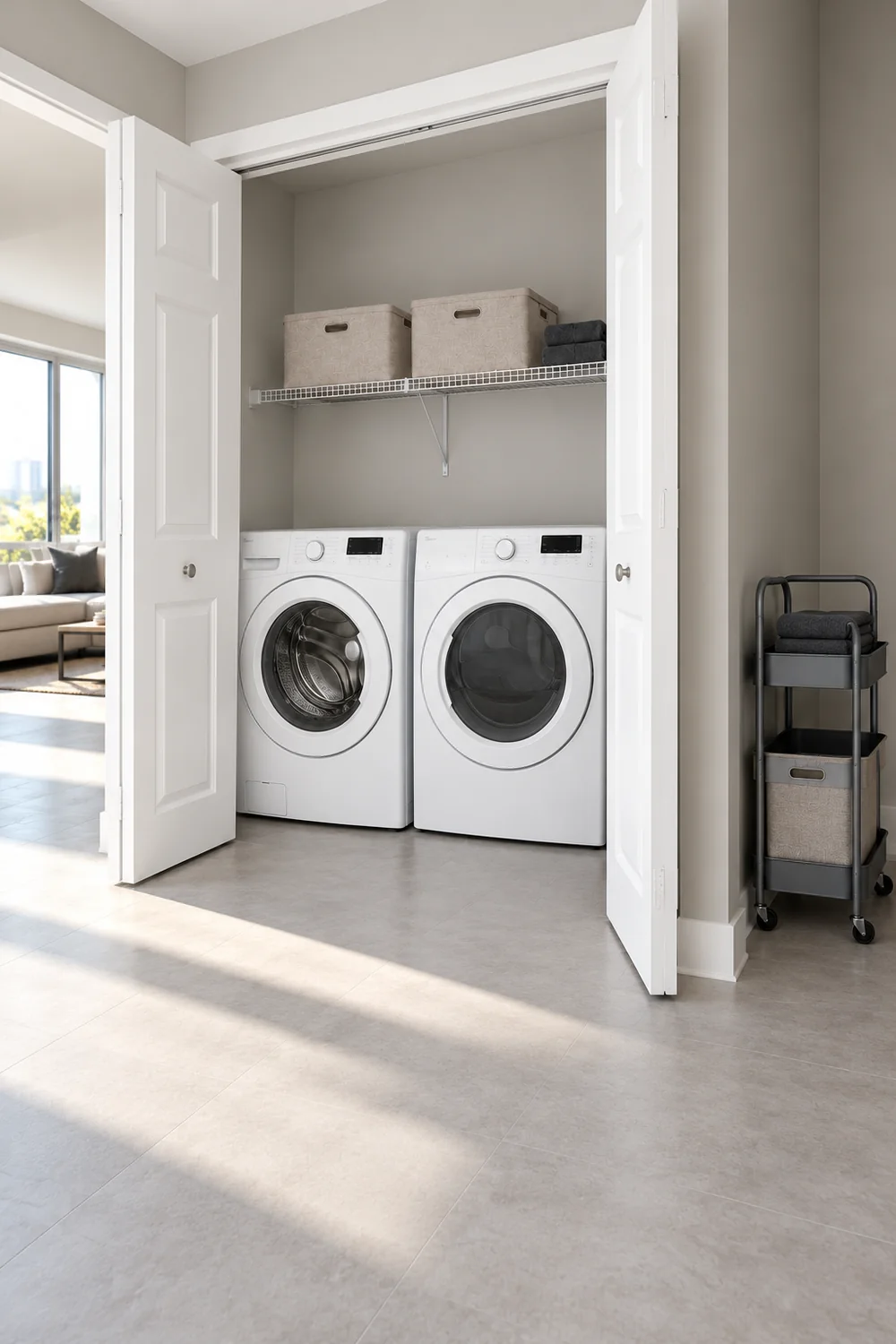
Read the assembly and use instructions before treating a cart as a loose movable piece. Confirm the intended contents, loading arrangement and any stability or fixing requirements. If a maker requires anchoring or another condition the rental cannot provide, reject that candidate rather than improvise a substitute. Check the actual floor and the space needed for the intended movement. A tall narrow form is not automatically a useful choice because the gap is tall and narrow. The cart needs to work in the state in which you will use it, with its ordinary contents and the required access preserved.
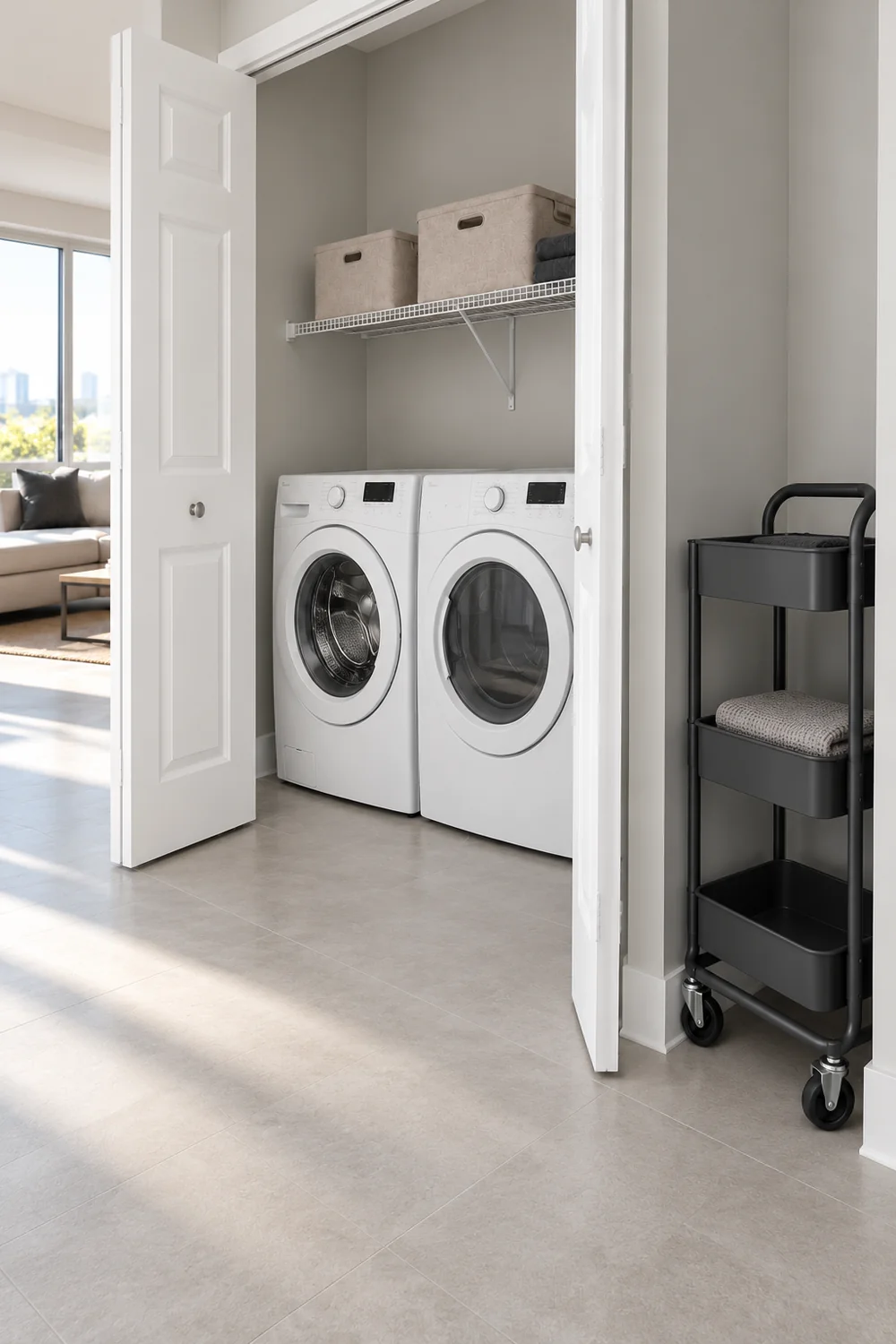
If the candidate fails, return to the apartment laundry room organization plan and reconsider the job. Perhaps the cloths can share an existing suitable bin, or an occasional item belongs in another appropriate storage position. This is a better question than searching for a cart that is only slightly slimmer. I would keep the gap empty when it is part of the equipment's required space or when no properly used product can work there. Empty space can be the correct specification.
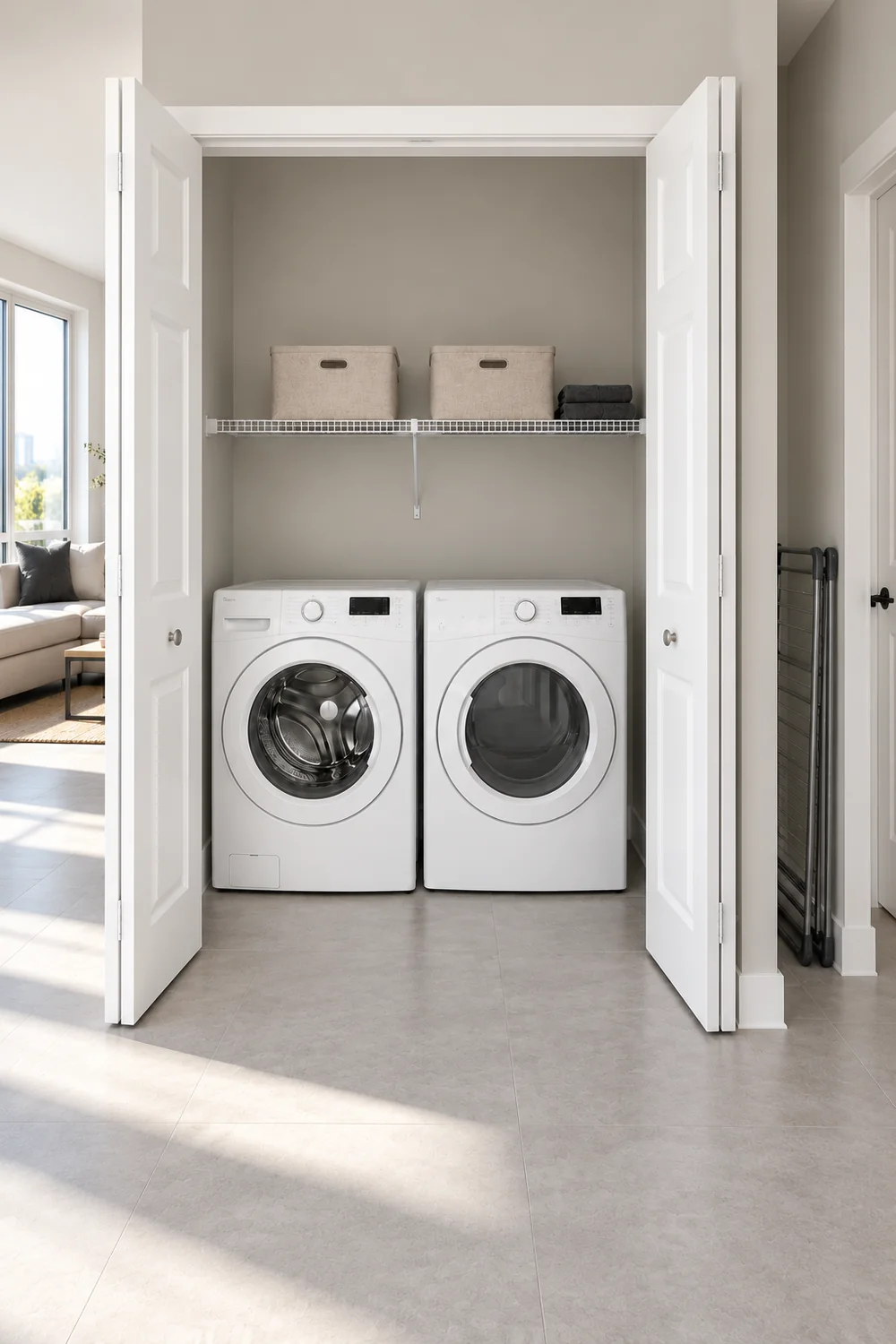
For a cart that remains eligible, write the acceptance sentence before ordering: its assigned contents, complete outside size, parked and withdrawal positions, confirmed use requirements and care method. Keep the product information with the brief. Avoid using the top as another appliance support, adding loose boards or stacking containers above the intended arrangement. Your scheme should still make sense when you remove the cart for cleaning. If you have to dismantle the rest of the closet to use it, its attractive narrow profile has not solved the practical problem.
Choose portable drying equipment for the location established in the plan, which may be outside the closet. Record the fully open footprint, operating movement, permitted load and closed size from the particular maker. Include the drop of the garments you intend to hang and the space needed to reach the usable rails. I would compare a smaller folding rack with an existing suitable alternative before assuming the largest model offers the best value. Extra rail length is not useful if the loaded arrangement interrupts the apartment's normal route or cannot return to its stored position.
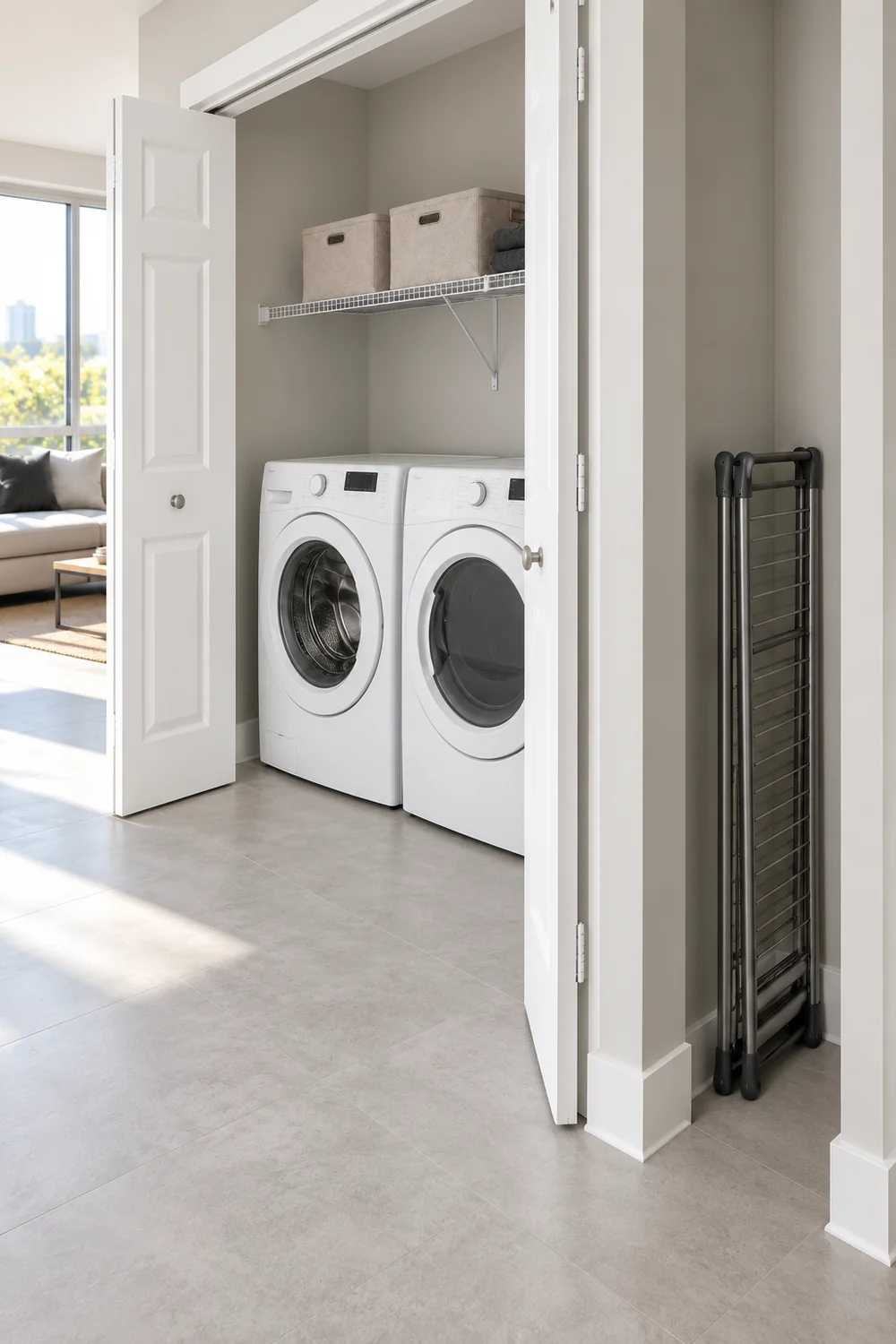
Test the closed state as deliberately as the open state. Check the complete folded thickness and any projecting feet or locking parts. The storage position should let you remove the rack without pulling against supplied fittings or blocking required openings. Follow the equipment instructions for opening, locking, loading and closing it. Do not assume a door mounted or tension product qualifies simply because it avoids conventional drilling. Its support requirements, door compatibility and permission still need checking. In this brief, a suitable portable floor model is worth considering before a device that adds loads to the landlord's door or wall.
Use the Japandi color palette as a tie breaker between candidates that already pass the practical checks. A restrained white or dark frame can sit more quietly against the existing shell than a bright mixed finish. Colour cannot rescue an unsuitable footprint or an instruction you cannot meet. I would let the functional object be visible during use rather than add a cover that changes how it operates. The clean appearance comes from a considered choice and a place to put it afterwards, not from hiding active laundry.
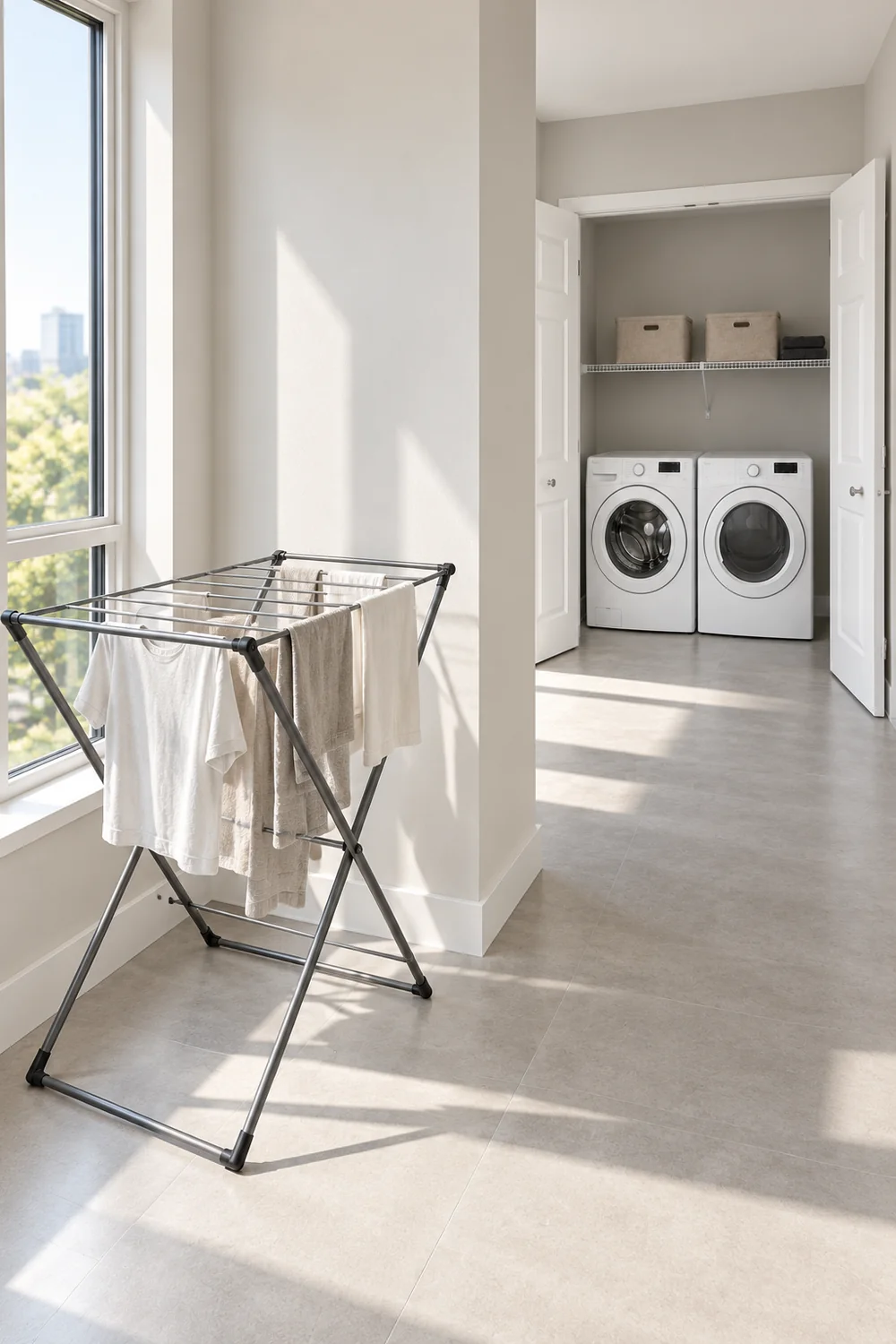
For folding, first check whether the suitable existing surface in the apartment is enough. If a portable table is genuinely needed, compare its working and stored dimensions, intended use, stability instructions and surface care. Do not rest a loose folding board on the supplied machines. Keep clean clothes away from a surface being used for another unsuitable task. Record how the table is cleared and put away when folding ends. This purchase should replace a specific inconvenience in the agreed routine, rather than create a new object that remains open because closing it is too difficult.
Bring a small accepted group together beside the actual machines and floor before committing to a full set. For this contemporary Japandi interpretation, I would start with retained cool white, pale grey and mushroom fabric, then add a little smoked ash or ink through a useful approved item. The Japandi color palette explains those relationships between neutral surfaces, timber warmth and restrained contrast. Your choice may shift if the apartment has a warmer floor or different existing light. Keep the base truthful to the rental rather than buy accessories that only match a different room in a photograph.
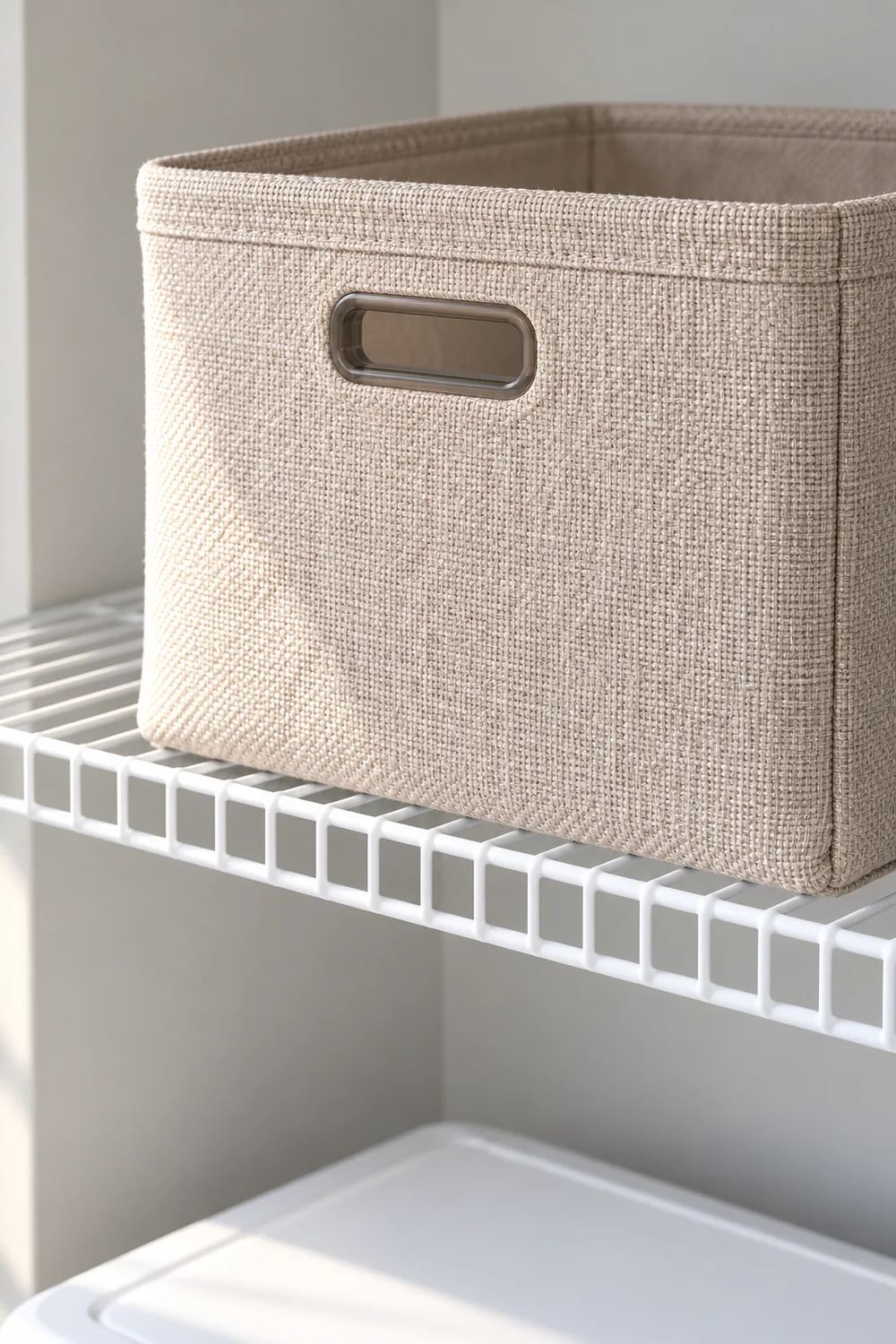
Assess the material at the point of contact. A fabric container needs a realistic cleaning method for its contents. A coated frame needs the care appropriate to that finish. A timber detail should suit the product's intended setting and the maintenance you will actually perform. Ask for the relevant information instead of treating a material name as a performance guarantee. I would avoid a decorative woven object where its shape, snagging surface or care makes the assigned job harder. Natural texture is useful when it belongs to an item you can use correctly and keep in good condition.
Check the retained surfaces as well. Feet, wheels and the base of a container can touch the landlord's floor or shelf. Follow the product instructions and the property's requirements rather than assume a protective pad or adhesive addition is suitable. Keep the original condition photographs so you can notice a problem early. If an item leaves marks, moves unpredictably or catches the shelf, stop using that arrangement and resolve it. A removable object can still affect the surface beneath it. I would choose a simpler compatible piece before building a complicated collection of protective accessories around a poor match.
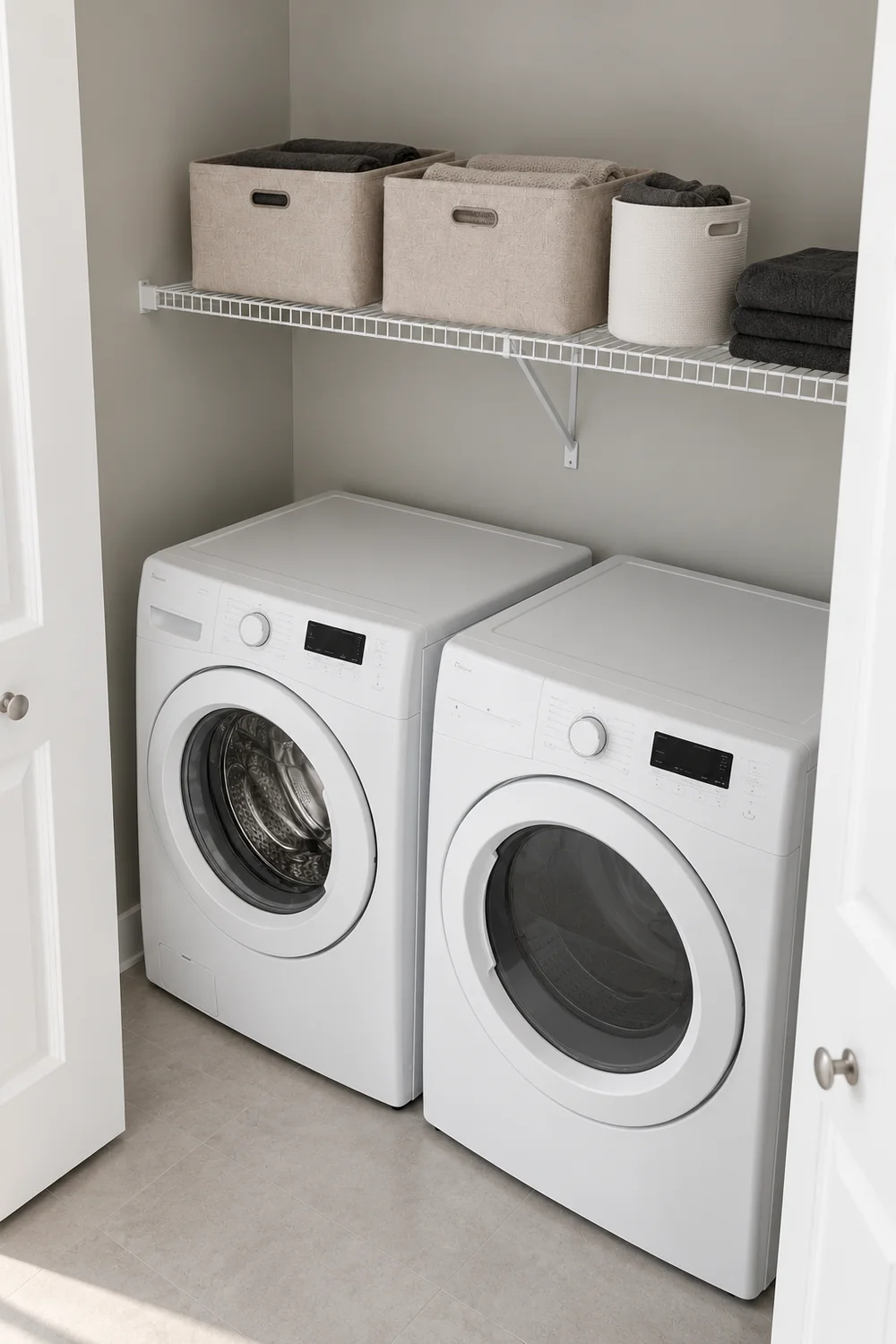
Keep the visual decision small enough to maintain. Repeat one textile family or one frame colour where it makes sense, while allowing original product packaging and supplied fittings to remain visible where required. You do not need matching dispensers, wall art or a decorative ladder. Compare the accepted pieces together, then photograph the group for your records. This makes later replacement easier: you can see the useful colour relationships without needing to find the exact same product again. The scheme should remain coherent when one worn container is replaced with another appropriate size and material.
Set up the accepted pieces in the order that protects the retained arrangement. Clear unrelated belongings, clean surfaces using the appropriate care information, and place each container in its agreed position. Check the full closet with the actual contents and ordinary access. Open the closet and machine doors, remove the storage groups and use the portable equipment according to its instructions. Record any mismatch immediately. I would keep a return or correction list rather than accept a blocked opening because everything has finally arrived. Do not alter an installed fitting to rescue a purchase that failed its brief.
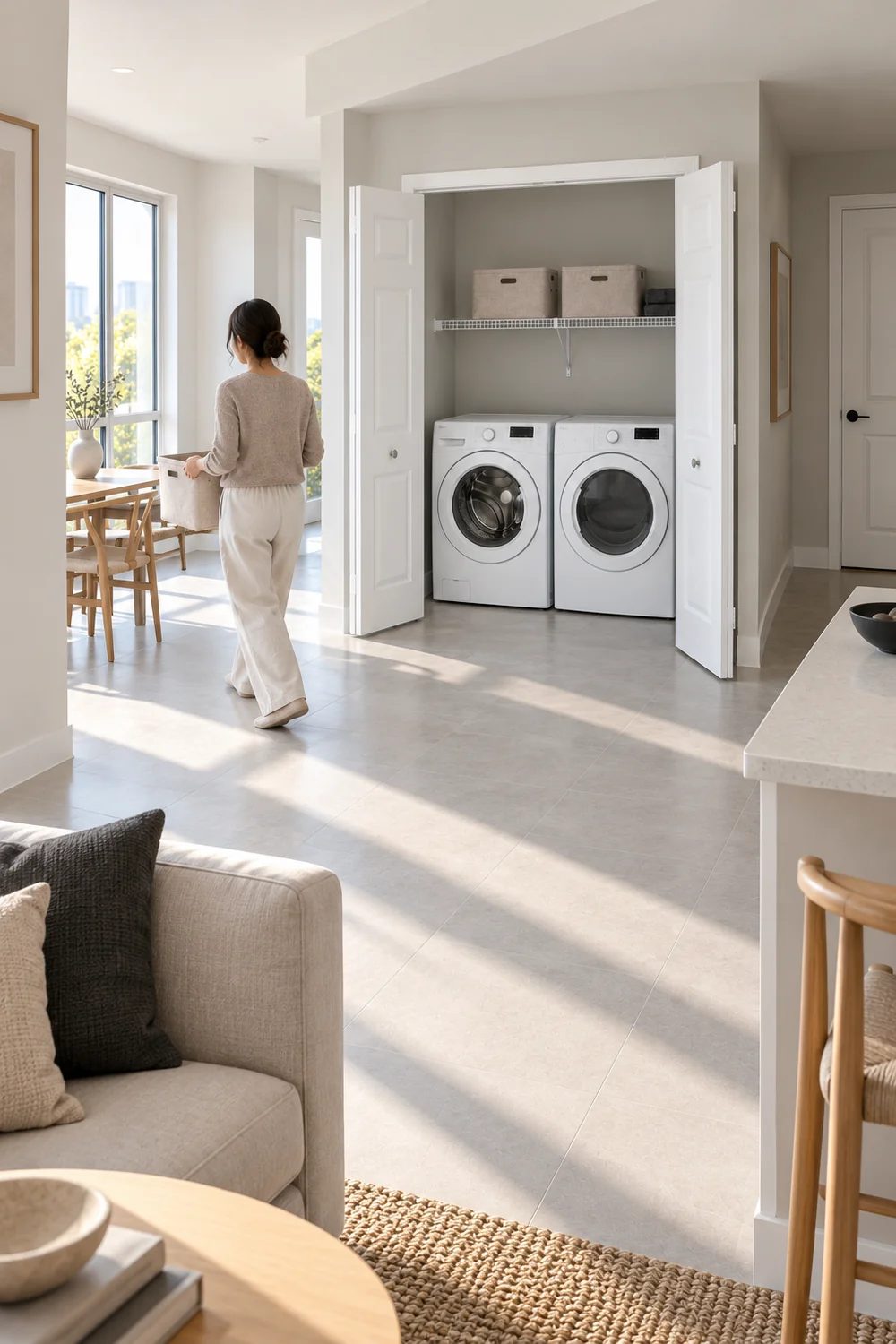
After laundry, restore the conditions that made the plan work. Return the portable rack only when it is ready to be stored according to its care instructions, clear the folding surface and put the relevant supplies away correctly. Notice whether a container regularly ends up on the machine or a rack never reaches its closed position. Those are specific observations about the setup. Give an ordinary routine several uses before buying more storage, while resolving any damage or equipment concern promptly through the appropriate route. A single unusually large load does not automatically require a permanent additional object.
If the same obstruction returns, use the apartment laundry room organization brief to change the job or location first. A cart may be doing work the retained shelf could handle, or the closed rack may need a different agreed home elsewhere in the apartment. Change one practical decision and review the result. Keep the individual product instructions with the acceptance sheet, so a later adjustment does not accidentally omit a required condition. This return to planning is useful only when real use identifies something to reconsider.
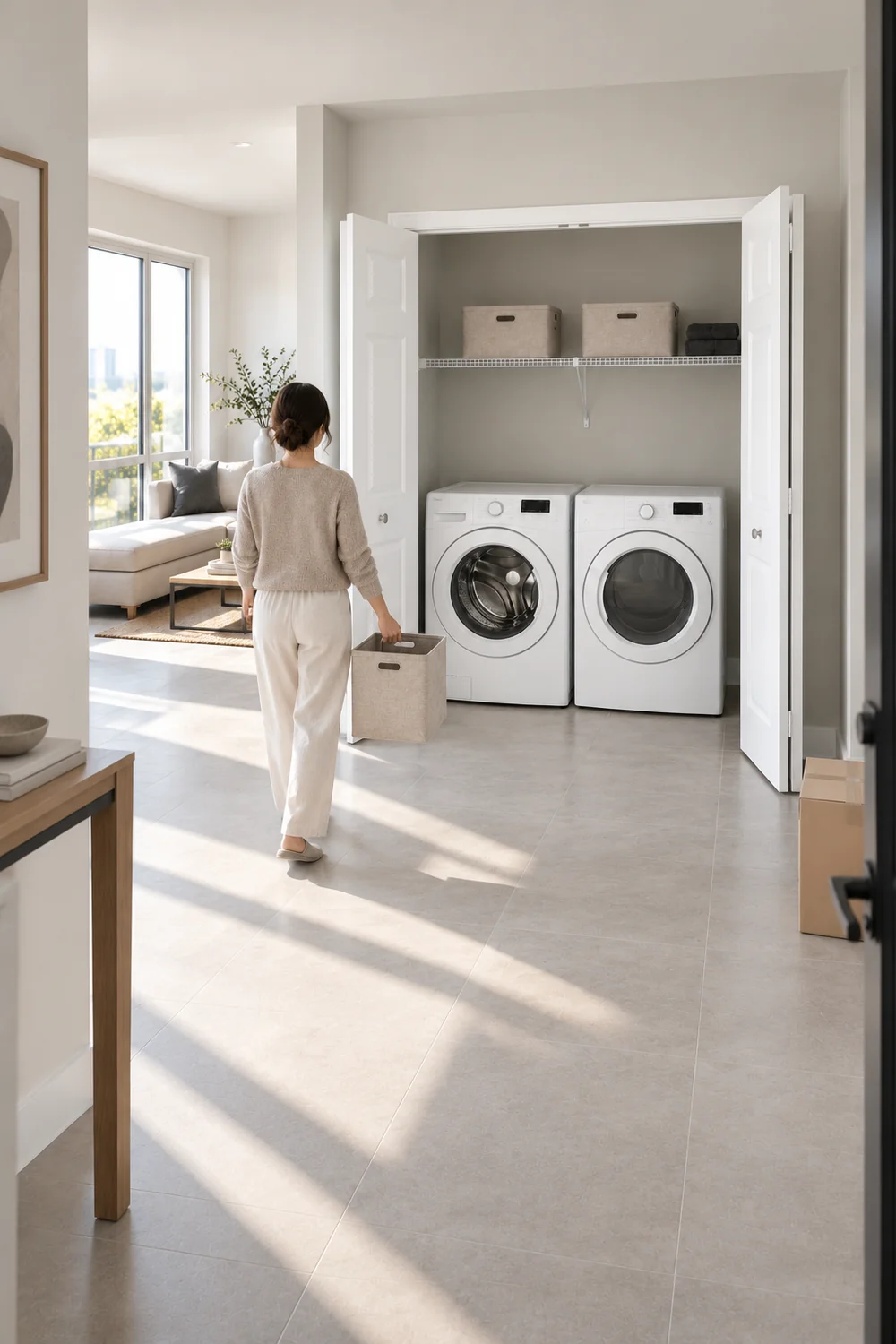
Before moving, empty and clean the portable pieces as their makers advise, keep their parts and instructions together and compare the retained closet with the original inventory photographs. Follow the tenancy's actual handover process for condition questions. Take your accepted portable items, leaving the supplied fittings and equipment as required. I would keep the brief but reassess every piece against the next home's machines, surfaces and available space. A successful rental setup earns its place by working here and being manageable to pack. It does not need to become a permanent installation, or promise that one set of storage will suit every apartment you rent.