Newsletter Subscribe
Enter your email address below and subscribe to our newsletter

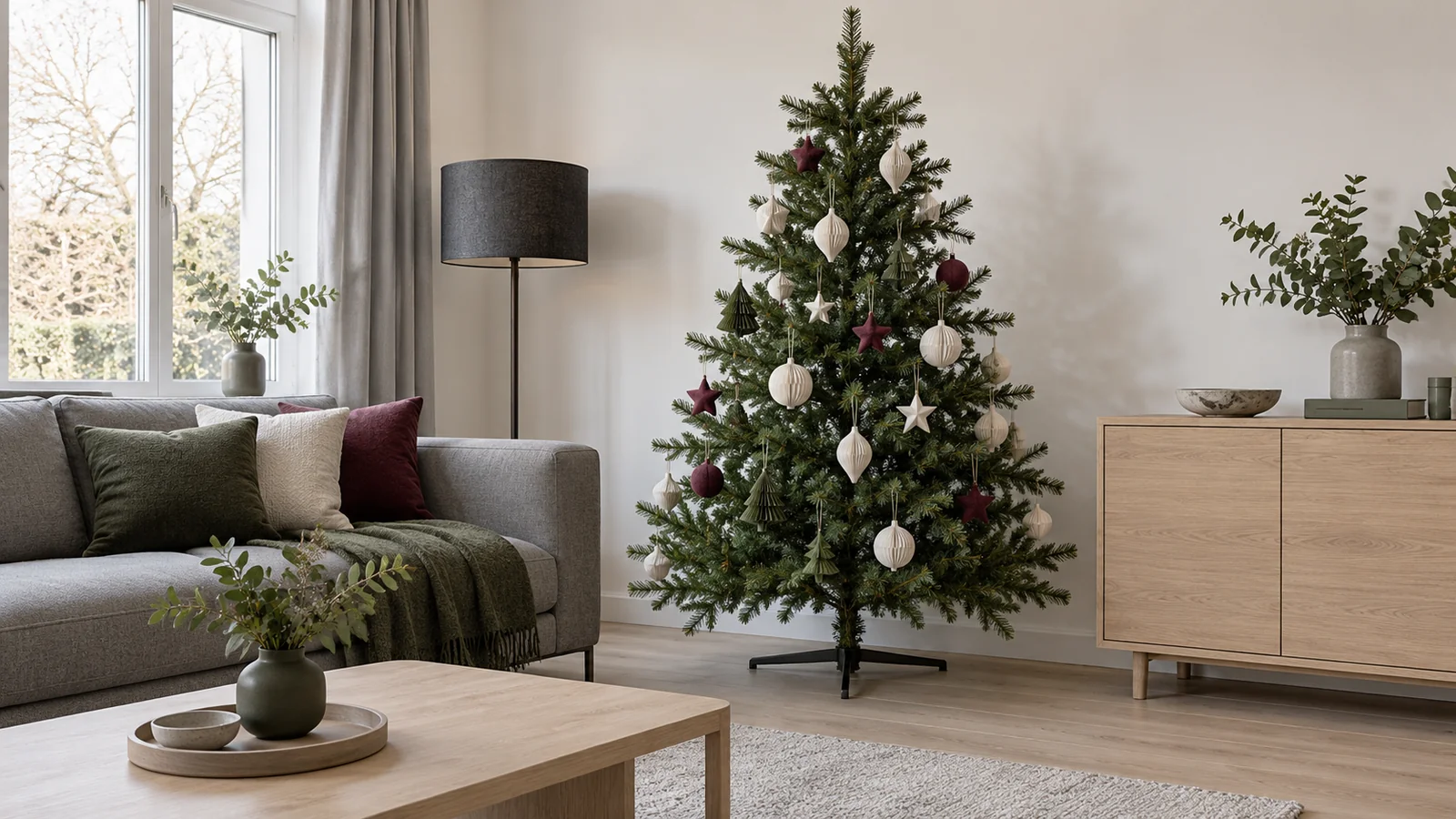
A Japandi Christmas tree should earn its place in a rented living room through more than a narrow silhouette in a photograph. I would check the whole object, from its support and outer branches to the box that has to go back into the cupboard. Then I would choose ornaments and lights that suit the actual tree and the room you are keeping around it. You may already own most of the useful pieces. The aim is to approve a coherent set, rather than assemble a new collection simply because its colours match. This is the action stage for a seasonal plan you have already chosen: compare the real dimensions, resolve the support and product questions, rehearse the finished arrangement and record how it will pack away. If a tree fails one of those jobs, a smaller option or a different festive focus can still give you the room you wanted.
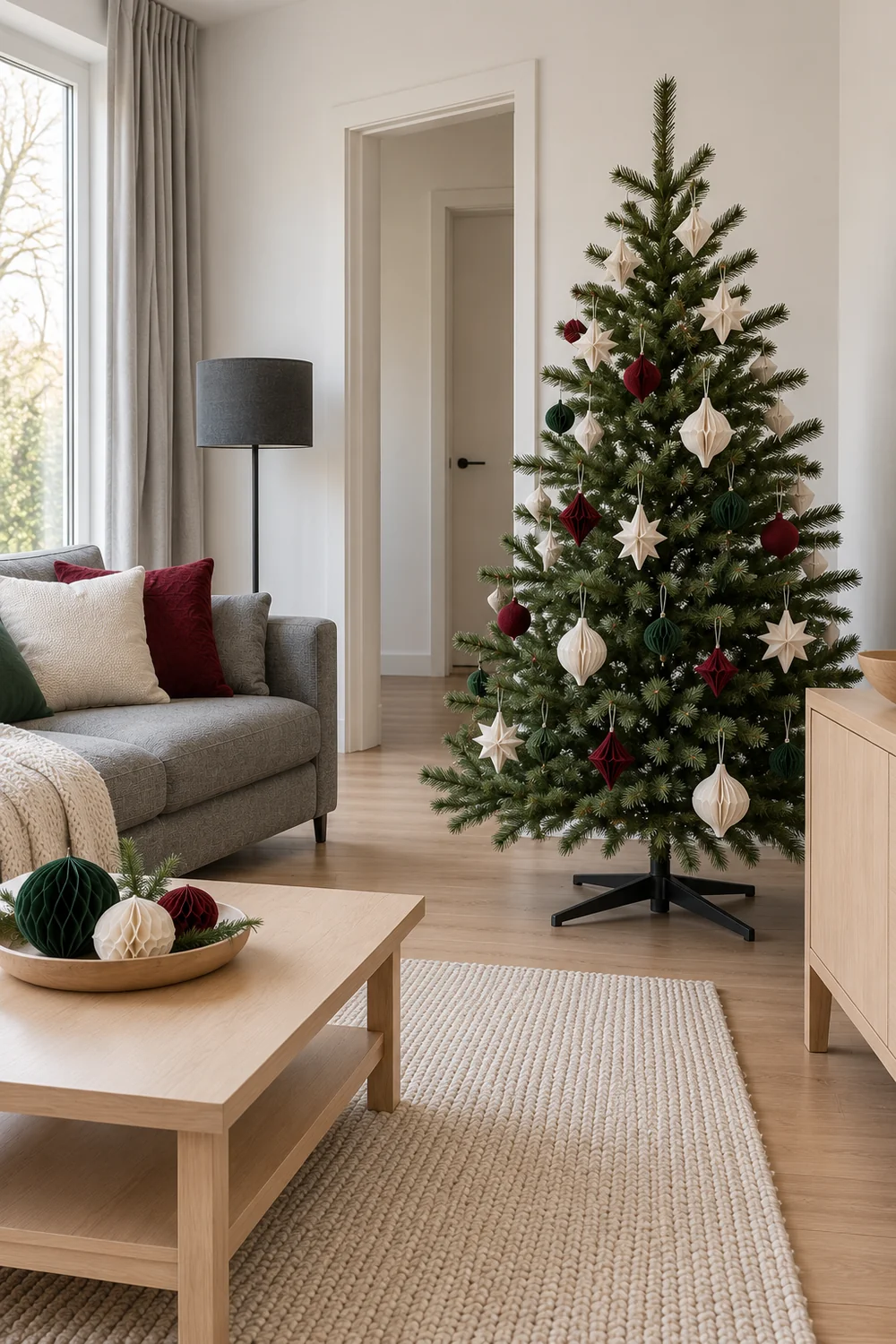
I would write down the available space before looking at advertised tree height. Include the floor or surface area, the nearby furniture movements and the packed home you have reserved. Then find the actual product information for the tree you own or are considering. You need its assembled height and width, support dimensions and packed component sizes, together with the instructions. A description such as slim does not tell you whether a low branch will overlap the side table. If a useful dimension is missing, ask the maker or retailer before treating the tree as a suitable choice.
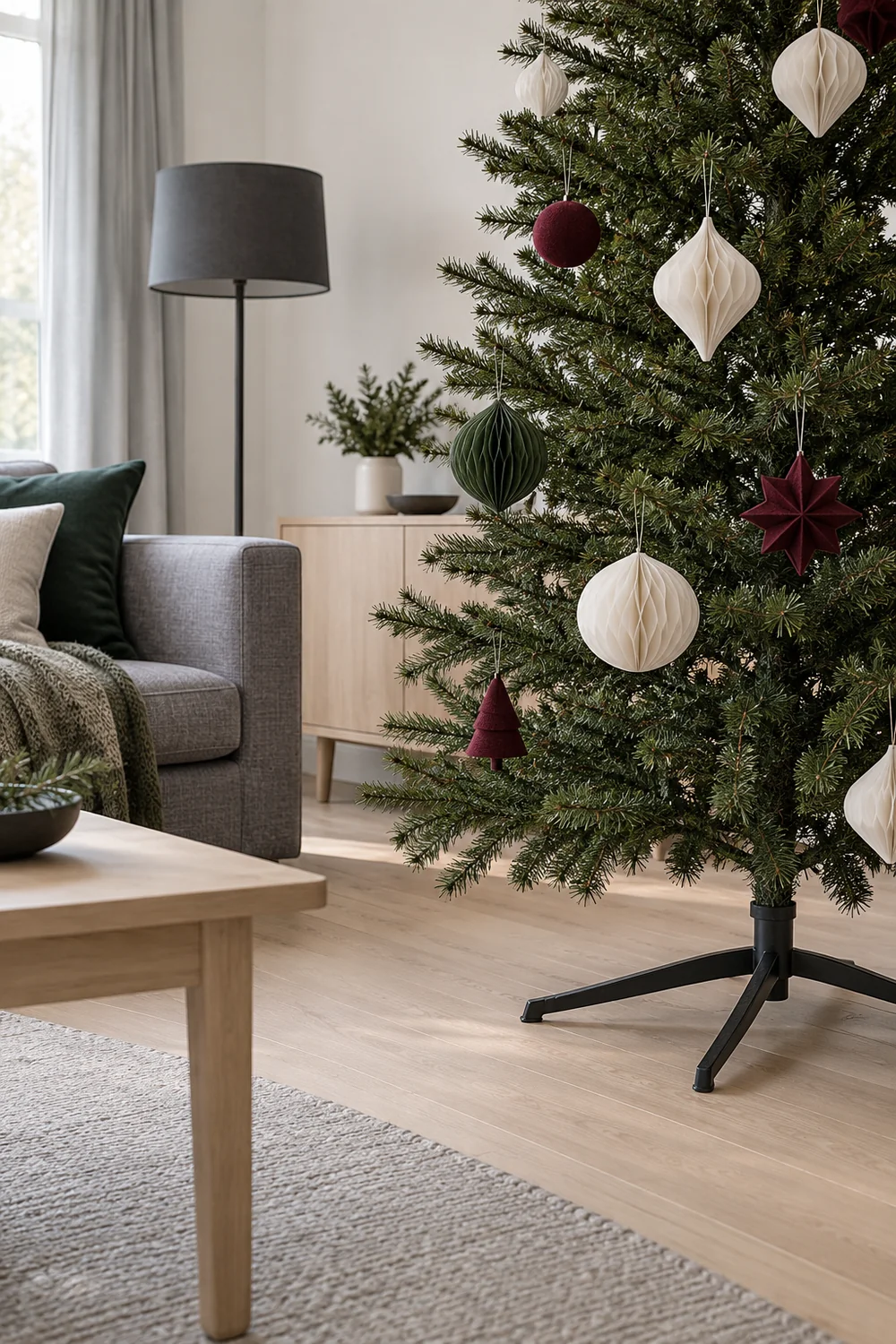
Consider a hypothetical floor allowance measuring 70 by 70 centimetres. A tree described as 150 centimetres tall with a 65 centimetre branch spread and a 75 centimetre stand would fail that allowance, even though the foliage appears to fit. These figures illustrate comparison, not recommended clearances. Your actual tree may have a different construction, require additional space under its instructions or need a support arrangement your rental does not permit. Use the largest relevant dimensions and required conditions. Add the intended decoration and gifts to the occupied area rather than treating them as invisible extras.
Packed size deserves the same comparison. If a cupboard has 85 centimetres of useful depth, a rigid tree section 100 centimetres long does not fit simply because the tree can be dismantled. Check the access opening, any fixed shelves and the movement needed to put the pieces away. A storage bag can protect a suitable item, but cannot make a rigid section shorter. Do not assume you can bend branches or compress a product beyond the maker's instructions. Record a separate home for anything that must be stored outside the main box.
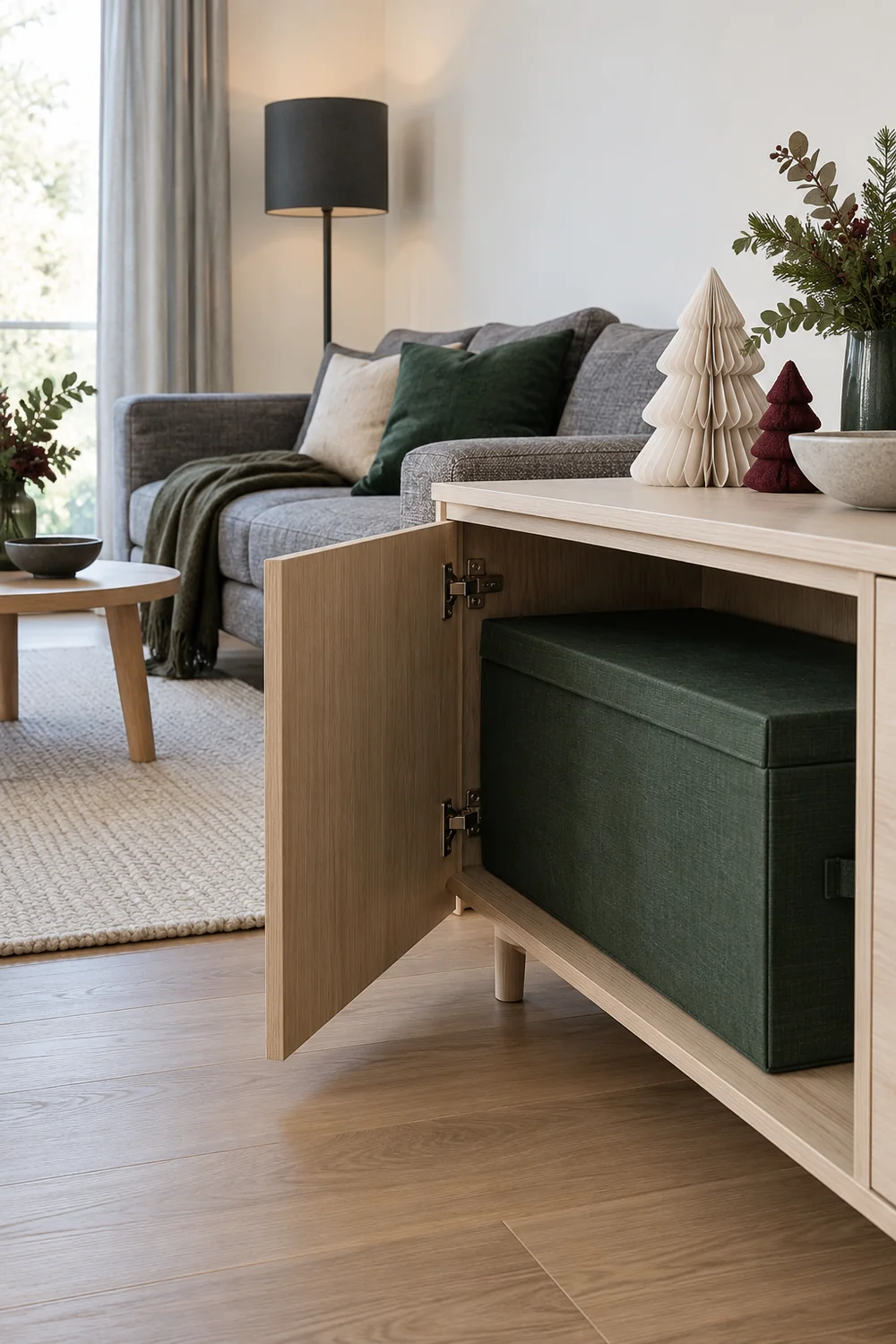
When neither the assembled nor packed state works, return to the apartment Christmas decor plan before buying another size by guesswork. I would change the focal arrangement rather than spend the season moving a chair whenever the cupboard opens. The completed check should name an acceptable object and its two homes, or clearly reject it. It is useful to reach that decision without purchasing anything. An existing smaller tree, a borrowed suitable set or a tree free display may meet the brief more honestly.
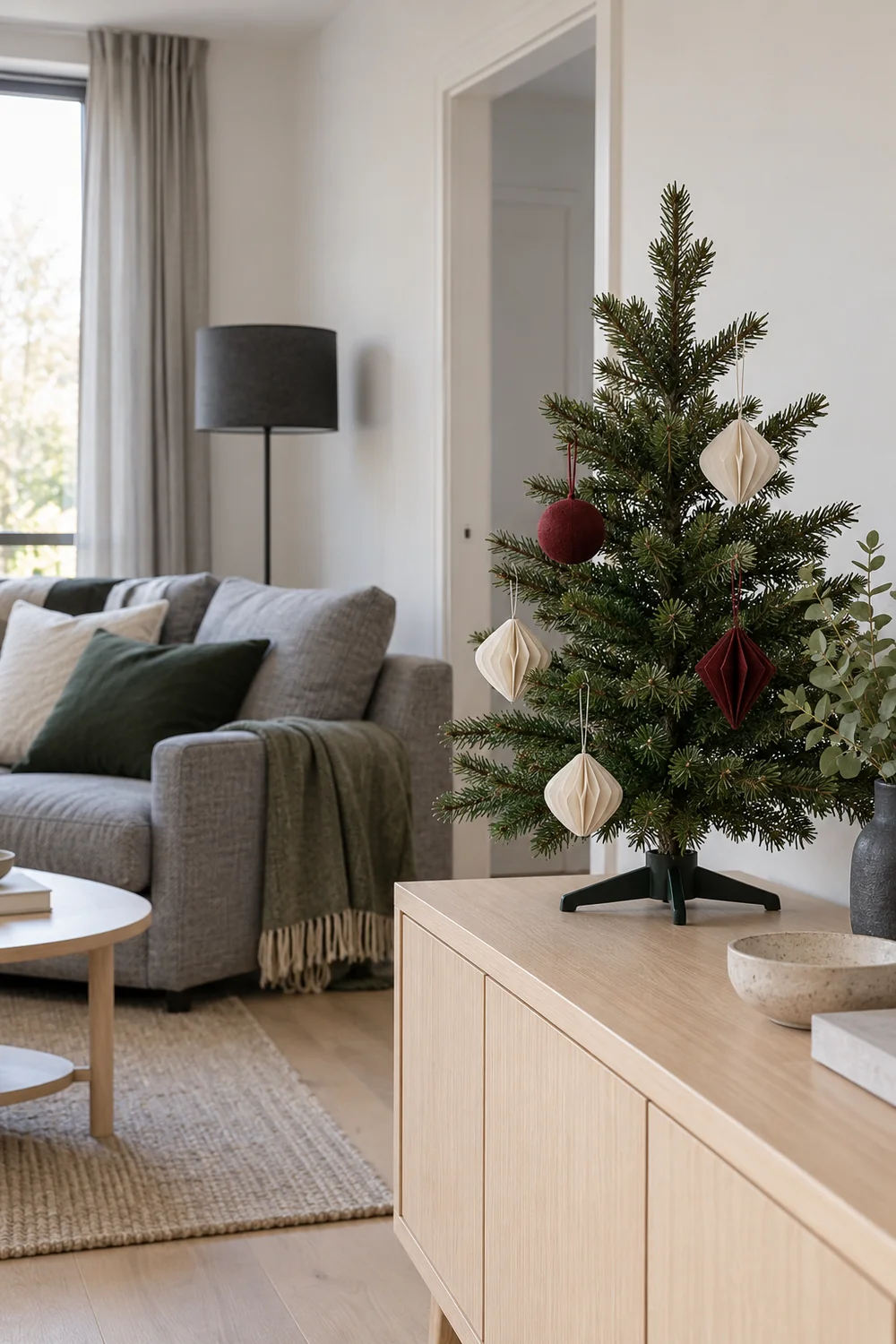
I would compare tree forms by their demands on the room. A floor tree gives a vertical focus and can keep the cabinet top available, but it needs a suitable base and its full spread must work beside the furniture. A tabletop tree preserves floor area while occupying a surface that may already have a job. A compact wooden or folding form may store differently, but its support, assembly and intended use still need checking. None of those descriptions establishes stability or suitability for an unknown home.
| Option | Information I would require | Reason to reject it |
|---|---|---|
| Floor tree | Actual base and foliage spread, assembly method, required support and packed sections | The full arrangement prevents ordinary furniture use or needs an unavailable permitted support |
| Tabletop tree | Complete weight and base dimensions, suitable support surface and packed size | The cabinet cannot meet the stated conditions or the display removes a needed surface |
| Folding decorative form | Open dimensions, assembly instructions, intended indoor use and closed package | The form needs a fixing you cannot approve or cannot be stored as instructed |
These are selection categories, not claims that every product within them behaves alike. I would follow the actual instructions and retain any required support method. Do not hide an unsuitable stand inside a basket or place a tree in a decorative pot unless that arrangement is appropriate for the product. The container can obscure a problem without solving it. Keep the support visible during the checks, then decide whether a suitable decorative finish belongs around it without interfering with the assembled structure.
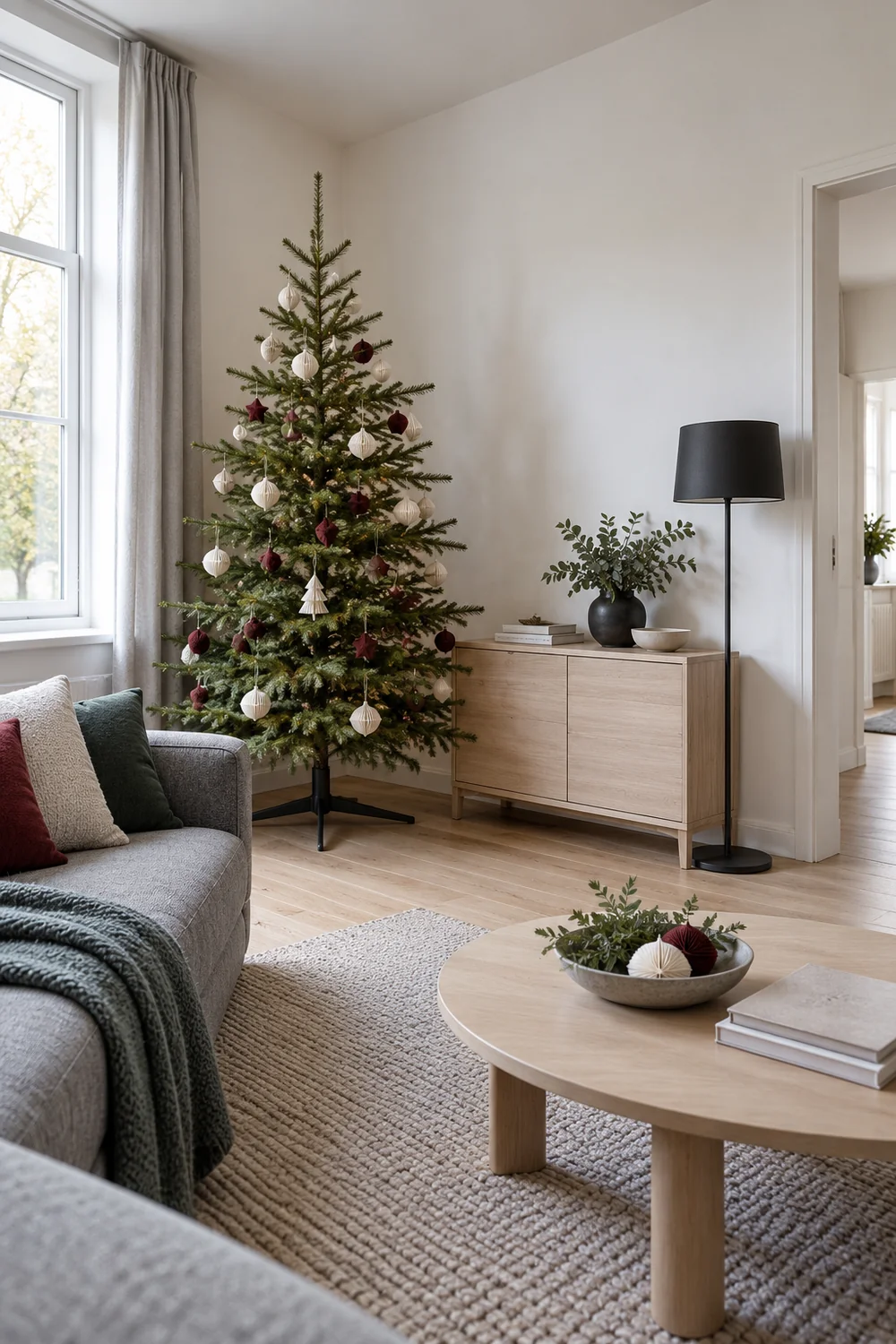
Building rules may also influence your options. Check the rules for your own property rather than assuming a living tree is either permitted or forbidden. If a chosen tree or support needs a wall fixing, it does not become a freestanding option because the footprint looks convenient. I would leave it out until the required permission and installation conditions are established. For a broader comparison of decorative directions, the existing Christmas living room decor guide can help you choose another focal idea. Bring that idea back through the same actual space and support checks before approving it.
Before buying a coordinated ornament set, I would put your existing pieces beside the chosen tree. Separate the ones that matter to you from those that merely fill space. Then inspect their condition and attachments. A substantial ceramic decoration and a folded paper star ask different things from a branch. Use the tree and ornament instructions where supplied, and do not invent a universal safe weight from the material name. If a maker gives no suitable way to assess a doubtful combination, choose a different ornament or a different approved display position.
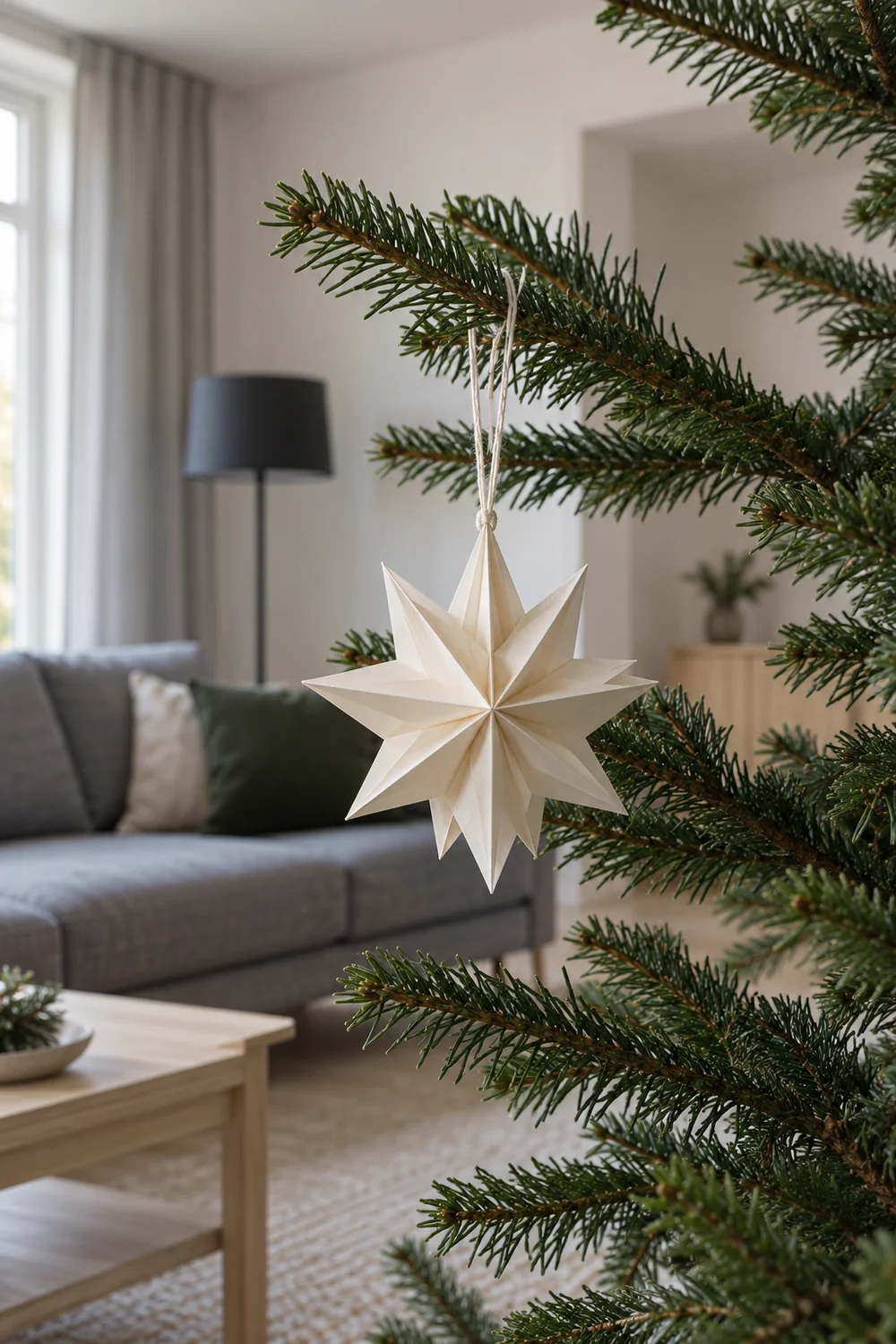
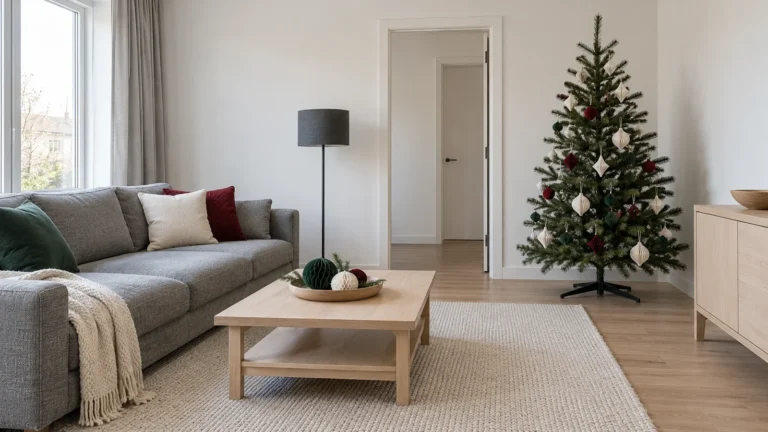
For the sparse look here, I would begin with a small group of natural white paper shapes, a few oxblood felt pieces and one or two simple timber ornaments that the tree can appropriately support. Those quantities describe an editing approach, not a capacity. Place one suitable object, step back and look at its relationship to the surrounding branches before adding the next. Leave visible gaps so the tree's form remains legible. A decoration does not need to occupy the end of every branch for the result to feel complete.
The Japandi Christmas decor primer helps with that visual restraint. I would borrow its simple shapes and deliberate empty areas while keeping your meaningful ornaments where they belong. If a cherished piece is too heavy or has an uncertain attachment for this tree, consider a suitable separate freestanding display. Do not force it onto a branch merely to preserve a matching composition. The emotional value of an object is a reason to give it a thoughtful place, rather than a reason to skip the practical check.
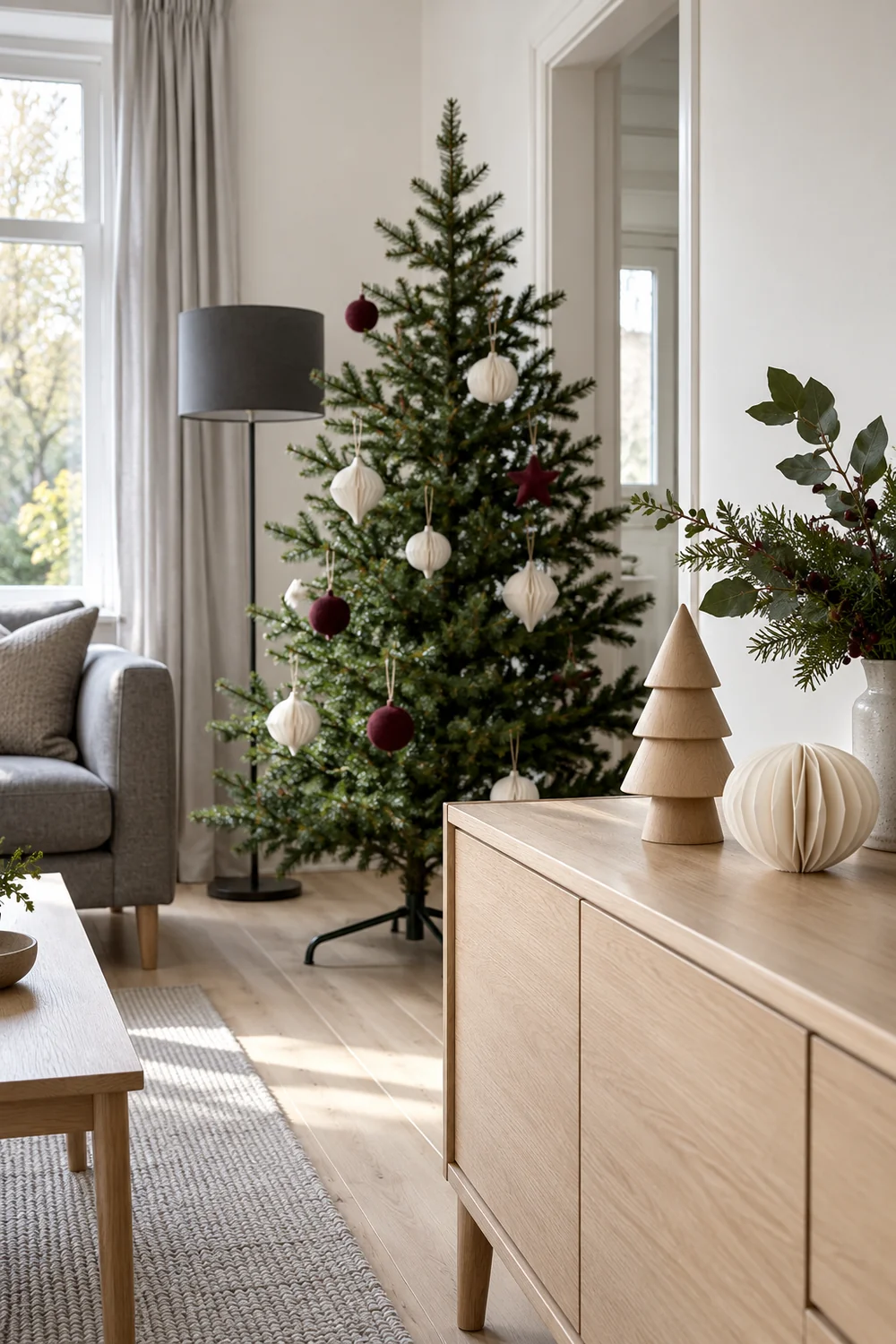
Look from the sofa as well as at close range. An evenly distributed group can appear busy when every ornament sits at the front. Turn the tree only as its setup allows and give the visible sides a balanced arrangement. Keep attachments secure under their instructions and leave access to anything you need to operate or inspect. I would also give loose packaging, spare hooks and small accessories a contained storage place immediately. They should not remain scattered around the base while the decorated tree is in everyday use.
I would bring a few actual materials together before approving the full ornament group. In this rented room, grey upholstery and soft white walls stay unchanged. Forest green provides the main seasonal colour; white paper catches the daylight, pale ash connects the furniture and simple timber forms, and a small amount of oxblood felt gives the tree a darker note. The contrast comes from distinct surfaces and shapes. It does not require a bright metallic ornament on every branch or another fabric on every seat.
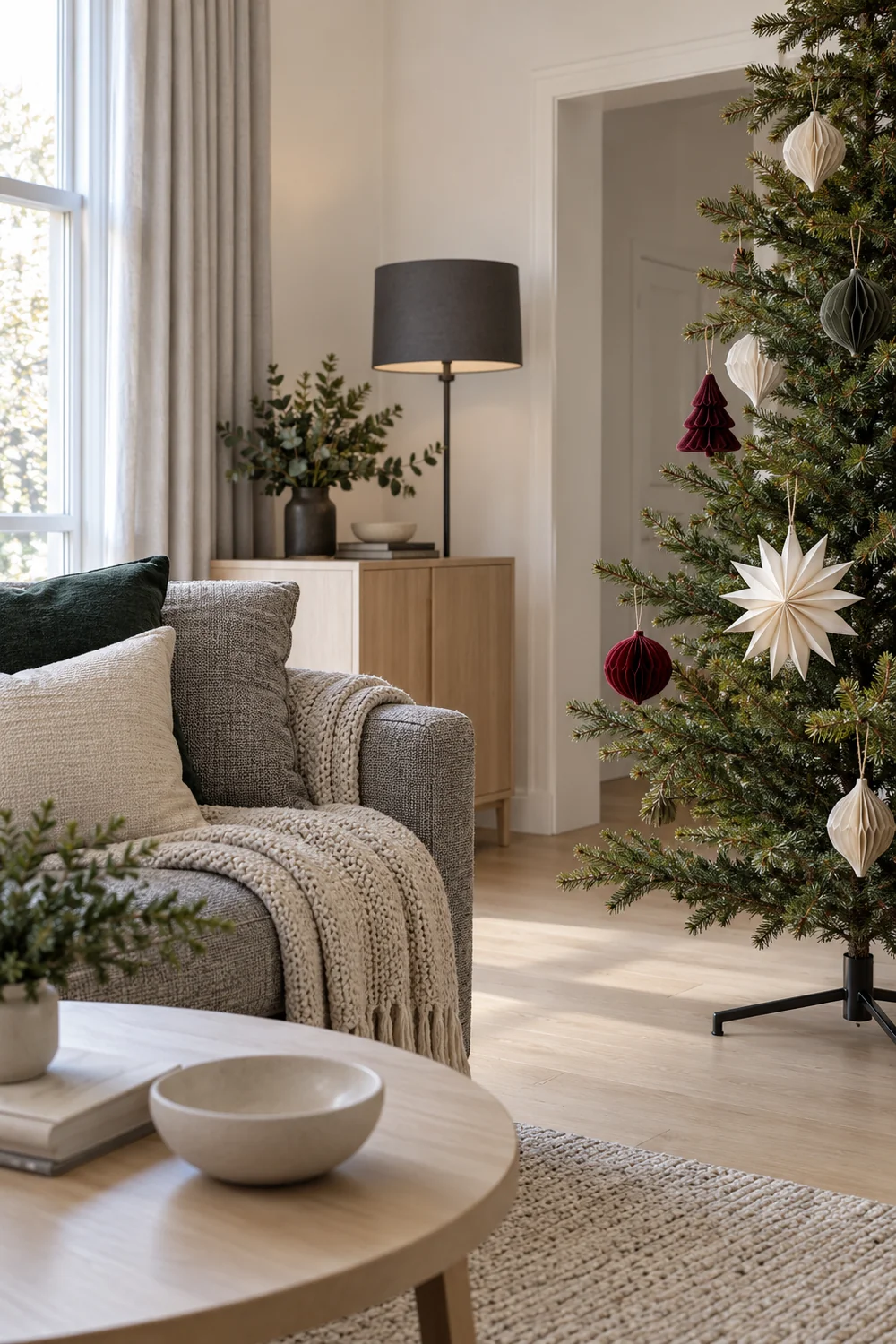
Use the Japandi color palette to compare those relationships with the room you actually have. Its seasonal colour ideas can help you judge whether an accent belongs beside existing finishes. If your sofa already carries a strong rust or burgundy colour, I would reduce the added red rather than make the whole tree match it. If the room is cooler than this example, natural white paper and a small timber detail might connect the scheme without another coloured purchase. The fixed shell is useful information, not a defect to conceal.
Compare finishes in ordinary daylight. A white paper shape, a glossy white bauble and a pale felt ornament may have similar colour names but very different visual weight. Place the small candidate group near the seating and look from the doorway. Keep the materials that remain distinct without shouting across the room. This is an editorial choice about appearance, not a guarantee about durability or environmental impact. Natural looking products can still have coatings, mixed components and particular care instructions. Read the relevant information instead of choosing from the photograph alone.
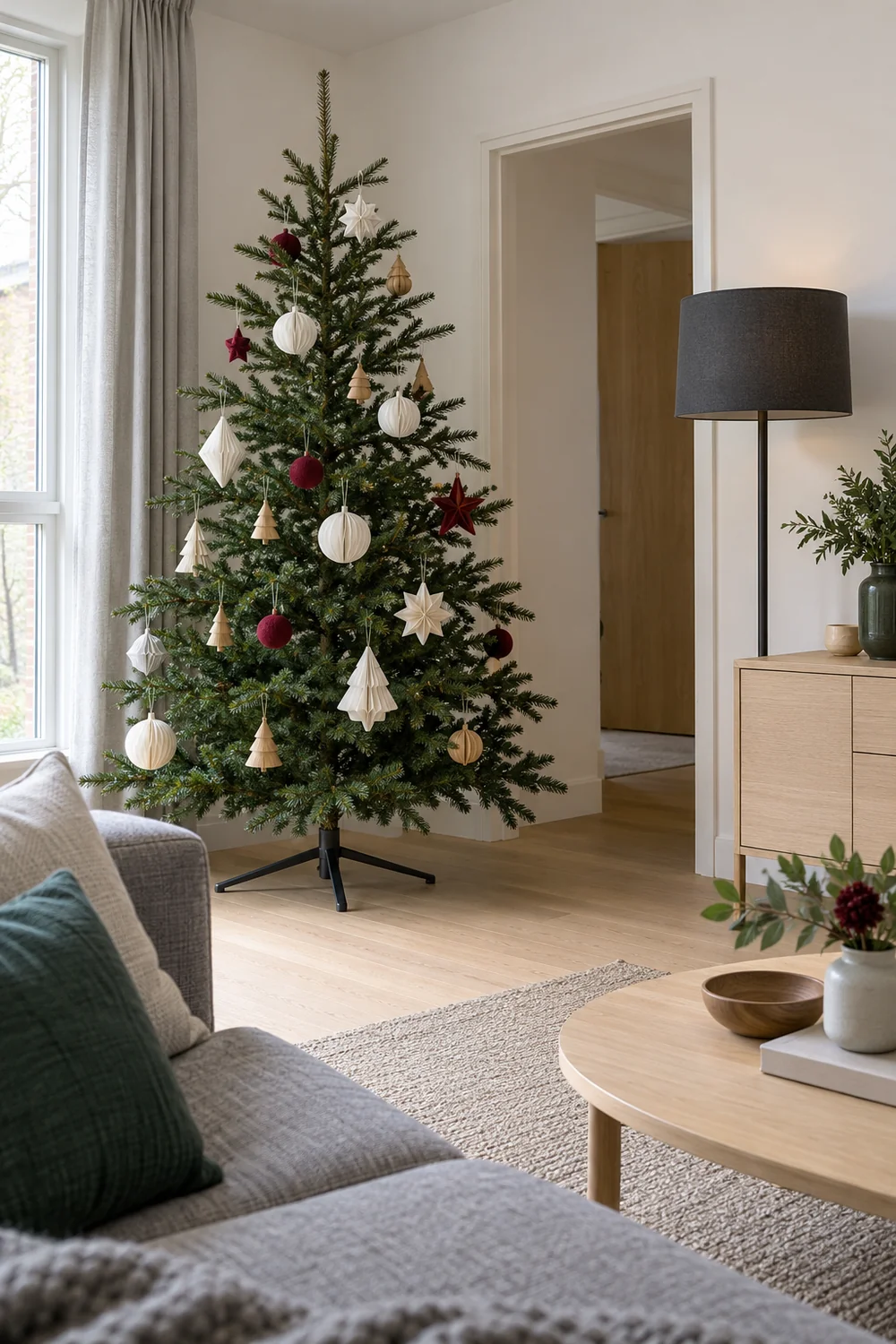
Storage can resolve a decorative tie. If two suitable ornaments do the same visual job, I would favour the one whose required protection fits the space already allocated. A folding paper decoration should only be folded in the way its construction allows; a delicate timber shape may need a separate compartment. Keep that packed arrangement in view as you edit the displayed one. A restrained tree feels more considered when its pieces belong to the room and have a realistic future beyond the few weeks they are visible.
I would use the light set's own instructions to decide whether it suits the chosen tree and position. Check the product's condition, intended use and required placement of its power supply or battery compartment. Keep the model information and instructions with the set. Electrical Safety First advises buying from reputable retailers, avoiding overloaded sockets and unplugging Christmas lights overnight and when you go out. If equipment is damaged or its suitability is uncertain, leave it out of the arrangement rather than improvising a repair or connection.
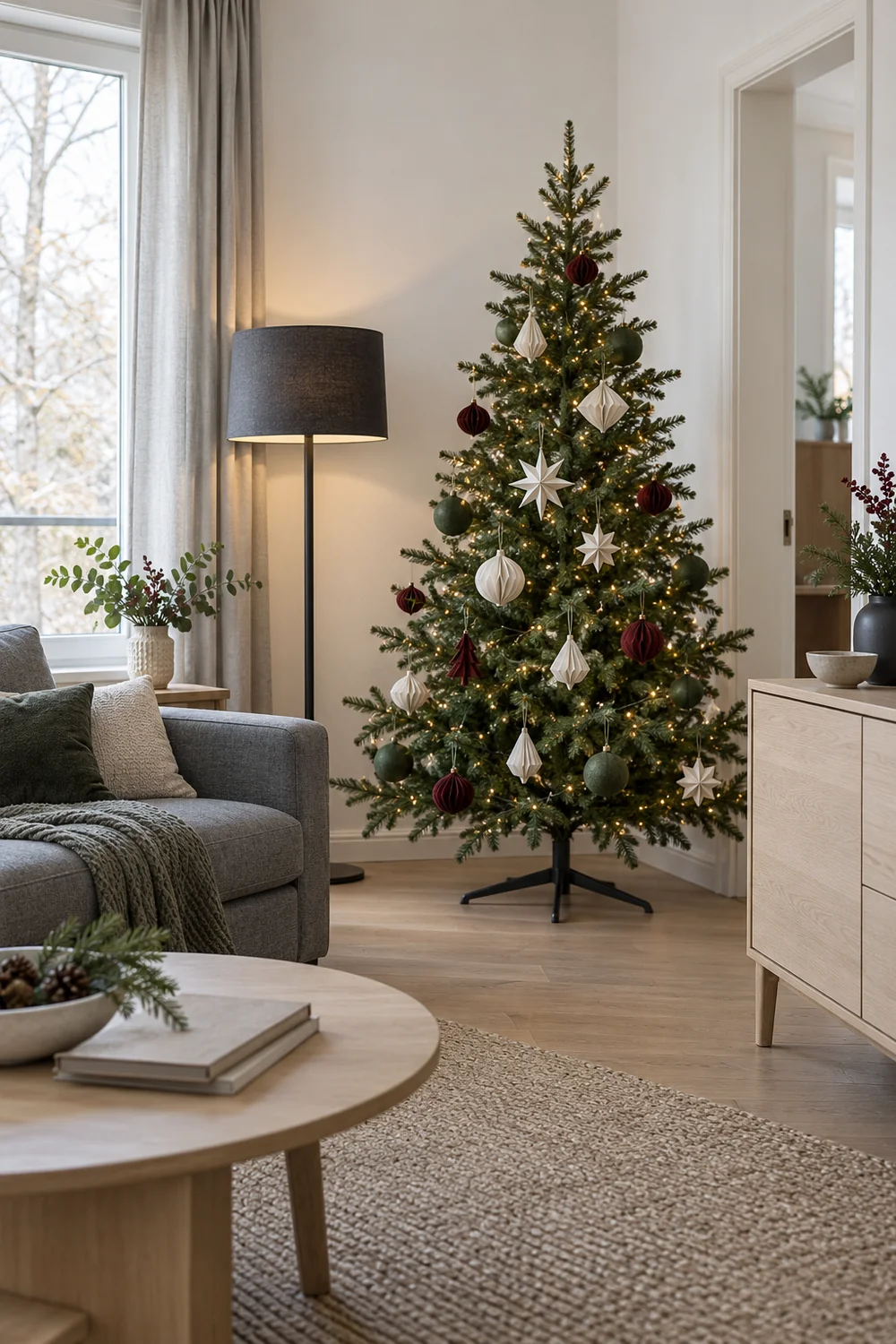
Check the controls in the real room. The switch or power connection should remain accessible without reaching through delicate ornaments or moving the tree. Follow the product guidance on heat, materials and any permitted connections. Paper decorations and festive fabrics are not a reason to ignore those conditions because the light source appears small. I would also keep decorative objects away from heaters and other heat sources according to their requirements. The location of the lights belongs in the specification alongside the ornaments, rather than being fitted into whatever gaps remain.
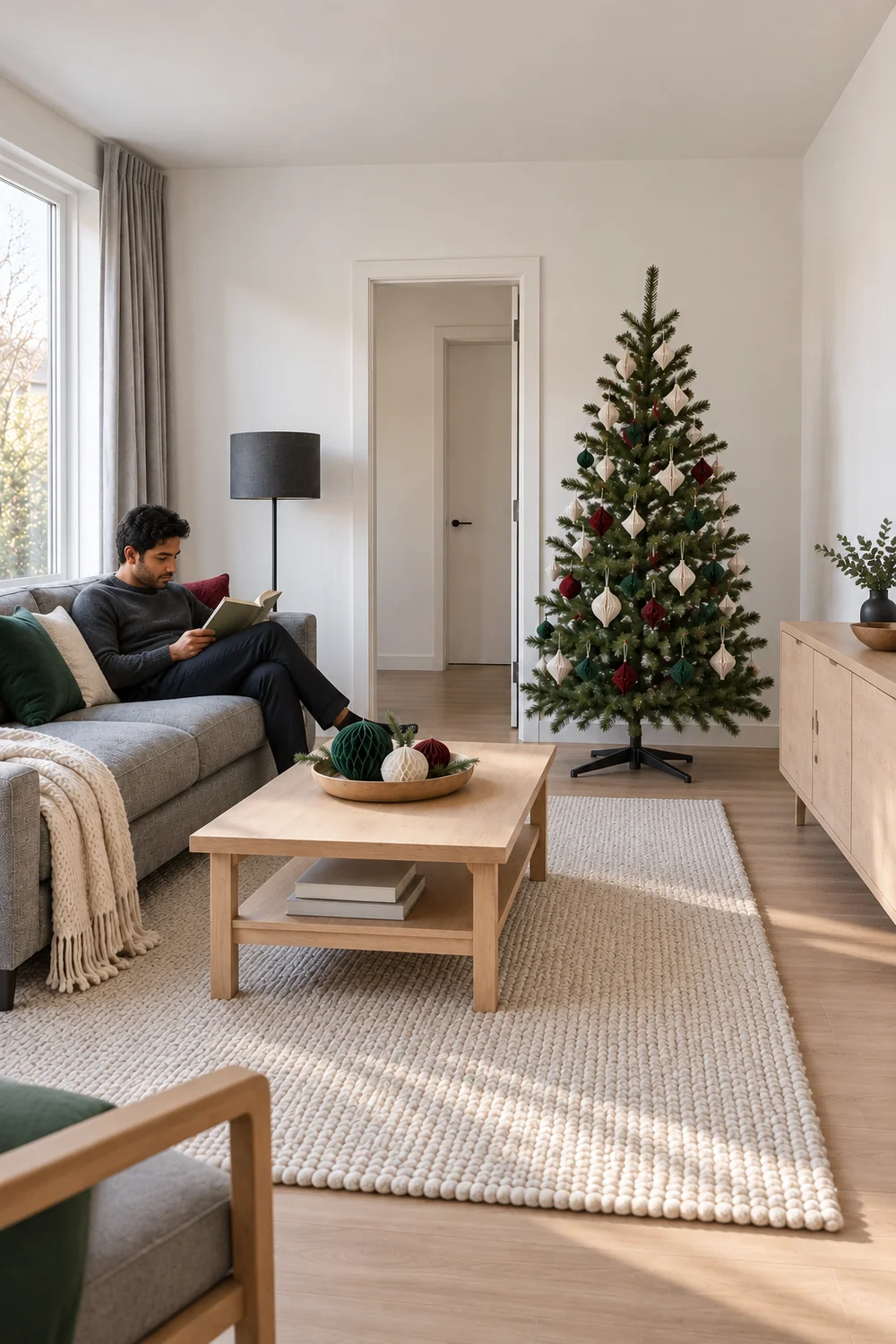
Keep useful ordinary lighting working around the tree. The Japandi living room examples are helpful for seeing how quiet furnishings and light relate to everyday seating. I would preserve that relationship after decorating. You should still be able to read, see the route and recognise the colour of the materials. Decorative sparkle can add a seasonal layer without taking over the room's practical light. A brighter room also makes it easier to notice whether an ornament is crowding the chair or whether a branch sits in the curtain's normal path.
Finally, rehearse the occupied arrangement. Sit in the main seat, use the side table, open the adjacent door and move the curtains normally. Check the whole tree and its support without leaving it in a temporary or incomplete state. Gifts also need an agreed location if you intend to display them. I would reduce the arrangement when ordinary use reveals a conflict, rather than ask you to remember an awkward manoeuvre for the entire season. Record the final positions with a photograph and a few plain notes. That gives you a useful reference when you inspect and dismantle the set later.
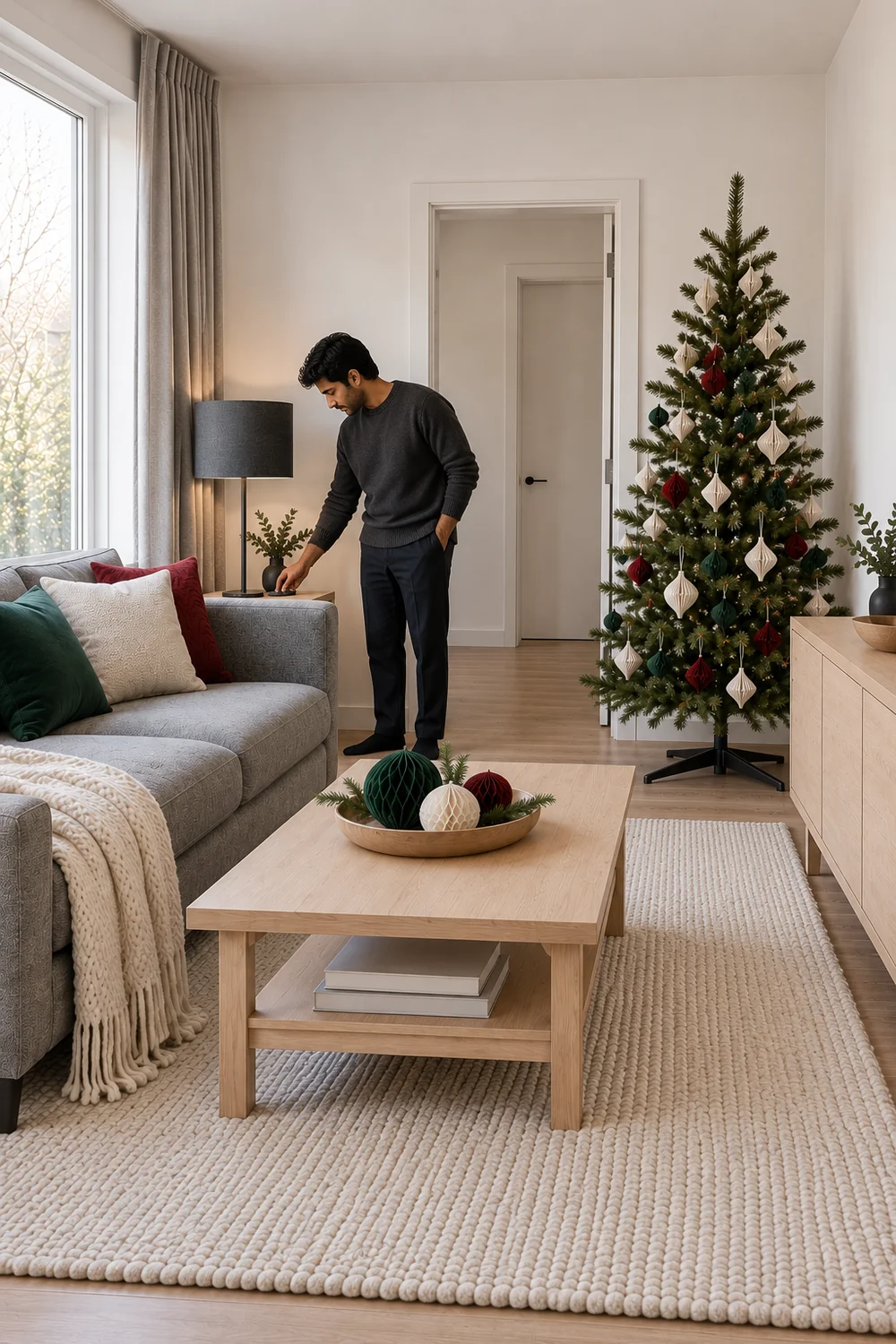
I would begin the return to storage with the photographs and the product instructions. Switch off and disconnect equipment as directed before dismantling. Keep damaged or doubtful items separate from the accepted set so they do not quietly reappear next year. Follow the appropriate repair, replacement or disposal advice for the actual product. A box labelled Christmas should not become a place where unresolved electrical problems wait until the next decorating day. Write down what needs attention while the reason is still clear.
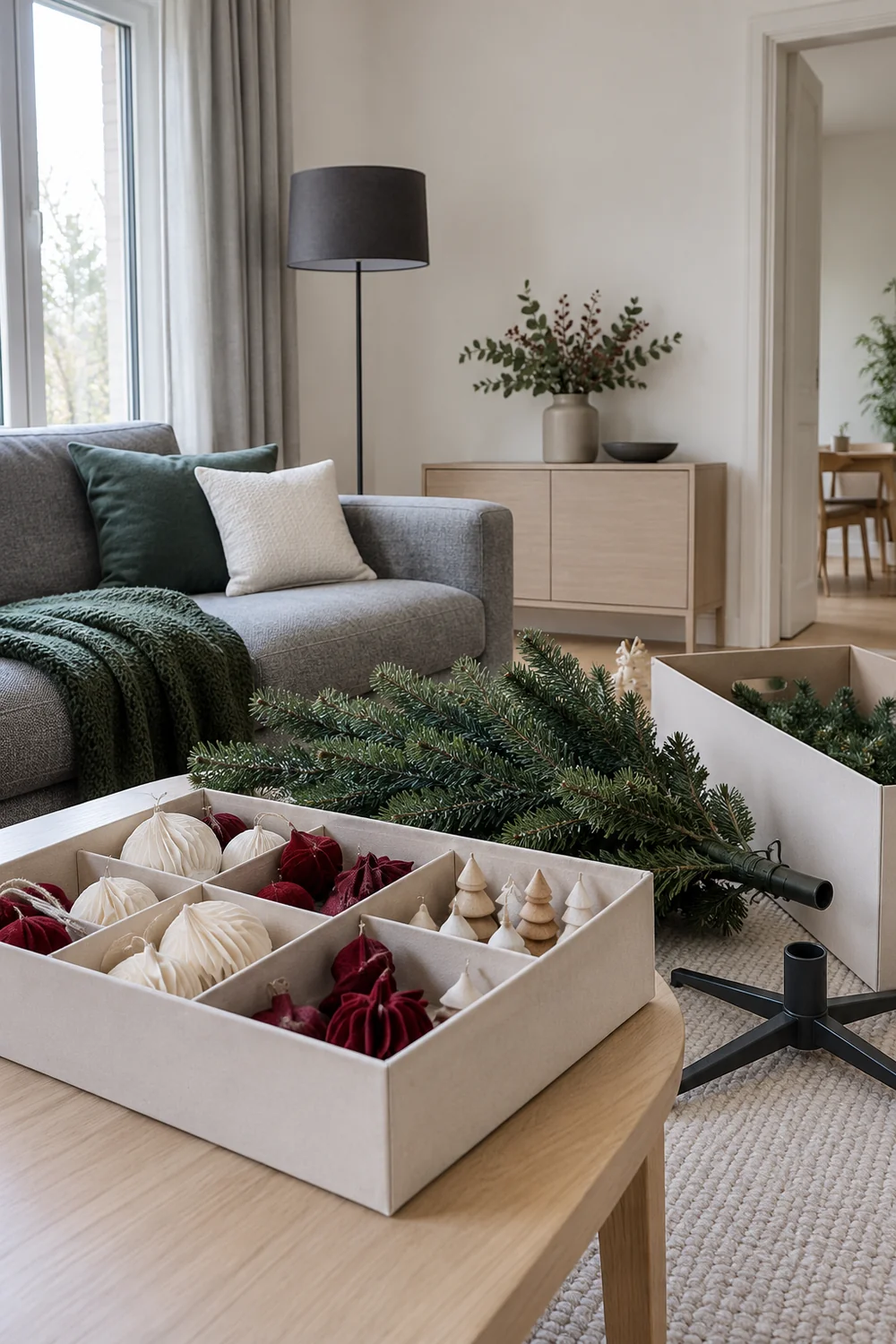
Pack each material according to its construction. Allow suitable items to become clean and dry as their care guidance requires before closing them away. Protect paper folds from unnecessary pressure, separate delicate shapes and keep the appropriate original packaging where it provides useful support. Store lights and their power components in the way their maker specifies, with the relevant instructions together. Do not force tree sections into a container that changes their shape or damages fittings. The point is to return a complete usable set, rather than make everything disappear into the smallest possible box.
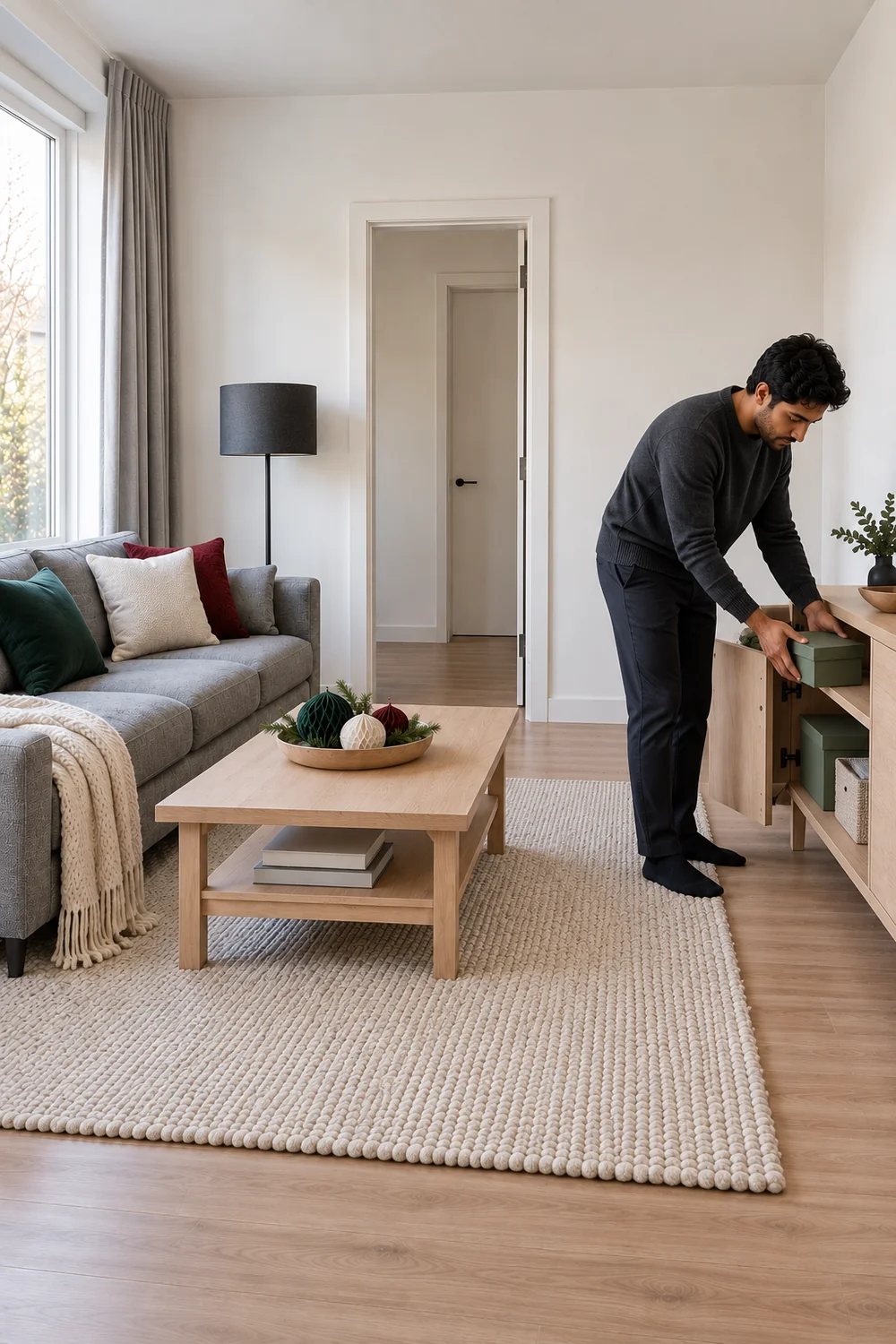
Compare the packed group with the space you reserved before decorating. Check the container's actual closed size, its handling and the movement through the cupboard opening. Keep ordinary items accessible around it. If the set has expanded, identify what changed: extra gifts of ornaments, packaging that needs more protection, or a tree whose components did not pack as expected. Reduce or rehome pieces deliberately instead of taking over another cupboard by default. Limited storage is part of this rented room's brief throughout the year.
Then return the everyday furniture to useful service. My rental living room ideas are a useful return point when you are deciding what the cleared surfaces and portable layers should do next. You do not need to fill the empty tree corner immediately. Let the room work normally again and notice whether the temporary changes revealed a better position for a chair or lamp. Keep any lasting change within the same permission and product boundaries you used before Christmas.
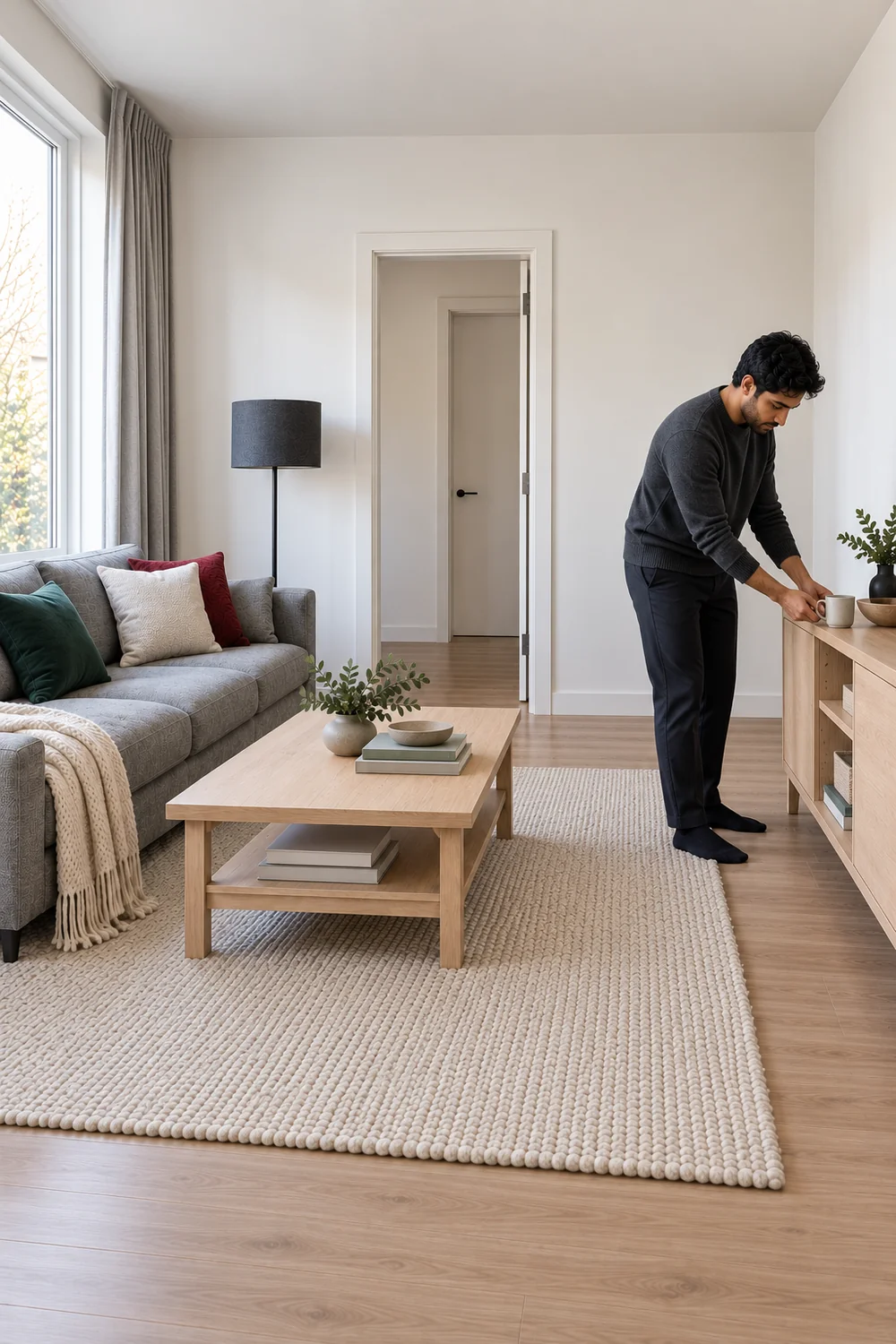
For next season, save a short note with the set: what fitted, what repeatedly obstructed ordinary use and which objects you actually enjoyed seeing. If the room, furniture or storage changes, revisit the apartment Christmas decor plan before repeating the old arrangement. Otherwise, the photograph and the checked set may be enough. I would finish with fewer unresolved pieces and a room that has returned easily to daily life. A tree that works while displayed and belongs in its packed home has delivered a complete result for the rented living room.