Newsletter Subscribe
Enter your email address below and subscribe to our newsletter

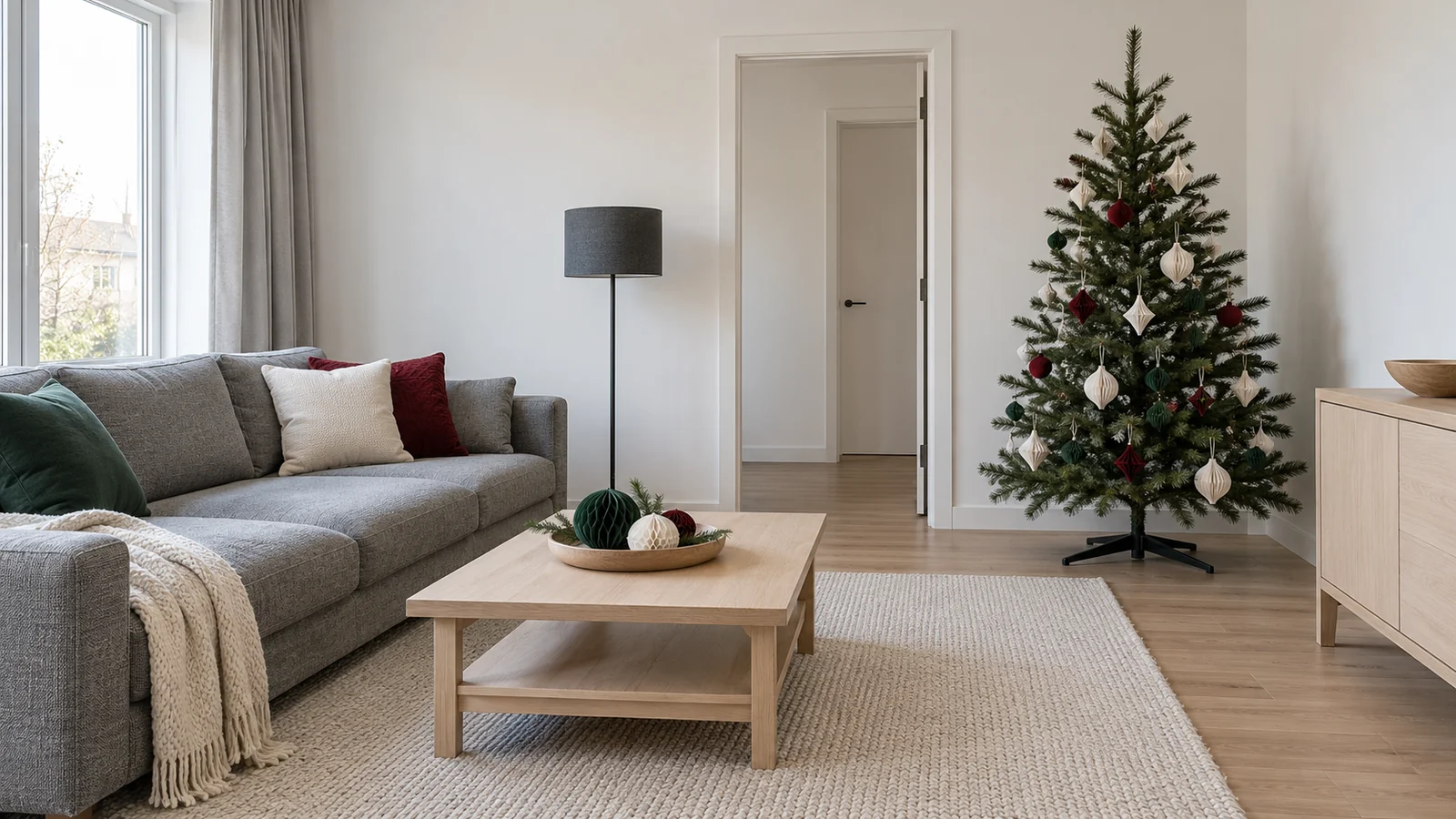
Japandi Christmas decor can make a rented living room feel festive without asking the room to become something else. I would start with the Christmas box you already own and the places you still need to sit, walk and open every day. A sparse tree beside a pale sofa might be the image that draws you in, but its usefulness depends on what happens outside the photograph. You still need to reach the curtains, use the cupboard and put the decorations somewhere when January arrives. My approach is to choose one seasonal focus, give it a real allowance of space and connect its materials to the room you have permission to use. By the end, you will have a practical brief for the display, the ordinary furniture and the packed set, before choosing a particular tree or adding another box of ornaments.
I would unpack before browsing. Put the decorations on a clear table and separate what you enjoy seeing from what you keep only because it arrived in the same box. A small collection of paper stars, a familiar ornament and one useful strand of lights can give the room a stronger identity than a new coordinated set. Keep damaged electrical items out of the proposed arrangement. For everything else, distinguish a repair you can appropriately make from a piece whose maker needs to advise you. The first decision is what deserves a place this year, rather than what could fill another surface.
Next, walk through the ordinary room with the decorations still on the table. Notice the seat you actually use, the cupboard you open most evenings and the route that connects the door to the window. Photograph the room from those positions. I would keep a plain record of what already works, because a seasonal change can gradually take useful places away. A tree may leave the doorway clear while making the favourite chair awkward to reach. A collection on the sideboard may displace the place where you normally set down a cup or charge a device.
The existing room should be good enough to return to. My rental living room ideas show how I would work with fixed finishes and movable layers throughout the year. For Christmas, I would keep that ordinary arrangement as the starting point and record only the changes the season needs. You are not choosing a second complete room. If a chair must move, identify its useful temporary position rather than pushing it into another doorway. If something comes off a shelf, give it a protected place for the same period.
Finally, list the permissions that affect this particular display. Your agreement, building rules and the instructions for the actual fittings matter more than a description saying renter friendly. I would not assume that removable adhesive, a tension pole or an existing curtain track can support a decoration. Keep unresolved questions outside the approved plan. You can still make a festive room with freestanding pieces and objects placed on suitable existing surfaces. That gives you a workable direction while you check anything that depends on permission, condition or a stated load.
I would treat a seasonal object as having two sizes. One is the space it occupies when assembled and decorated. The other is the space it needs for most of the year. A tree that looks compact beside a sofa can arrive in a long rigid box that will never turn through the cupboard opening. A folding paper star can be easy to store, but a group of delicate ornaments may need more protection than the empty space between other belongings provides. Reserve both homes before approving an additional piece.
Measure the useful storage space, including the opening and the route into it. A deep cupboard is not automatically a good home for a long tree section if a door hinge or fixed shelf blocks the movement. Note what already occupies the space and what you are willing to move. I would avoid assigning decorations to an imaginary future shelf. If you cannot identify an accessible dry place that suits the products, reduce the set. The room does not owe a large Christmas display eleven months of inconvenient storage.
Then make a temporary outline for the proposed display using a method appropriate to your floor and agreement. Loose paper can be useful while you remain beside it; remove it after the check so it does not become something to slip on. Include the support and likely branch spread, rather than marking only a slim trunk. Open the adjacent cupboard, sit down and stand up, and move the curtains through their normal travel. This is a comparison of possible positions, not a substitute for the actual product dimensions or installation instructions.
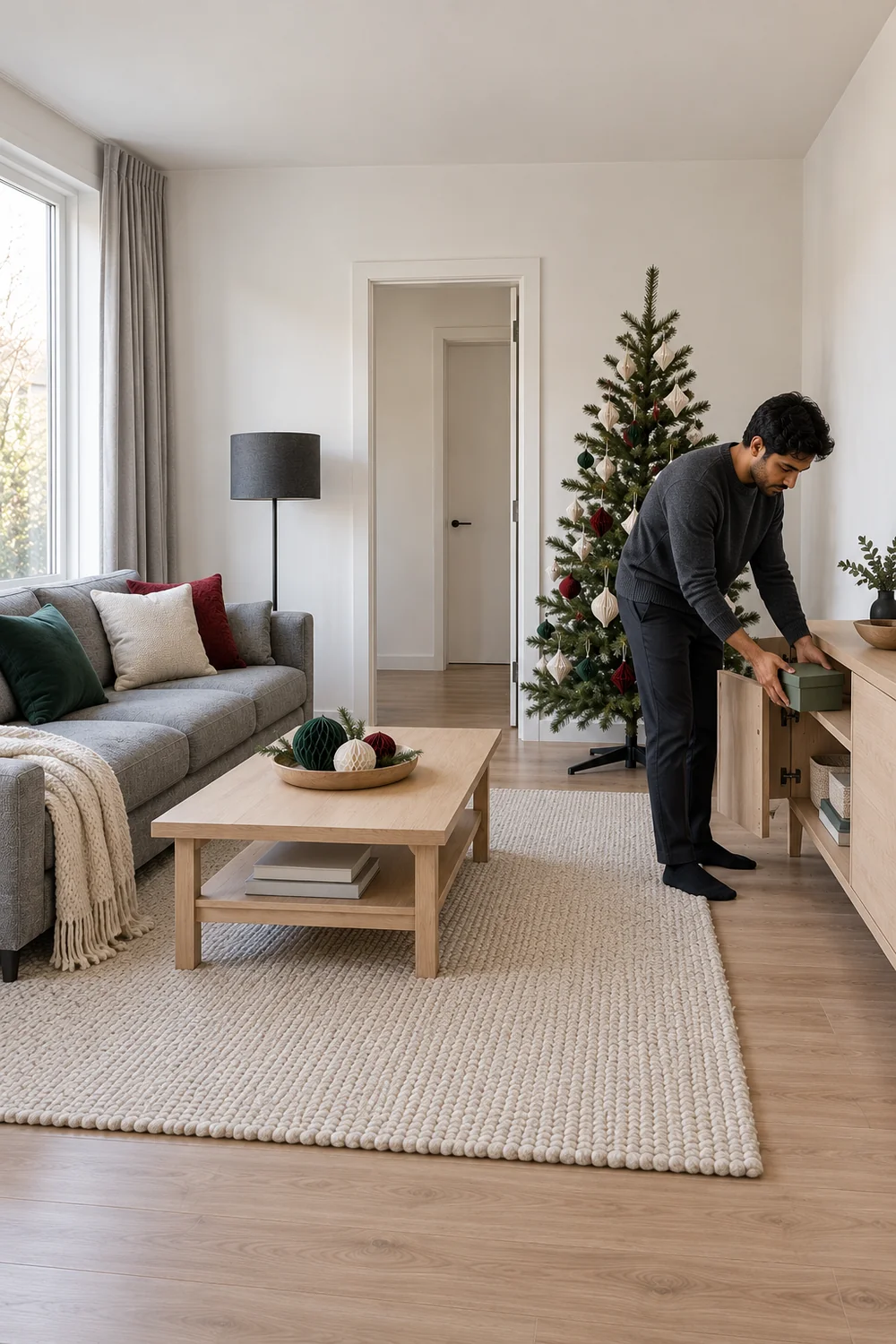
The specific Japandi Christmas tree checks come after that allowance is clear. I would use them to compare the assembled base, decorated spread and packed components against the two spaces you have reserved. For now, write a useful boundary such as a supported tabletop display on the existing cabinet, with all components fitting the measured cupboard. If a floor tree passes the room check but fails the packed one, it has not passed the project. Borrowing, using an existing smaller tree or choosing another focal point may give you a better answer.
The strongest version of this room may have a tree, but I would not make a tree compulsory. Look at the place where the eye naturally settles from the main seat. It might be a clear corner beside the sideboard, a suitable cabinet top or a quiet stretch of existing shelving. Choose one area to carry most of the seasonal character. Then let a small repeated material or colour connect it to the sofa. The room can feel deliberately festive without a decoration on every piece of furniture.
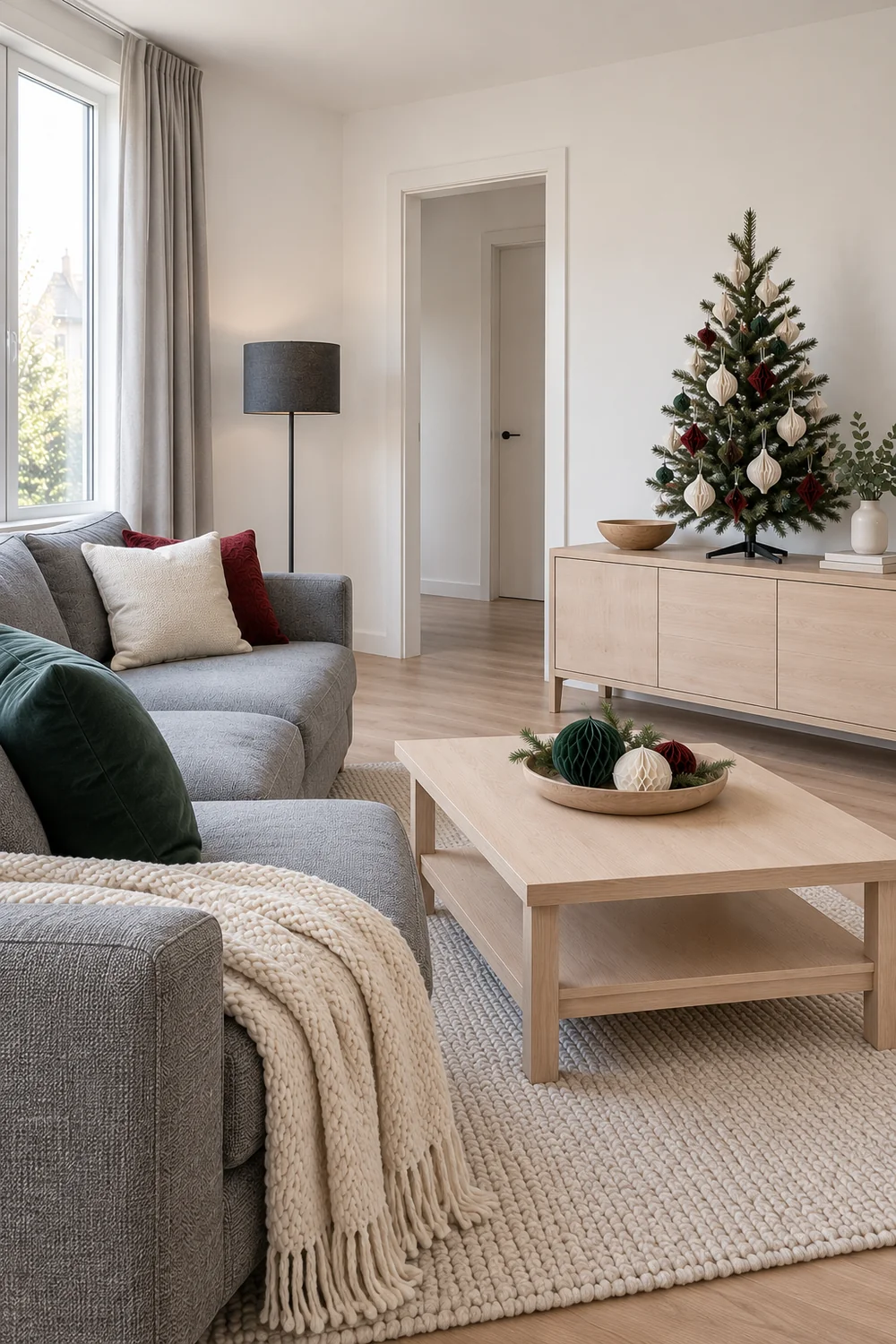
I would compare three arrangements. A floor tree gives the clearest vertical focus, but needs its own supported footprint and a useful position around the furniture. A tabletop tree can preserve floor area, but spends space on the surface and depends on the suitability of that support. A tree free arrangement could use a small freestanding wooden form or a contained group of existing ornaments on a suitable tray. It may be the most honest choice when the room has no spare corner. Each option should leave ordinary furniture doing its real job.
The posted Japandi Christmas decor ideas are useful when you are choosing the visual language for that focus. I would carry forward simple shapes, visible natural materials and the empty space around them. The lesson is restraint, rather than an instruction to replace everything with neutral decorations. A bright inherited ornament can belong if you give it a deliberate place and keep the surrounding group quieter. You do not need a completely matching collection for the room to feel considered.
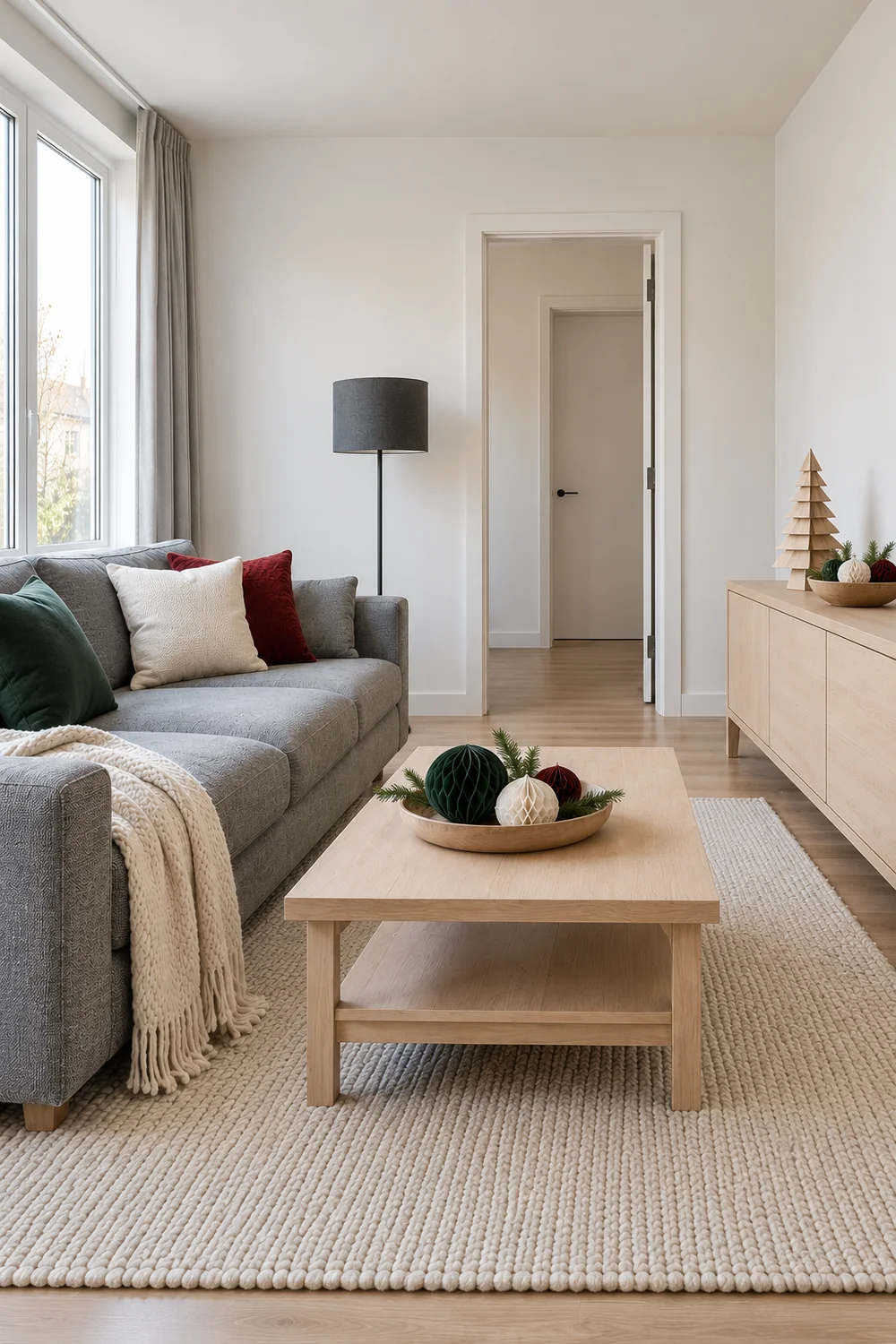
Check the arrangement from both the doorway and the sofa. A tabletop display that looks composed when you stand in front of it might disappear behind a chair when you sit down. Conversely, a tree that fills the whole view from the sofa may dominate the small room more than you wanted. I would move the proposed focus before buying more decoration to correct it. Leave the walls and ceiling out of the solution unless a suitable permitted support is genuinely established. The display should work because its position is useful, rather than because an improvised fixing makes the photograph possible.
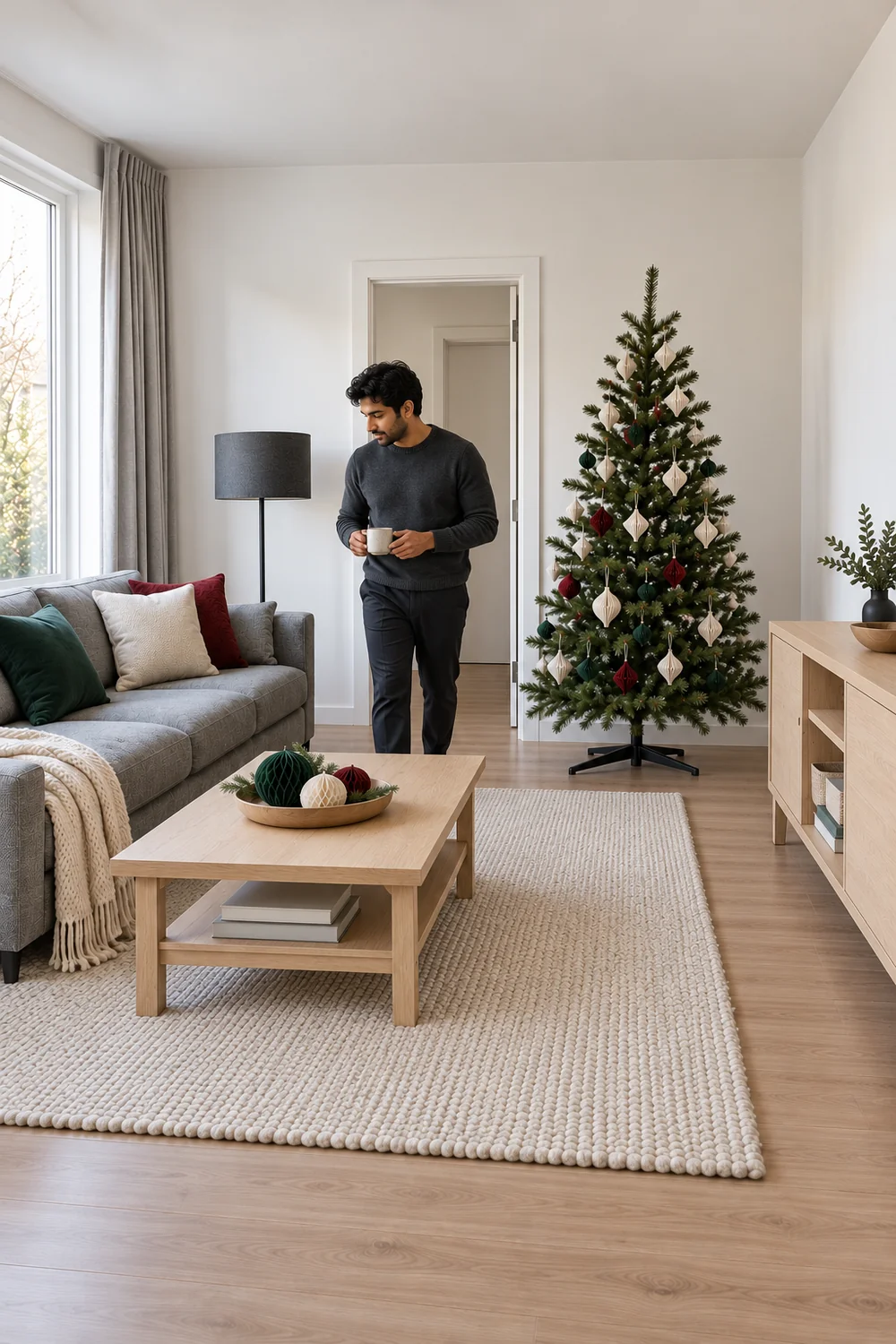
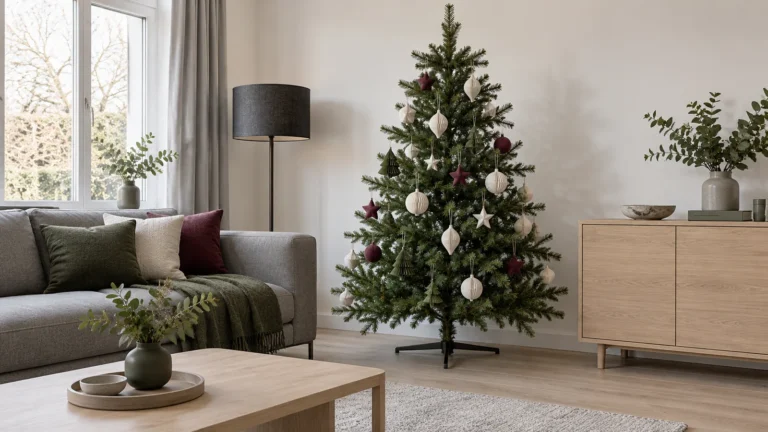
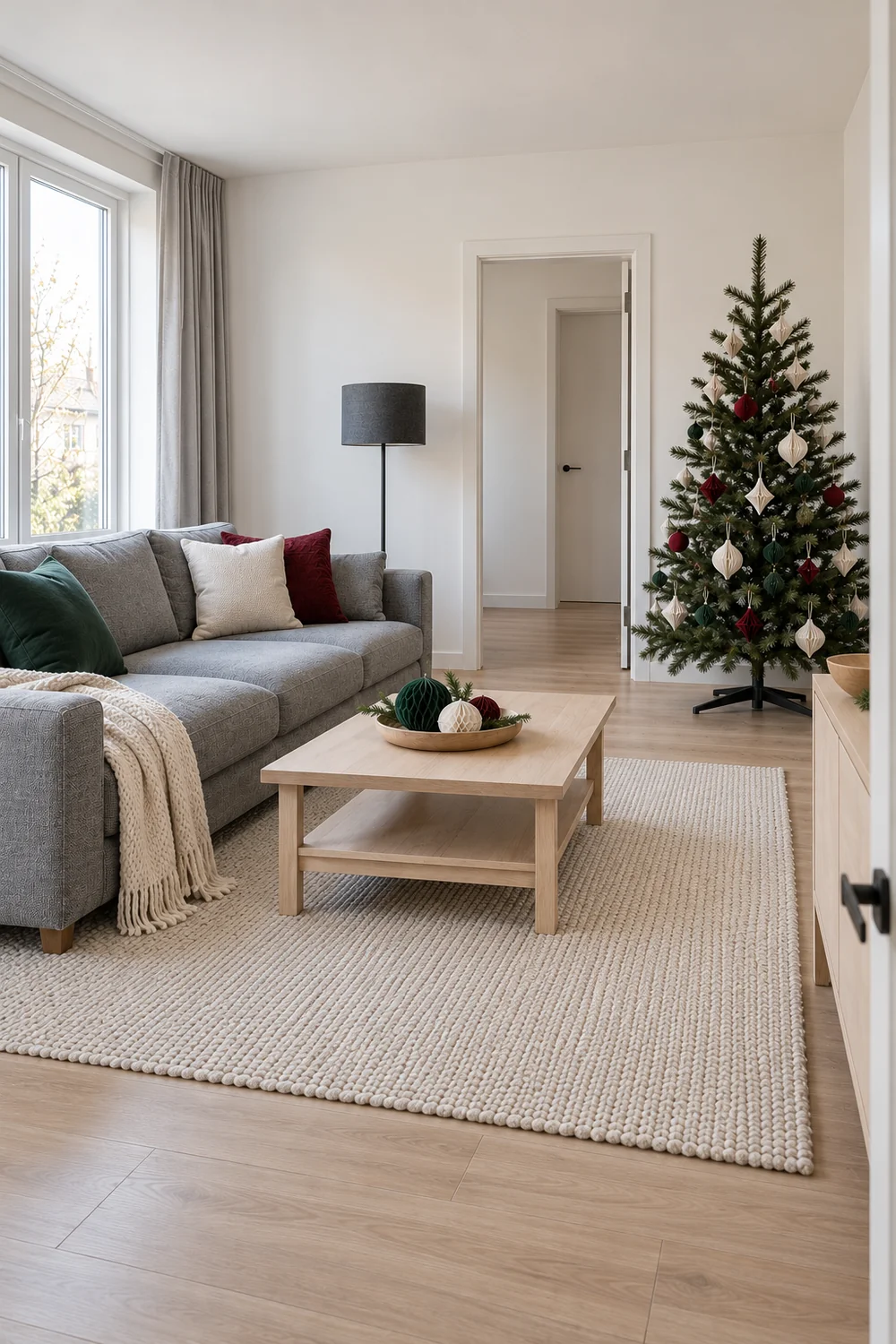
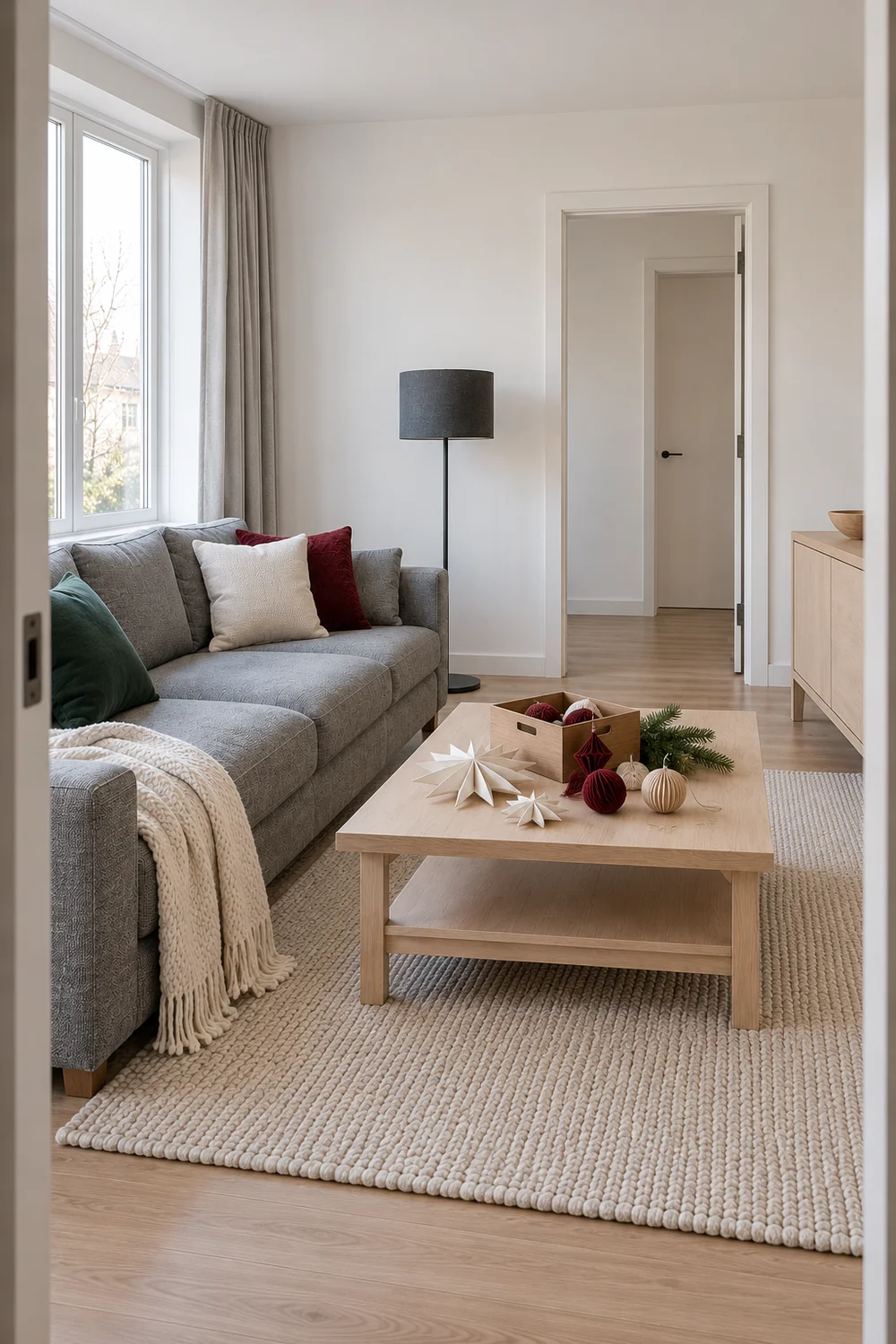
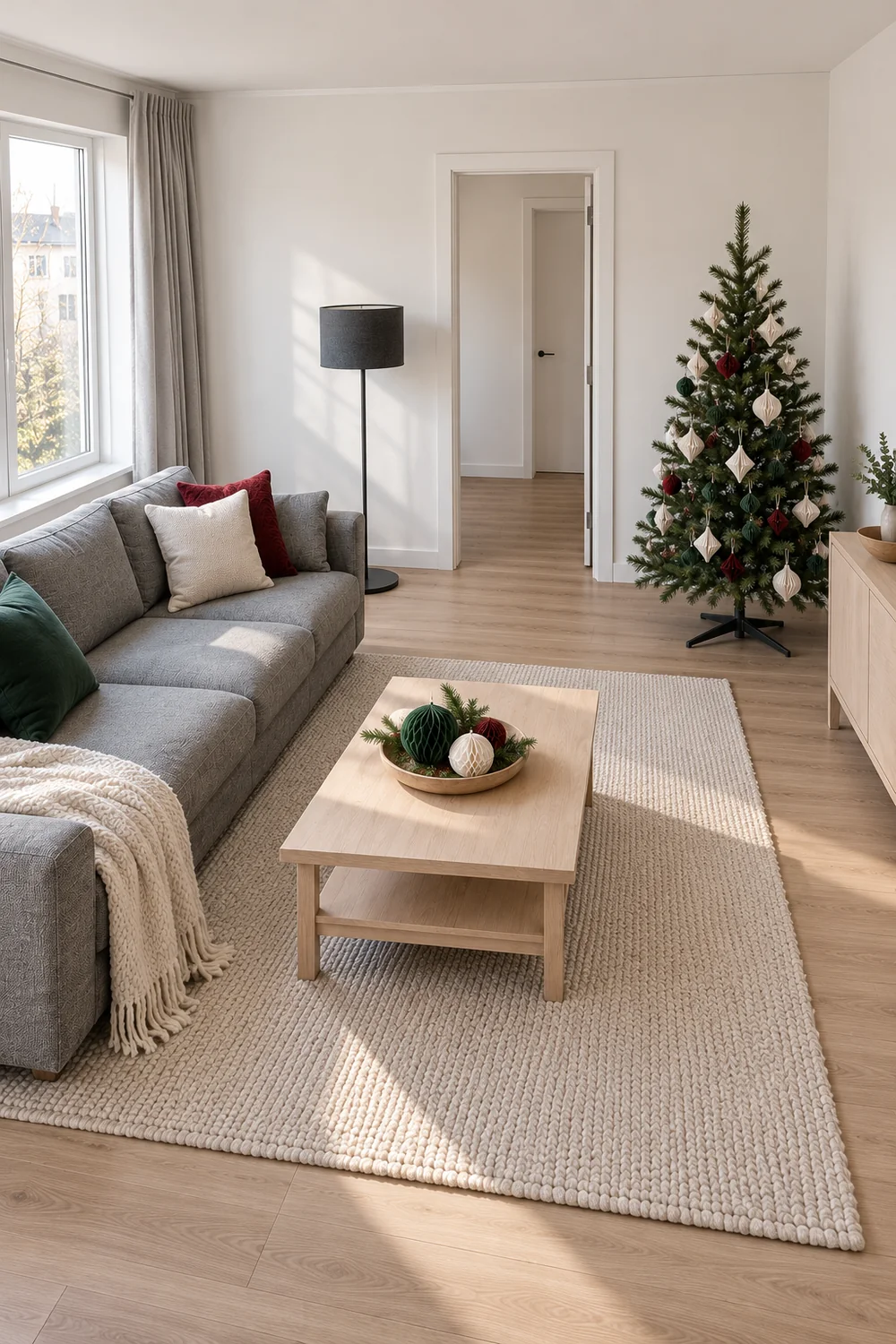
I would begin the palette with the wall, floor and sofa that are staying. In the example here, soft white walls and grey seating create the quiet base. Pale ash furniture connects them to natural white paper, forest green foliage and a small oxblood felt accent. The green gives the seasonal object its identity, while the darker red provides a little concentration among the pale shapes. This is one contemporary interpretation of Japandi Christmas, rather than a rule about what Japanese or Scandinavian homes must look like.
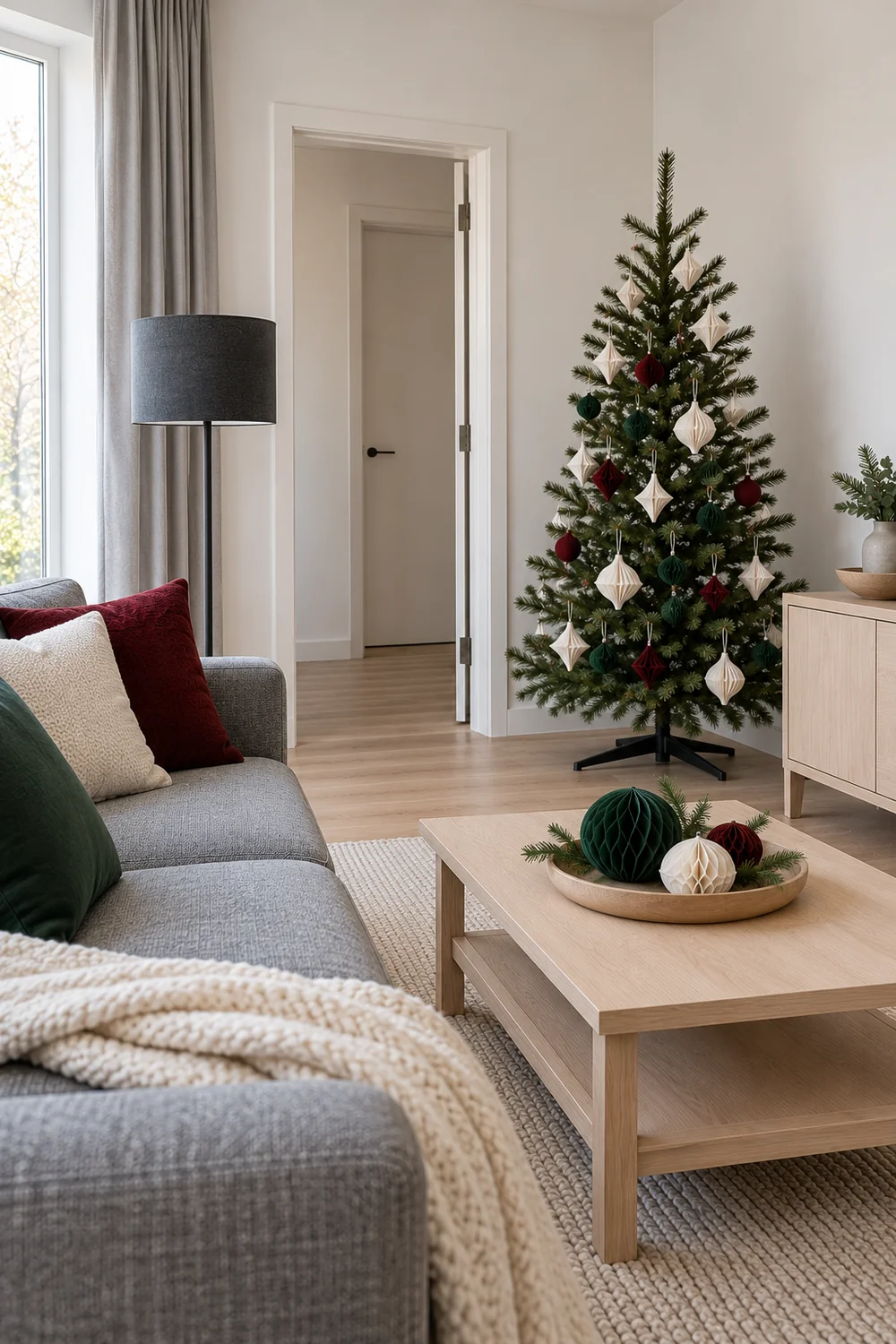
The useful question is where each colour belongs. I would keep most of the white in paper ornaments or a simple textile already suited to the room. Let the tree or another chosen green element carry the larger accent. Use oxblood in a small number of felt shapes or a ribbon detail, then stop. If your existing sofa is a strong colour, it may already supply the accent that this example adds. Repeating another colour everywhere can make the seasonal layer feel separate from the room rather than settled into it.
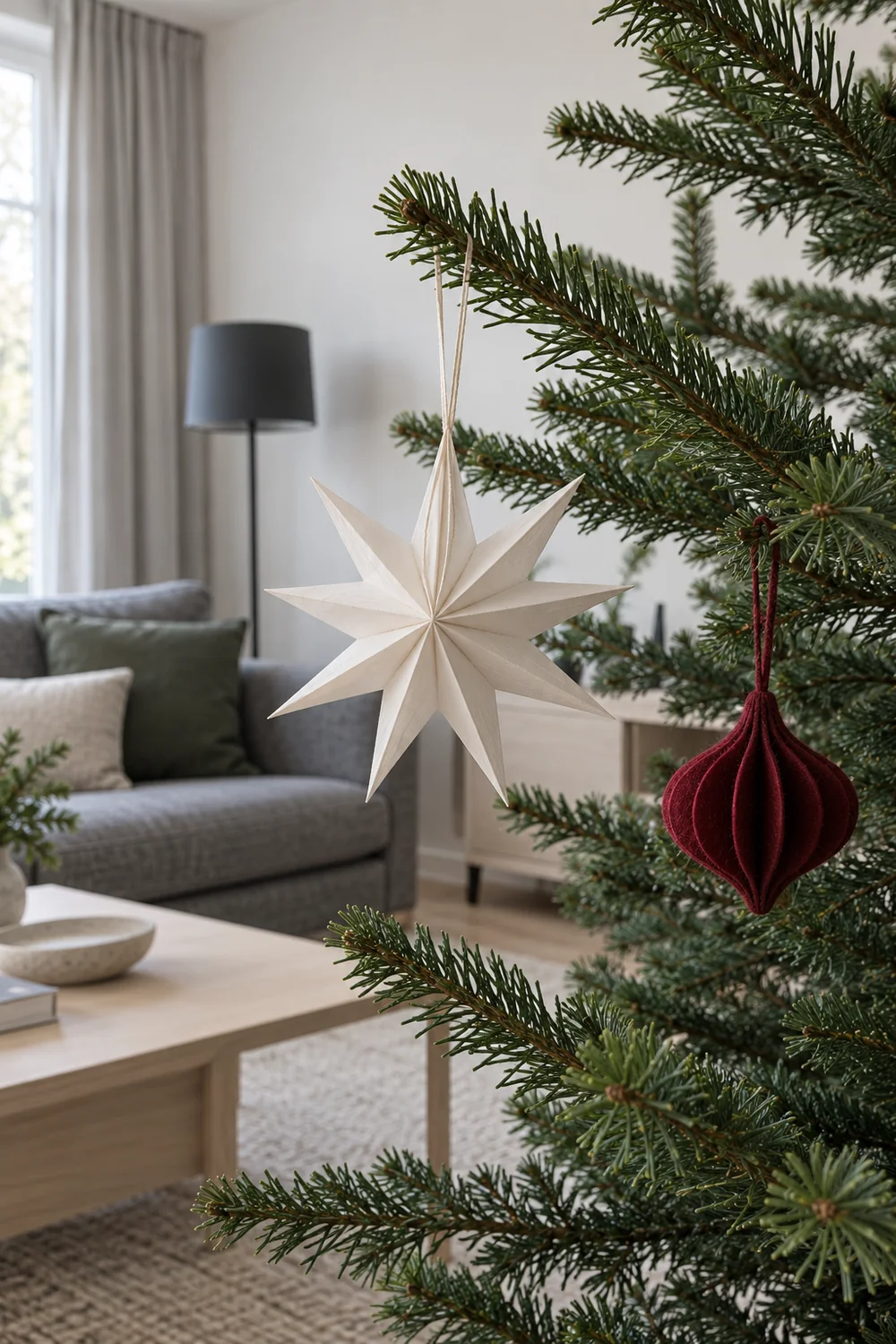
Compare the possible combinations with the Japandi color palette before committing to a new set. I would look at the relationship between the fixed surfaces, timber and small accents, then bring only the useful parts into the Christmas display. A photograph of white paper against your grey sofa can tell you more than a perfect online flat lay. View the materials in ordinary daylight and under the lamps you already use. You are choosing a relationship that must remain convincing in the actual room, not just a colour name.
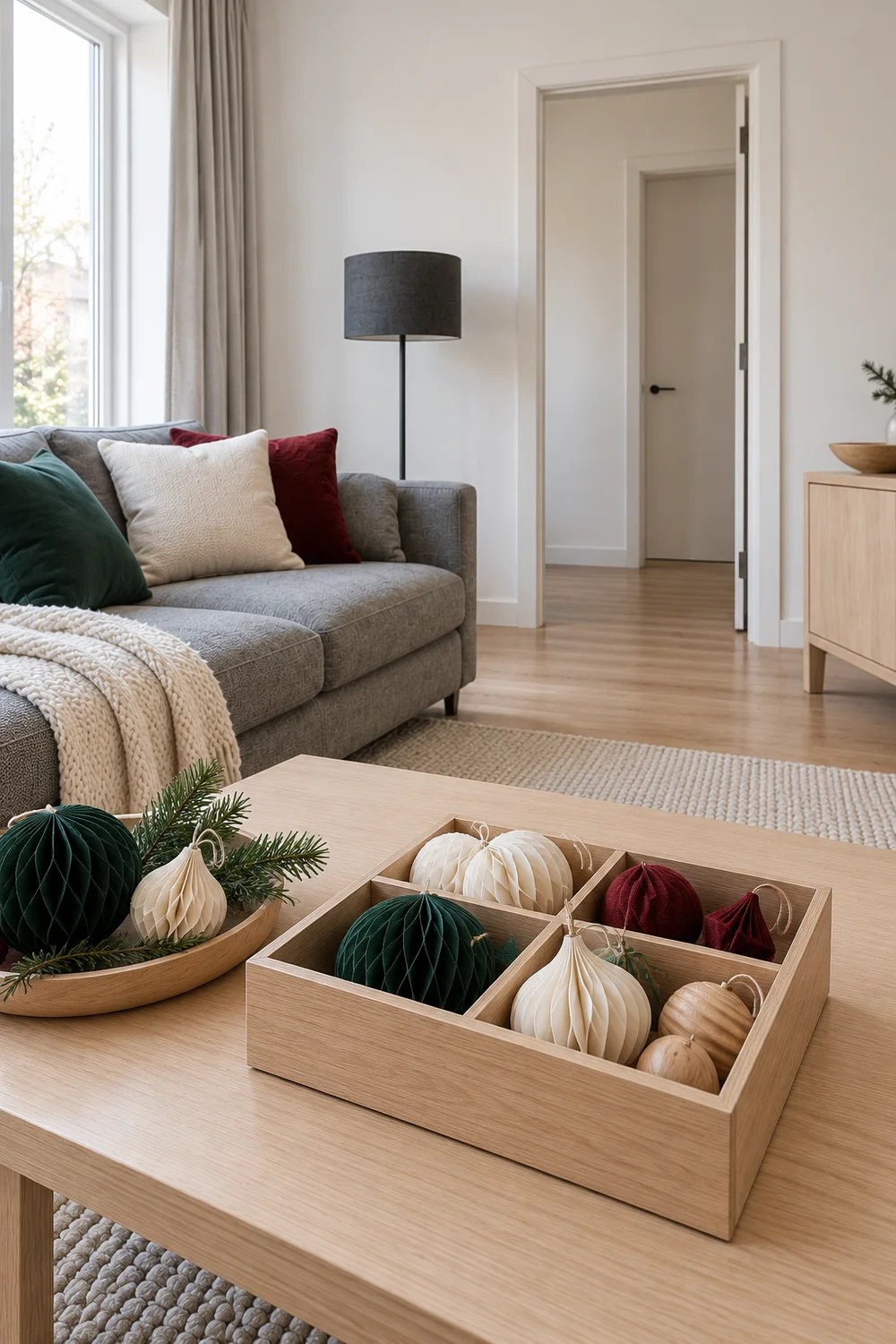
Texture can supply variety without another colour. Folded paper, a soft felt shape and a plain timber ornament each catch light differently. Choose them because you enjoy their visible character and because their construction suits the intended display. A paper ornament is not automatically suitable beside a light, and a wooden one is not automatically light enough for a thin branch. Keep the decorative direction separate from the later attachment and product checks. At this stage, the complete result is a modest material family and a clear place for your meaningful pieces, with no need to repaint the rented shell.
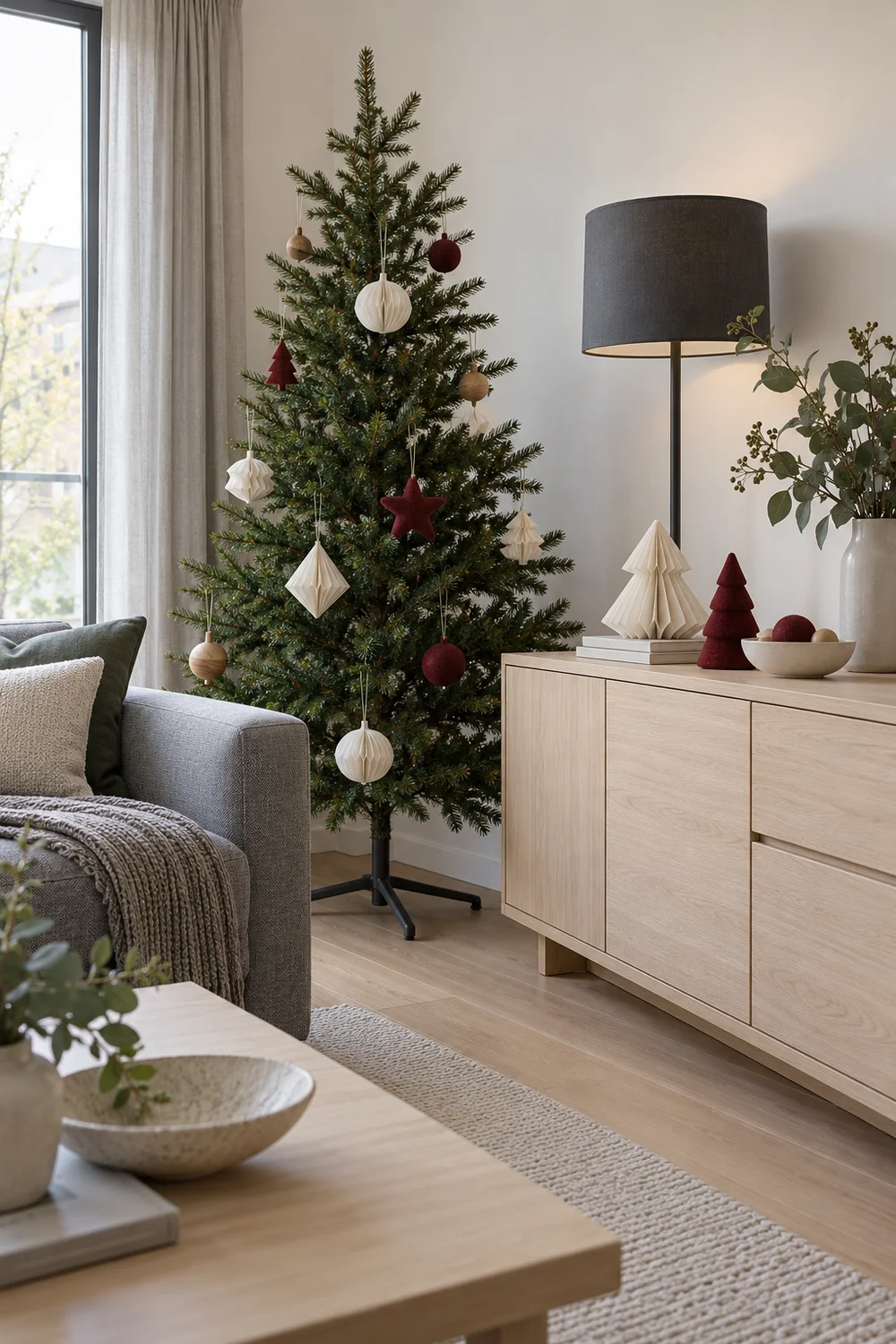
I would judge the decorated room during an ordinary evening as well as from the entrance. Can you put down a cup beside the seat, reach the lamp and close the curtains without shifting ornaments first? Those small actions reveal whether the seasonal layer has taken over the room. Keep the main seat and its useful nearby surface working. A smaller display that leaves those relationships intact will usually be more enjoyable than a larger one that has to be negotiated every night.
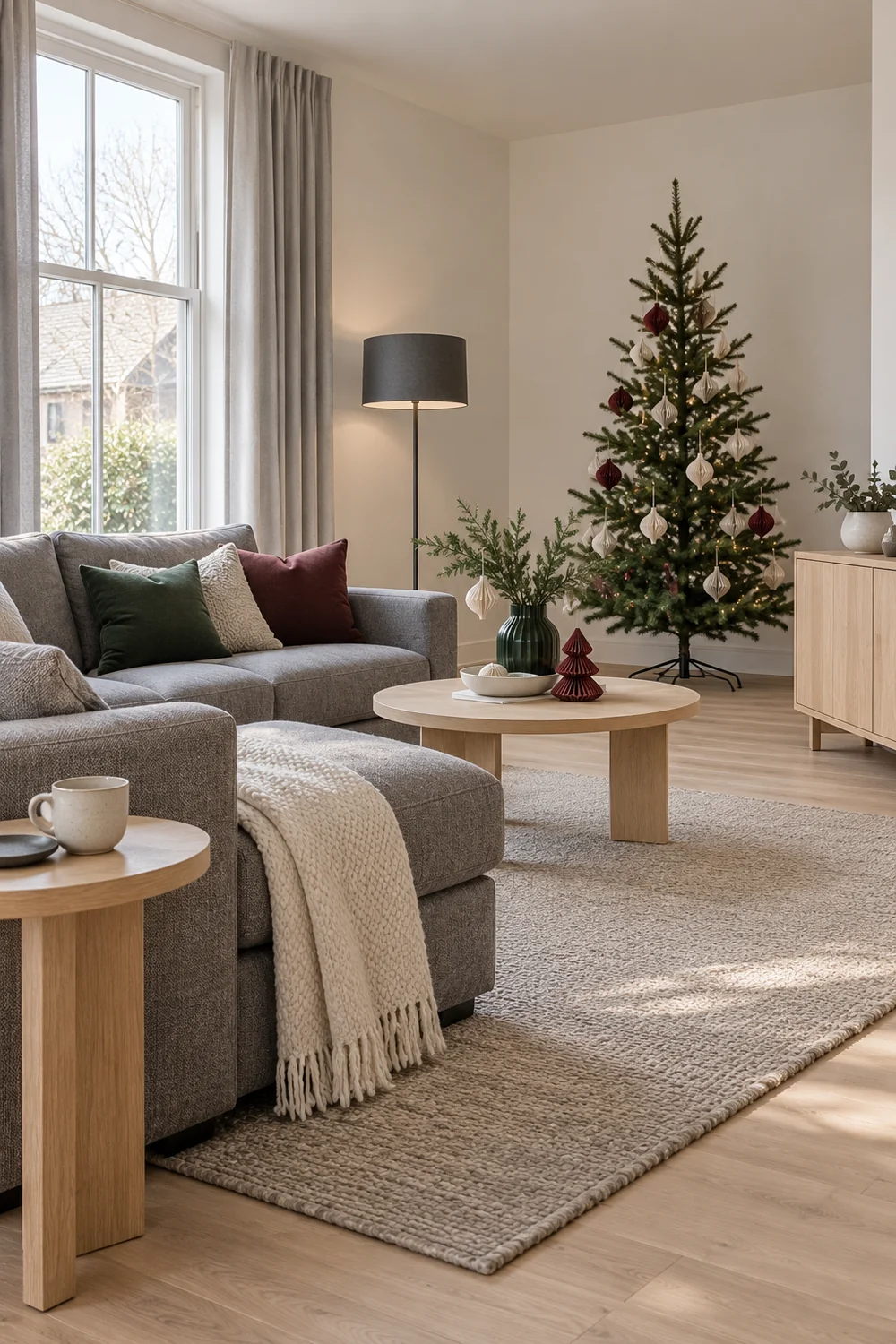
Use the Japandi living room examples to compare the breathing space around furniture and the balance of low seating, timber and light. I would preserve those everyday relationships when adding the festive focus. The Christmas object does not need to occupy the window simply because a saved image puts it there. A side position may let you see the tree and still open the curtains normally. If the room is already short of daylight, avoid turning its only clear opening into a dense seasonal backdrop.
Plan the route to any light control before choosing the decorative effect. The socket, transformer, switch and cable are part of the arrangement, even when a photograph hides them. Keep ordinary access and walking routes in view, and follow the instructions for the actual set. I would not route a cable across the room to make a preferred corner work. A battery powered product is not automatically suitable for every position either. Its instructions, compartment access and storage needs still belong in the decision. Keep unresolved electrical or product questions visible rather than improvising around them.
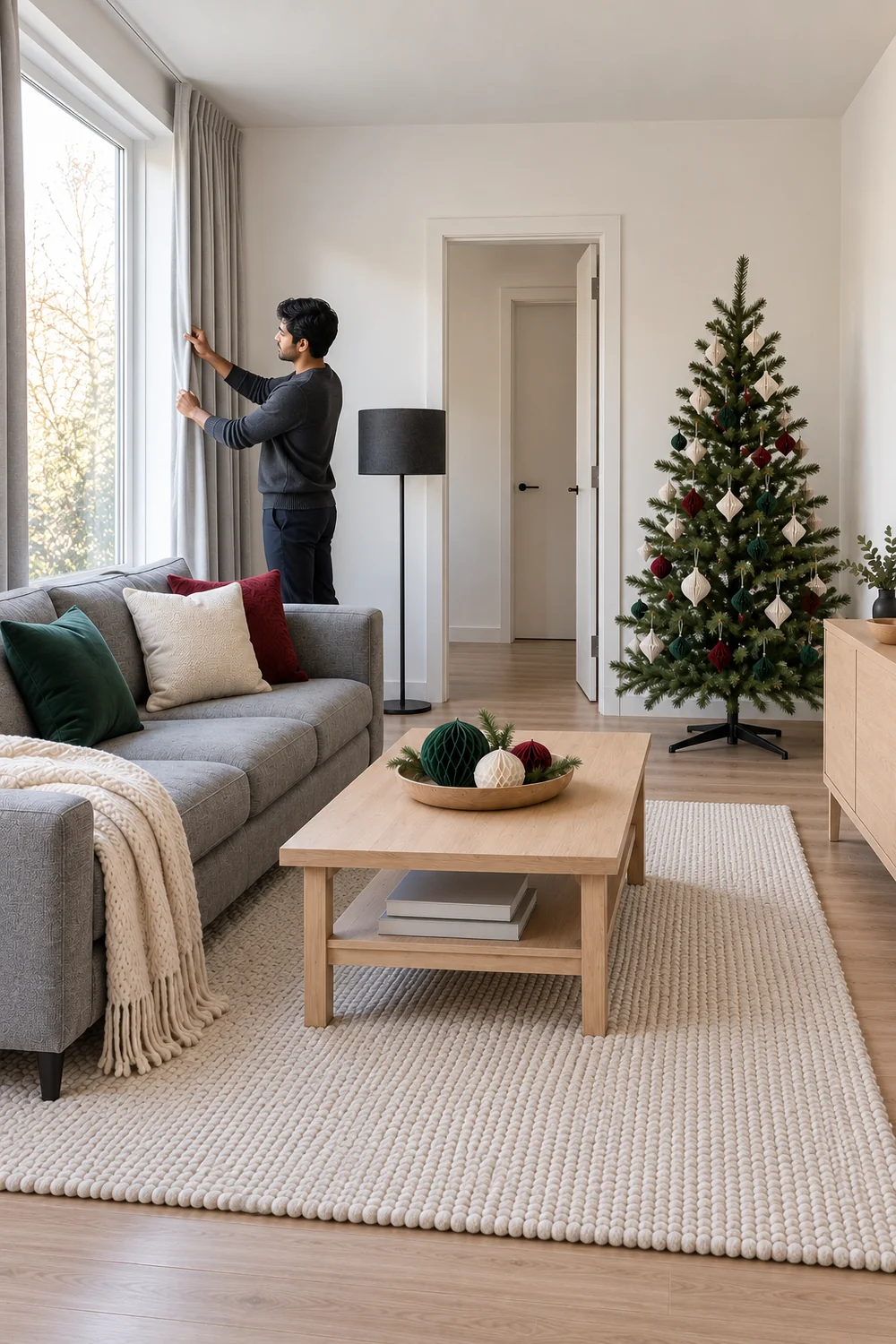
Decorative light should remain a layer beside useful room lighting. You still need to read, see the floor and use the furniture. I would photograph the proposed composition in bright daylight first, because that reveals the materials and the actual amount of decoration. Later, check the ordinary evening view with the room lamps working. Electrical Safety First advises unplugging Christmas lights overnight and when you are out, and avoiding overloaded sockets. Build a reachable switching routine into the plan. The room can feel festive without depending on darkness to conceal a crowded corner or an awkward support.
Bring the decisions together in a short brief you can use while comparing real options. Name the ordinary room jobs that stay, the chosen seasonal focal area, the allowed display footprint and its packed home. Add the material family and the decorations you already intend to use. Keep a separate line for anything still awaiting permission or product information. I would rather have a brief with one honest unanswered question than a finished looking arrangement that depends on an assumption about a shelf, a fixing or a cable route.
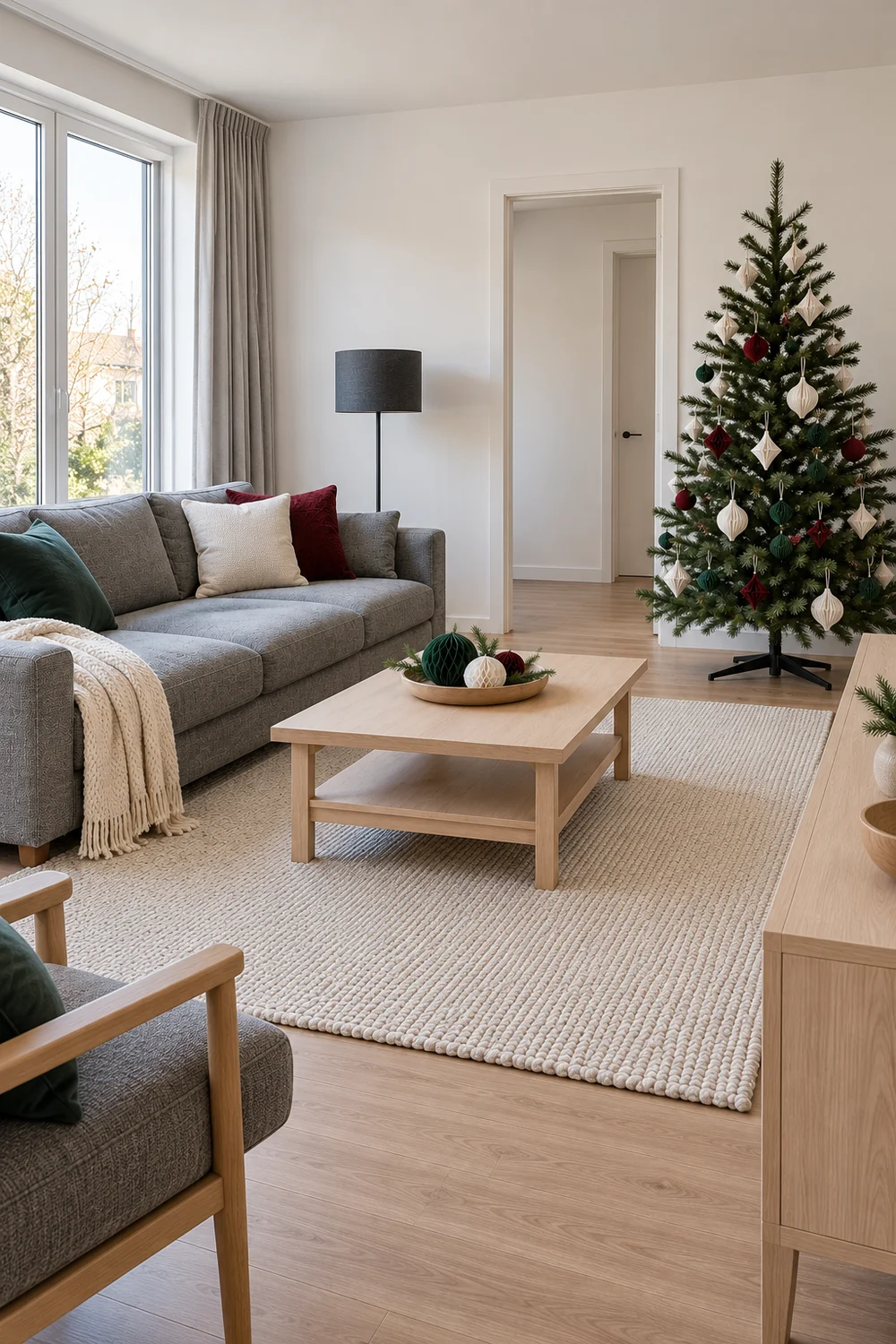
For example, your brief might retain the sofa and side table, use a supported tabletop focus on a suitable existing cabinet, and limit new decoration to white paper with the red felt ornaments you already own. Its packed components would need to fit the cupboard space you measured. This is an illustration of the decision format, not a specification for an unknown cabinet or household. Another room could support a floor tree more easily and have no useful display surface. The method should help you recognise that difference rather than force both rooms into the same picture.
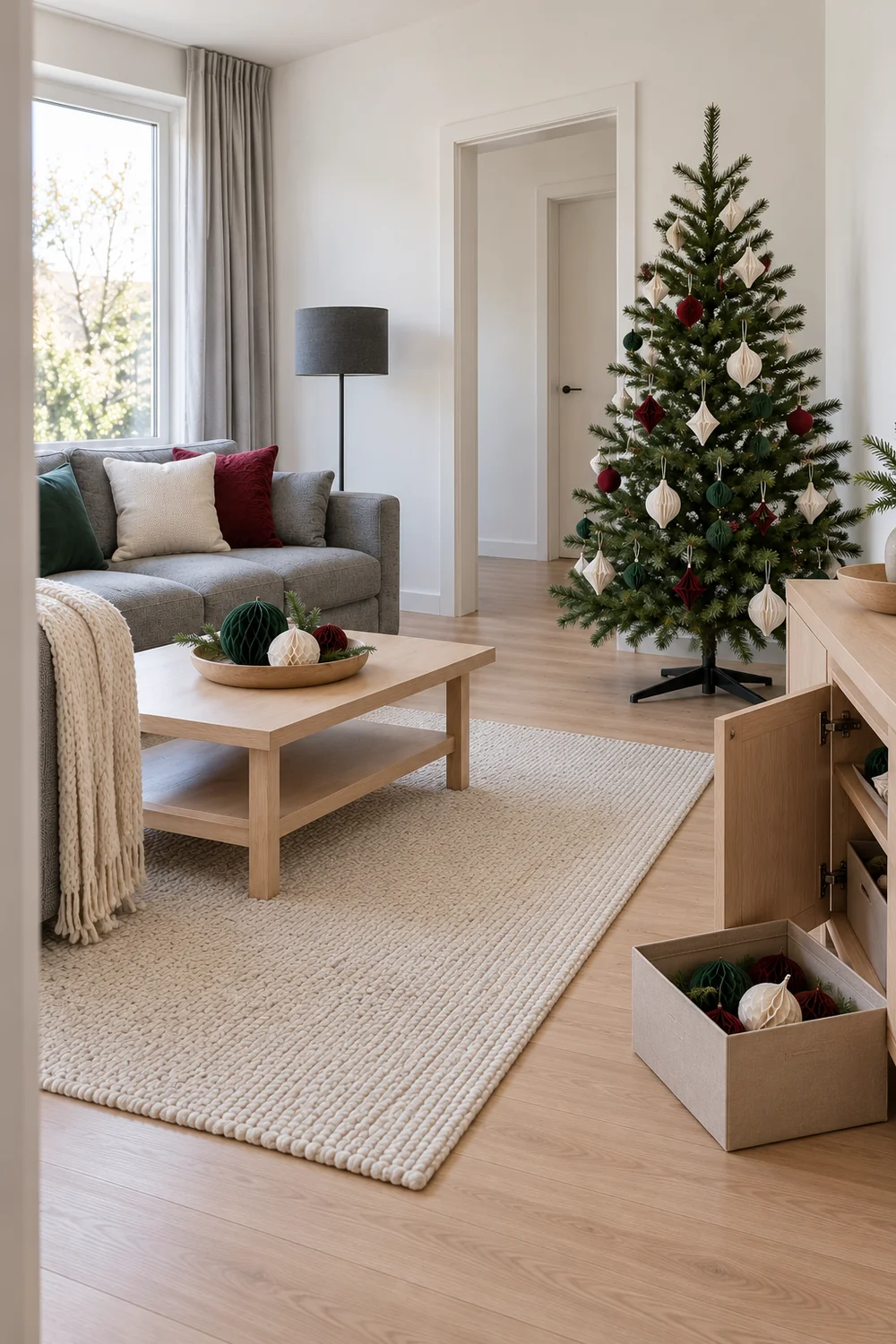
Now the Japandi Christmas tree article can answer the next question properly: which actual tree, support, ornament group and light set meet that brief? It checks the product and the whole assembled arrangement, including the packed components. You already know what the room needs to achieve, so you can reject an attractive option for a concrete reason. A tree that passes those checks can earn its place. If none does, the seasonal plan still gives you a complete alternative through a smaller or tree free focal point.
I would finish with the room you want to live in throughout the season, rather than a shopping list. Keep the useful seat, let one area carry the celebration and choose a few materials you enjoy seeing every day. The most successful rented Christmas room may be the one that asks for fewer changes and fewer boxes. You can recognise its style, use its furniture and return the whole collection to an agreed place afterwards. That is enough of a result to plan for before another decoration comes home.