Newsletter Subscribe
Enter your email address below and subscribe to our newsletter

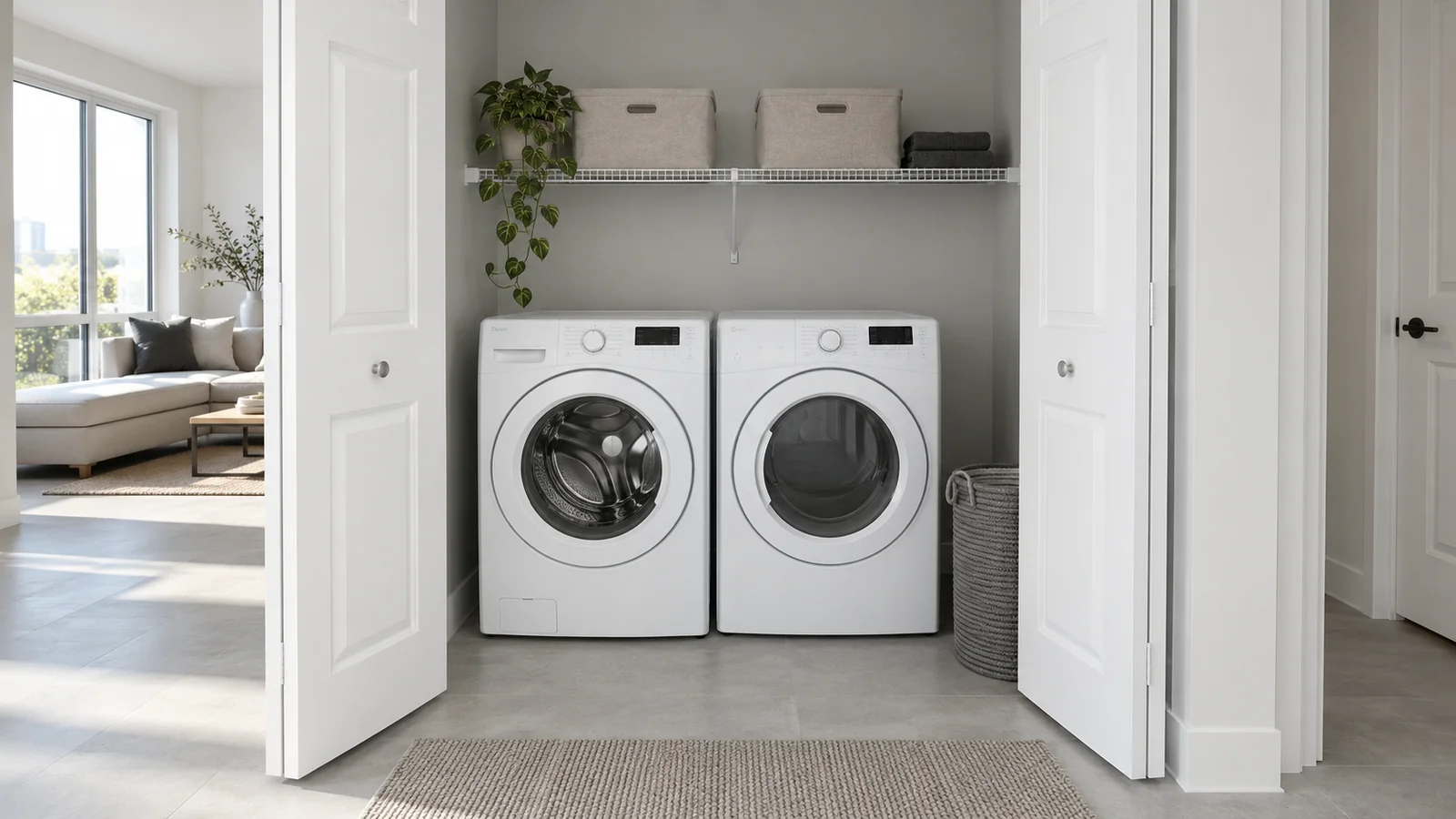
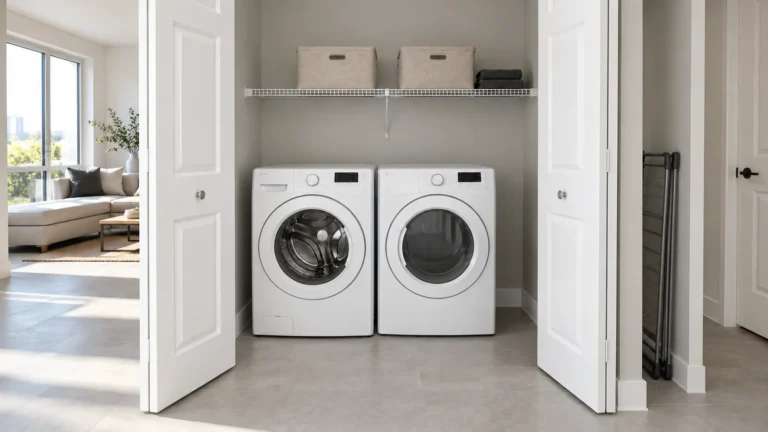
A Japandi apartment laundry room does not need a new bank of cupboards to feel considered. If you rent, the useful starting point may be two supplied machines, a wire shelf and finishes you cannot change. I would organise that existing arrangement before choosing anything described as a makeover. Your decisions are about what the lease permits, what the equipment needs and which everyday jobs can genuinely happen in this small space. A quiet palette comes afterwards, through pieces that can leave with you. This plan keeps the appliances, shelf, walls and floor in place. It will help you separate what stays, what you might buy and what needs an answer from the property manager or equipment instructions. The result is a workable brief for your particular closet, with useful storage and a realistic home for drying and folding, rather than a miniature fitted utility room squeezed into a rental.
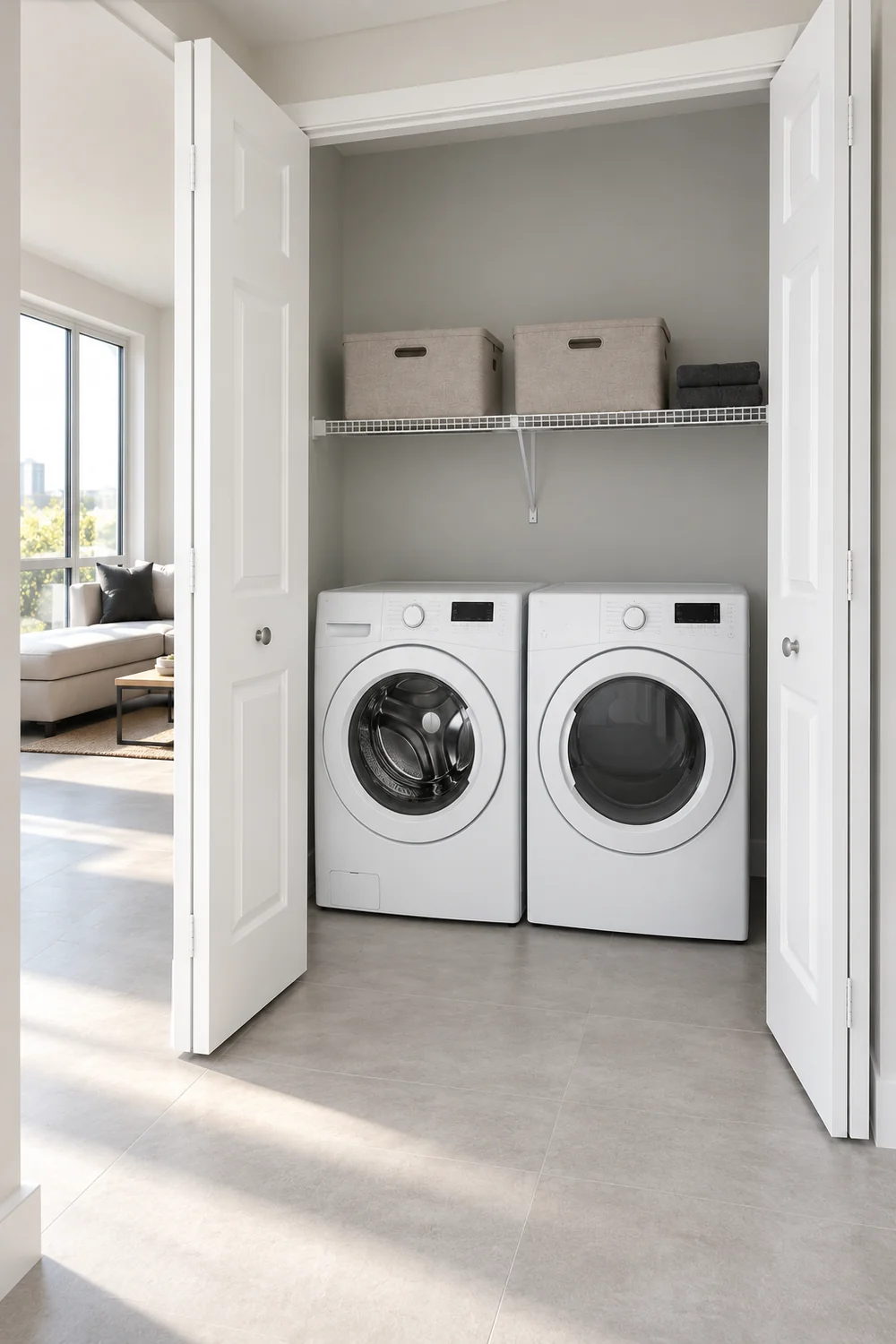
Start by opening the closet and recording what you actually have. Photograph the supplied machines, shelf, doors, floor and surrounding walls. Note existing marks and anything that already looks loose or damaged, then use the property's normal reporting process for concerns. I would keep this record with the inventory rather than treat a storage project as permission to repair the landlord's fixtures. Your first drawing only needs to show the fixed pieces and the usable space around them. Include the shelf supports and the door hardware, because both can interrupt a container that appears to fit in a straight front photograph.
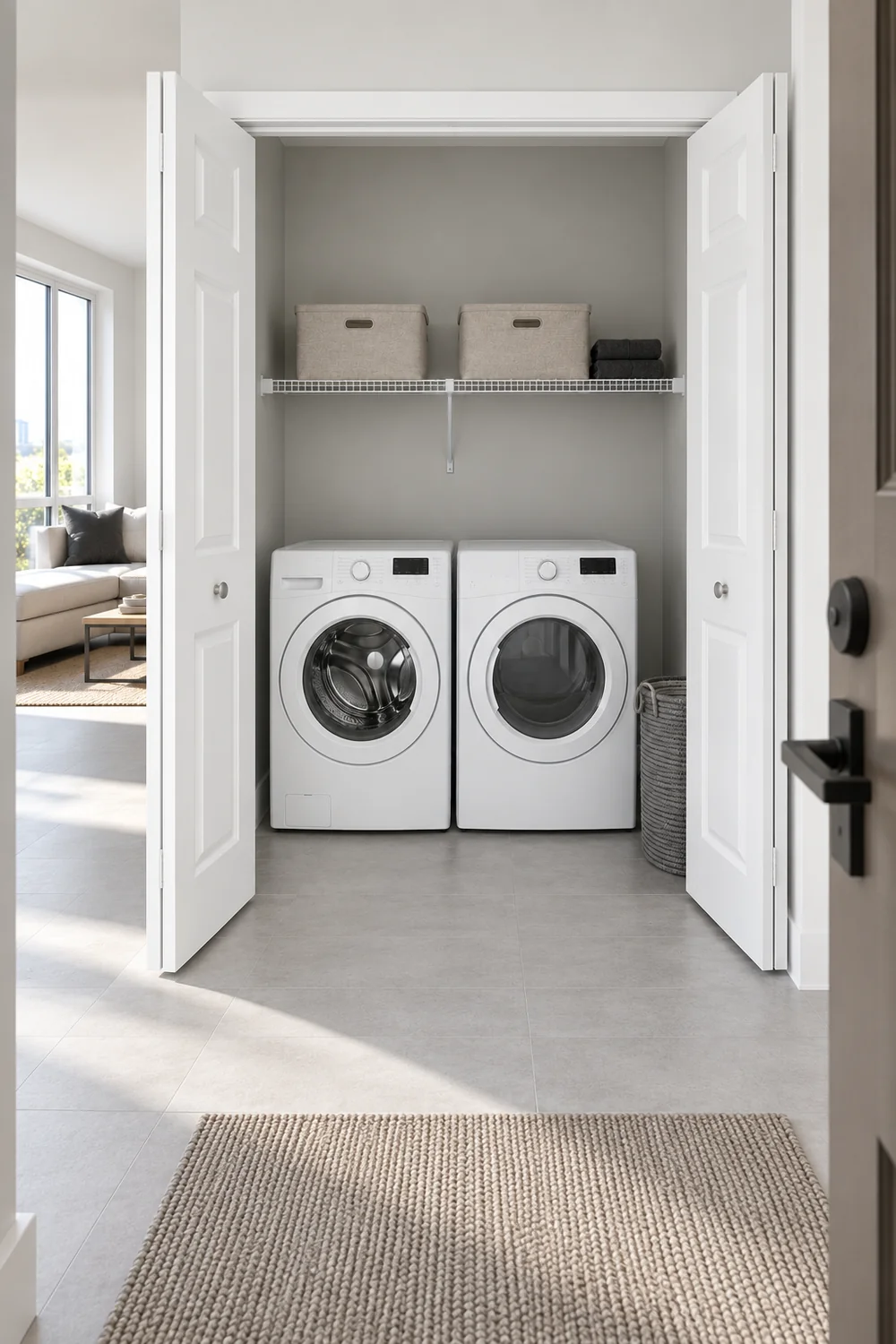
Make three short lists: keep, possible and ask. Keep includes the installed appliances, service positions, existing shelf and sound finishes. Possible includes loose containers and portable equipment whose instructions suit the location. Ask includes every unresolved permission, support or equipment question. Adhesive hooks, removable wallpaper and tension fittings do not automatically belong in possible. A product being removable does not establish that its use is allowed on this particular surface. For this project, I would begin without those additions. An attractive idea should earn its place through a necessary job before you investigate whether the rental can accommodate it.
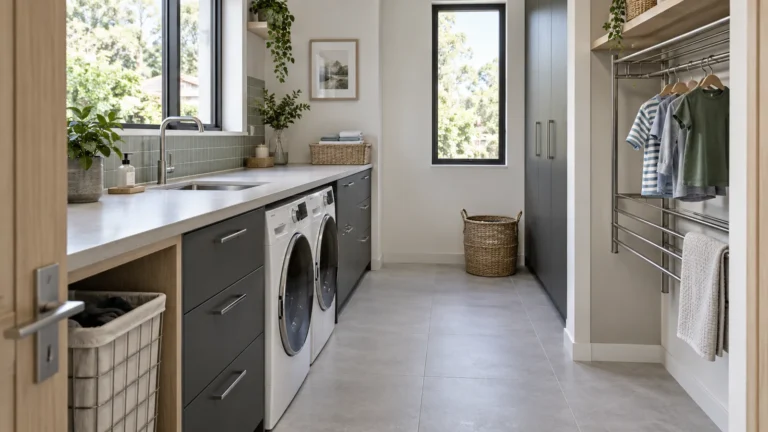
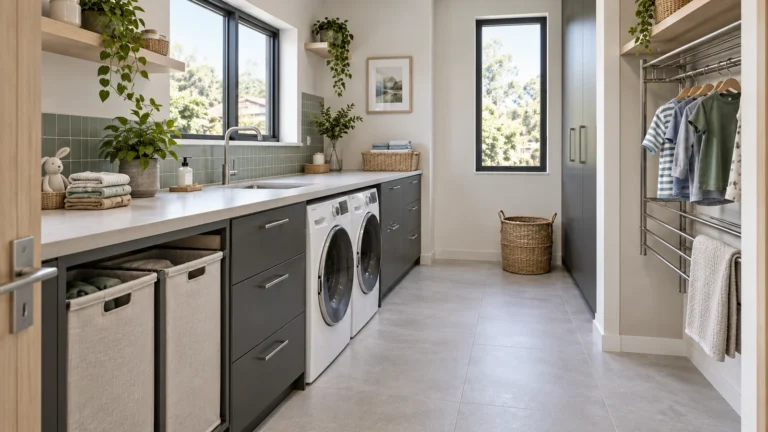
Separate the visual ambition from the construction shown in a photograph. The existing Japandi utility room examples explain the appeal of simple forms, natural texture and a restrained palette. Those are useful principles for your closet. A fitted cabinet, tiled wall or concealed appliance shown among them is a different proposition. I would translate the quiet material relationships into the things you can choose, rather than copy an installation your tenancy does not permit. White machines and a visible shelf can remain part of a deliberate scheme.
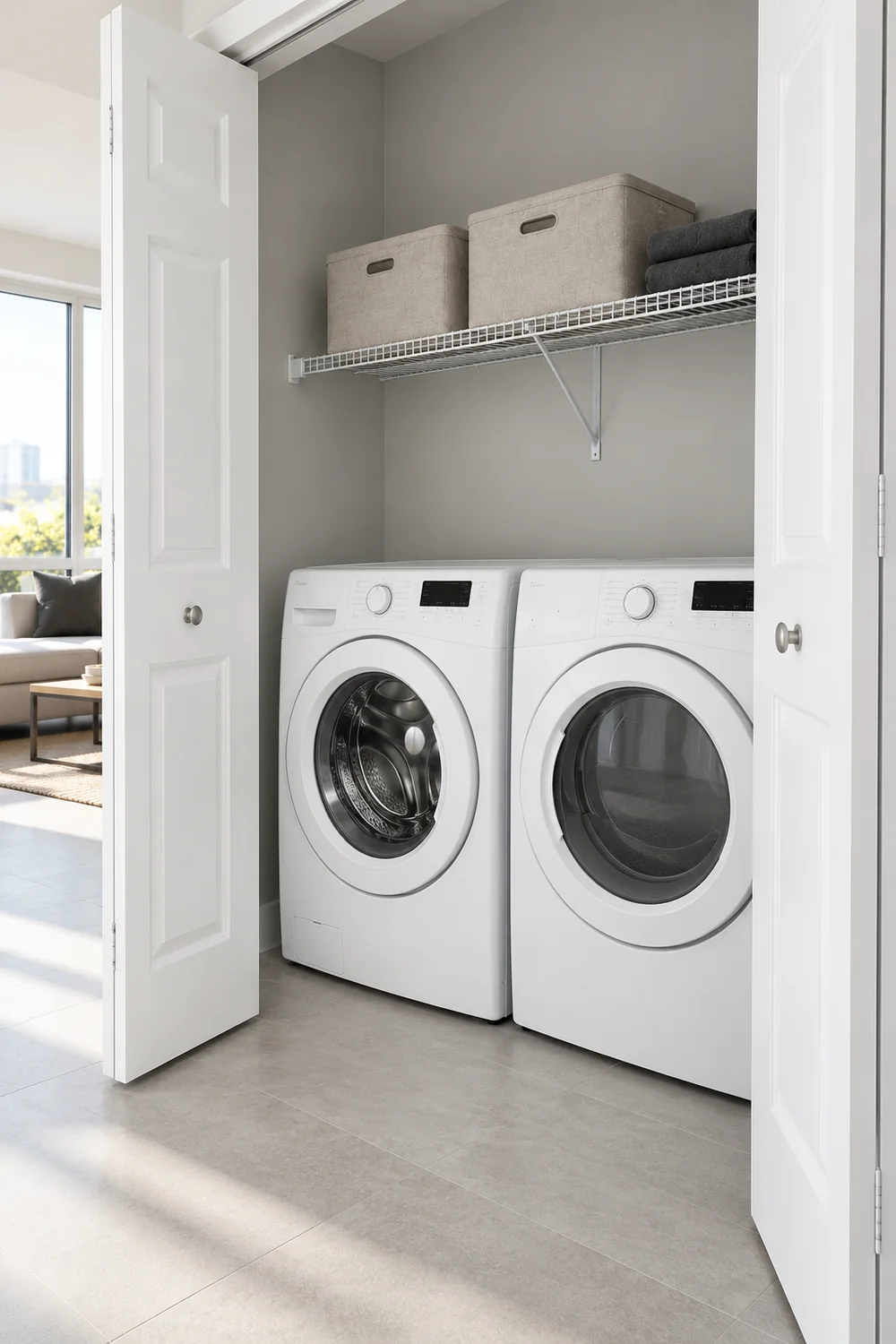
Before shopping, write a boundary sentence you can use to reject unsuitable ideas: the supplied equipment and fittings stay, required access remains clear, and new pieces must meet their instructions without an unapproved alteration. This is a brief for the current rental, not a promise that every object will fit a future one. Keep the unanswered questions visible. If the shelf's condition or permitted load is uncertain, ask before adding weight. You can still make progress by reducing unnecessary belongings and assigning jobs to the storage already available.
A laundry closet has several different footprints. There is the space occupied by the closed machines, the space their doors or lids use, and the space you occupy while loading them. I would mark these separately on the drawing. Open each door normally and observe where the basket and your feet need to go. Include the closet doors in the test. A narrow cart can sit comfortably in a closed photograph yet prevent a machine door opening far enough for a bedding load. Empty floor in front of the machines may therefore be working space rather than spare storage.
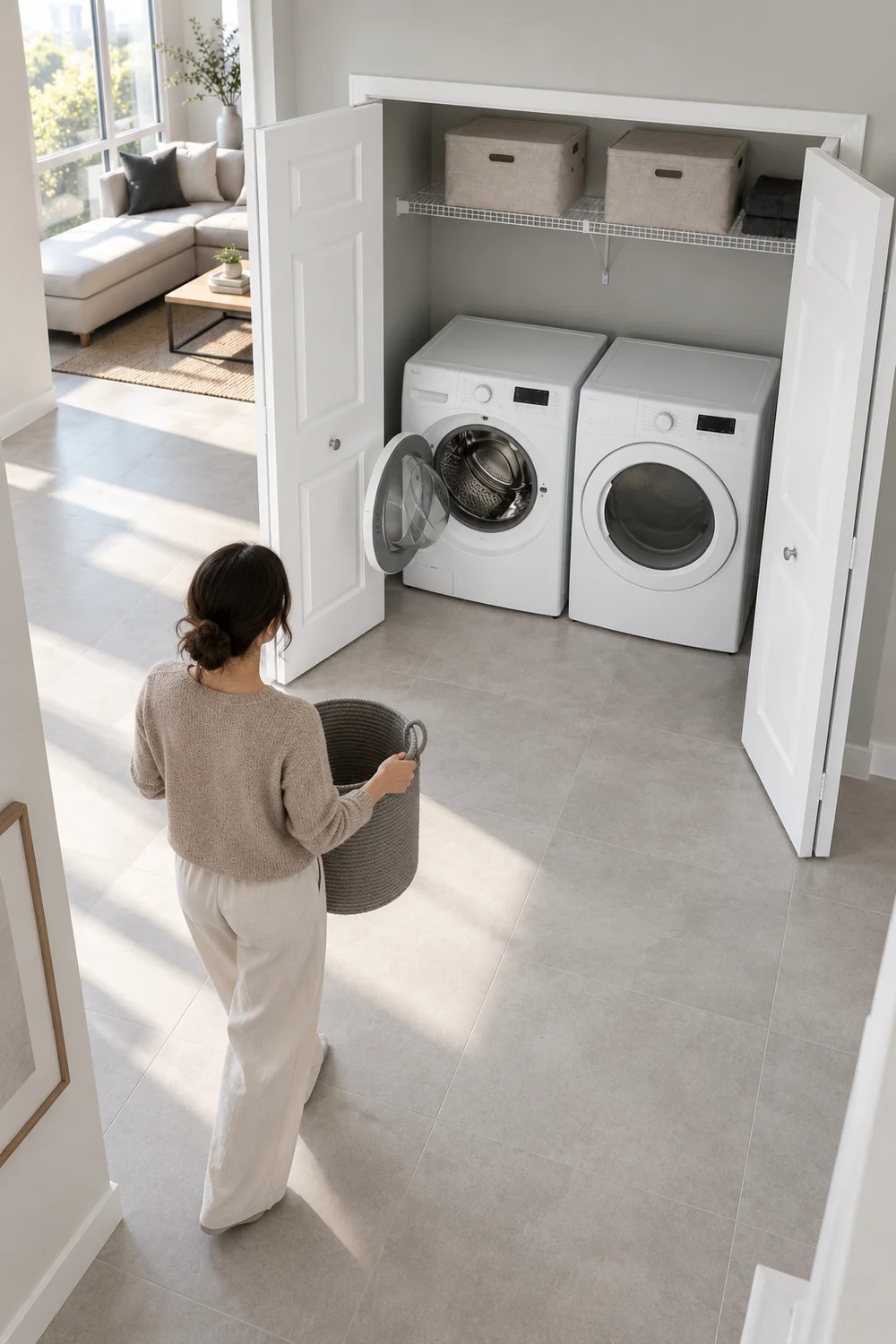
Find the model details and the relevant equipment instructions. Required clearances, ventilation and maintenance arrangements depend on the actual appliances and installation. Do not substitute a general online measurement or another rental's arrangement. If the instructions are missing, ask the property manager for them or obtain the correct documents from the maker. You are planning around installed equipment, not assessing or redesigning its services. A concern about a connection, damaged fitting or ventilation belongs with the responsible person before decorative choices. Keep required openings and access points free rather than disguising them with storage or fabric.
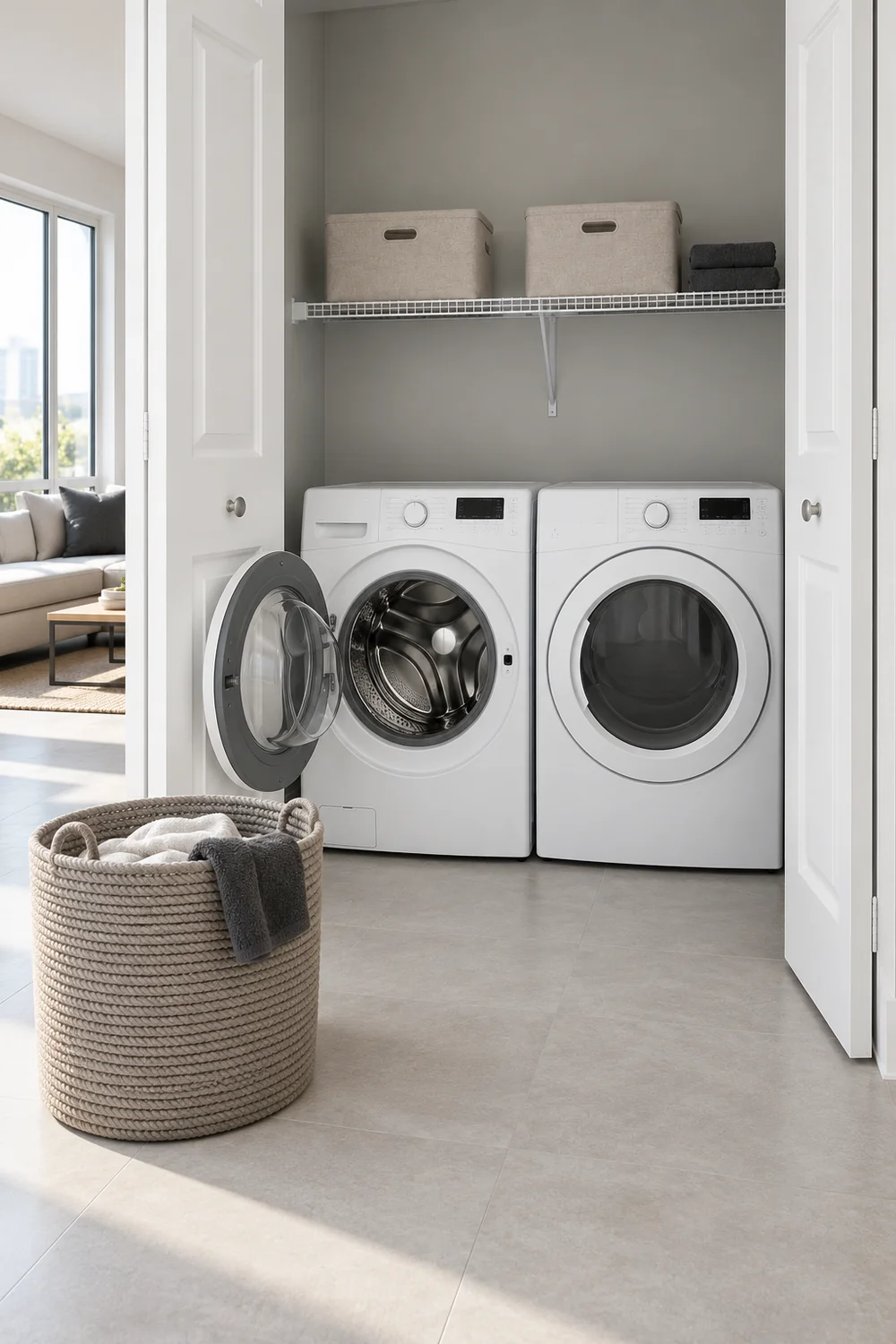
Rehearse an ordinary loading task with the basket you use now. Can you set it down, open the machine, transfer clothing and leave without moving a stack of supplies? Try the other machine and the closet doors as well. Record a problem in plain language, such as the basket occupies the door opening or the lower shelf cannot be reached from the loading position. That observation is more useful than deciding the closet needs more shelves. I would remove an unnecessary object first, then see whether one portable piece could solve a remaining job without creating another obstruction.
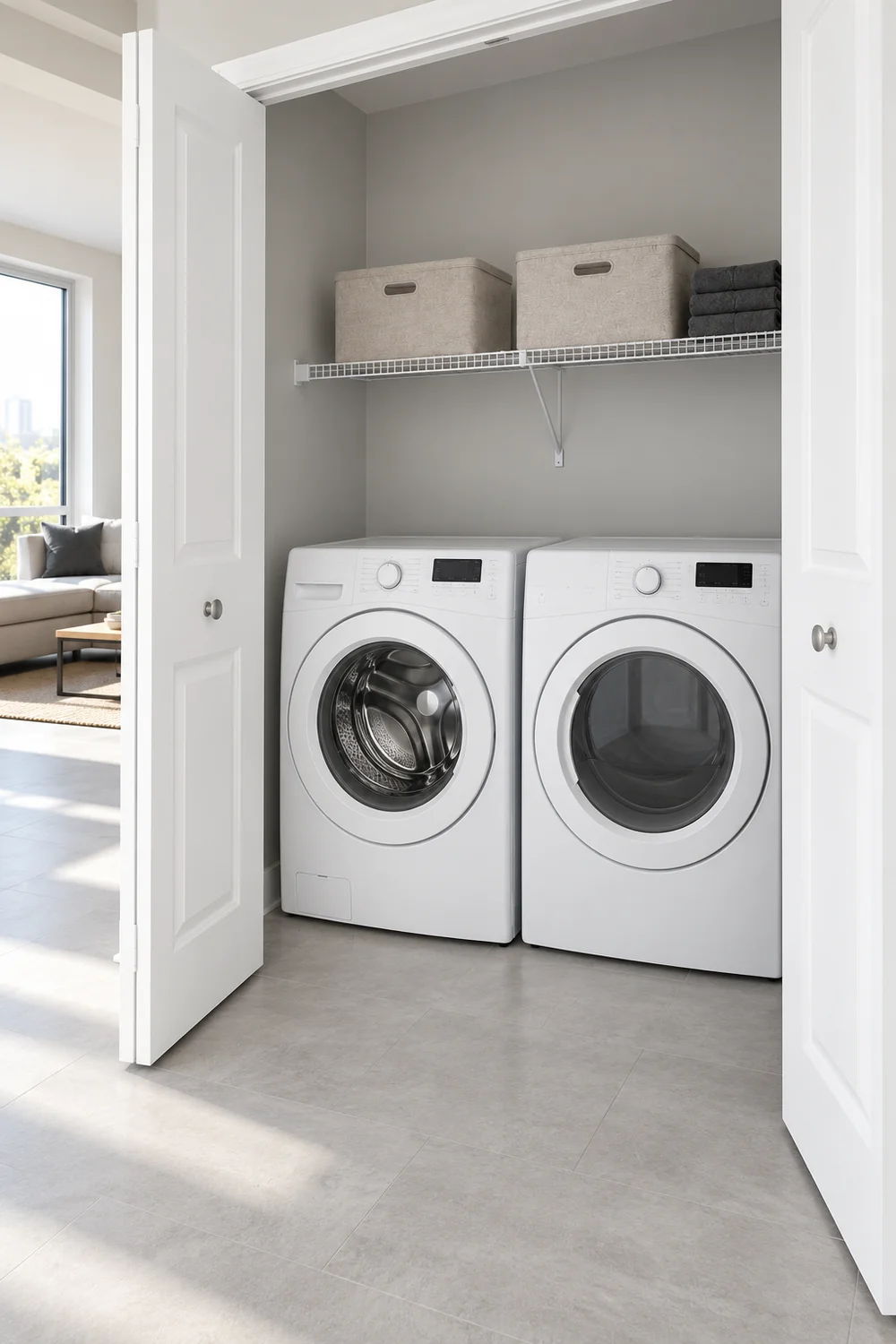
Carry these limits into the later apartment laundry closet checks when comparing actual pieces. The width on a listing is only part of the answer. A handle, wheel, lid or open drawer can change the required space. At this stage, your output is an envelope for each possible item and an explanation of what must stay clear. Leave a position unassigned when no useful piece can occupy it honestly. You do not need to fill a gap simply because somebody sells a product shaped like it.
Sort the current contents by use before buying matching containers. Keep laundry items separate from unrelated things that have drifted into the closet. I would ask which objects you reach for during an ordinary wash, which are occasional and which belong somewhere else. A small wire shelf cannot sensibly hold every spare household item just because it is above the machines. Move unrelated storage to an appropriate existing home if one is available. If there is no suitable alternative, record that constraint instead of styling it out of the photograph. The plan needs to account for what remains.
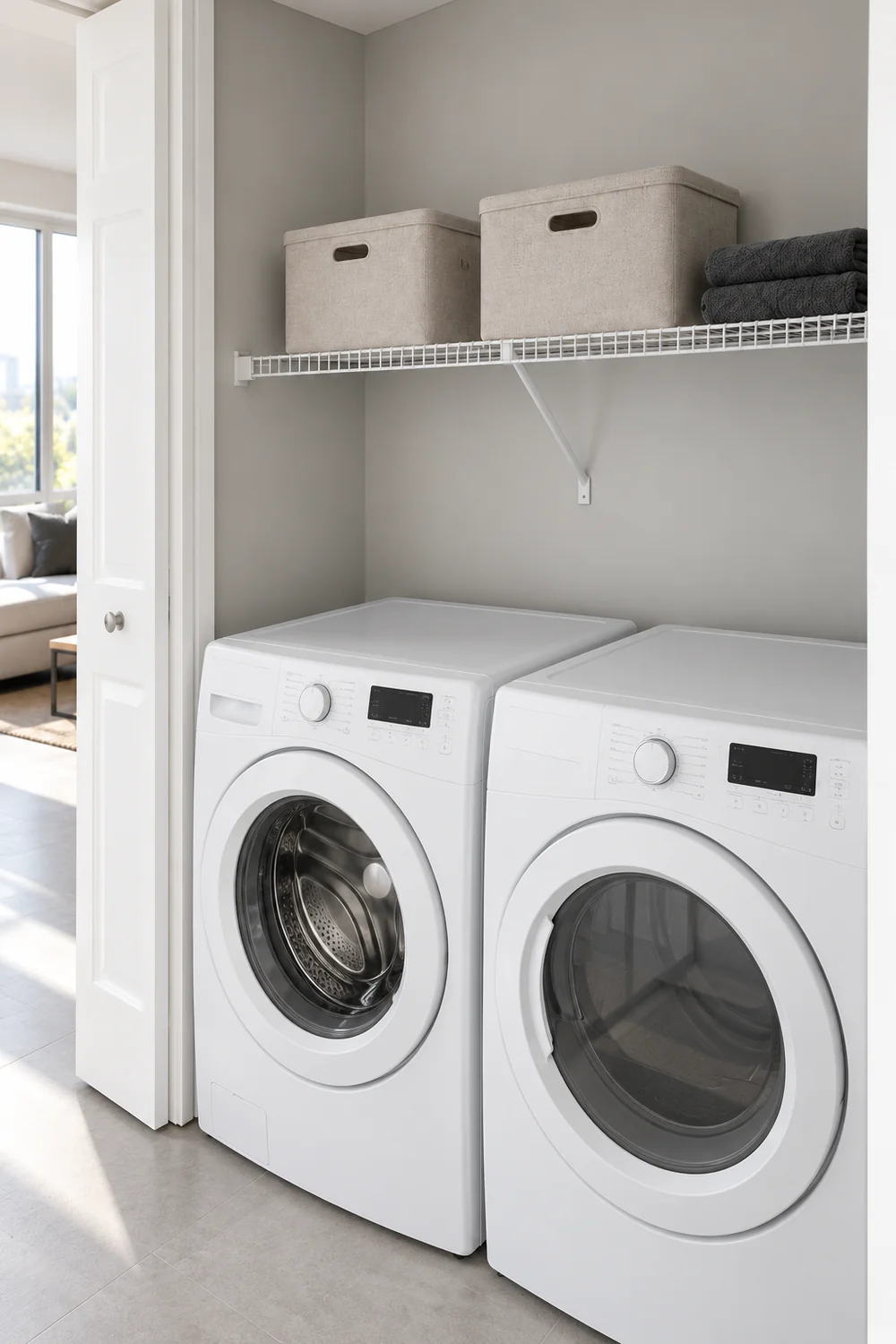
Draw the shelf as several usable positions rather than one long line. Supports, a hanging rail and the reach from the floor may make those positions different. Give a frequently used item an accessible location without adding a step or reaching across an open machine. Keep supplies in their original packaging and store them according to their labels, including keeping laundry packets out of children's sight and reach. A neutral basket may conceal visual noise, but it is not a substitute for the required storage conditions. Do not turn detergent into an unlabelled decorative display to make the shelf look calmer.
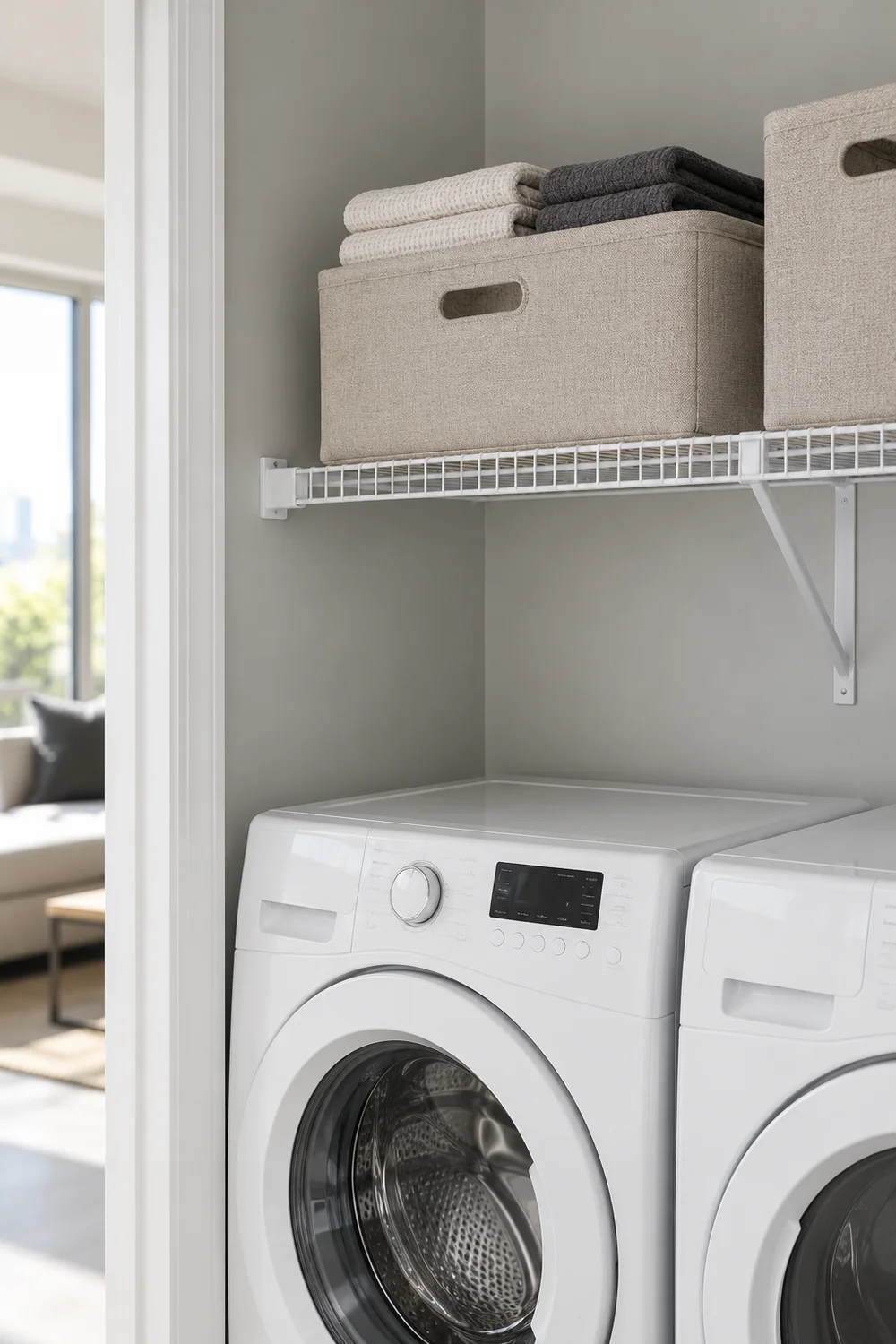
The Japandi utility room discussion of open and closed storage is useful here as a visual choice. You can have a quiet elevation without pretending the shelf is a fitted cupboard. I would choose a small number of containers that reflect actual groups, leaving space around the existing supports and enough room to lift them out. A pale fabric bin for dry cloths can sit beside a plain tray for a different suitable job. They do not have to be identical when their contents need different handling or care.
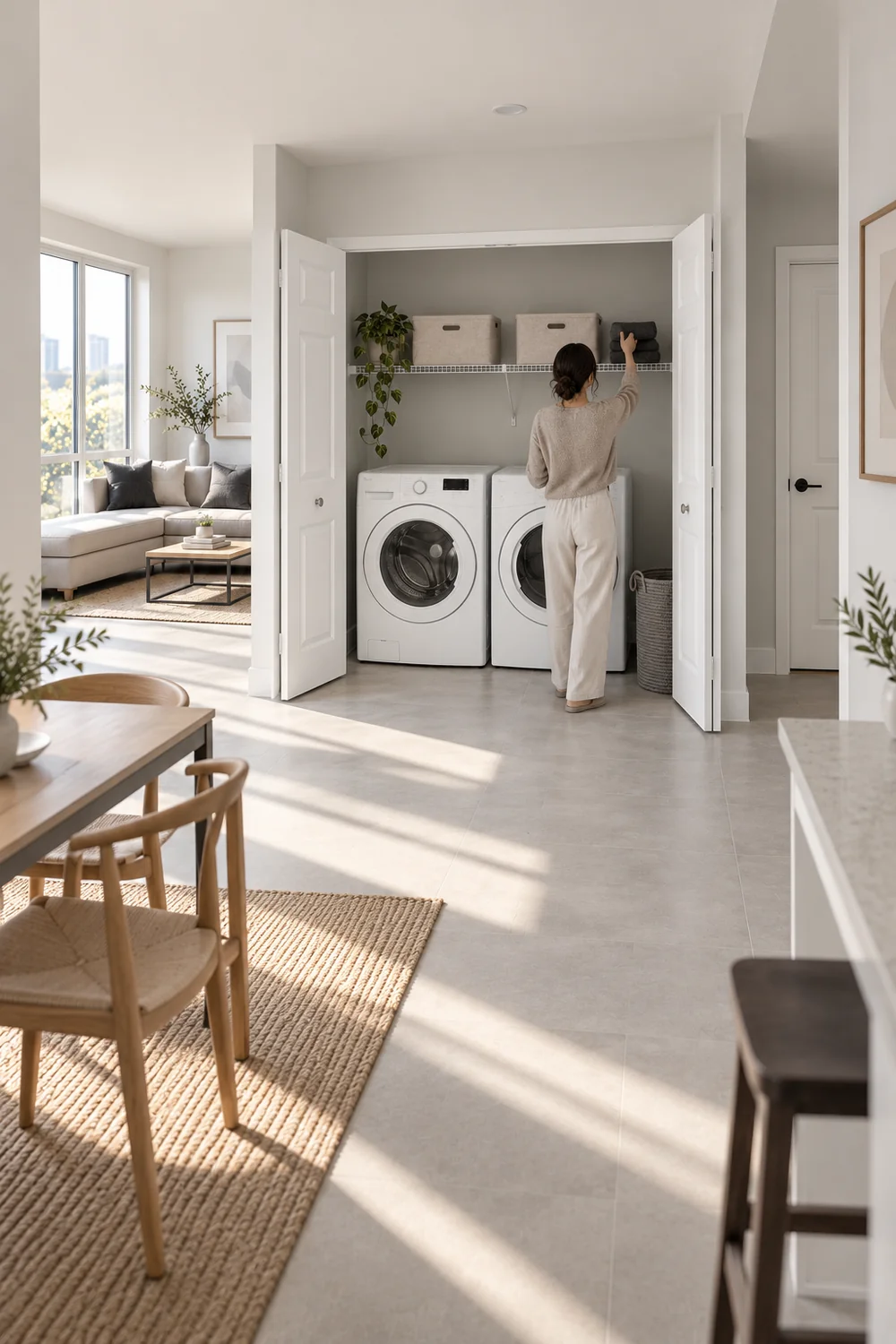
Test each proposed group with the objects you already own. Note the outside size a container could occupy, the height needed to lift it and where you would put it while using its contents. Keep the shelf's confirmed limits separate from a container's advertised capacity. A larger bin does not increase the shelf's capacity. If no container improves access, retain the original package in an appropriate position rather than introduce another layer. Your shelf plan is complete when each retained group has a reason, a reachable place and a method of removal that works around the supplied equipment.
Decide what the closet is responsible for before asking it to do everything. It may be a good home for washing and supply storage while a portable drying rack works elsewhere. I would follow a normal load through the apartment and identify where garments that need air drying already go. The answer should reflect garment care, available space and appropriate moisture management, not a desire to photograph every task behind the same doors. If drying creates a concern in the home, raise it with the responsible property contact rather than assume a different rack will resolve the building conditions.
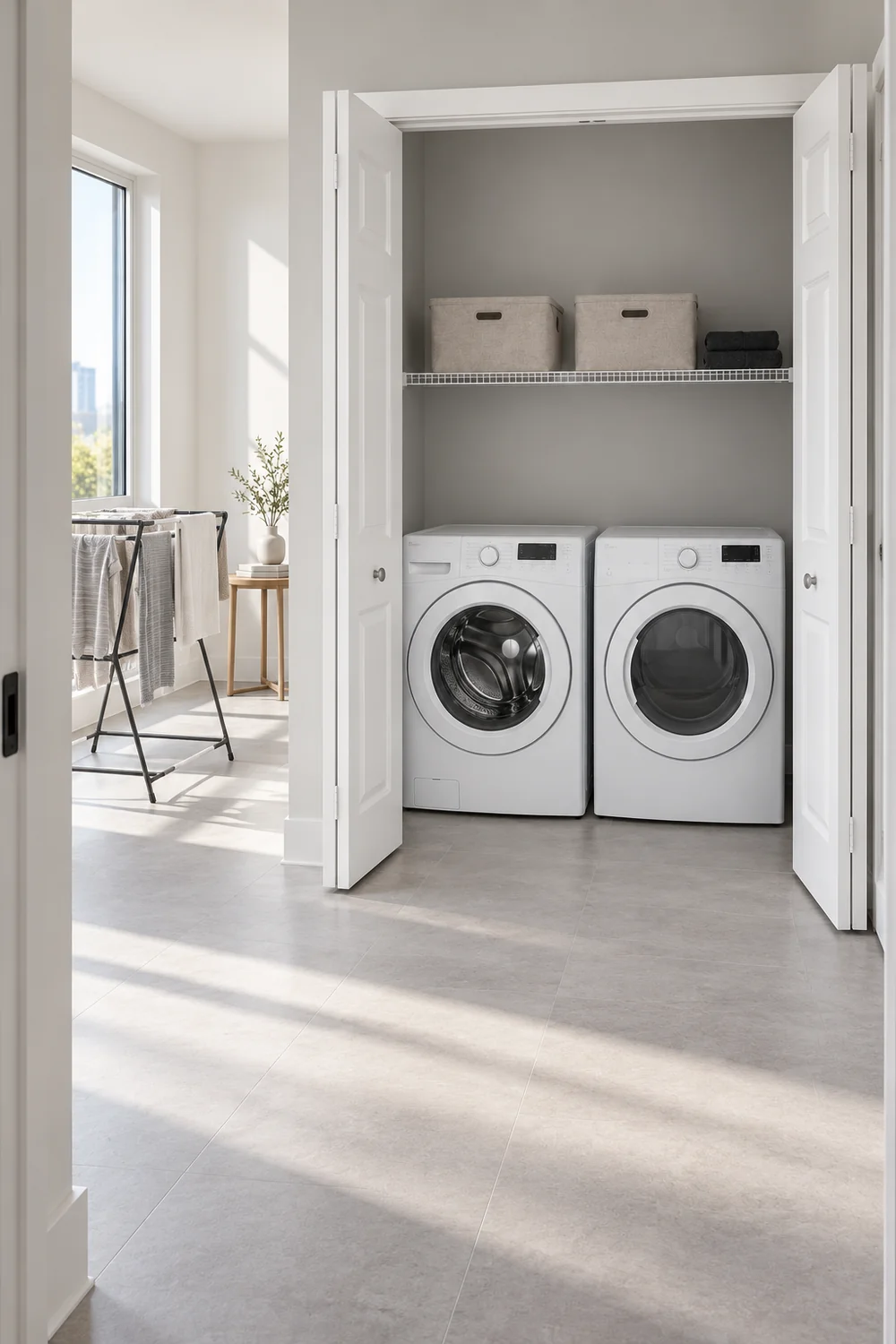
Compare an inside location and an outside location as real arrangements. Inside, look at the machine opening, your standing position and the movement of hanging clothes. Outside, consider whether the loaded rack interrupts a route, furniture use or an opening. A rack's closed size does not describe its working footprint. I would also identify the place it returns to when empty. A folding object that lives permanently across the doorway is not a successful portable solution. The plan needs an ordinary place for both states, even if that means choosing less drying capacity and handling occasional overflow differently.
Give folding the same practical treatment. You may already have a suitable table elsewhere that can be cleared for clean clothes. That can be more useful than an improvised board across supplied machines. This project does not add a counter or use appliances as structural supports. Test the existing folding location with a basket and a typical garment. Consider the surface condition, the available standing space and how quickly clean clothes can leave afterwards. I would keep the journey simple enough to repeat rather than add a special surface whose storage becomes another problem in a small apartment.
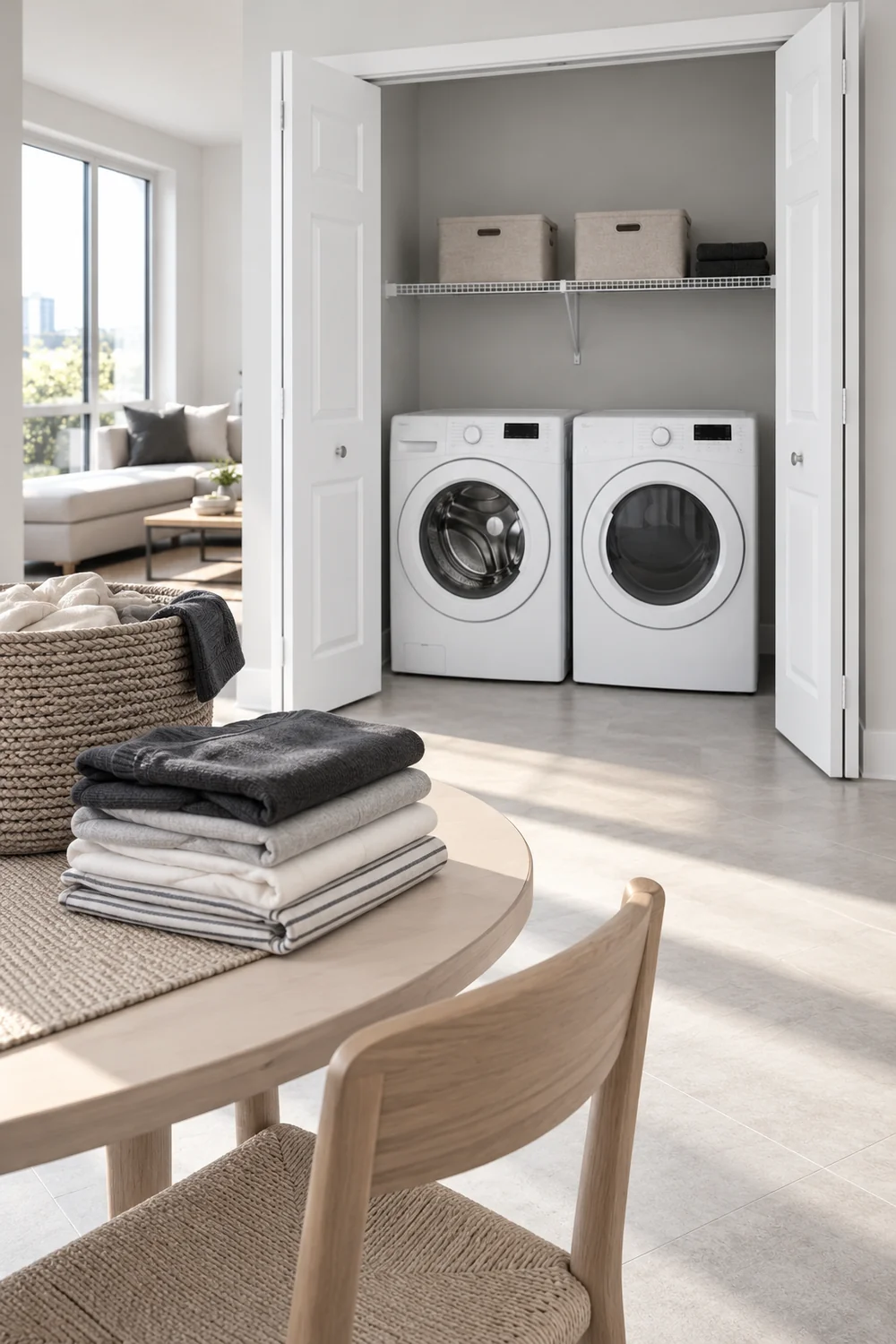
Write each job as a complete sentence: washing happens in the closet, the portable rack opens in the agreed clear position, and folding uses the existing suitable surface when it is available. Add the storage location for the closed rack and the return basket. If one job has no workable location, leave the brief incomplete and change the arrangement before ordering. You have not failed because the closet cannot contain an entire utility room. You have identified its honest role in the apartment and avoided paying for equipment that needs space you do not have.
Read the fixed colours first. Supplied white machines, a white shelf, pale grey walls and an existing floor are already a substantial palette. I would leave those elements visible and introduce warmth through a limited group of removable materials. Mushroom coloured fabric storage, a restrained smoked ash detail and a small ink accent can give this contemporary Japandi interpretation depth without a painted wall or new cabinet front. These are choices for one illustrative scheme. Your actual floor and light may suggest another balance within the same quiet material language.
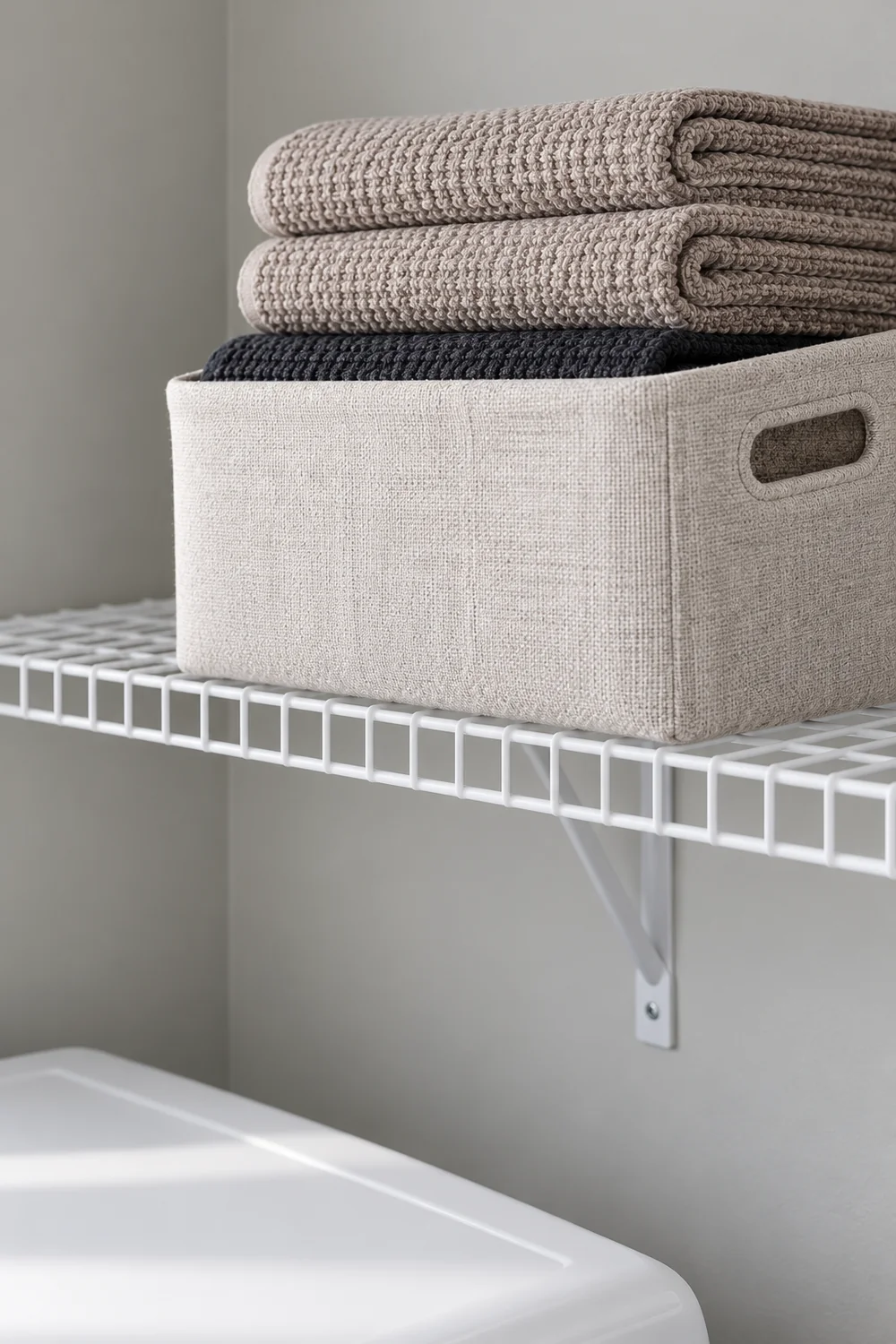
Use the Japandi color palette to compare neutral whites, soft greys, earthy timber and restrained darker accents. For a rental closet, the useful question is which of those families you can introduce through necessary pieces. I would look at a container's colour beside the machines and the existing shelf before buying a whole set. A warm grey fabric can connect cool white equipment to a darker portable frame. You do not need several new colours, a plant and a framed print simply to demonstrate the style.
Make texture do a job. A washable textile container may suit dry cloths; a wipeable surface may suit a different permitted storage task. Check the specific product's intended use and care rather than assume natural fibre is always preferable in a laundry area. Keep absorbent decorative pieces away from inappropriate contact with moisture. A timber accent should belong to a useful approved item, not a loose board added over the machines. I would rather keep a simple white storage piece than buy an impractical basket solely because its weave looks more handmade.
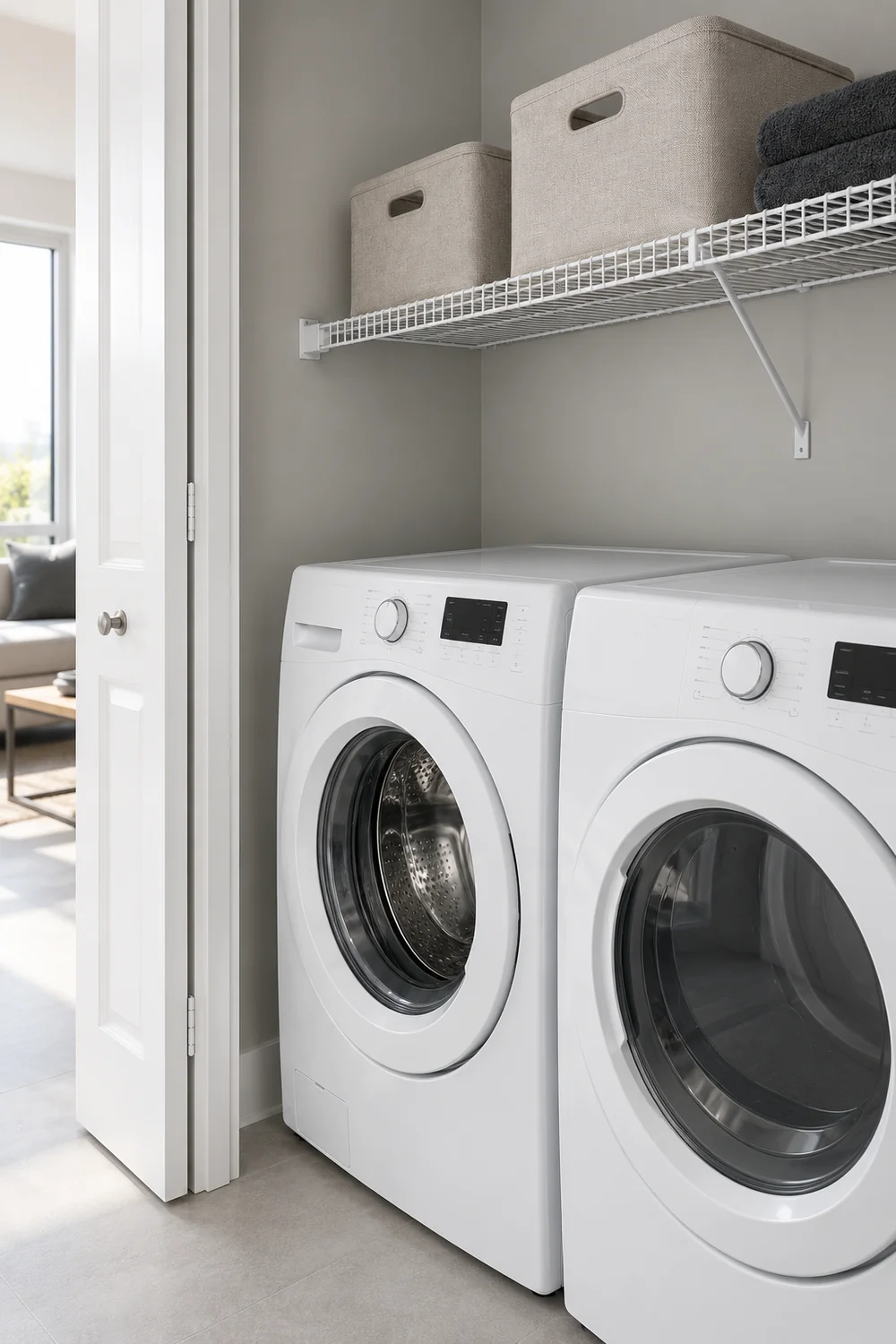
Compare the whole group at the closet, including anything already retained. Repeat one or two relationships rather than demand matching brands. The white shelf can relate to the machine fronts, mushroom fabric can soften the elevation, and a restrained dark handle can give definition. Keep the floor and openings clear. The finished view should still show a place where laundry happens. A visible original supply package in its proper location is preferable to a beautiful container that conceals necessary information or makes the ordinary task harder.
Bring the decisions onto one sheet before comparing products. List the retained machines and fittings, the confirmed limits, each storage group, the loading position, the drying location and the place for the closed equipment. Give each possible purchase one job and one position. I would include a maximum outside envelope, any opening or removal movement, and the information still needed from the product maker. Keep approximate observations separate from confirmed requirements. The purpose is to make a bad fit visible before an appealing photograph encourages you to overlook it.
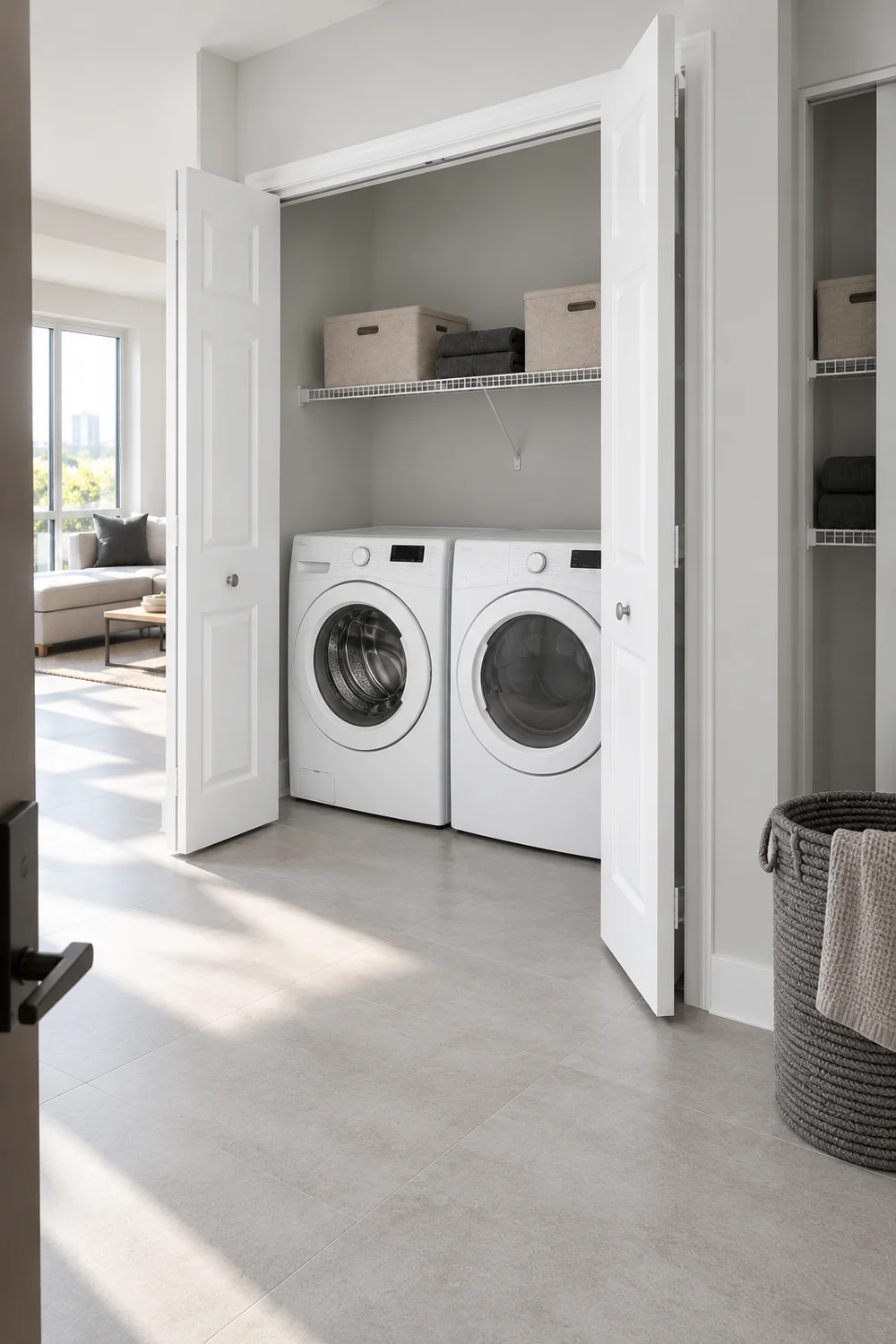
Use keep for objects that already work, buy for a defined job with known limits, and ask for anything still dependent on permission or instructions. A container may be ready to compare while a cart remains undecided. That is a useful outcome. You do not have to approve an entire coordinated set at once. If a proposed item requires an attachment you cannot obtain permission for, select another appropriate approach or omit it. Calling something portable does not remove the need to follow its assembly and stability requirements. The same rule applies even when the object looks small in a listing.
Your next question is which actual candidates meet these conditions. The apartment laundry closet specification takes the brief into container fit, cart suitability, portable drying and the packed state. Keep the plan beside those comparisons. If an item only works by changing an agreed limit, return to the relevant decision rather than quietly narrowing the clear route or assuming a different shelf load. The brief should protect the useful room you have, not become a formality once shopping begins.
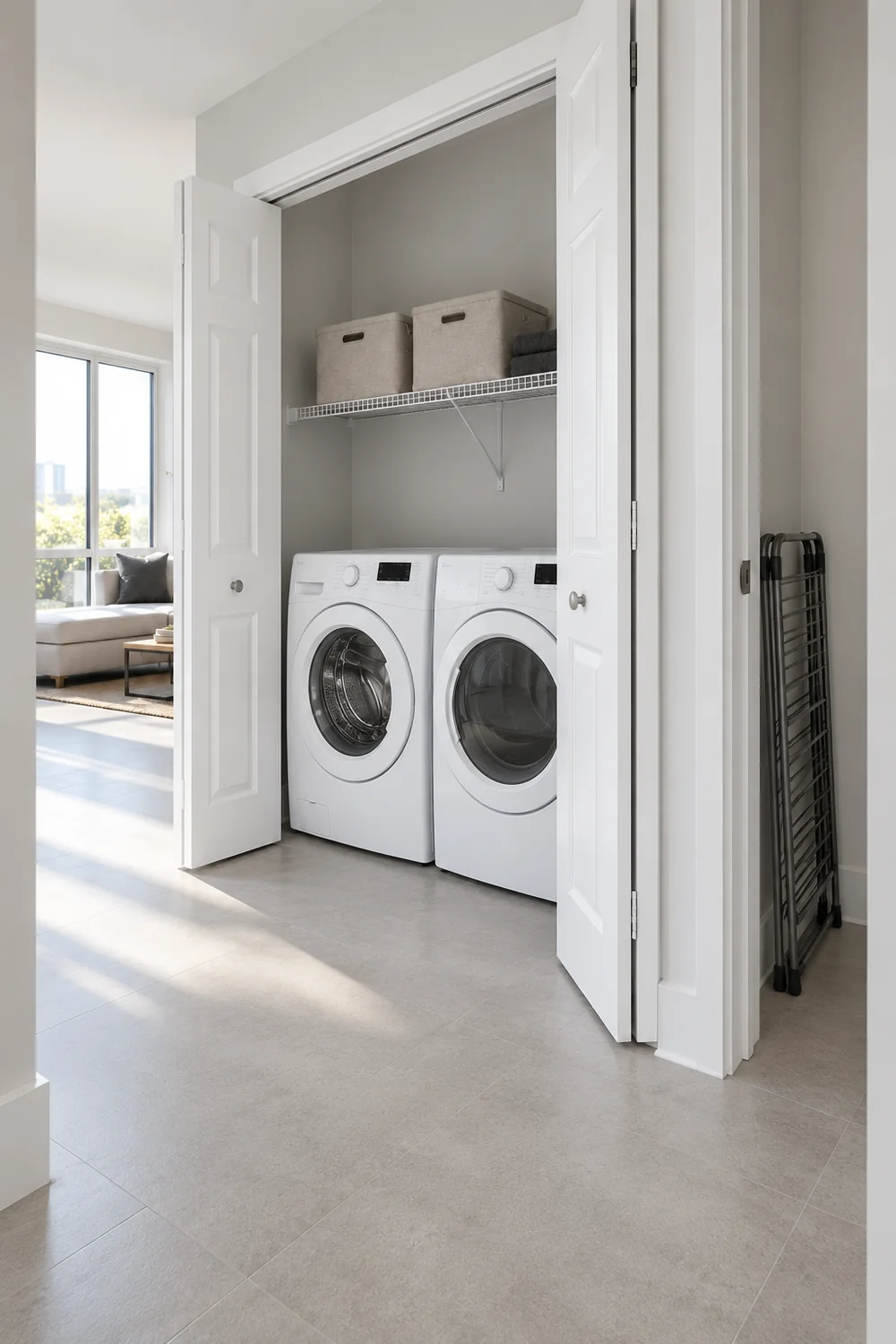
I would consider the planning stage complete when the closet has a clear role and every ordinary job has a workable address. The machines and shelf remain in place, required access stays available, and your proposed purchases are limited to pieces with an identified purpose. The Japandi character comes from quiet forms and related materials around those decisions. Keep the photographs and brief for the later setup and for your next move. They will remind you why a piece was chosen and make it easier to change one weak part without buying another collection of laundry accessories.