Newsletter Subscribe
Enter your email address below and subscribe to our newsletter

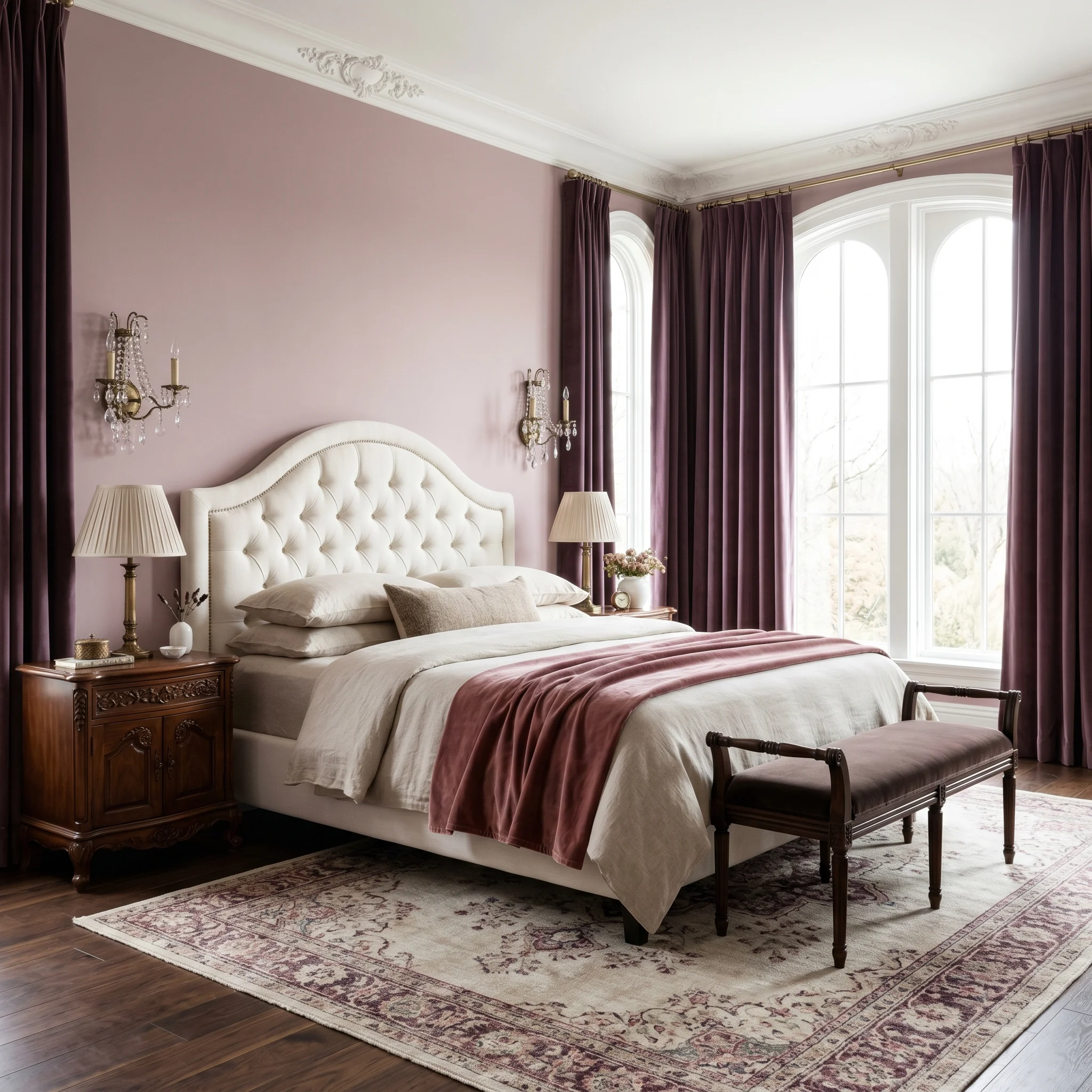
The Victorian bedroom most people picture is a museum. Heavy fabric. Dark wood. A bed that looks like it would file a complaint if you sat on it wrong. That version is dead, and good riddance. The modern Victorian bedroom keeps the bones (the carved wood, the trim, the moody jewel tones) and quietly drops the fussy bits. I’ve spent months pulling apart what makes this style work in a 2026 home. The biggest finding is small. The lampshade swap. Trade your plain drum shades for pleated, fringed, or velvet ones, and the whole room shifts. If you nailed the Modern Victorian Living Room, the bedroom is where it gets personal.
Here’s the thing nobody tells you. The fastest way to make a plain bedroom read as Victorian is to change the lampshades. Not the bed. Not the walls. The shades. Pleated silk, fringed velvet, or warm cream linen with a tiny tassel. Swap them in and the room shifts in an hour. The original 1880s rooms got their soft glow from gas light through fabric shades. We’ve been using flat white drum shades for fifty years and forgot. And that same logic carries over to your victorian bathroom.
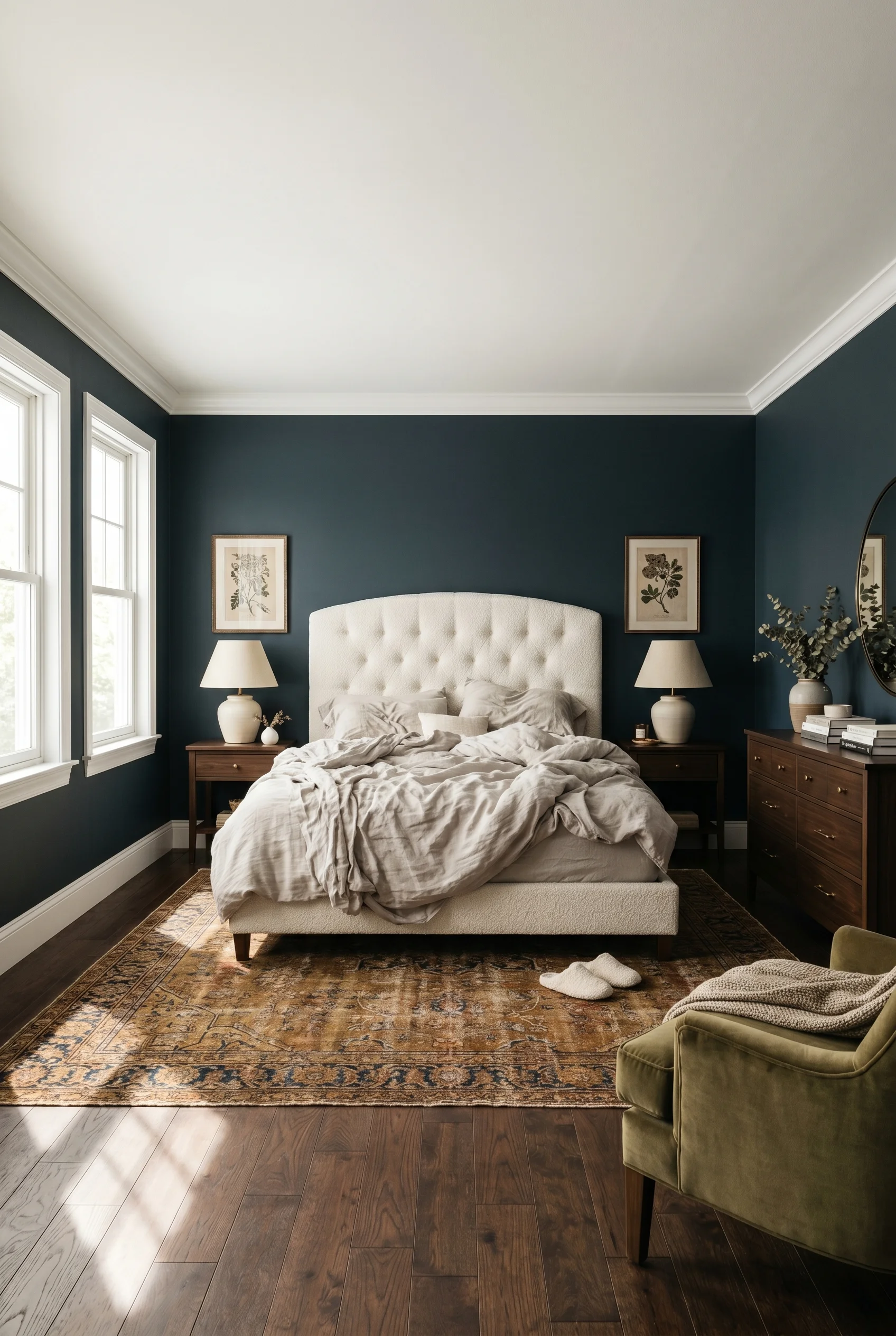
I’ve found this is the single biggest mental shift. People think going Victorian means florid wallpaper, a four poster bed, AND tufted everything in one room. It doesn’t. It means picking the small details that did the heavy lifting back then and bringing them forward. A pleated shade on a brass lamp. A fringed pendant over the bed. A silk shade on the dresser lamp. Each one costs less than a takeaway dinner. Together they do more than a feature wall. We dove deeper into this for victorian modern interior design.
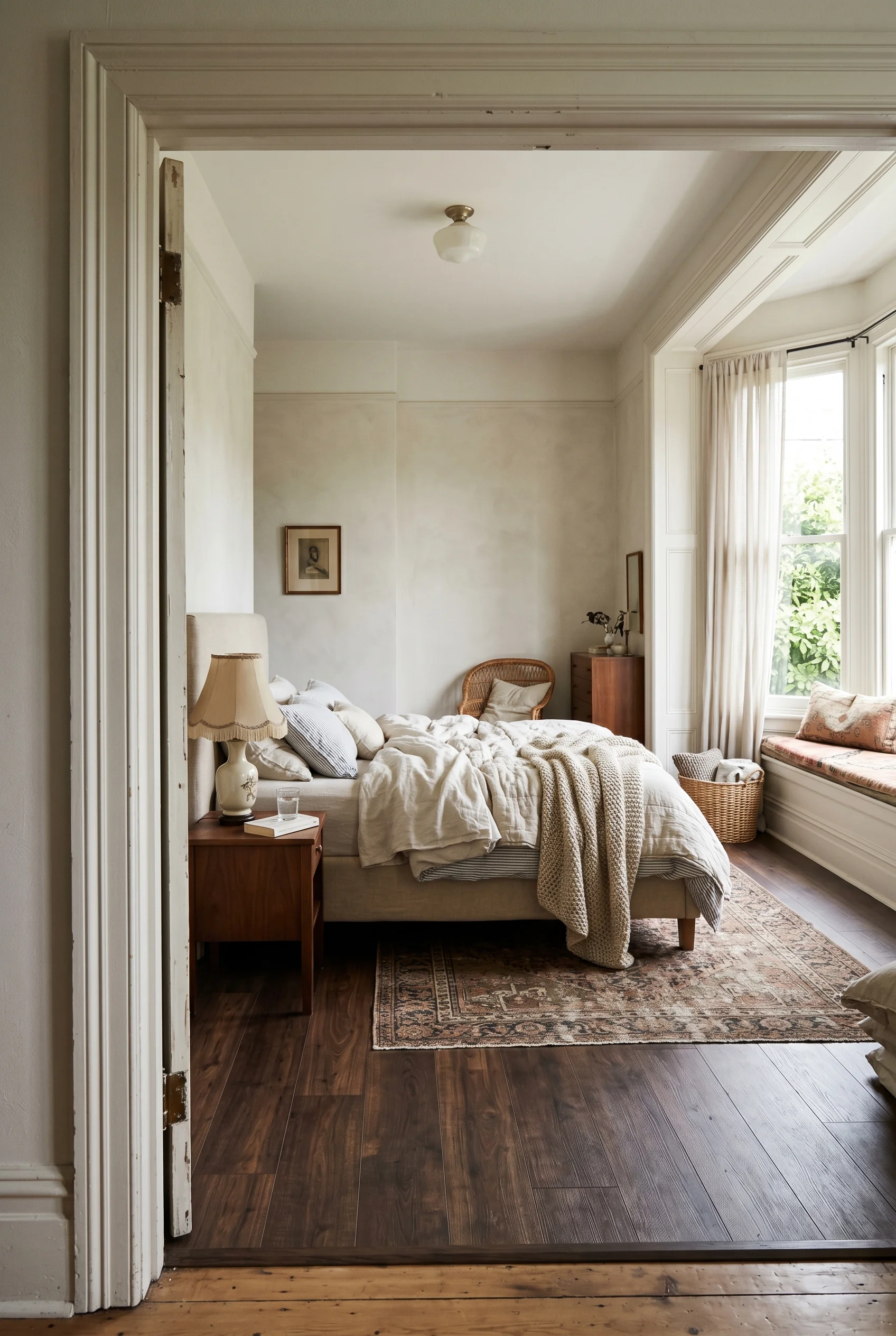
The reason this works is light. Victorian rooms were not bright. They glowed. The glow came from soft fabric shades that broke up the bulb and threw warm pools of light at chest height. Modern bedrooms get blasted from above by one cold ceiling light, and we wonder why the deep paint feels heavy. Swap the shades, dim the bulbs to 2700K, and the same wall colour reads as cosy instead of cave. For more on this palette, see modern bedroom design.
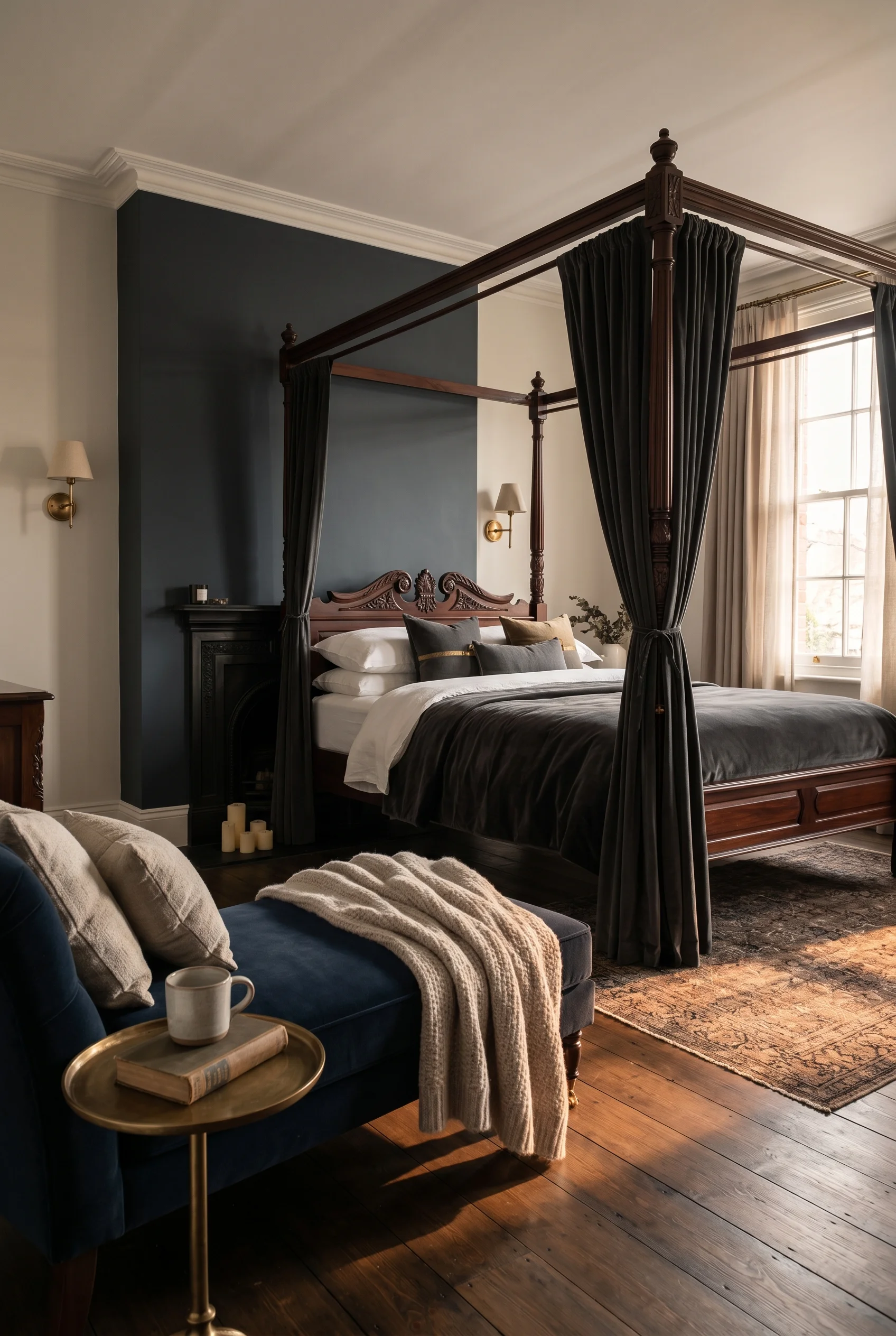
So the rule for the rest of this guide is simple. Get the small, soft details right first. Lampshades. Trim. Pleats and fringe. Then build the bigger moves around them. You can spend a fortune on a tufted headboard and ruin it with a flat white shade beside it. The reverse is also true. Cheap bed, right shades, room reads Victorian. Start small. The same principle holds true for victorian kitchen.
The 1880s palette was loud because gas light ate colour. Walls had to be deep just to read. We don’t have that problem, but the deep tones still work in modern bedrooms because the eye reads them as a hug at night. The trick is one or two jewel tones plus a soft neutral. That’s it. And that same logic carries over to your modern victorian dining room.
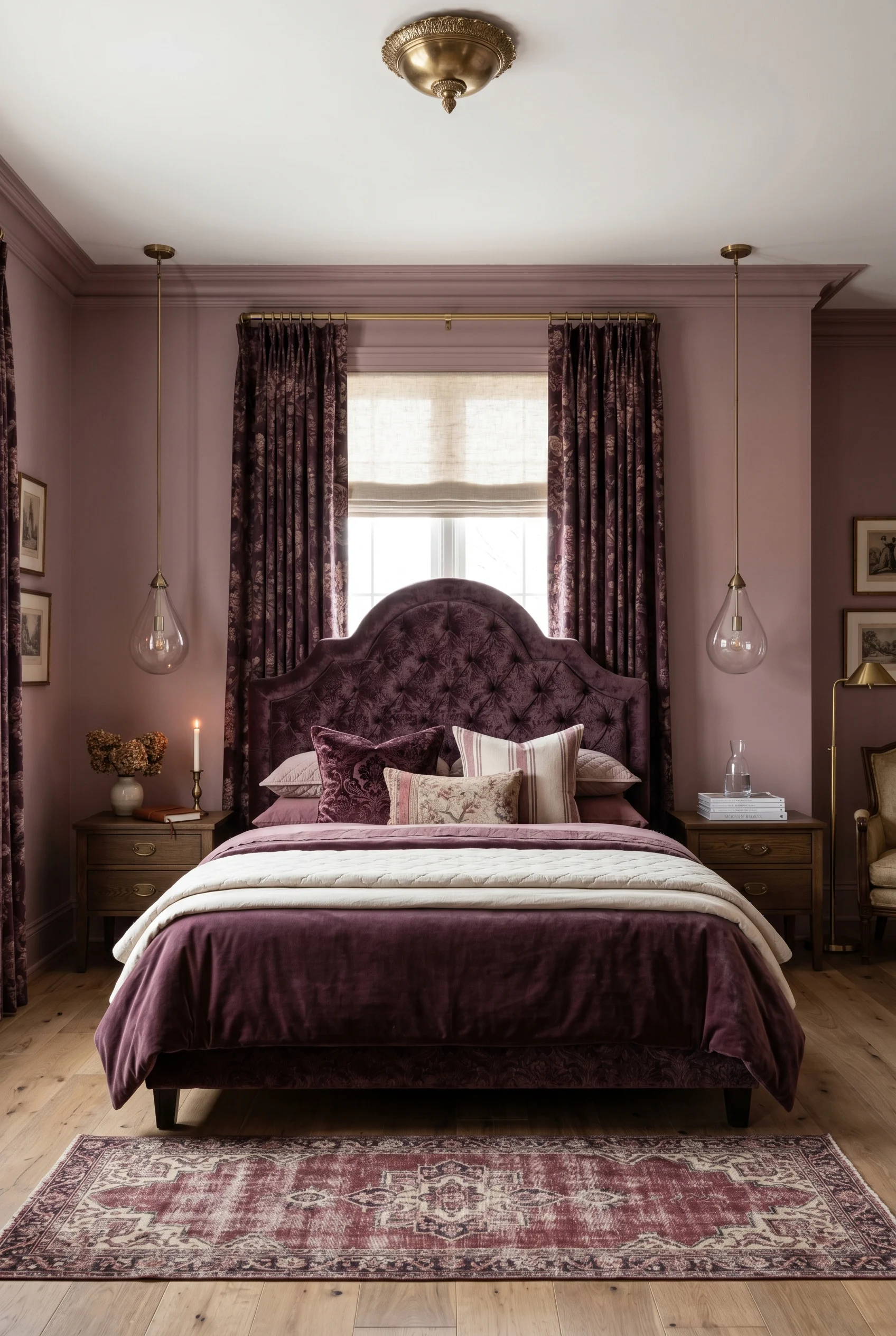
The move I’d lean towards is colour drenching. You pick one deep hue (emerald, plum, dusty pink, or a proper navy) and you put it on the walls AND the trim AND the ceiling, all the same shade. The depth comes from the finish, not the colour. Walls in matte. Trim in eggshell. Ceiling in dead flat. Same paint, three sheens. The light catches each surface in its own way and the room reads as built, not painted. The same principle holds true for victorian color palette.
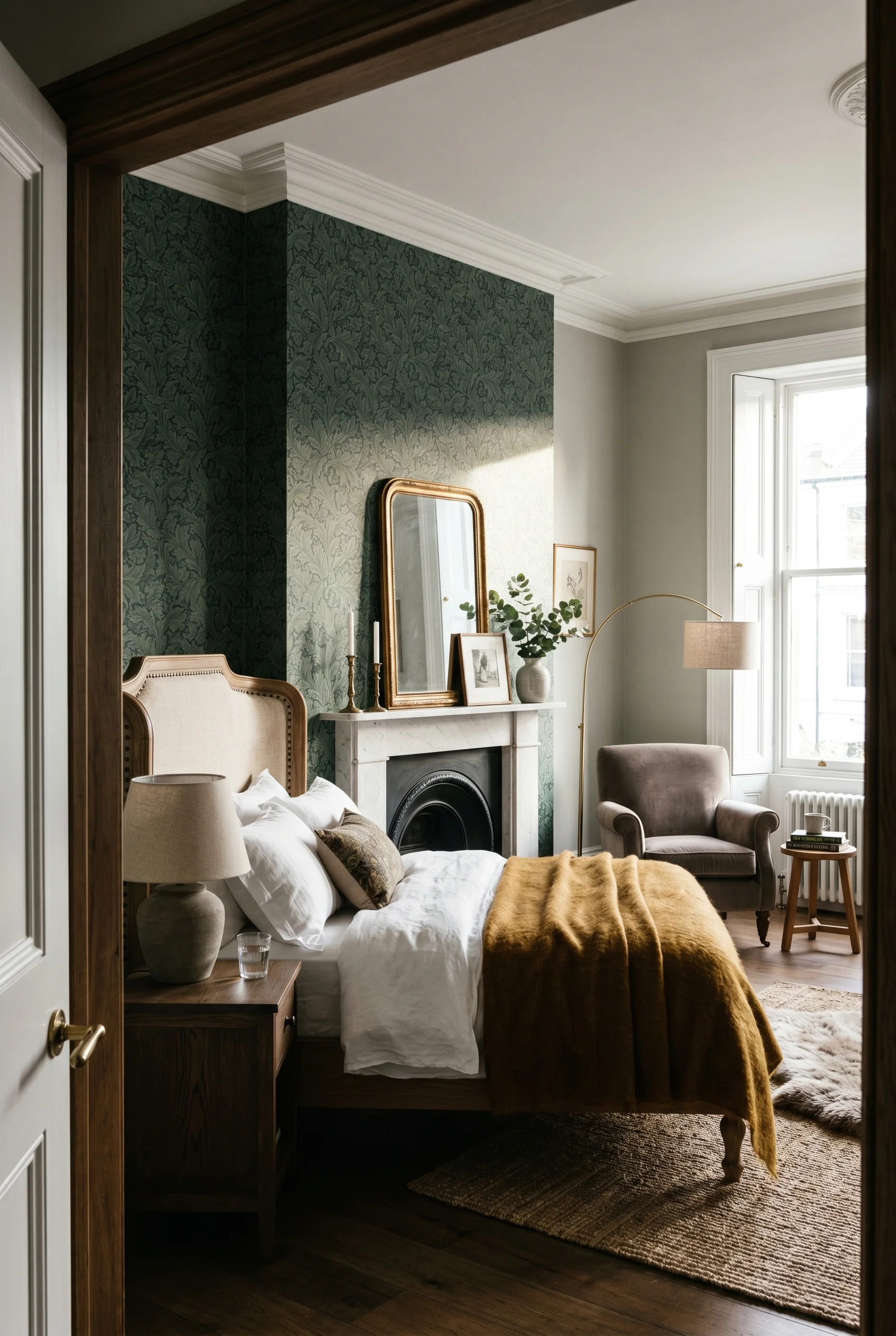
For the split, think 60-30-10. Sixty percent is the drenched envelope. Thirty percent is the soft neutral (ivory bedding, off-white roman shade, stone rug). The last ten percent is one metal or one bright accent. Don’t chase a fourth colour. The minute you add it, the room starts to look like a fabric sample book. For more on this palette, see neutral bathroom ideas.
Pick one drench shade and one neutral. Stop there. The hold-back is what makes it modern.
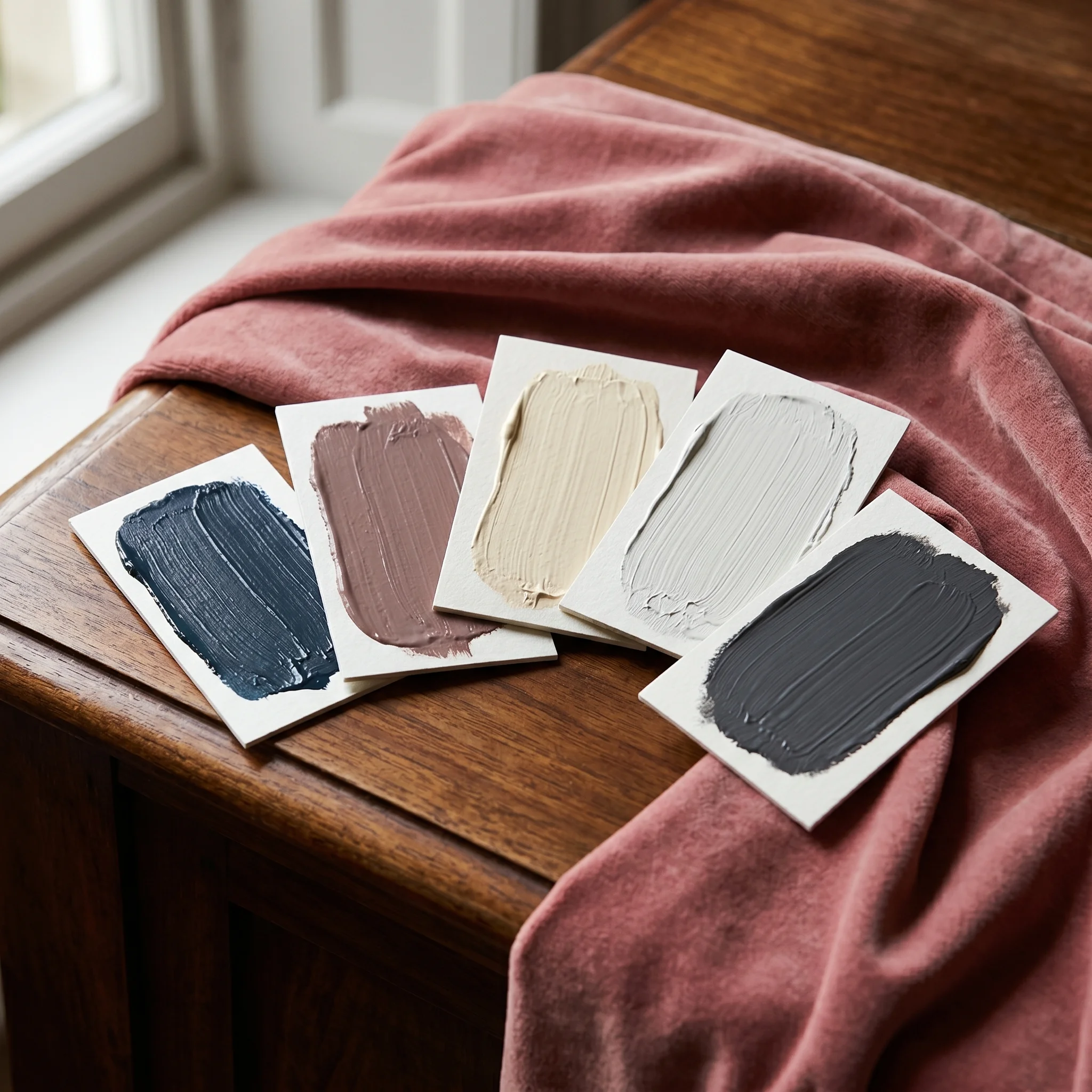
The bed should be the loudest piece in the room. Full stop. In a Victorian bedroom, the bed does the work of three pieces in any other style. Pair it with an equally fussy dresser and equally fussy nightstands and the room tips into costume. So I’d put the whole ornament budget into the bed and let everything else stay calm. You will find a version of this in our modern victorian exterior breakdown.
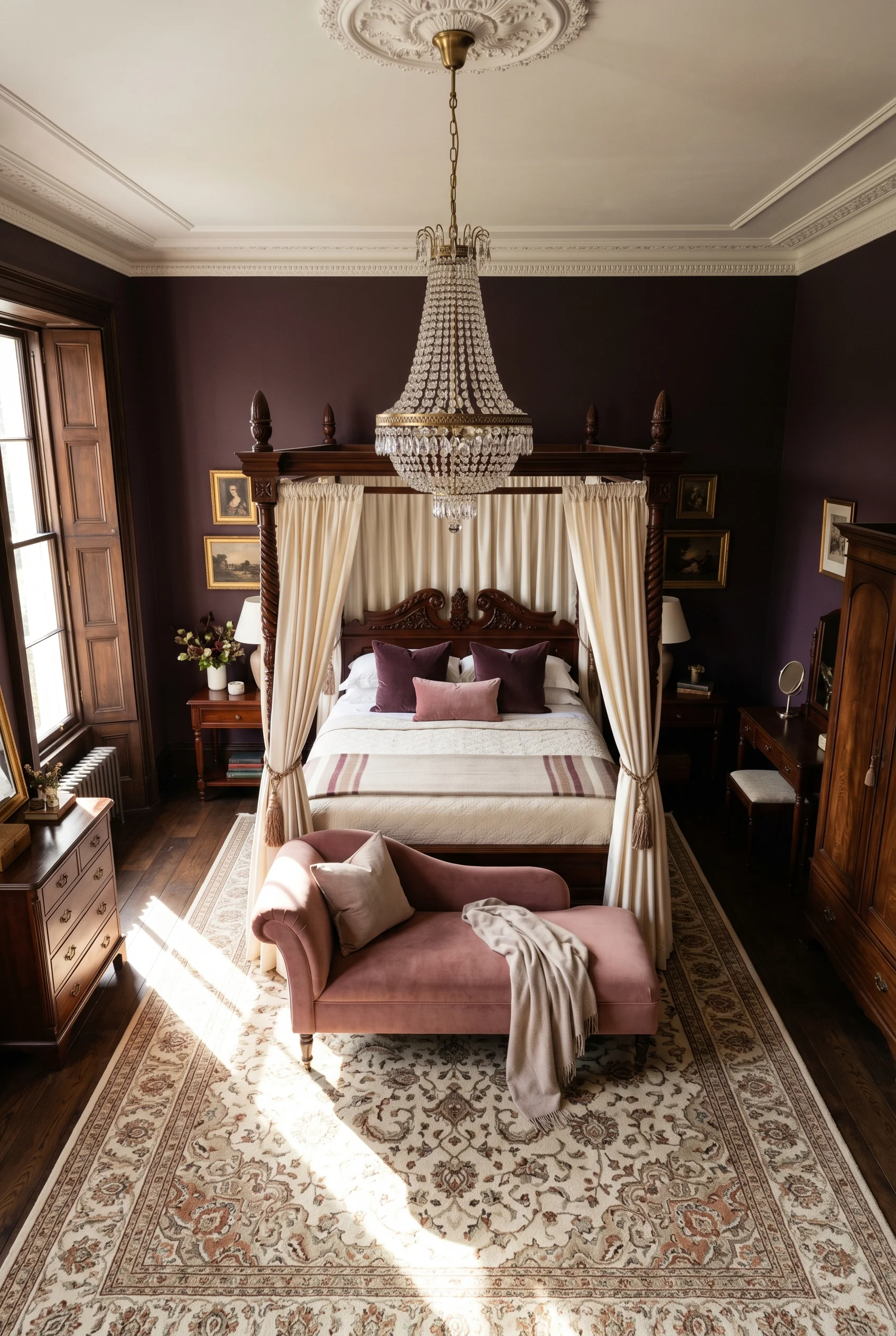
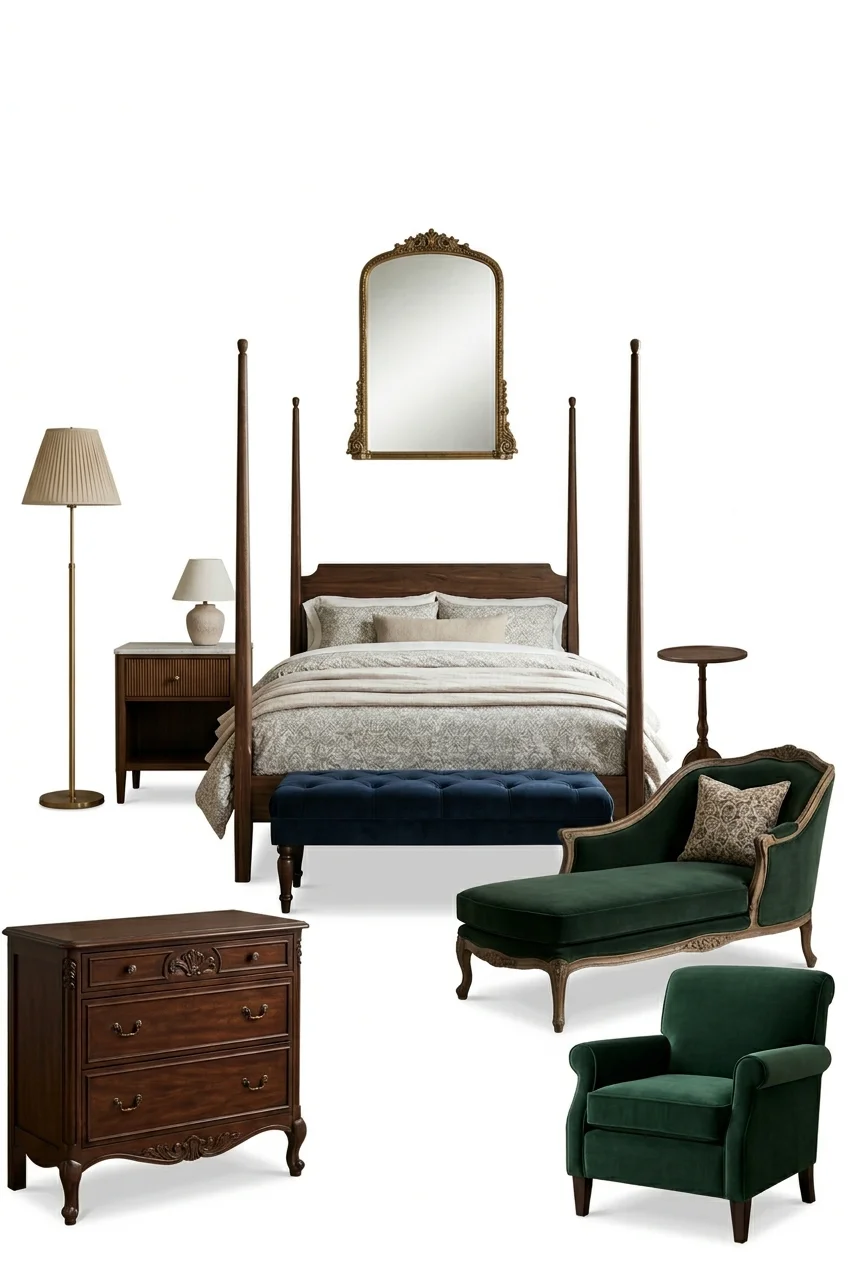
Two beds work here. The first is a four poster in cherry, walnut, or dark oak. Tall, carved, no canopy fabric (the fabric is an 1880s call, not a modern one). The second is a tall arched tufted headboard in velvet (emerald, plum, or deep dusty pink) on a plain platform base. The arched headboard is the move I’d lean towards in a smaller room. It gives you the Victorian shape without claiming as much floor space. Which is exactly what makes victorian hallway work so well.
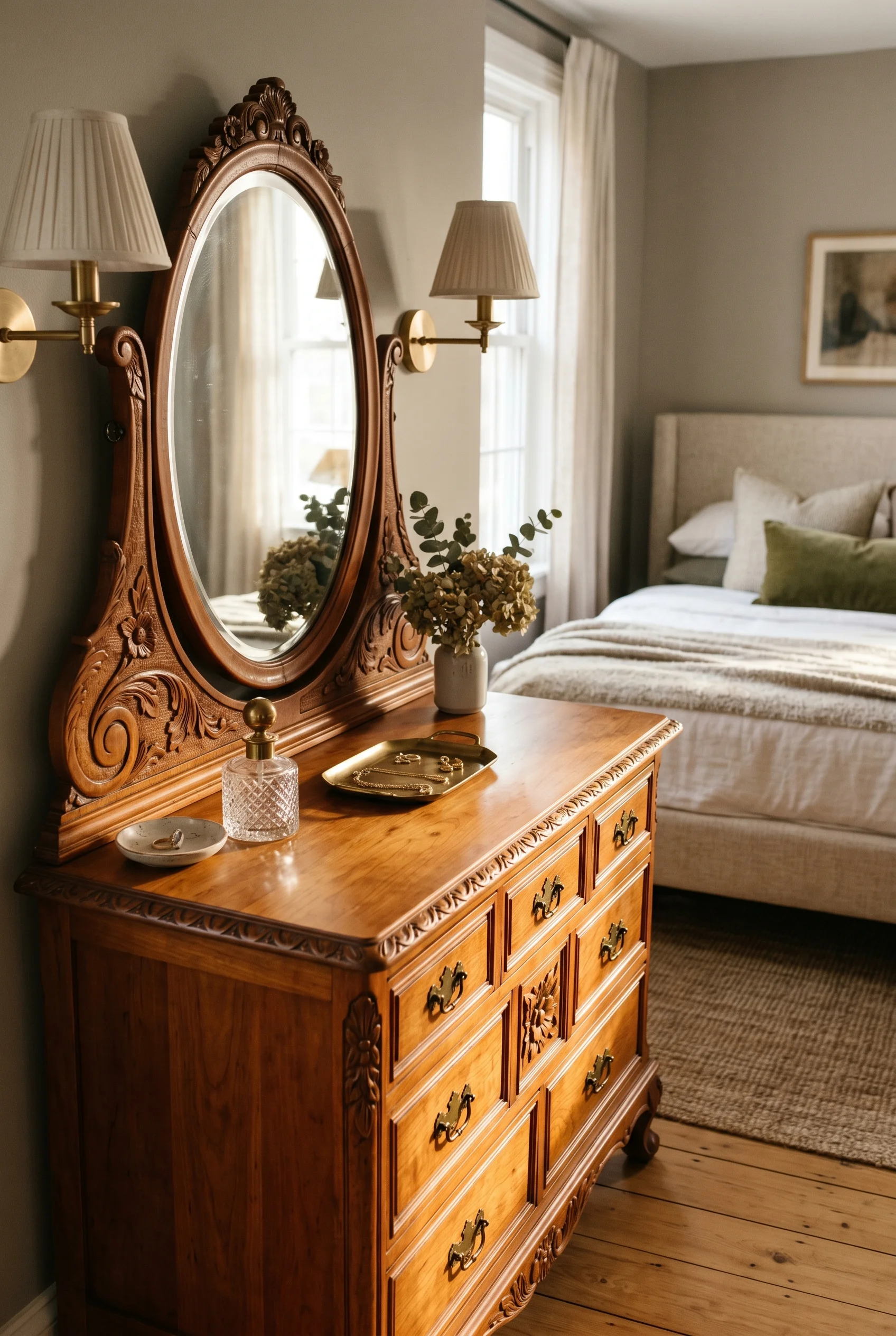
For the rest, mix one carved old piece with simple modern shapes. A vintage walnut dresser at the foot of the bed plus two slim modern bedside tables. Or a single carved wardrobe plus a clean writing desk under the window. The hardware is the glue. Brass or bronze pulls on the modern pieces echo the metal on the old one, and the eye reads them as one set, not a yard sale. If your taste runs more toward master modern luxury bedroom design, the proportions shift.
Victorian walls did three jobs at once. They had structure (panels and a dado rail, which is just a wood strip running around the room at chair-back height). They had pattern (William Morris papers, damask). And they had art, hung floor to ceiling. Modern Victorian keeps the structure, dials the pattern down to one wall, and rethinks the art. You will find a version of this in our modern victorian hallway breakdown.
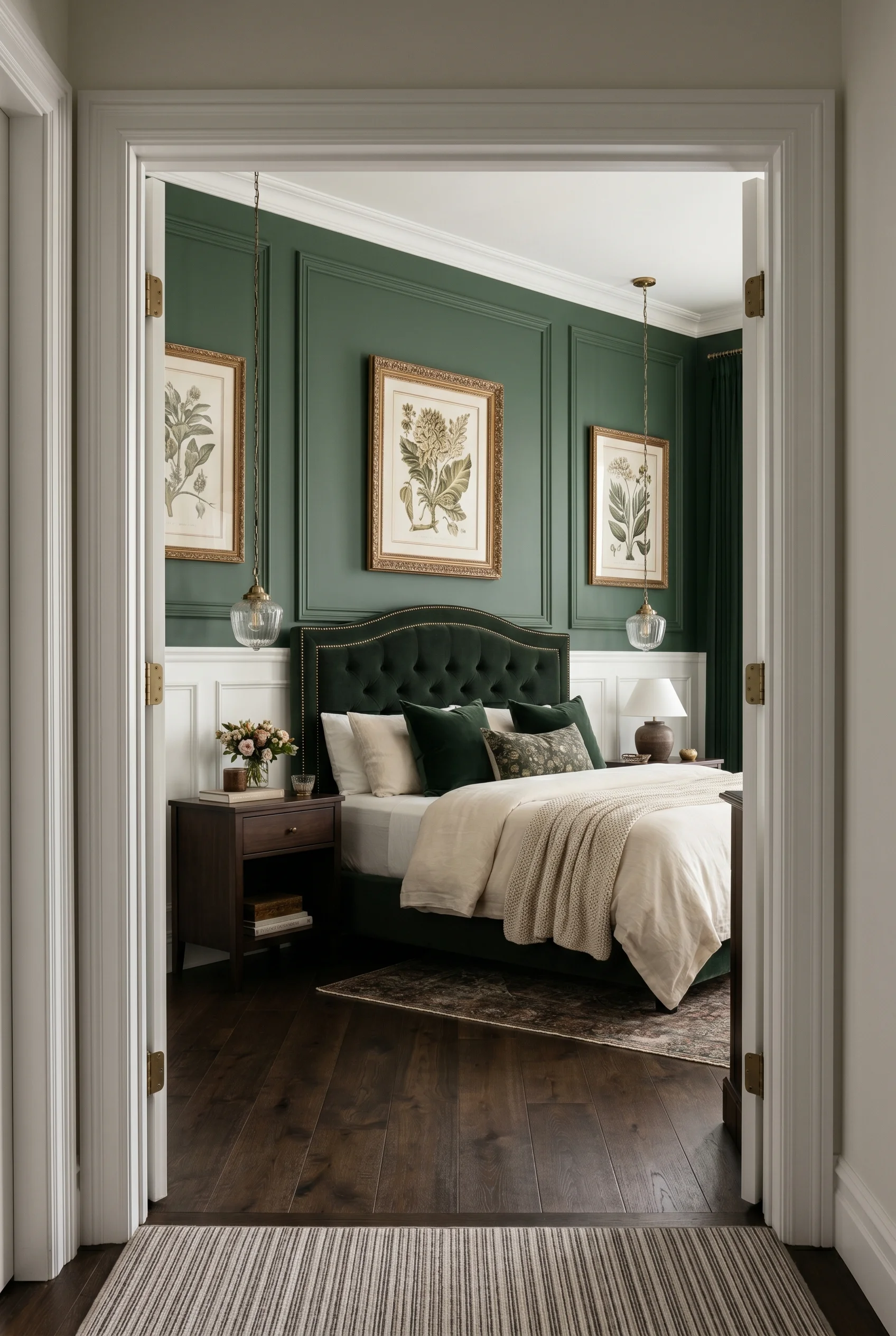
Wall panelling is the move I’d never skip. Raised panels for a smarter room. Beadboard (those thin vertical wood strips) for a softer feel. Or simple picture frame moulding for a clean modern read. Run it to chair-back height (about 90cm) so the upper wall still gets the deep paint or paper. The height is the whole point. Too low and it looks dull. Too high and the room shrinks. We dedicated a full guide to modern farmhouse dining room for this reason.
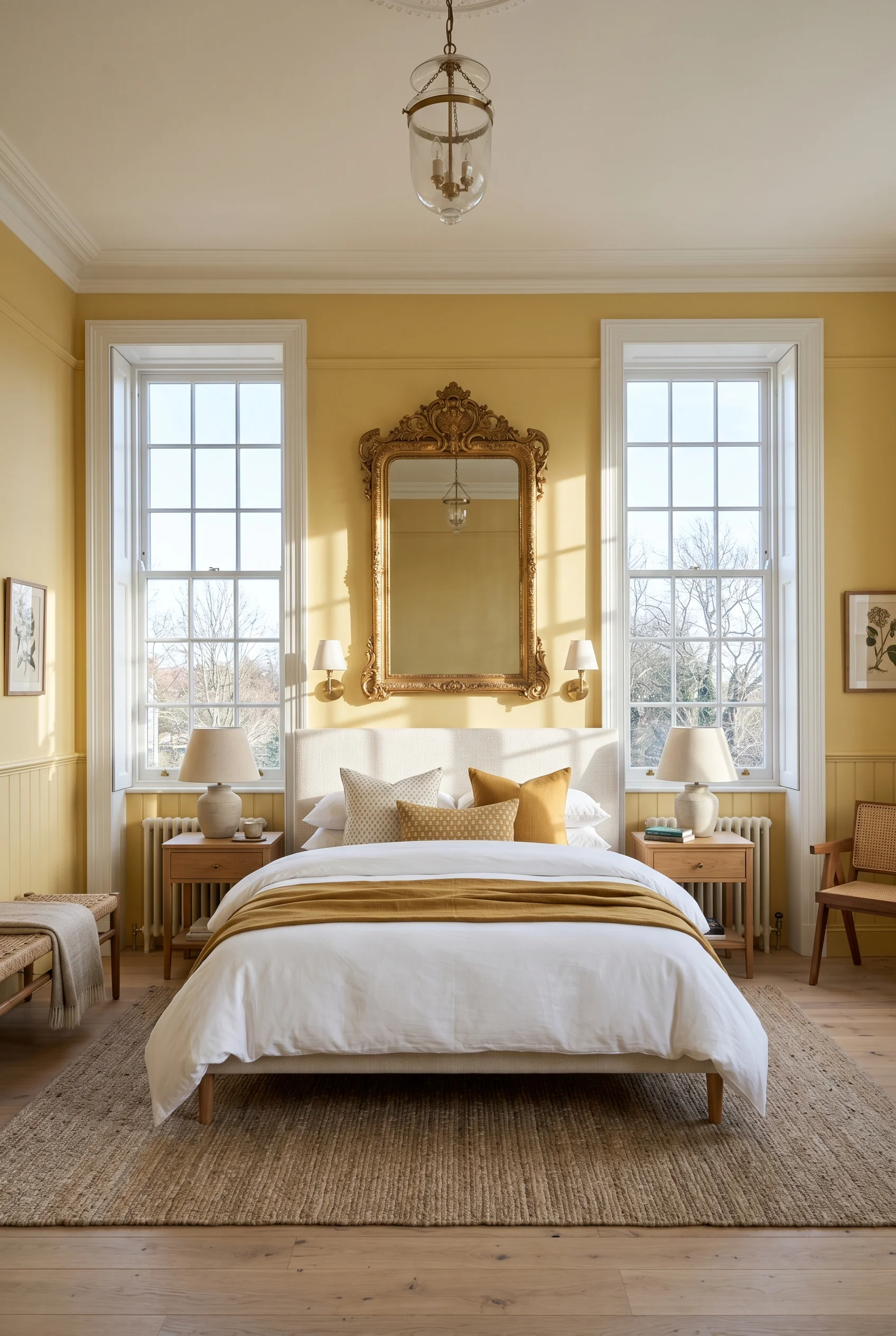
For pattern, pick one wall and one paper. A William Morris print behind the bed, the rest of the walls in the deep drench shade. Or floor to ceiling on the wall furthest from the door, so it doesn’t hit you walking in. Don’t mix two patterns. The room is already busy with the bed, the panels, and the paint. A second pattern is the moment it tips. Which is exactly what makes very small living and dining room ideas work so well.
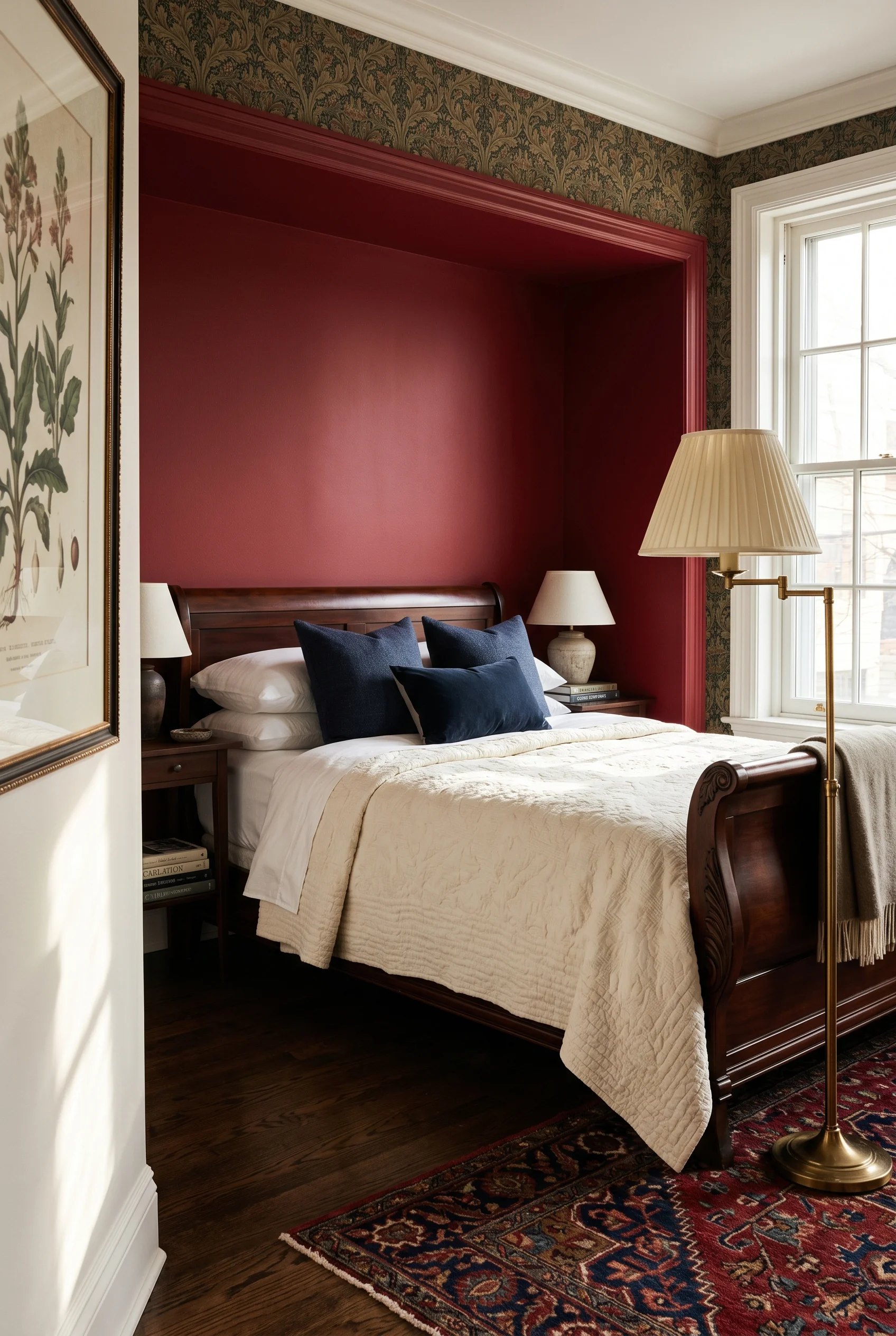
The reward, if you get the structure right, is that the walls do half the styling for you. Panels plus one papered moment give the room enough to look at that you don’t need to over-style. That’s the trap a less careful Victorian bedroom always falls into. A close cousin of this idea appears in our contemporary modern victorian living room guide.
Most Victorian rooms had a clear job for every metre. A dressing zone. A reading zone. A pause zone (yes, that was a thing, near the window with a chair). The modern version is just good zoning, and it makes the bedroom work as a calm room instead of a sleep-storage unit. We dove deeper into this for modern victorian kitchen.
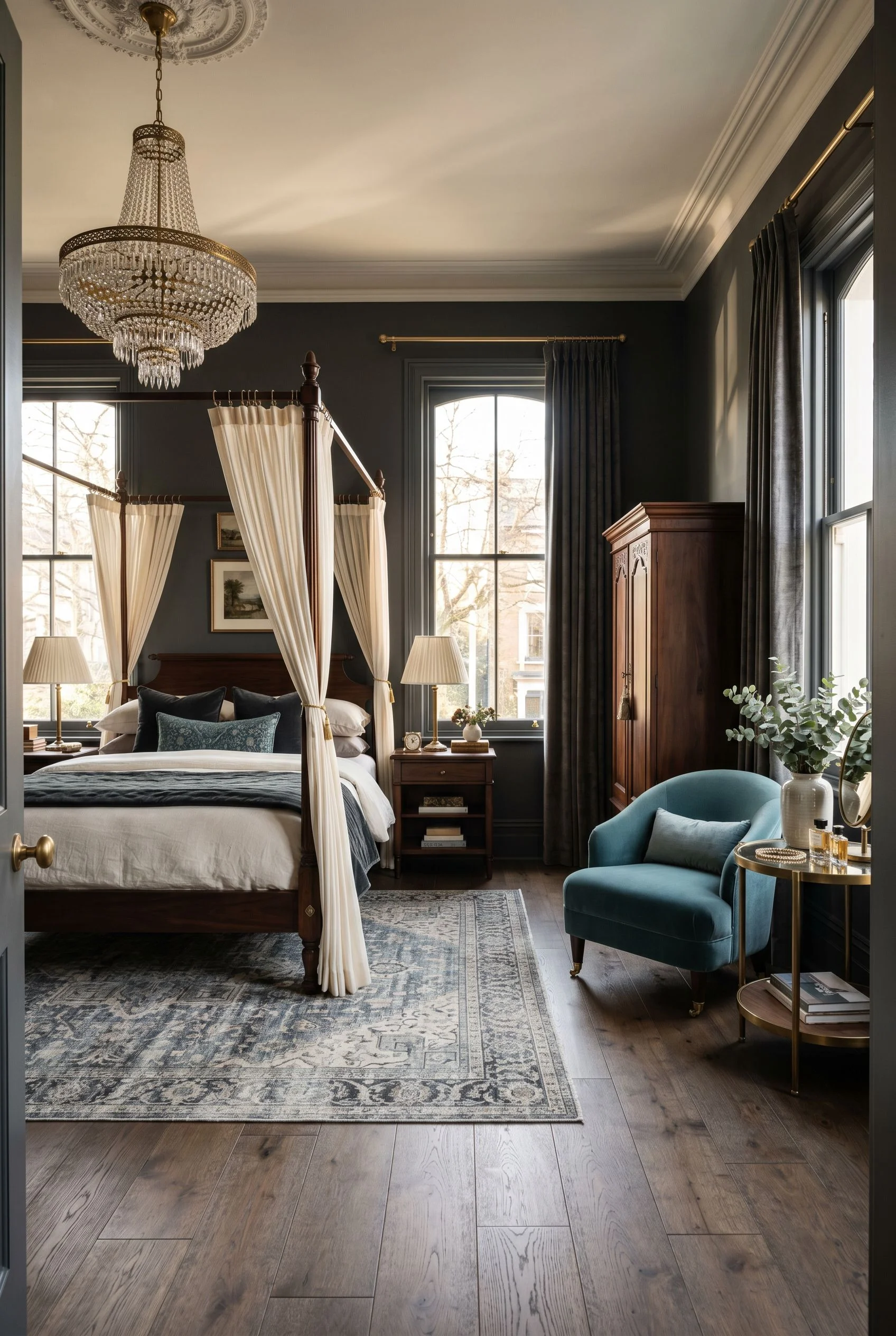
The zones I’d map first are sleep, dress, and pause. Sleep is the bed and what flanks it. Dress is the dresser or vanity, ideally near the wardrobe so the morning routine doesn’t cross the room three times. Pause is the one most people skip. A reading chair by the window. A small velvet bench at the foot of the bed. A built-in window seat. This is the Victorian touch that does the most for the brain and costs the least. A close cousin of this idea appears in our victorian dark green bathroom guide.
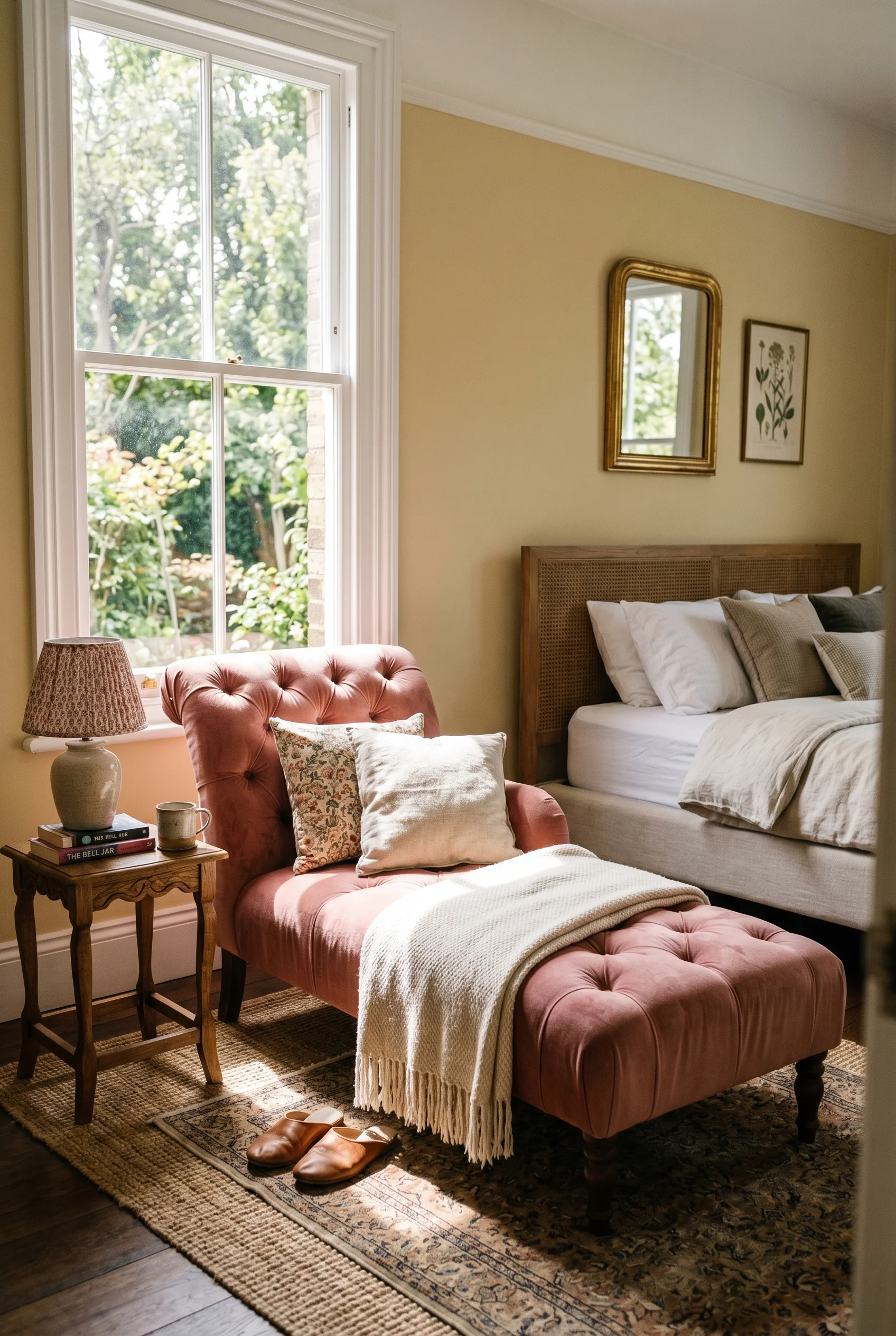
The other call is traffic flow. Old Victorian rooms got boxed in by heavy furniture along every wall. Don’t do that. Float the bed if you have the depth. Keep one full wall mostly clear (the wall opposite the bed is often the wardrobe wall or the art wall, but never both). The room should breathe even when it’s drenched in deep colour. We tested this theory across rooms, starting with victorian bathrooms.
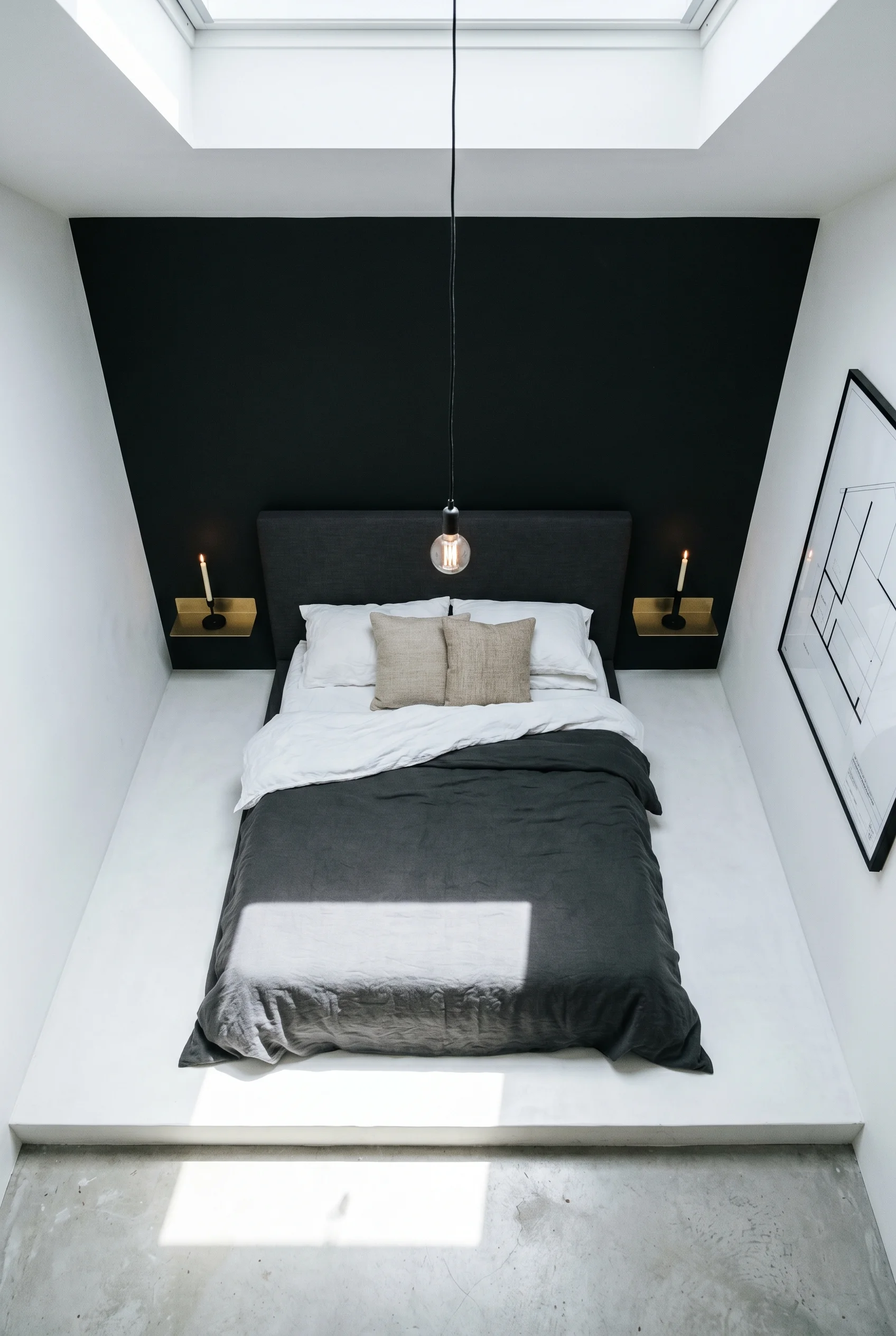
The rule to apply: sleep, dress, pause. Three zones, three jobs. If a fourth zone shows up (a desk, a treadmill, a craft corner), the bedroom has stopped doing its main job. Move it. If your taste runs more toward sage green bedroom, the proportions shift.
This is where the modern half of “modern Victorian” earns its keep. The old rooms layered heavy fabric on heavy fabric. Velvet duvets. Brocade dust ruffles (a brocade is a thick woven fabric with a raised pattern). Silk drapes. The result was rooms you could barely breathe in. The modern fix splits the job. Heavy fabric for the bits you look at. Soft fabric for the bits you touch. We tested this theory across rooms, starting with victorian garden.
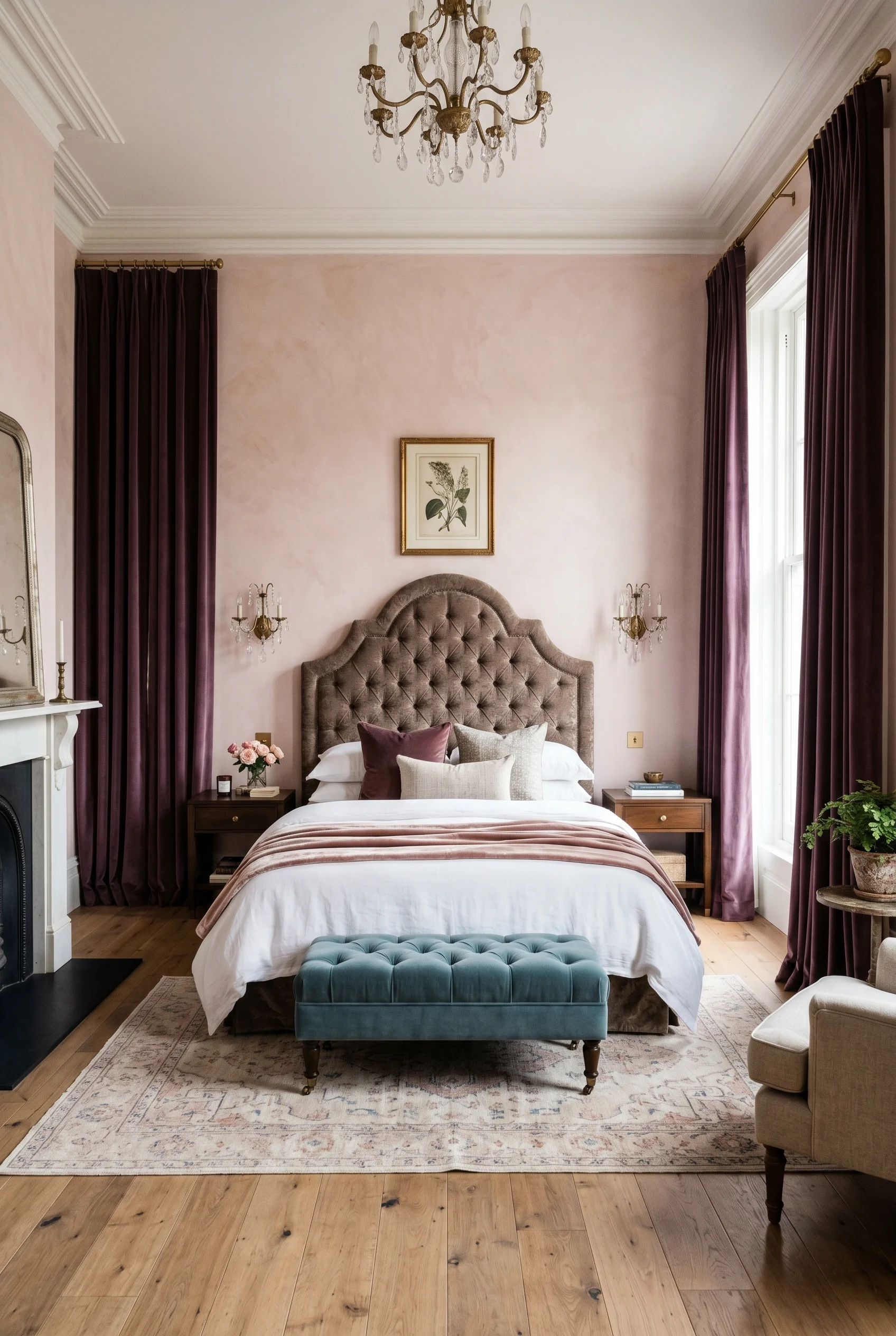
Heavy goes on the headboard, the drapes, and one accent piece (a bench, a footstool, or one armchair). Velvet, brocade, or silk. These are the pieces your eye lands on, not your skin. Soft goes on the bedding (white or ivory linen, cotton, percale) and the rug if it’s flat woven. Your skin is on the bedding for eight hours a night. It needs to be honest, breathable, and washable. We dedicated a full guide to white color for this reason.
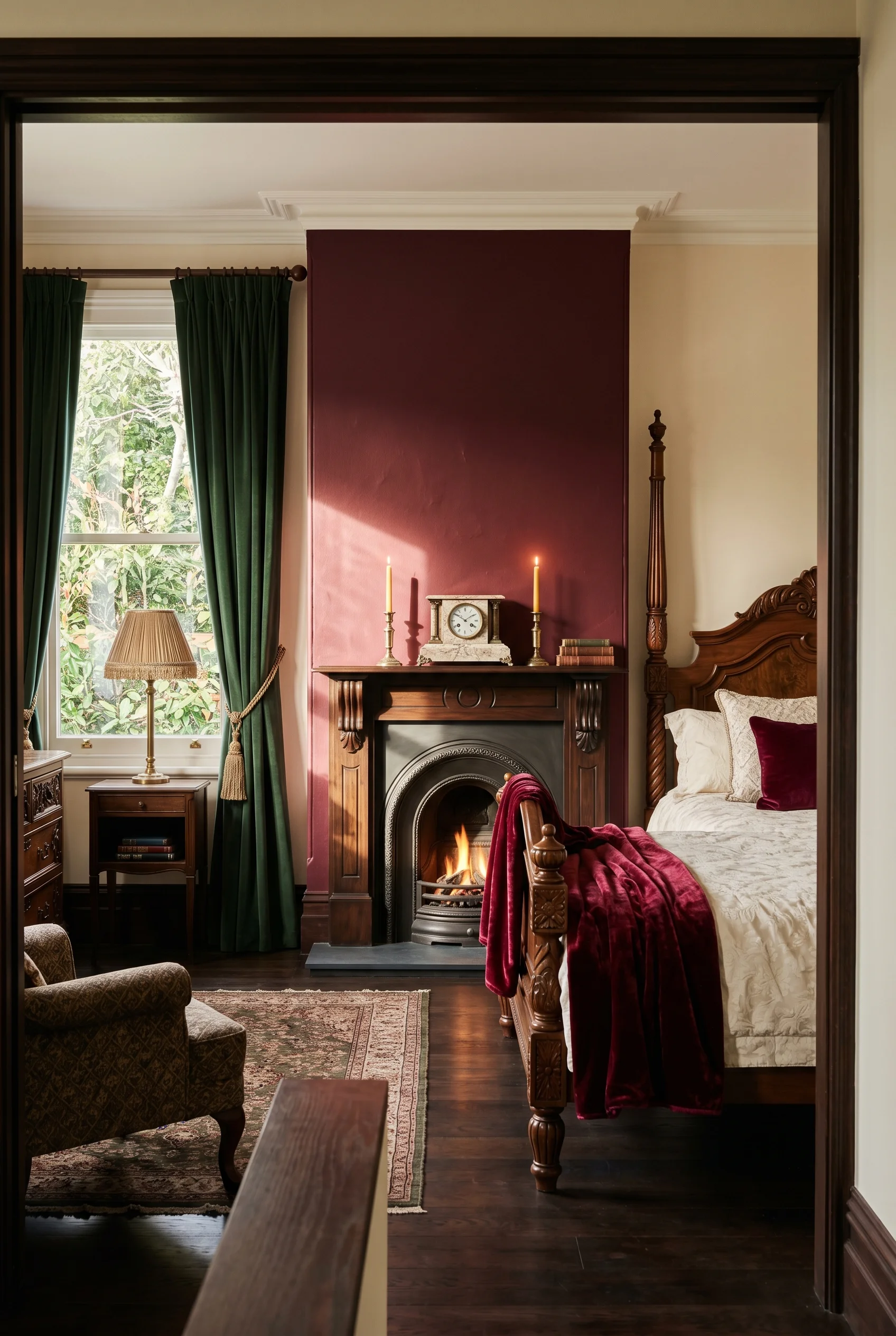
Hardware ties it all together. Bronze, aged brass, or a deep brushed nickel. I’d use the same metal on drawer pulls, the curtain rod, the wall lamp arms, and the bedside lamp bases. Hardware is the jewellery of the room. When the metal repeats, the eye reads the room as one piece, even if the fabrics and woods come from different decades. It is the same instinct behind great victorian exteriors.
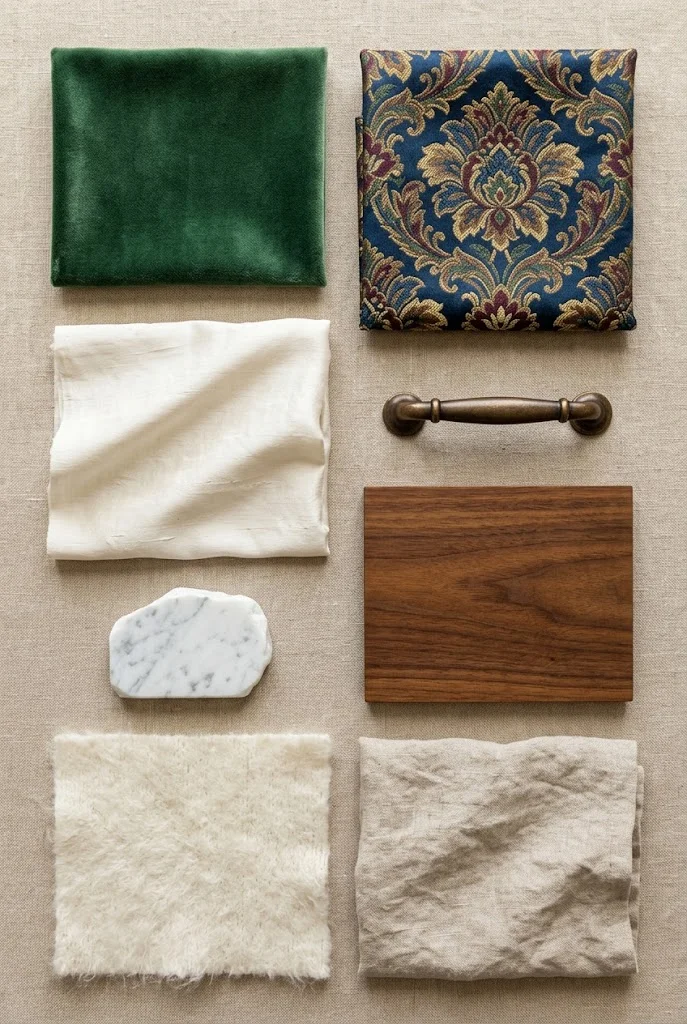
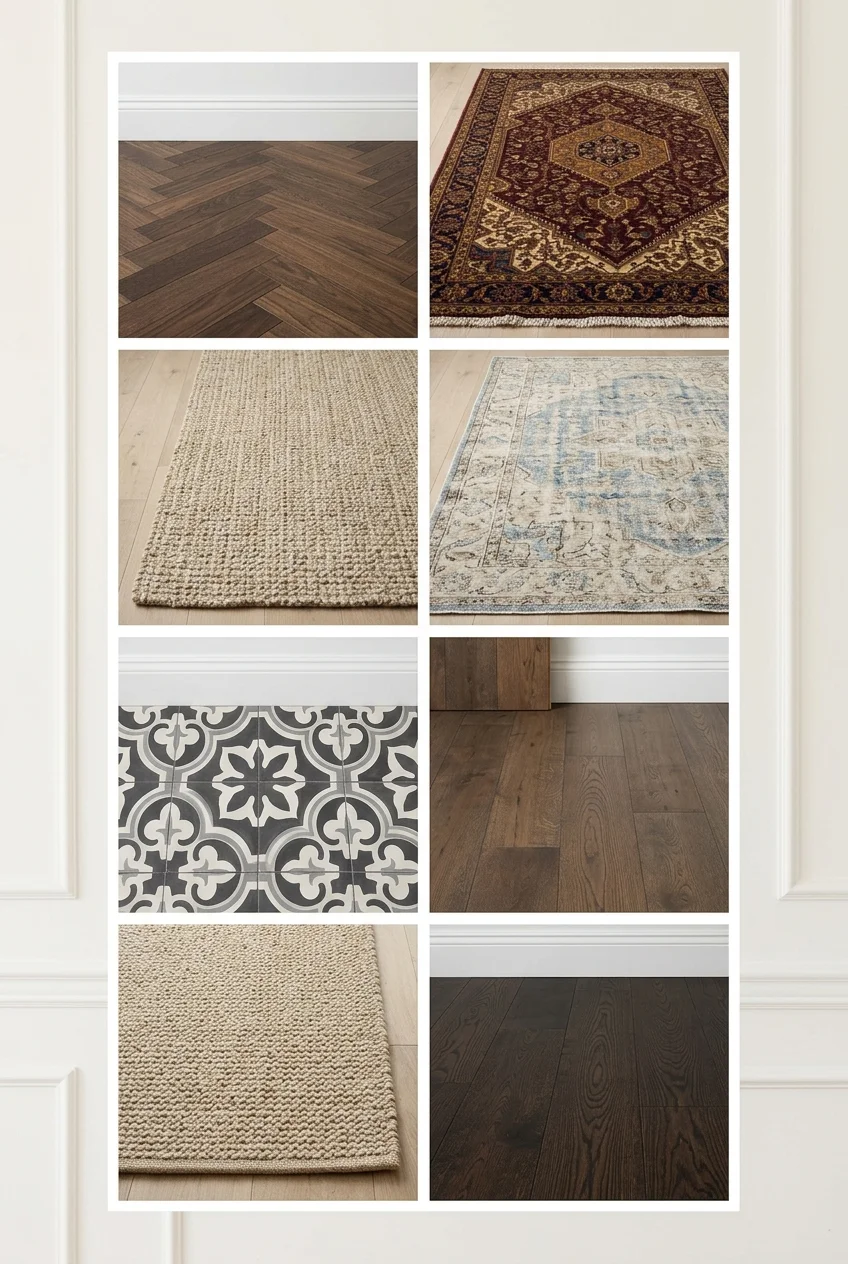
Victorian floors were almost always dark wood with patterned rugs over them. The modern version keeps the bones (dark wood, or a good wood-look vinyl) but rethinks the rug. One big rug becomes two stacked rugs. The stack gives the room a depth one rug can’t. It is the same instinct behind great victorian mudroom secrets designers never share publicly.
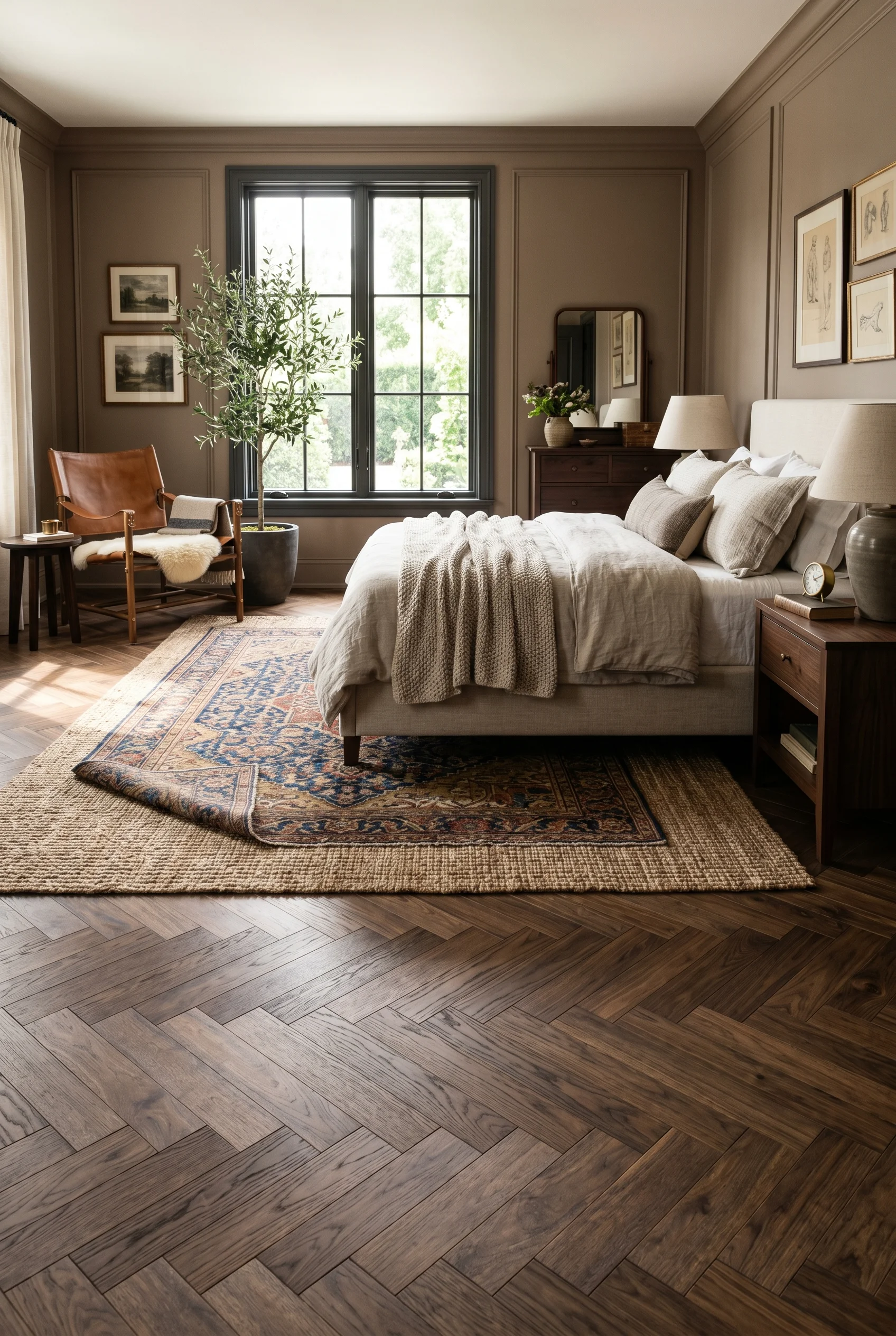
The base I’d pick is a polished dark hardwood (walnut, dark oak, or a stained engineered board). If the budget won’t stretch, modern wide-plank vinyl in a matte finish is hard to tell apart, and it’s better near the en-suite than real wood anyway. Skip mid-tone floors. Modern Victorian needs the floor to drop into shadow, not fight the bed. The full version of this trick is in our japanese style home office piece.
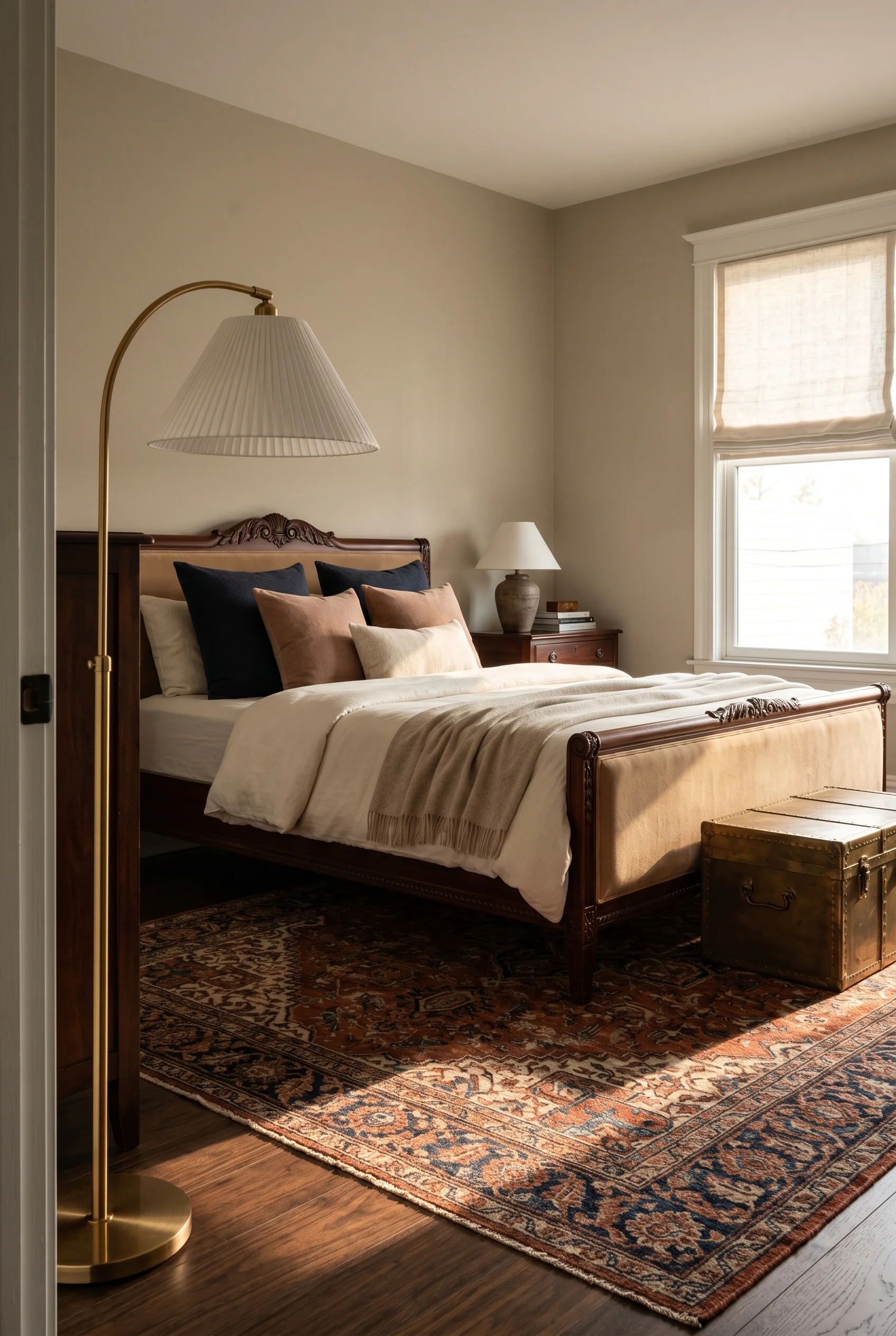
The rug move is layering. A big plain jute or sisal rug as the base (running well past the bed on three sides) with a smaller patterned vintage Persian on top, set under the bed or floated in the pause zone. The jute gives you scale and warmth. The Persian gives you the colour and the Victorian nod, without the cost of a Persian big enough to do the whole room. It also makes the floor feel deeper than it is. This shade shows up again in dining room ideas.
Old Victorian bedrooms used a chandelier, wall lamps (a sconce is just a wall-mounted lamp), table lamps, AND candles, all at once. We don’t need that many. We do need warm light at different heights, because one ceiling light is what makes a deep-toned room feel like a cave. Three layers and one statement is the working formula. Contrast this with scandinavian bedroom where the approach is almost opposite.
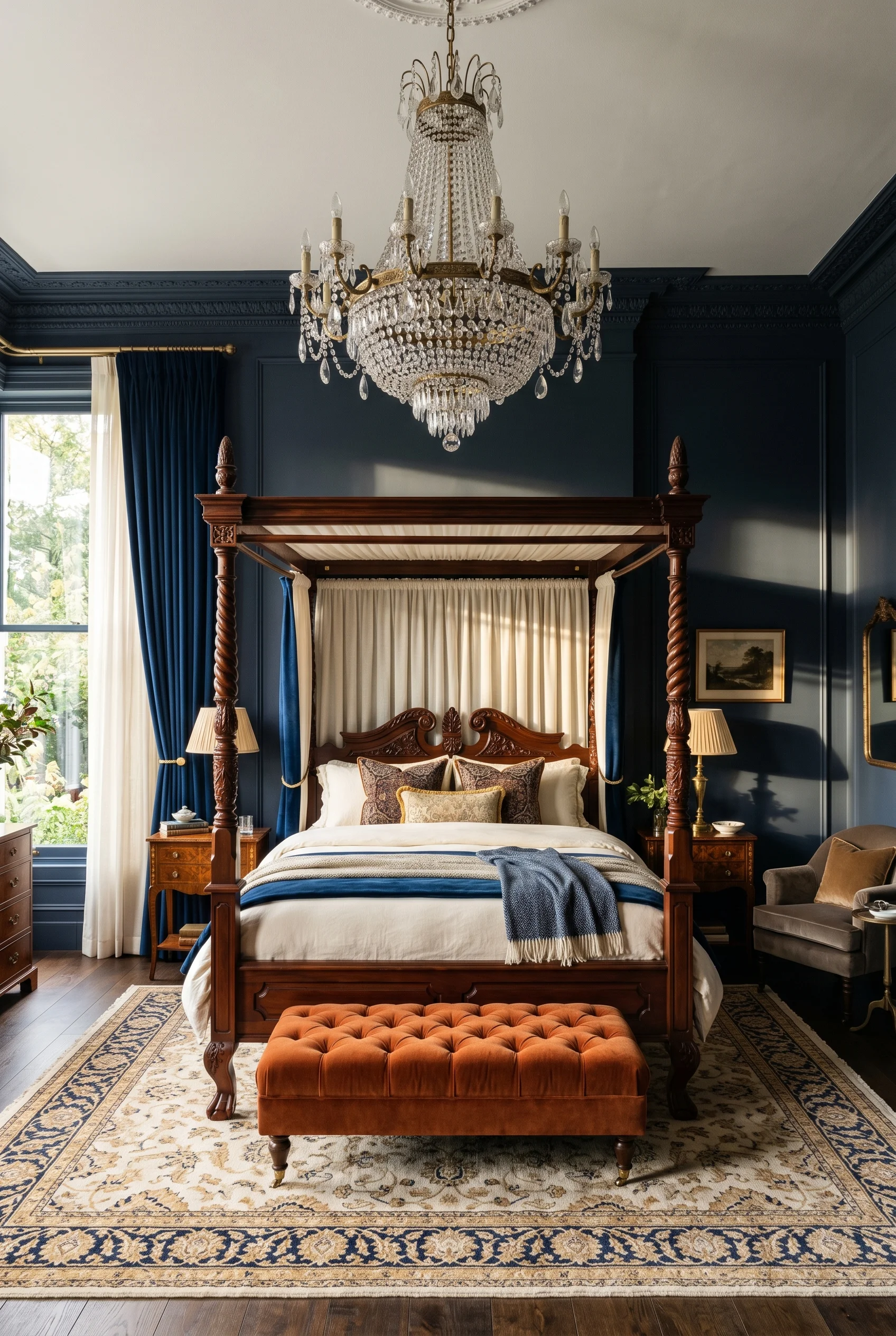
The statement is a crystal chandelier or a fringed pendant, hung in the centre of the room or right over the bed. Crystal sounds over the top, but in a drenched room it grounds the space. The cut glass catches the deep wall colour and bounces it softly, which takes the edge off. Always on a dimmer. Bedroom light at full power is a crime. Contrast this with japandi bedroom where the approach is almost opposite.
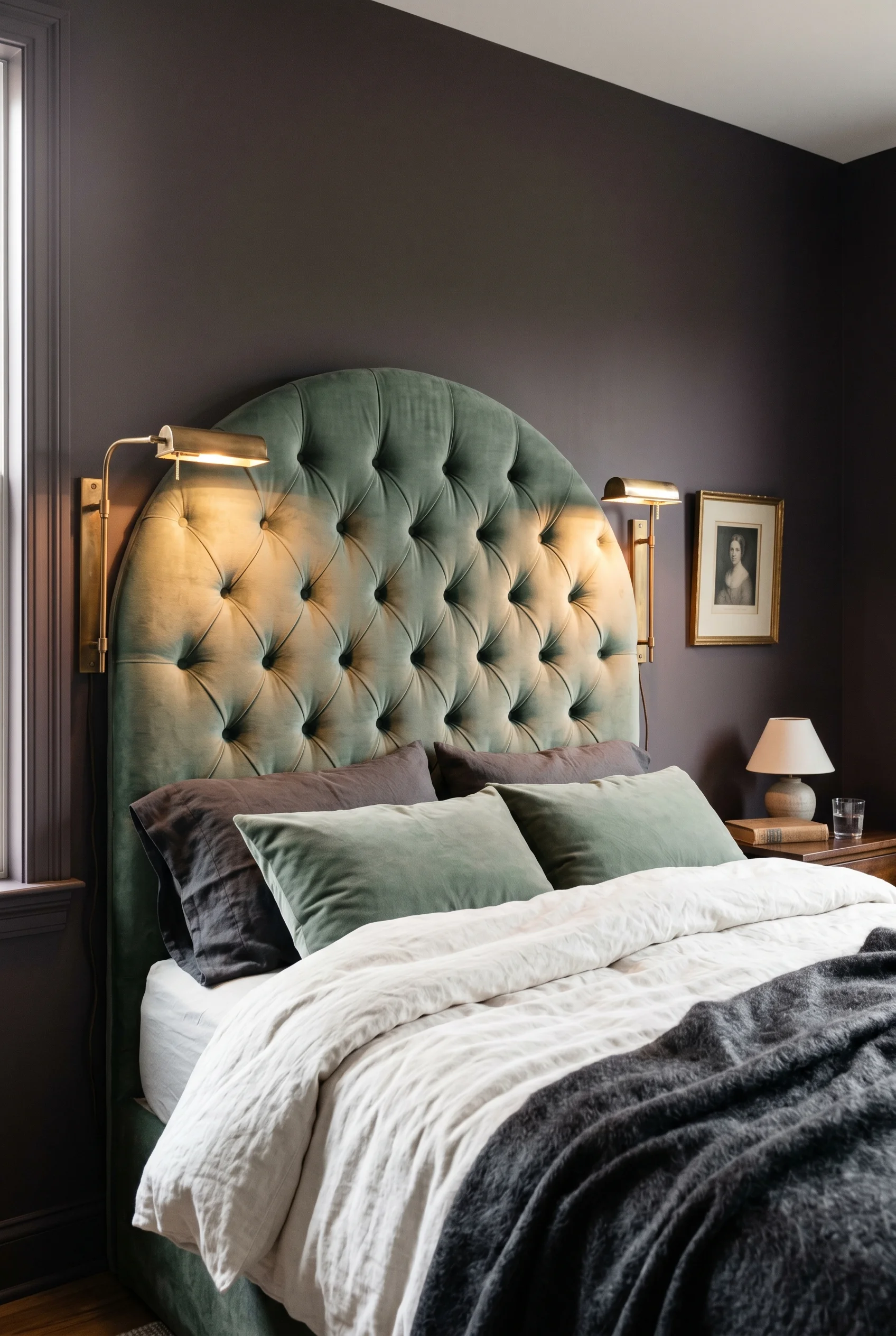
The layers are wall lamps flanking the bed (no more reading lamps that fall off the table), a table lamp on the dresser, and a small lamp in the pause zone. All bulbs at 2700K to 3000K (that’s the warm yellow end of the scale, not the cool blue end). And here’s where the lampshade swap pays off again. Pleated, fringed, or velvet shades in dusty pink, deep green, or warm cream. It costs almost nothing and does more than any other single move. This shade shows up again in sage green bedroom ideas.
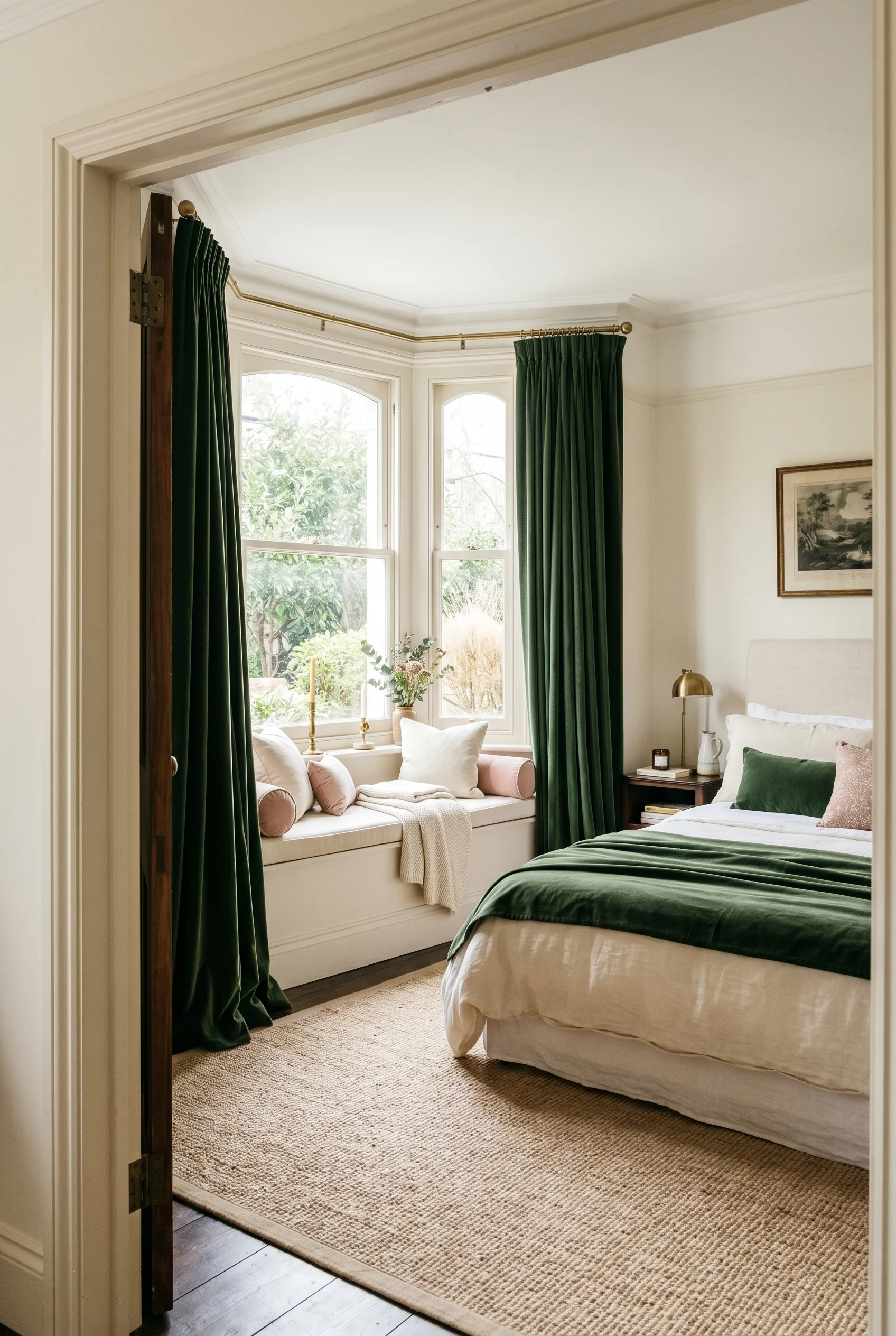
The fixtures I’d pick: a crystal or detailed metal chandelier, swing-arm brass wall lamps either side of the bed, and a ceramic or carved-base table lamp on the dresser. All warm, all dimmable, all at different heights. That’s the soft glow Victorian rooms were always chasing before electric light caught up. The material logic here mirrors what we covered in small warm and cozy living room ideas.
Window dressing is where Victorian bedrooms used to go full theatre. Three layers of drape. Valances (a short bit of fabric across the top). Swags. Sheers behind the lot. The modern version keeps two layers and quietly drops the rest. The result has the same weight without the museum drag. For a warmer take on the same room, see modern bedroom.
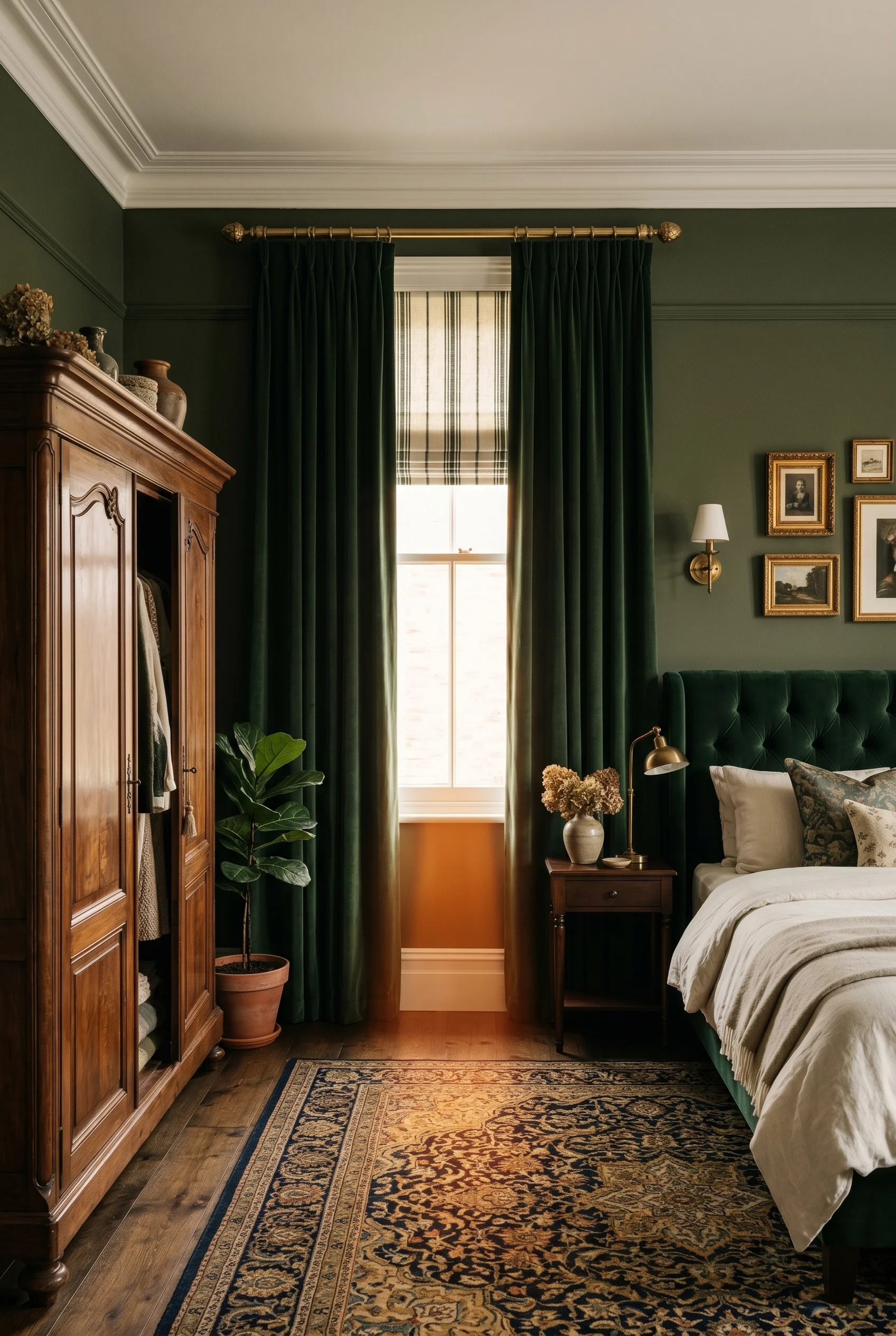
The first layer is a roman shade in linen or cotton, fitted inside the window frame. This is the working layer. It does the privacy and the light filter day to day, so it has to be useful. White, ivory, or a soft stone shade. Skip pattern here. The pattern is going elsewhere. The material logic here mirrors what we covered in corner cozy reading nook.
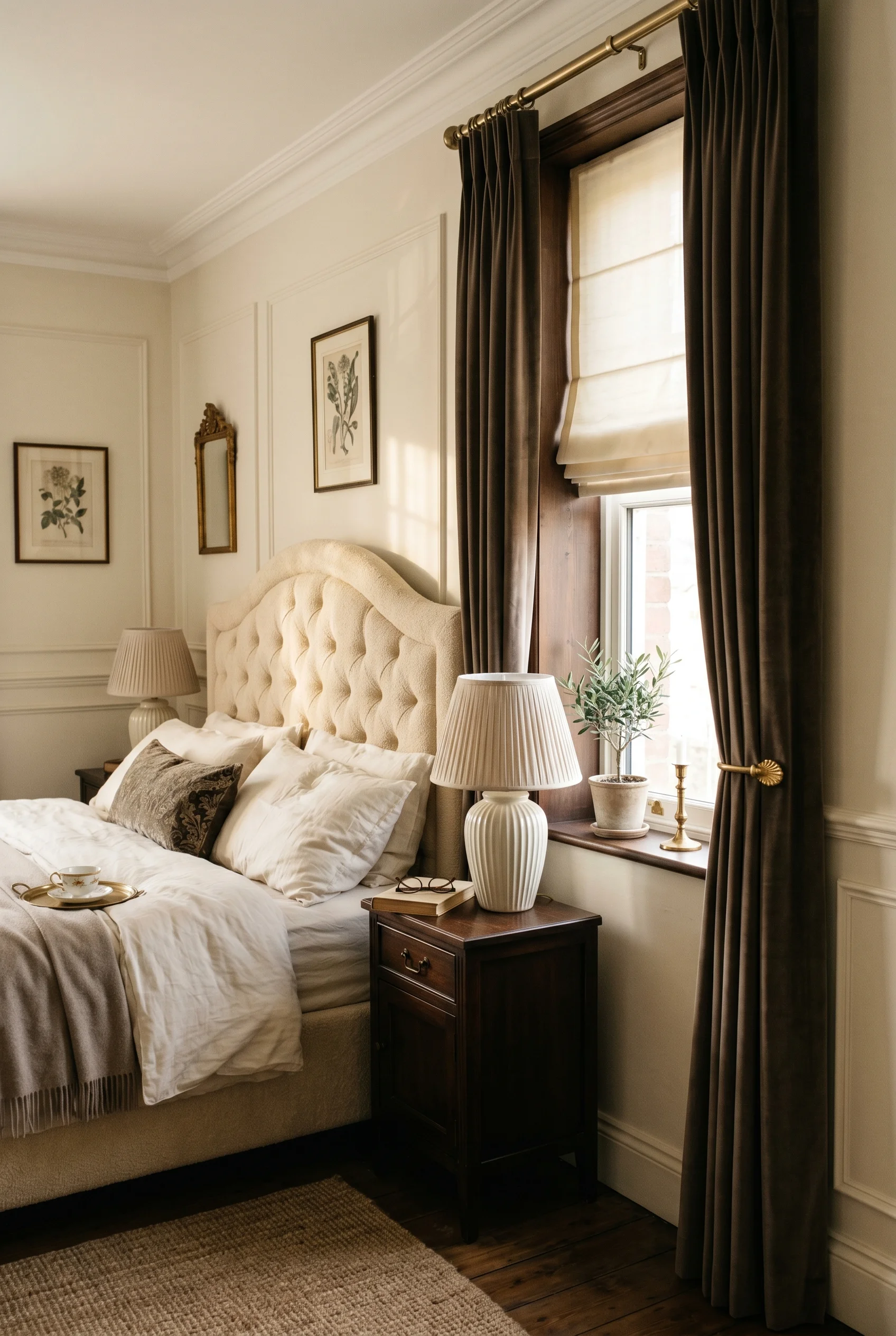
The second layer is the heavy drape. Velvet, silk, or brocade, hung high (about 15cm above the window frame) and wide (20cm past the frame on each side). Floor length, with a slight pool. This is the layer that does the visual work. It pulls the eye up, frames the window, and gives the room the tall feel Victorian bedrooms always tried to push. A simple silk fringe or a tassel tie-back adds the period nod without going full costume drama. For a warmer take on the same room, see dark bedroom ideas.
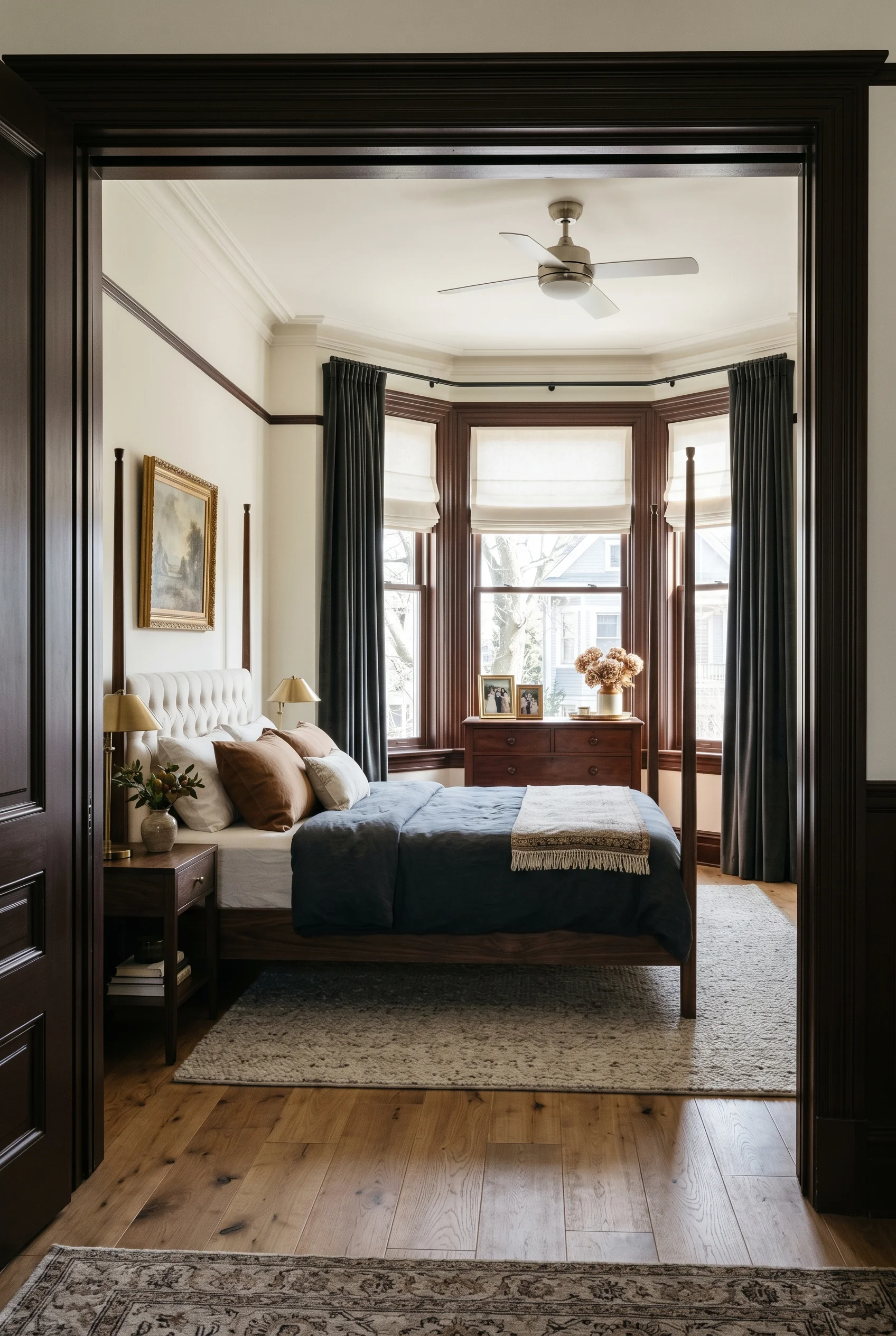
The specs I’d use: linen roman shade inside the frame, heavy velvet drape mounted high and wide, no valance, no swag, simple fringe or none at all. Two layers, both useful, both pretty. Add a third layer and you’re doing a stage set. You will see this exact finish in our mid century modern roundup.
The accessories bit is where modern Victorian bedrooms most often fall apart. Old Victorian rooms were maximalist on purpose. The era thought empty surfaces were a moral fail. That look does not travel. The modern fix is to cut hard. Three or four good things per surface. No more. The mid century modern bedroom interpretation handles this completely differently.
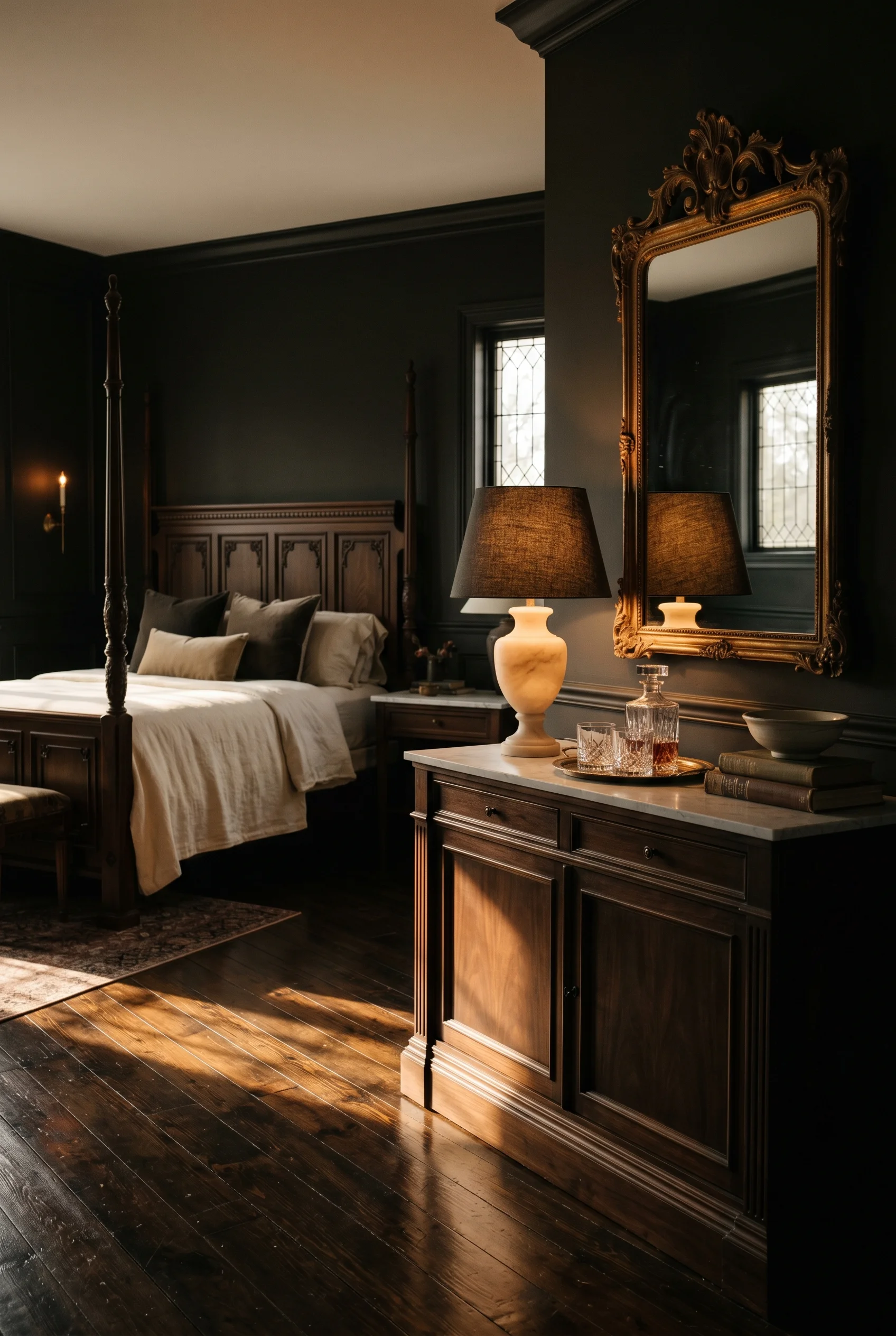
The pieces I’d reach for are a big gilt mirror (above the dresser, never above the bed, because a mirror over the bed creates a sleep problem nobody talks about), one piece of vintage-style art in an oval or gilt frame, a pair of brass or ceramic candlesticks, and one stack of books that mean something to you. That’s it for the dresser. The bedside tables get a lamp, a small dish for jewellery, one book, and a glass of water. The rest hides. You will see this exact finish in our mediterranean bathroom ideas roundup.
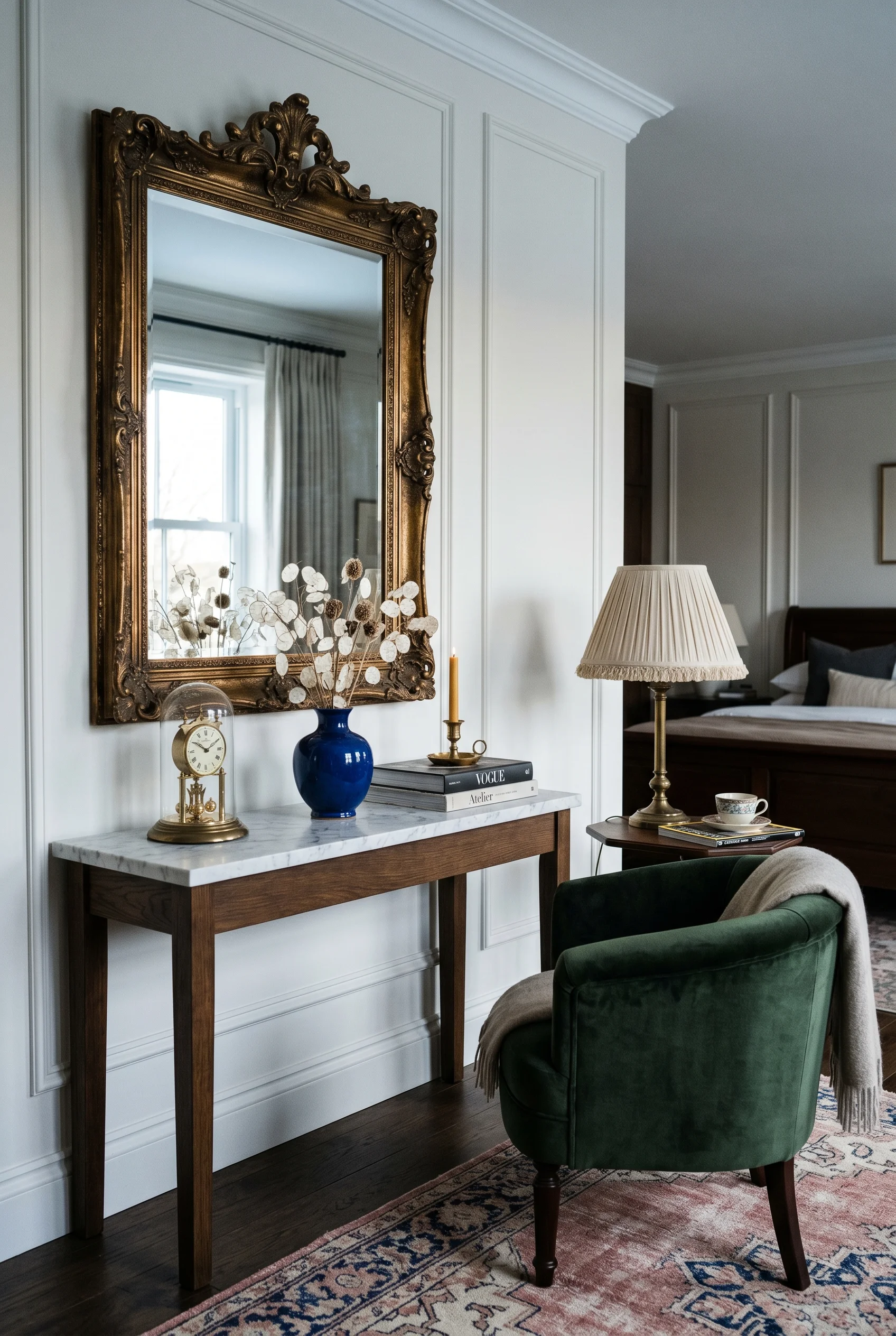
Tech is the modern bit. You will have a phone charger. You may have a smart speaker or a sleep tracker. The move I’d lean towards is to dress the tech in period clothes. A brass toggle switch instead of a plastic rocker. A USB port set into the side of the old nightstand instead of an ugly plug on the floor. Smart bulbs in the chandelier so you can dim from the bed without breaking the look. Hide the wires. Don’t hide the function. This works in tandem with the ideas in modern bathroom ideas.
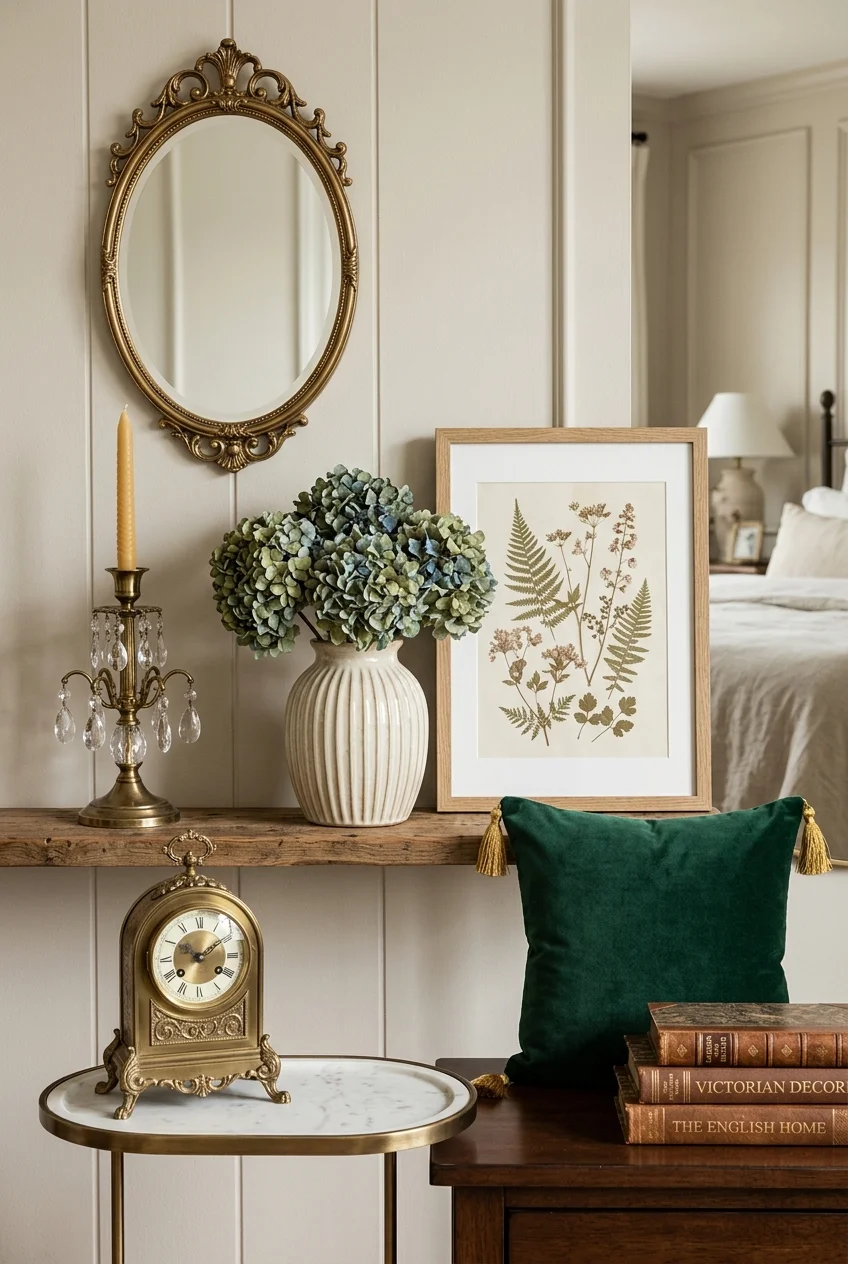
Swap your lampshades this weekend. Pleated, fringed, or velvet, in a warm shade, on every lamp in the room. That one move costs less than a meal out and does more than a feature wall. Once the light feels right, build the rest around it. The bed. The drench. The trim. Get the small soft details right first. The big moves get easier from there. This works in tandem with the ideas in farmhouse kitchen.
This post contains affiliate links, which means we may earn a small commission if you make a purchase through our links, at no extra cost to you. For a related take, see living room with dining table.