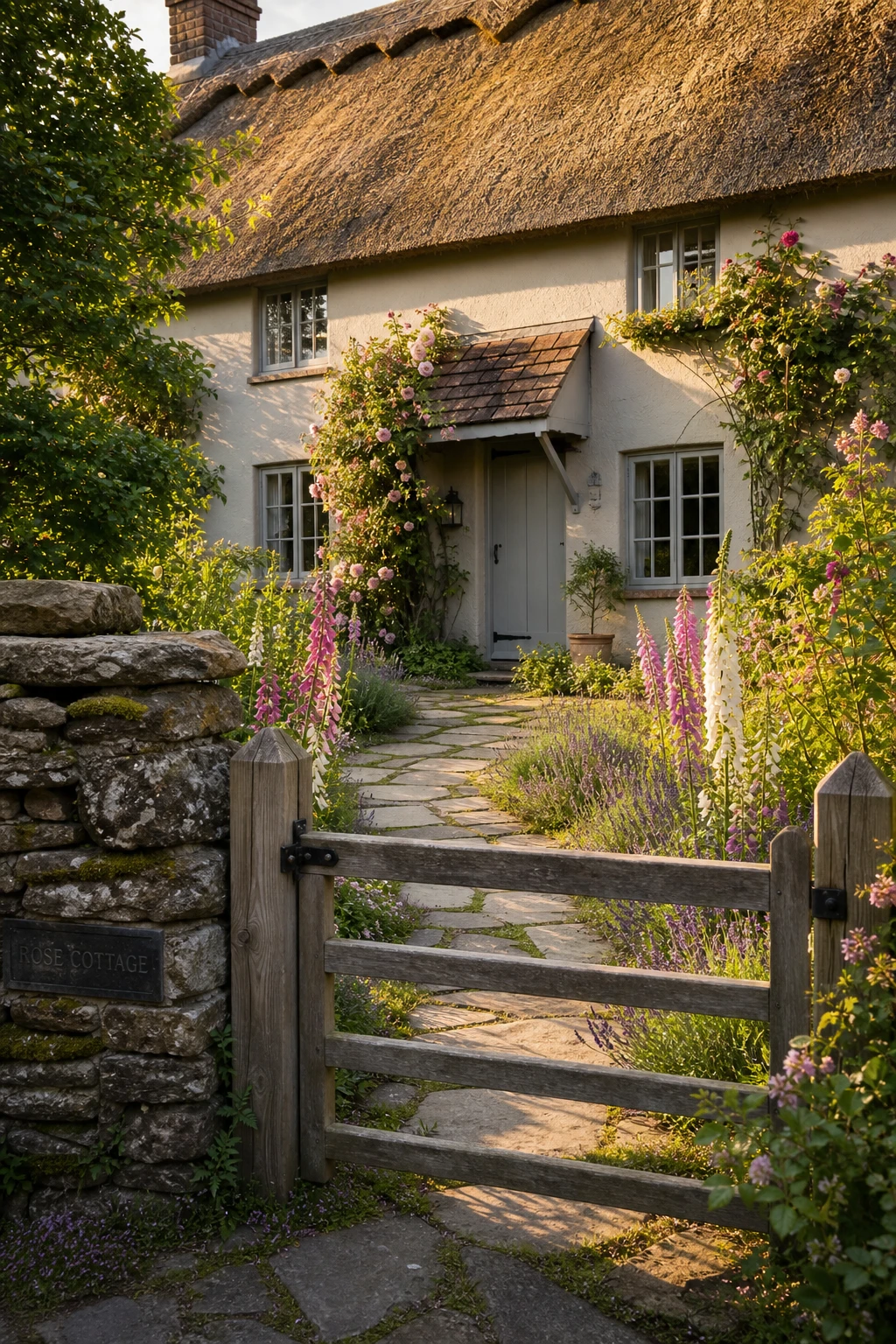
I’ve always thought a thatched English cottage exterior does something no other style can quite match: it makes a house look like it grew there, roots and all. What I love most is how many ways that magic shows up, whether it’s a green door framed by climbing roses, warm Cotswolds stone deepening in autumn light, or a ridge of heather thatching catching the morning mist. Every look here is one you can genuinely steal, whatever your starting point.
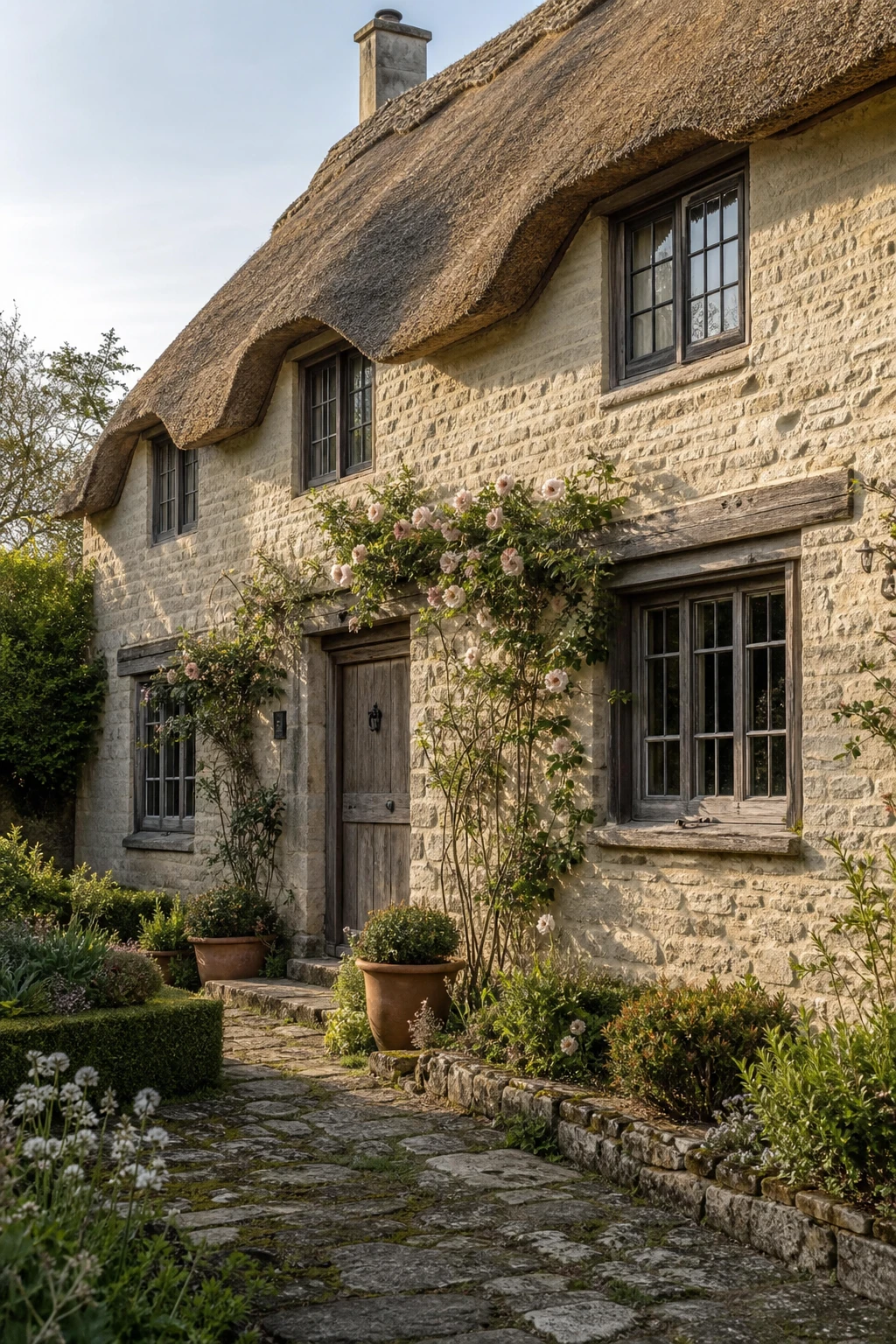
Why Stone Walls Make a Thatched Roof Look So Right
Stone walls and a thatched roof belong together the way a good wool jumper belongs with walking boots. What I love is how both materials carry the same earthy honesty, so the eye moves from ground to roofline without a single jarring note. You get that deep, settled feeling of a building grown from its own landscape rather than dropped into it. The rough texture of the stone is what really wins me over, because it gives the soft thatch something solid to rest against.
The Key Details
Deep wheat thatch roof
Recessed timber casement windows
Climbing rose on facade
Mossy stone garden path
Heavy oak plank front door
Pro TipMatch your mortar to the warmest tone in your stone, a creamy or honey coloured mix, so the joints read as part of the wall rather than a grid drawn across it.
AvoidPainting over natural stone seals away the very texture that makes the facade feel rooted and old, and once you coat it, reversing the damage is a long and costly job.
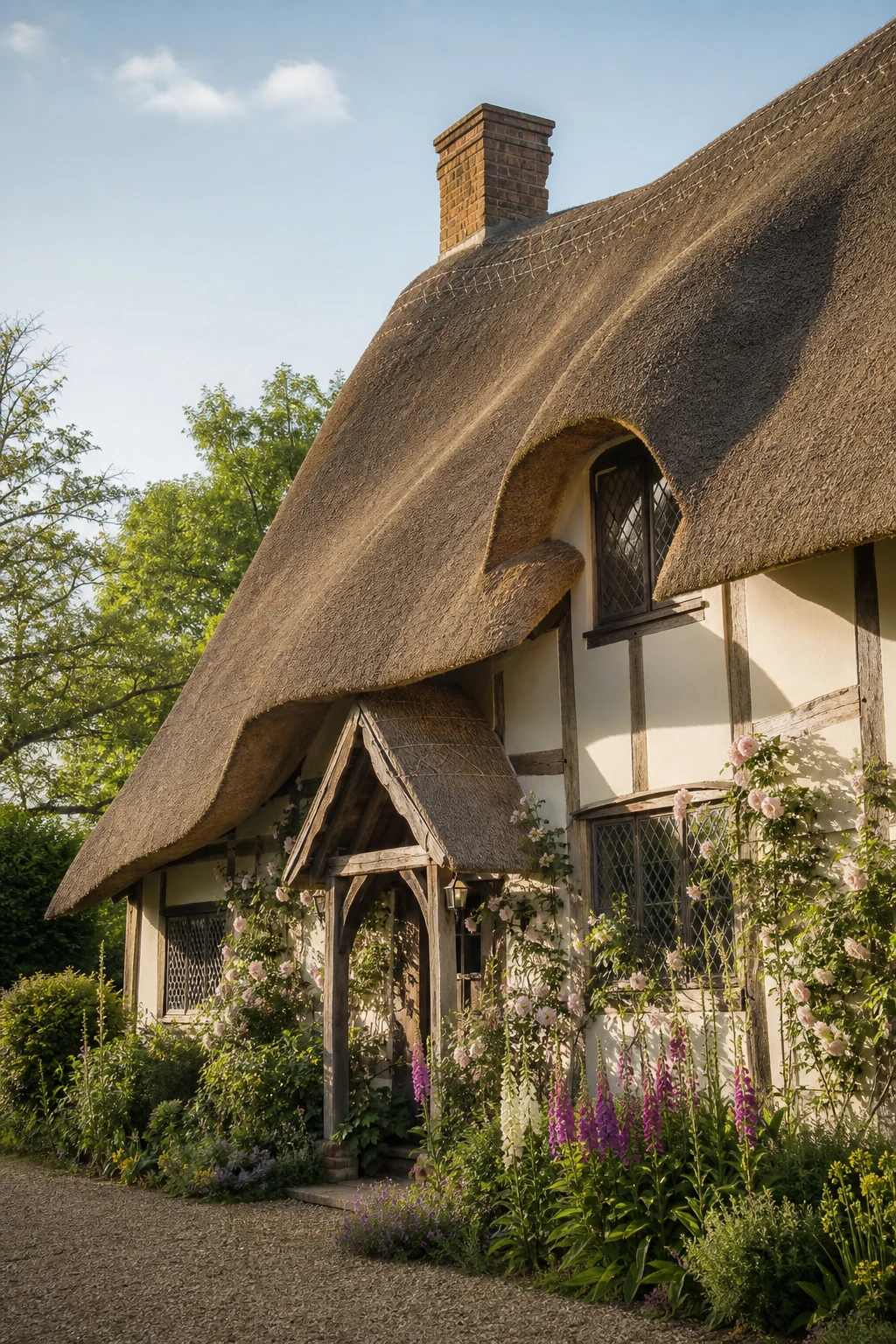
The Ancient Roofline Shape That Gives a Cottage Its Soul
A steeply pitched roofline is what I reach for when a cottage feels flat or forgettable. That sharp angle pulls the eye upward and gives the whole facade a quiet drama, the kind that feels ancient and settled all at once. You will notice how the low eaves seem to press the building into the ground, anchoring it to the landscape rather than floating above it. That proportion is everything.
The Key Details
Steeply pitched water reed thatch roof
Eyebrow dormer window in thatch
Timber framed oak entrance porch
Leaded casement windows
Cottage garden with foxgloves and climbing roses
Pro TipKeep your eaves no higher than two metres from ground level so the thatch reads as a heavy, generous crown rather than a thin cap sitting on top of the walls.
AvoidCutting a full height modern dormer into the slope steals the unbroken sweep that gives the roofline its medieval weight and leaves the silhouette looking restless and patchy.
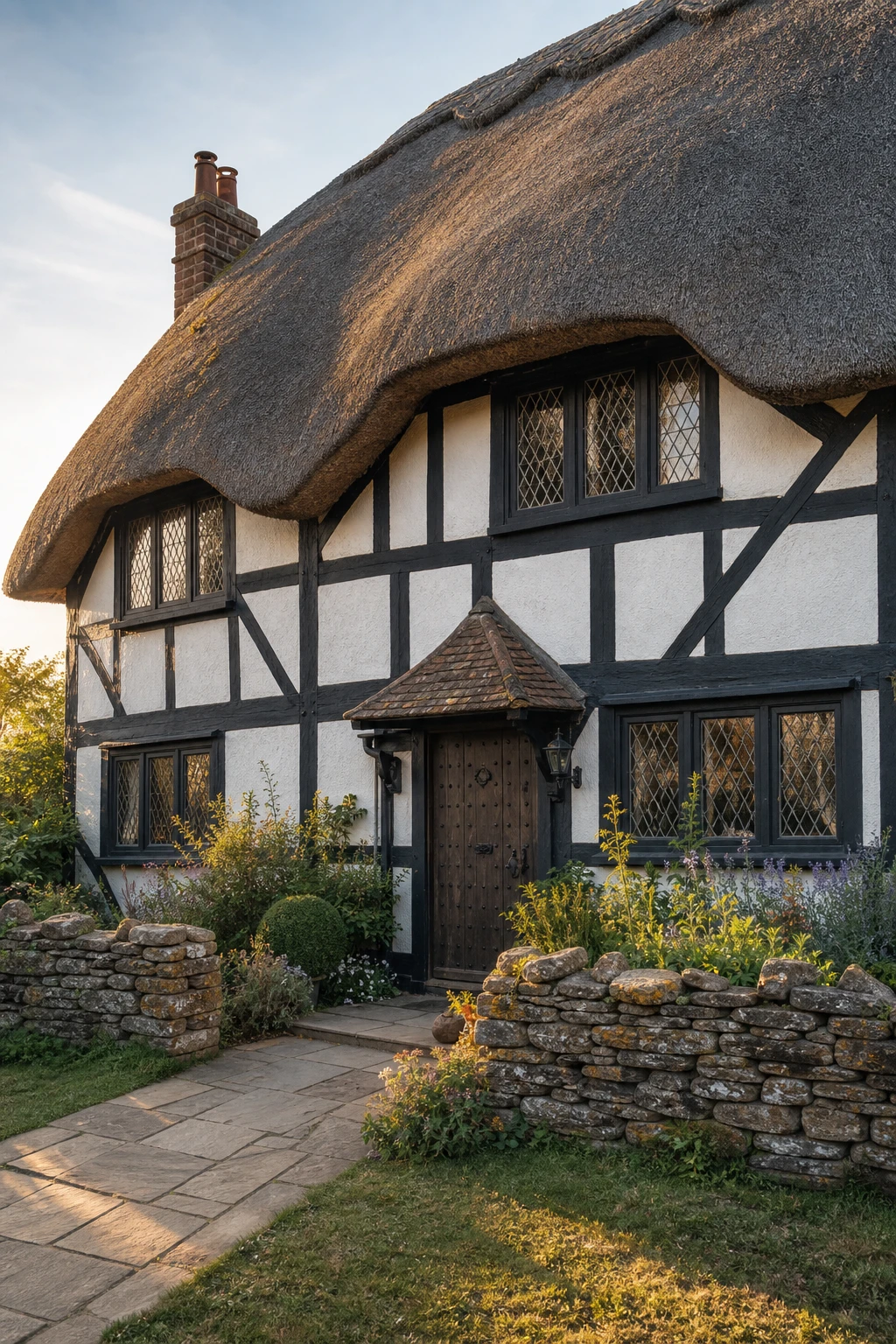
How Half Timber Framing Turns a Plain Facade Into a Storybook
Half timber framing is one of my favourite moves on a cottage facade because the dark beams map out every structural line and let your eye read the whole building at a glance. You get a graphic, almost illustrative quality that plain render simply cannot offer on its own. What wins me over every time is the contrast: rich walnut or near black oak against a soft lime white render turns the wall into something alive.
The Key Details
Leaded casement windows
Deep overhanging thatched roof
Studded oak front door
Flagstone front path
Dry stone garden wall
Pro TipChoose a timber stain at least four shades deeper than your render colour so the framing stays bold even on overcast days.
AvoidLetting the stain weather to a washed out grey strips the facade of all its definition and the cottage loses the structured, storied character you worked to build.
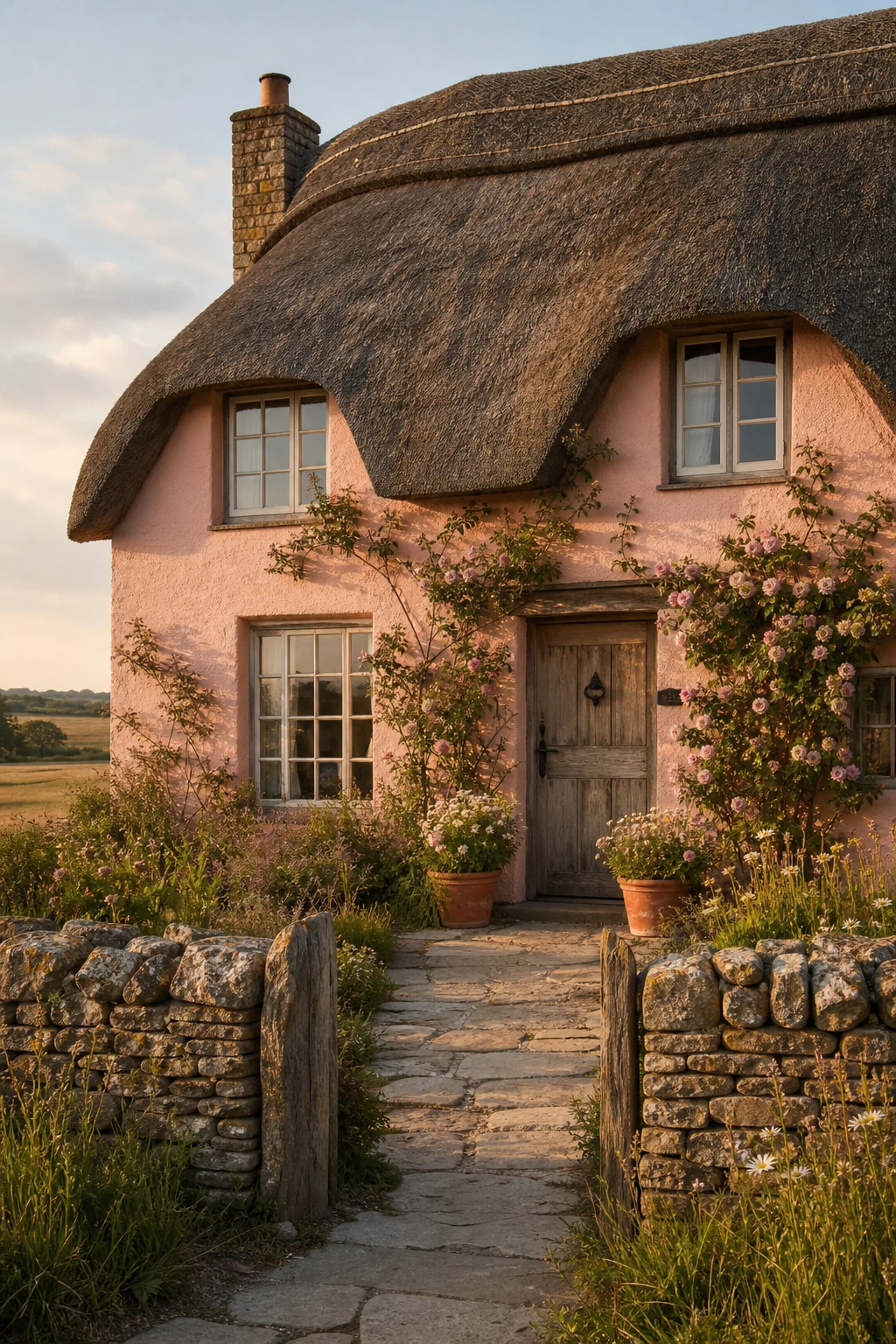
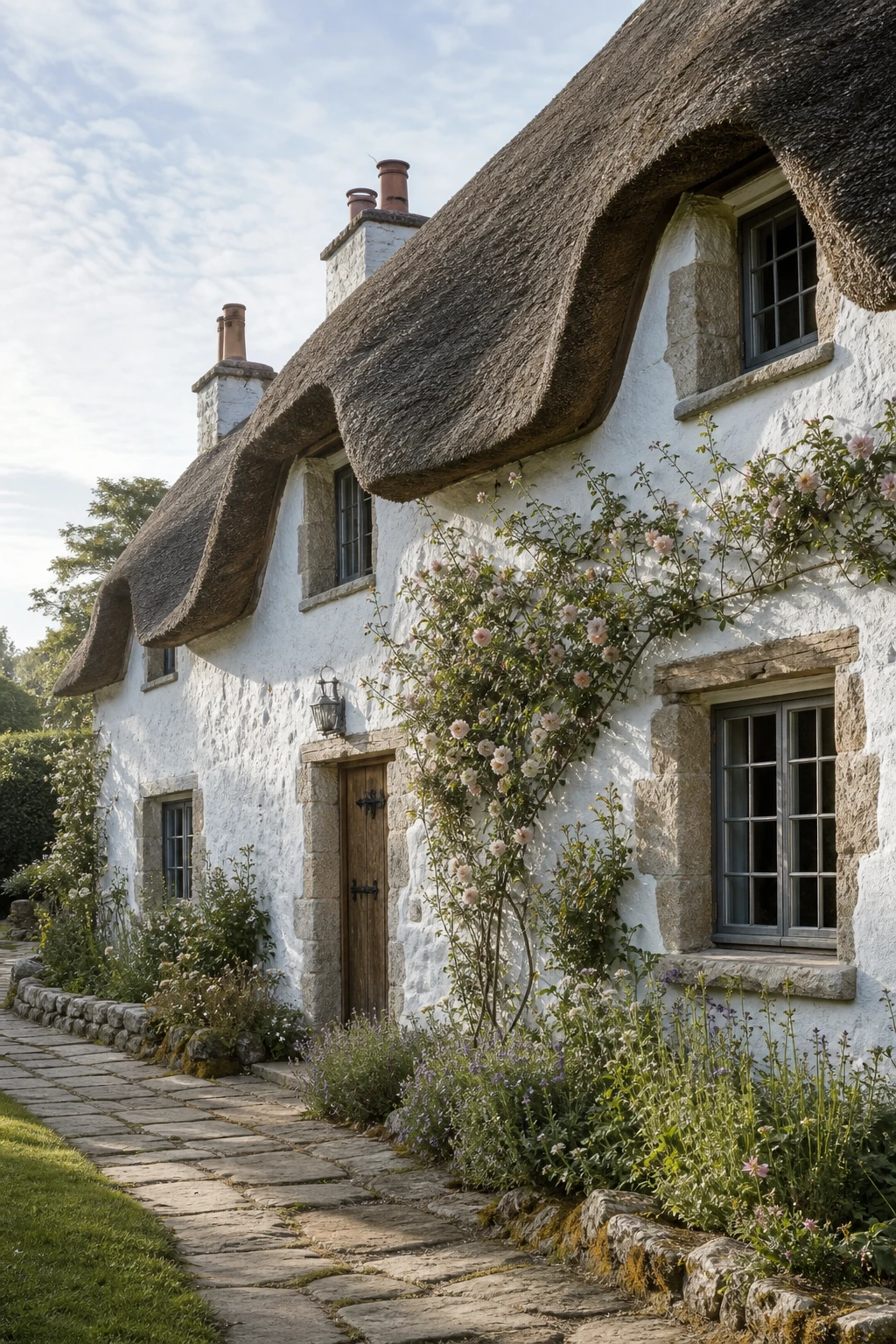
The Prettiest Pink Render Shade for a Thatched Cottage in Open Country
Blush render suits open country better than almost any other colour I know, because it pulls from the warm tones already living in the thatch and the soil. The whole building ends up feeling like it grew there rather than arrived. That gentle warmth is something white render simply cannot give you, and it makes the climbing roses and the limestone path read as one complete picture rather than separate features I had to coax into conversation with each other.
The Key Details
Deep thatch roof with swept eaves
Weathered oak front door
Climbing roses on rendered facade
Limestone flagstone path
Drystone boundary wall
Pro TipTint a breathable limewash rather than a standard masonry paint so the render keeps its slight variation in tone, which gives you that authentic, sun bleached depth a flat coat will never match.
AvoidPushing the pink too far into a saturated coral or bubblegum shade pulls the cottage out of its landscape entirely, and the whole facade ends up looking like a painted toy rather than a building that belongs to the countryside.
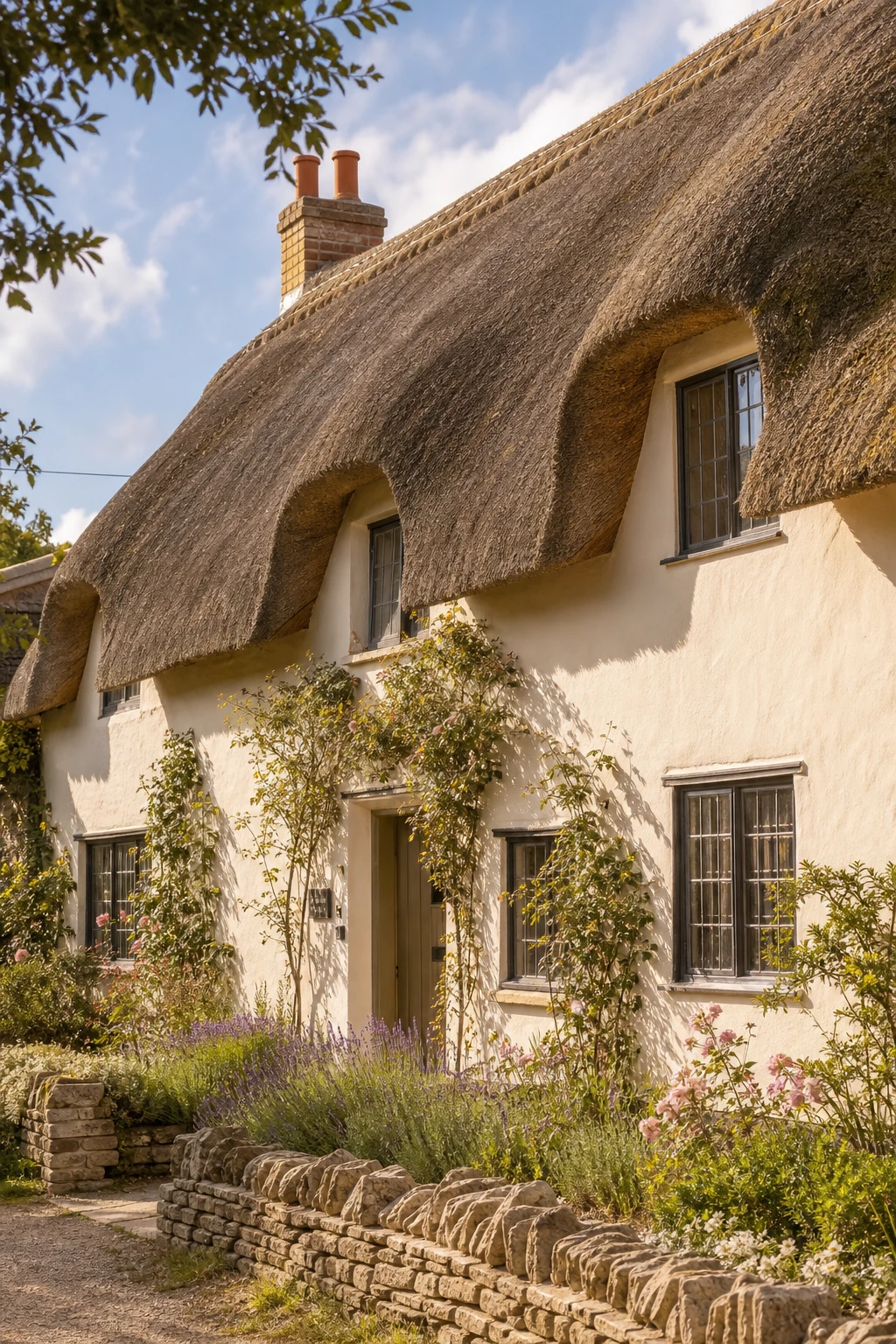
Getting a White Thatched Cottage to Glow Rather Than Glare
The colour of a warm white render shifts beautifully through the day, creamy at noon and almost honeyed at dusk, and that is what draws me to it on a thatched cottage. Notice how it picks up the golden tones of the thatch above rather than fighting them. Cool or brilliant whites flatten that relationship and the facade ends up looking clinical against such an organic roof. The chalky, slightly muted finish is the one I keep coming back to, because it makes the whole cottage read as one considered thing rather than a wall topped with a hat.
The Key Details
Deep golden thatch roof with undulating eaves
Leaded casement windows with dark timber frames
Climbing roses trained against the render facade
Low dry stone boundary wall
Lavender edged stone front path
Pro TipTest your white in a large patch on a north facing section of wall first, because that is where the colour will look its coolest and most unforgiving.
AvoidBrilliant white on an aged thatch roof creates a jarring contrast that makes the render look like it belongs on a new build rather than a centuries old cottage.
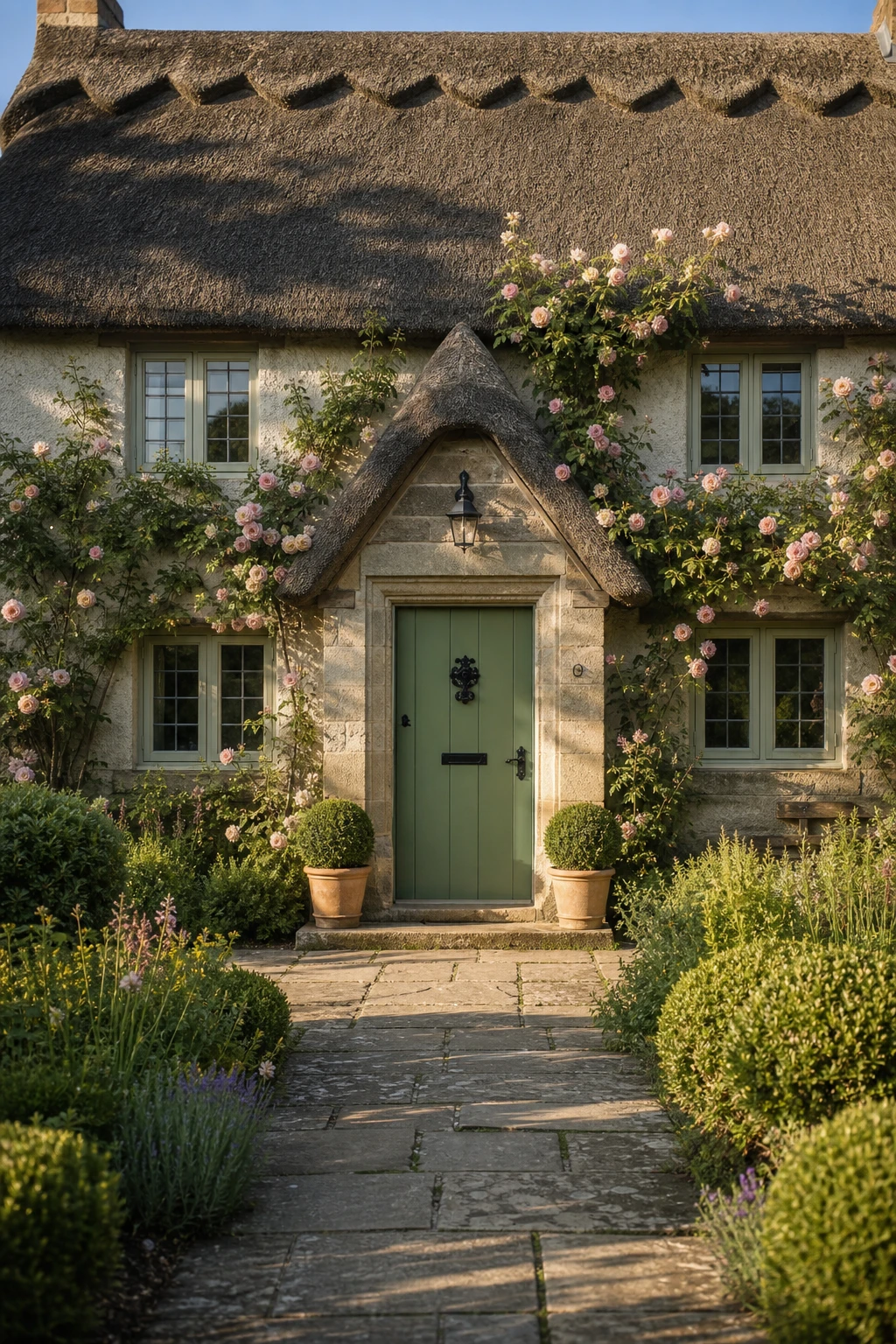
The One Door Colour That Makes a Thatched Cottage Feel Complete
A deep, bottle green door is the full stop the facade has been waiting for. Against warm honey thatch and pale render, you get an instant focal point that pulls every other element into place. What I love is how the richness of the green echoes the hedgerows and climbing plants already growing around it, so the colour feels earned rather than applied. Watch how the eye travels straight to the door and then relaxes across the whole front of the house.
The Key Details
Solid plank oak front door
Stone porch surround
Climbing roses on lime render
York stone threshold path
Clipped box topiary in terracotta pots
Pro TipPaint the door surround or timber frame one shade lighter than the door itself and you create a gentle frame that makes the green read even deeper at the centre.
AvoidChoosing a yellow green or lime leaning shade will fight the amber warmth of the thatch above it, leaving the whole facade looking unsettled rather than composed.
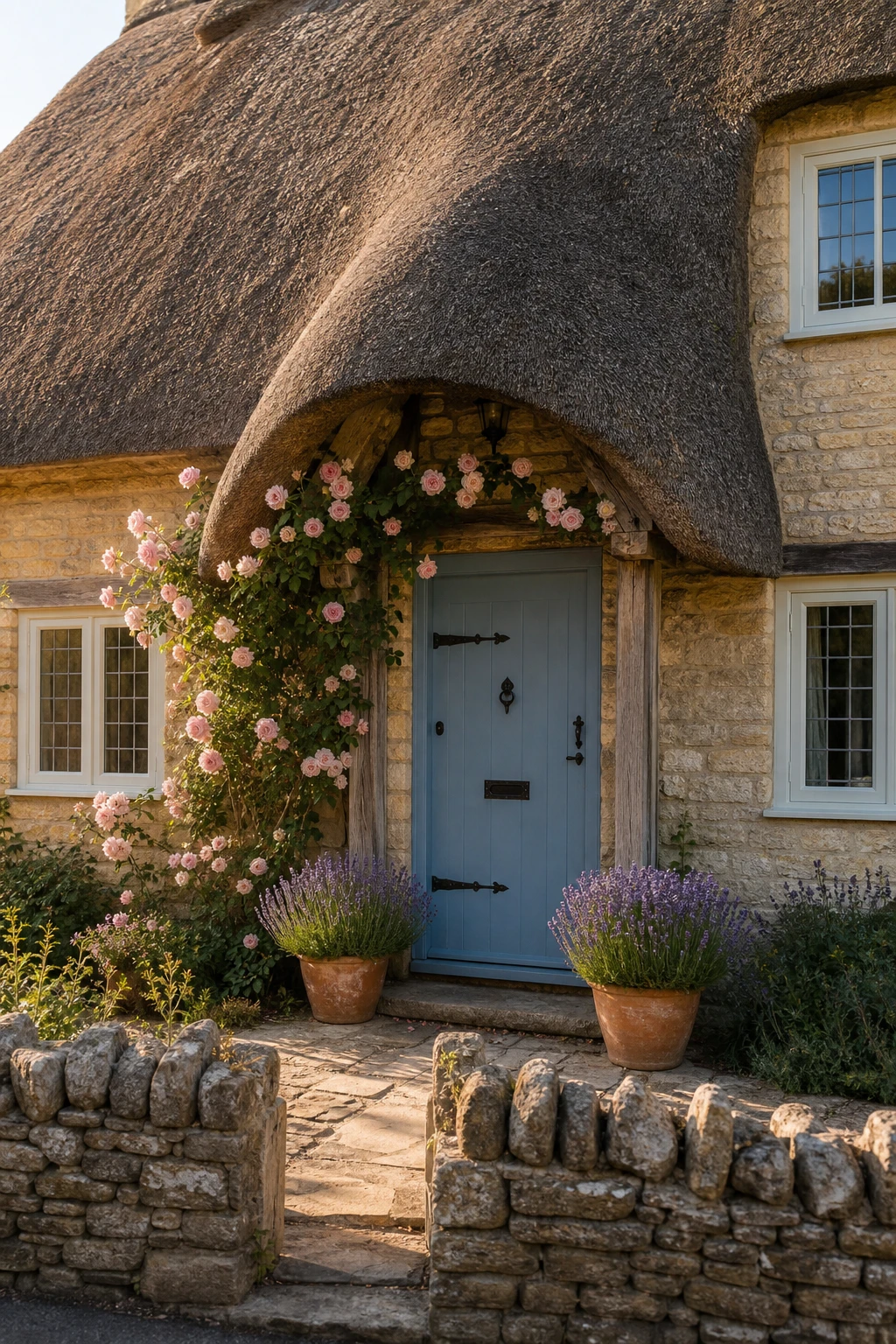
A Blue Door on a Thatched Cottage and Why It Works So Well
Dusty blue against honey coloured limestone is a contrast that always stops me. The cool tone pulls forward against all that warm stone and you get a quiet drama that feels completely unforced. The muted depth of a well chosen blue reads as both old and settled, like the cottage arrived at that colour gradually over centuries rather than from a paint chart. Pair it with the natural texture of the stone and the door does its job without trying too hard.
The Key Details
Leaded casement windows with white timber surrounds
Deep straw thatch roof with ridge detailing
Climbing rose framing the doorway
Worn flagstone entrance path
Dry stone boundary wall with terracotta pots
Pro TipReach for a chalky, grey leaning blue like Farrow and Ball Pitch Blue or Oval Room Blue rather than anything vivid, so the door sits in the palette rather than shouting over it.
AvoidPairing a bright cobalt door with a densely flowering climbing rose splits the eye between two loud focal points and the entrance loses all its calm authority.
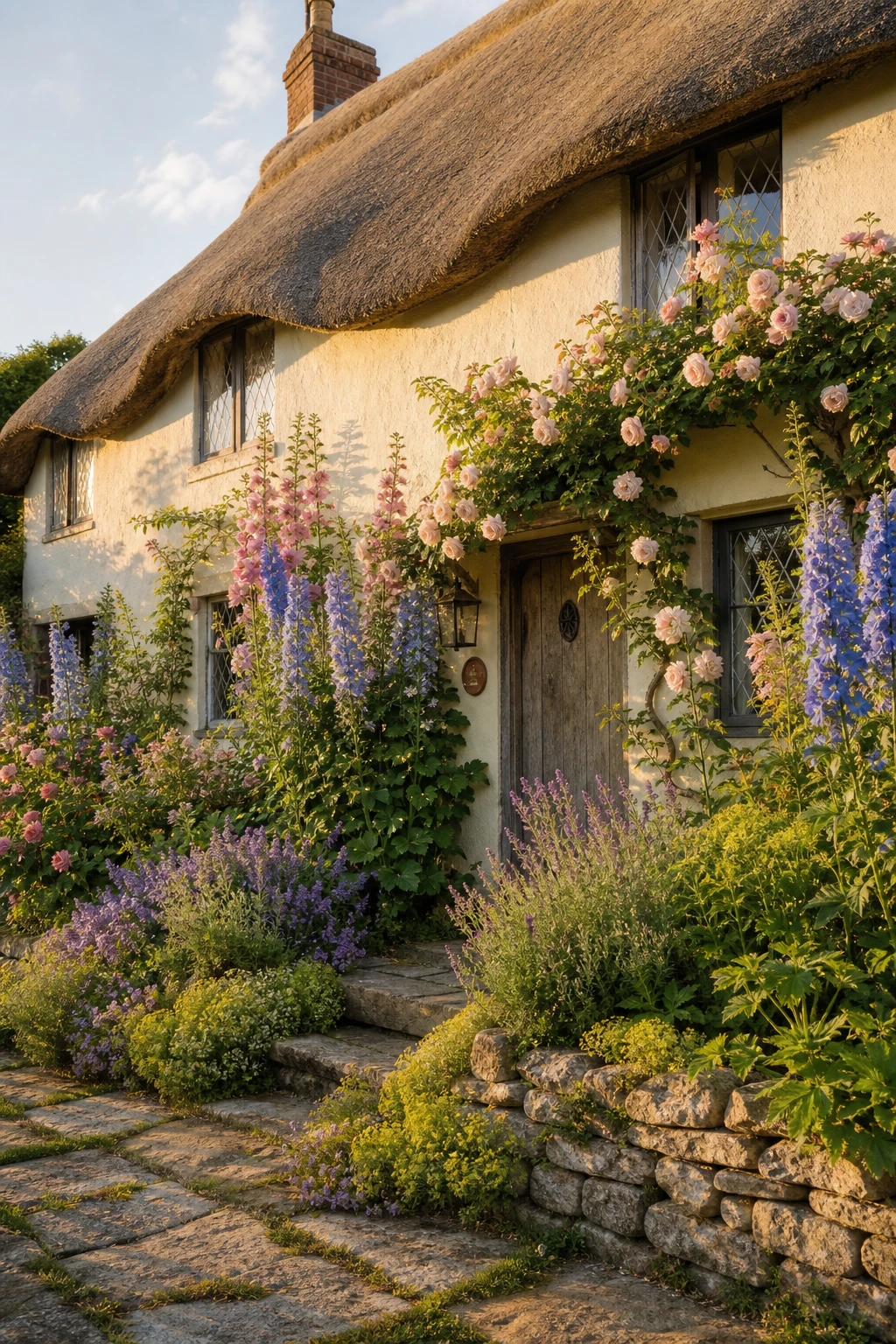
How Flowers Along the Facade Soften Every Hard Edge
Flowers along a cottage facade do their best work when they are layered by height, and that is the approach I always take. Tall foxgloves and delphiniums hold the eye at mid height, while low catmint and hardy geraniums spill softly at the base, giving you that generous, relaxed feeling of a garden that has grown itself over many years. The layering breaks up the flatness of a wall without hiding it, so the stone and render still read clearly behind all that colour, which is the balance I am always chasing.
The Key Details
Layered cottage flower border
Climbing rose around timber door
Leaded casement windows
Dry stone garden wall
Mossy flagstone path
Pro TipPlant a repeat flowering rose such as Gertrude Jekyll directly at the base of the wall so you get a second flush of blooms in late summer when the rest of the border starts to quieten down.
AvoidLetting a single vigorous climber like Virginia creeper run unchecked will swamp windows within a season or two, cutting light inside and making rooms feel dim and closed in.
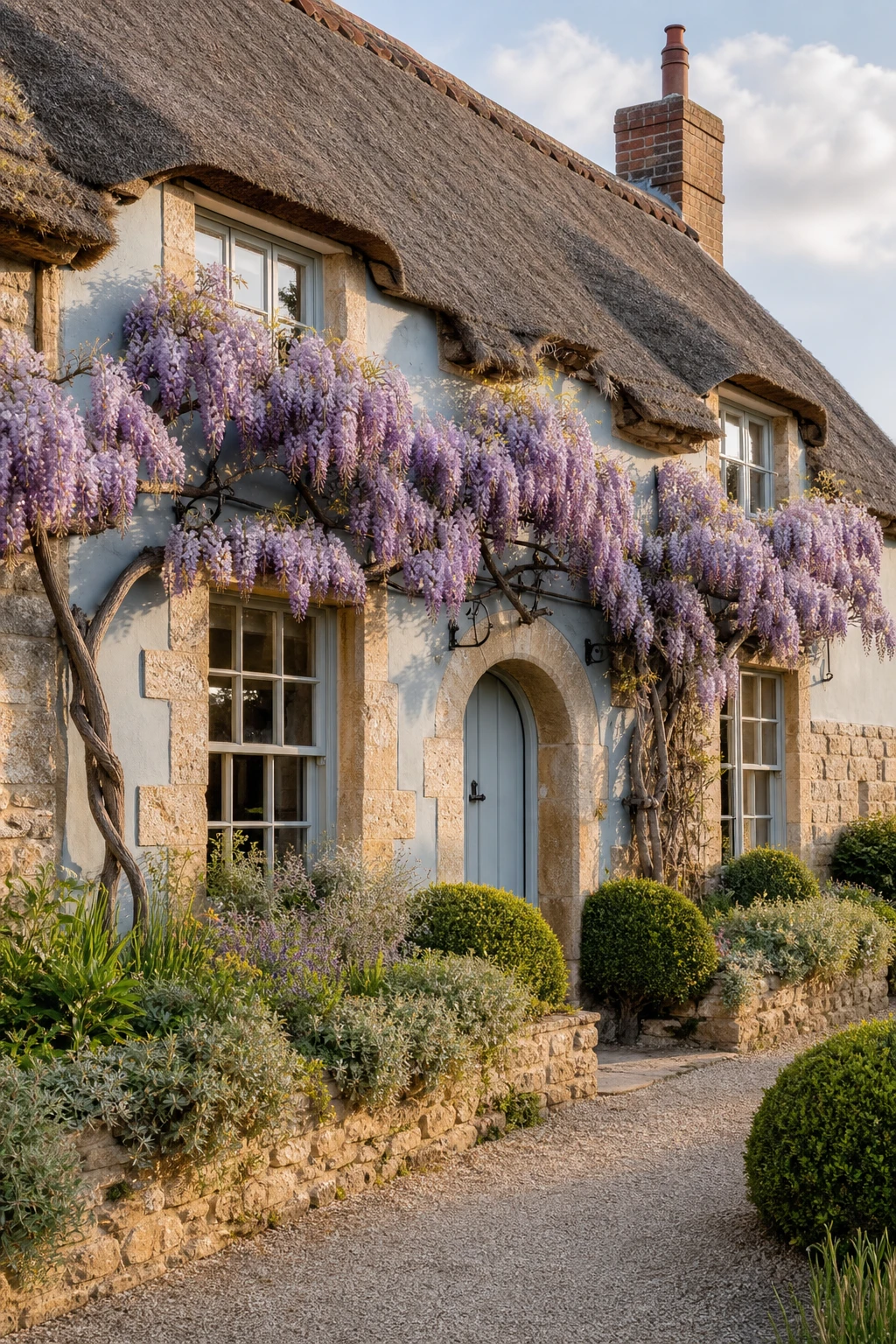
Training Wisteria So It Frames a Cottage Without Taking Over
Few sights stop people in their tracks the way wisteria draping a cottage front does. The plant adds pure vertical romance without any hard landscaping at all, which is something I find hard to achieve any other way. Soft curtains of lilac frame the door and windows and the eye travels upward in the most natural way. The detail I always check is that the stems are guided rather than left to wander, so the structure of the facade stays readable beneath all that growth.
The Key Details
Iron wall fixings for wisteria stems
Hand cut water reed thatch roof
Recessed stone arch doorway
Dry stone boundary wall
Gravel path with clipped box balls
Pro TipFix a grid of tensioned stainless wire to vine eyes in the render the season before you plant, so the wisteria has a clear route from day one and never needs to search for a hold.
AvoidWisteria allowed to push stems into thatch or probe open mortar joints will cause expensive structural damage within just a few seasons, undoing far more than the plant ever added.
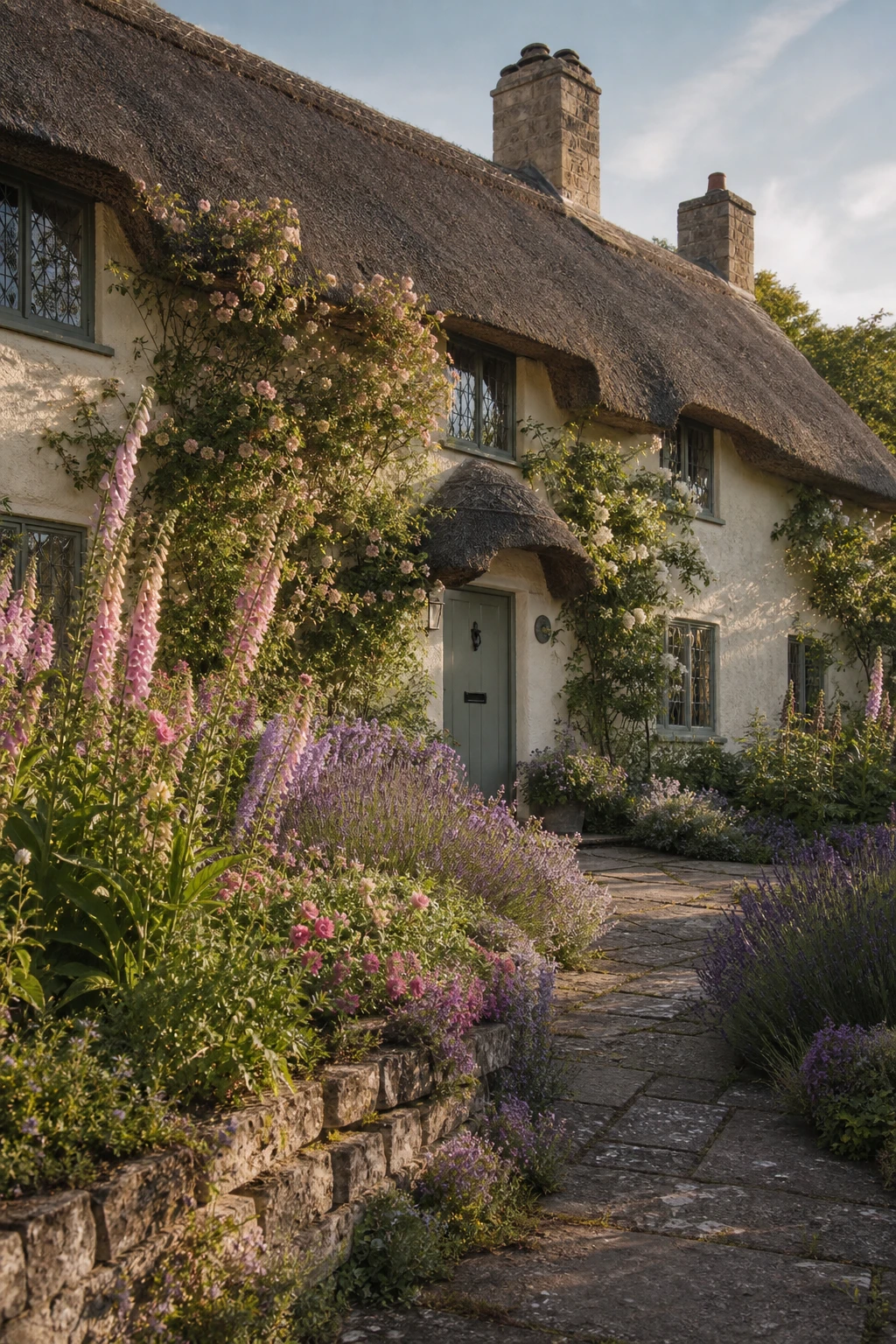
Laying Out a British Cottage Garden That Looks Effortless From the Road
Cottage garden beds that stop you in your tracks from the road are never as random as they look. What I love is the hidden skeleton underneath: a low lavender or box edge that holds the whole composition together while the foxgloves and roses do exactly as they please above it. You get that beautiful tension between order and wildness, and the eye reads it as intentional rather than neglected. Layer tall spires behind mid height blooms and let a few plants spill forward, and the depth that creates is what gives the facade its romantic, settled quality.
The Key Details
Layered cottage planting beds with roses, foxgloves and lavender
Worn York stone path with irregular edging
Leaded casement windows
Deep overhanging thatched roofline
Climbing honeysuckle on lime rendered facade
Pro TipPlant a continuous low edging of lavender or clipped box along the front of every bed to give your planting a clean baseline that reads clearly from the road.
AvoidPlanting in tidy straight rows signals a vegetable plot to every passing eye and strips the romantic, tumbled quality that makes a cottage garden front so appealing.
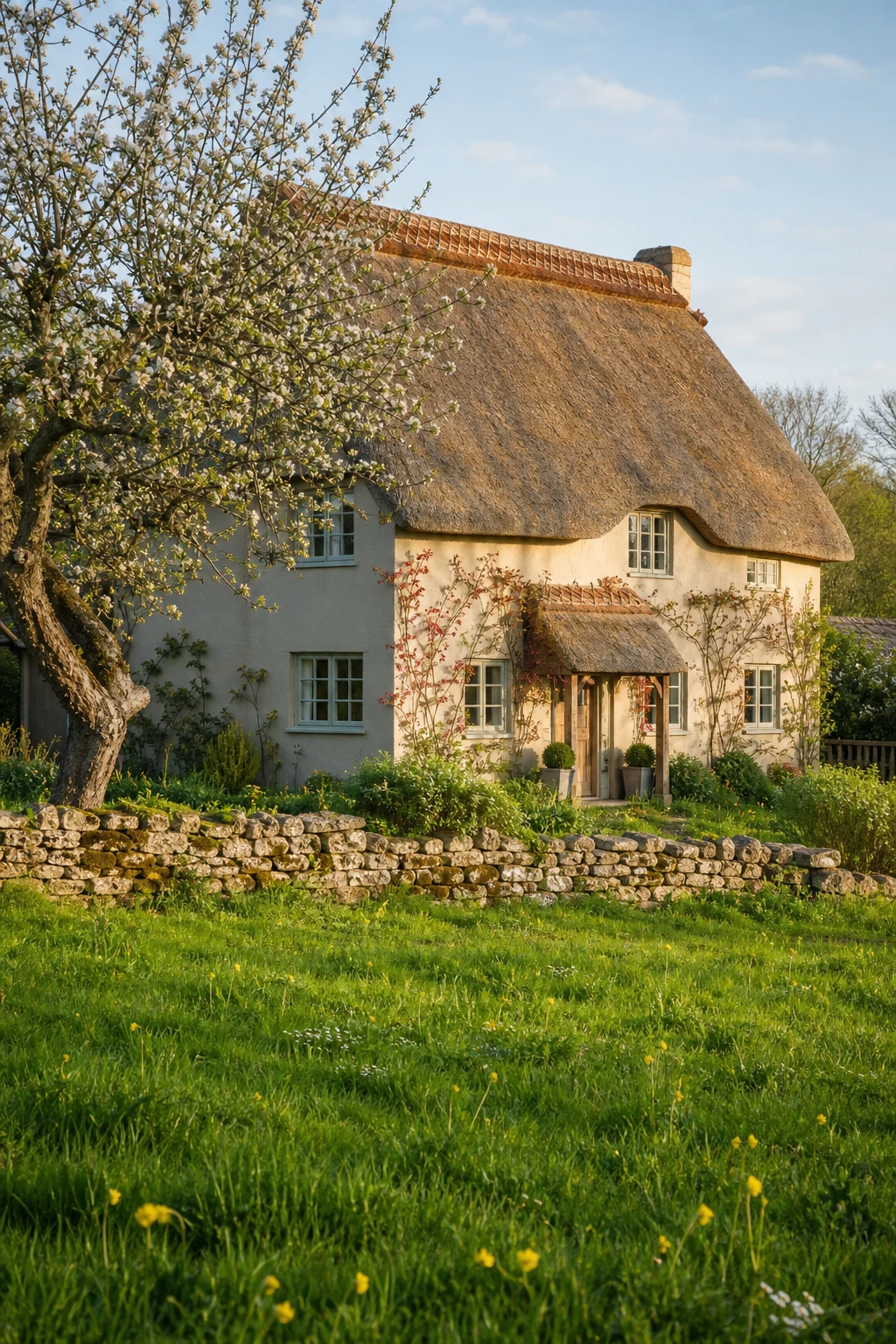
Making a Thatched Cottage Look Its Best Against a Spring Green Field
Spring green is one of the most saturated colours in nature, and what I find fascinating is how that vivid backdrop shifts the way a lime render reads: cooler whites look stark, but a warm cream catches the morning east light and pulls the whole scene together. You will notice the amber ridgework on the thatch picks up that same golden note, so the cottage feels grown from the landscape rather than dropped into it. The apple blossom and climbing rose canes add soft pink at eye level, which keeps the eye moving gently from lane to roofline.
The Key Details
Wheat straw thatch roof with hand cut amber ridgework
Low dry stone boundary wall
Climbing rose canes framing timber porch
Gnarled apple tree in early spring blossom
Lime rendered facade catching morning east light
Pro TipChoose a flowering hedge variety whose bloom peak lands within the same two week window as your apple blossom, so the whole frontage reads as one considered, cohesive moment of colour.
AvoidBare soil beds visible from the lane in early spring undermine the whole picture, making a carefully tended cottage look half finished at the exact moment visitors are most likely to stop and look.
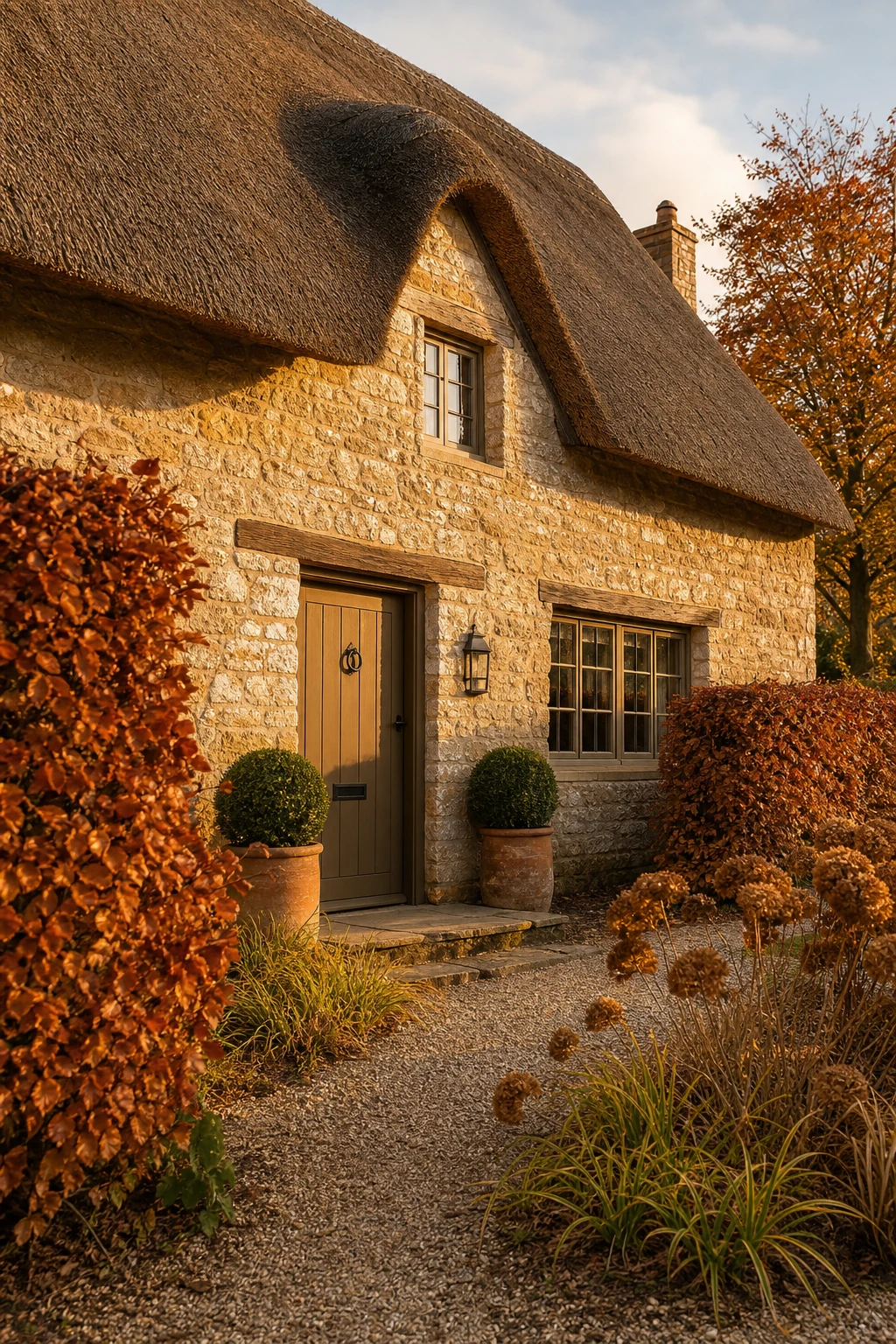
The Way Autumn Light Transforms Stone and How to Make the Most of It
Autumn light does something extraordinary to old stone, pulling out golds and ambers you barely notice in summer. What I love most is how the right planting doubles that effect: copper beech hedging and clipped box in warm terracotta pots echo the tones already living in the stone, so the whole facade reads as one cohesive palette. You get a cottage that looks as if the season built it.
The Key Details
Riven stone flag path
Deep straw thatch ridge
Clipped box topiary in terracotta pots
Solid timber front door
Copper beech boundary hedge
Pro TipPlant Virginia creeper along one gable end and by October it throws sheets of amber and crimson across the stone, giving you colour that no paint or stain could ever match.
AvoidPressure washing the stone walls in September strips away years of lichen and weathered patina, leaving a flat, cold surface exactly when you want that warm, aged depth the most.
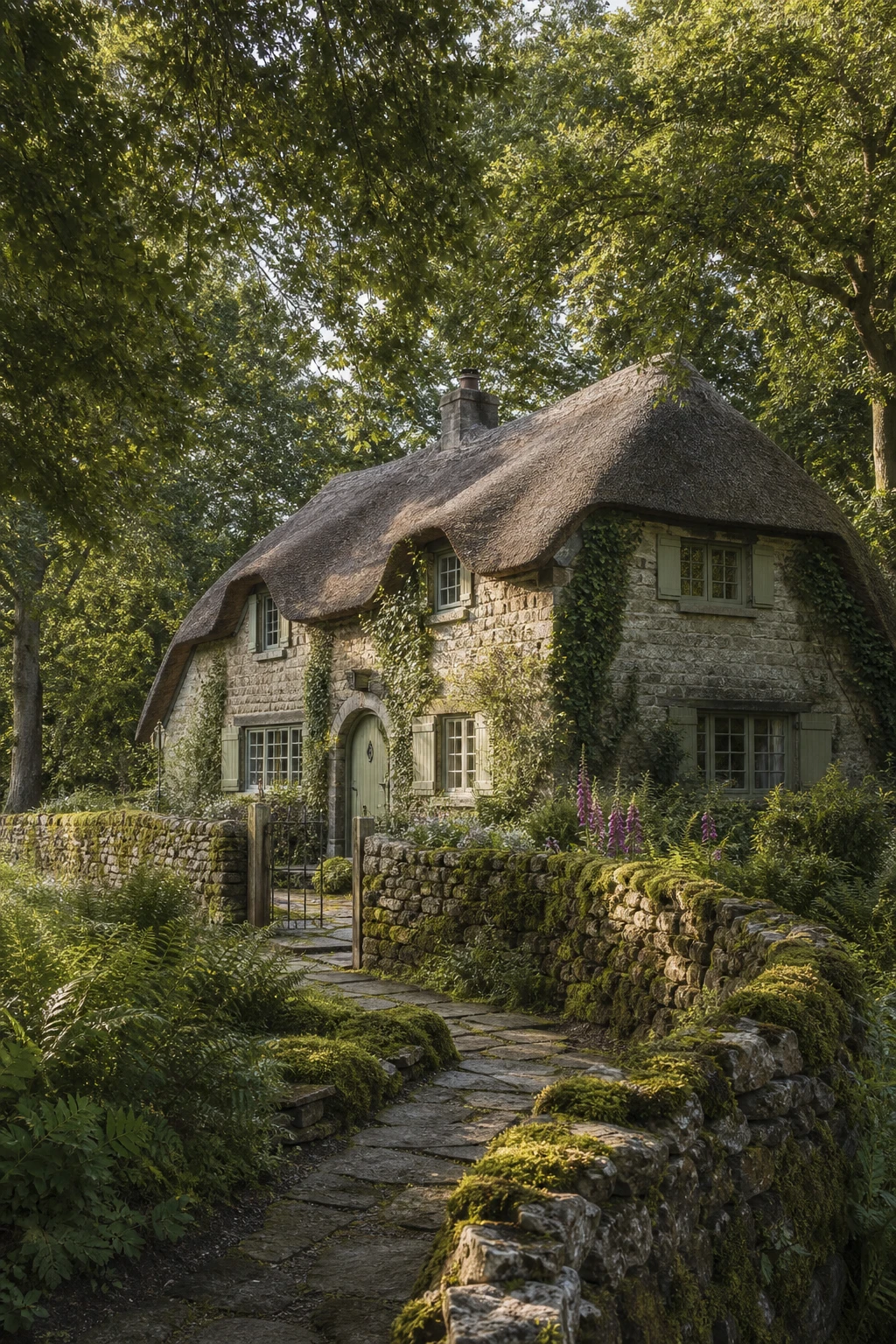
Tucking a Thatched Cottage Into Woodland Without Losing Its Charm
Light is everything when a cottage sits inside woodland, and you feel it the moment you step inside. Rough limestone walls catch even filtered canopy light and glow rather than sink into shadow, which is the quality I look for first. The hand cut reed thatch and low arched door keep the scale intimate, so the trees frame the building rather than swallow it. Watch how the ivy anchors the corners and softens the boundary between the facade and the forest floor into something that feels completely at rest.
The Key Details
Hand cut reed thatch roof
Rough limestone rubble walls
Low arched timber front door
Flagstone entrance path
Climbing ivy on cottage corners
Pro TipThin the canopy on the south facing side of your plot selectively, removing just enough to bring direct light back onto the facade for a few hours each day without stripping the woodland feel.
AvoidPlanting large trees within four metres of the walls is a slow disaster, because the roots will work under your flagstone path and eventually threaten the foundations themselves.
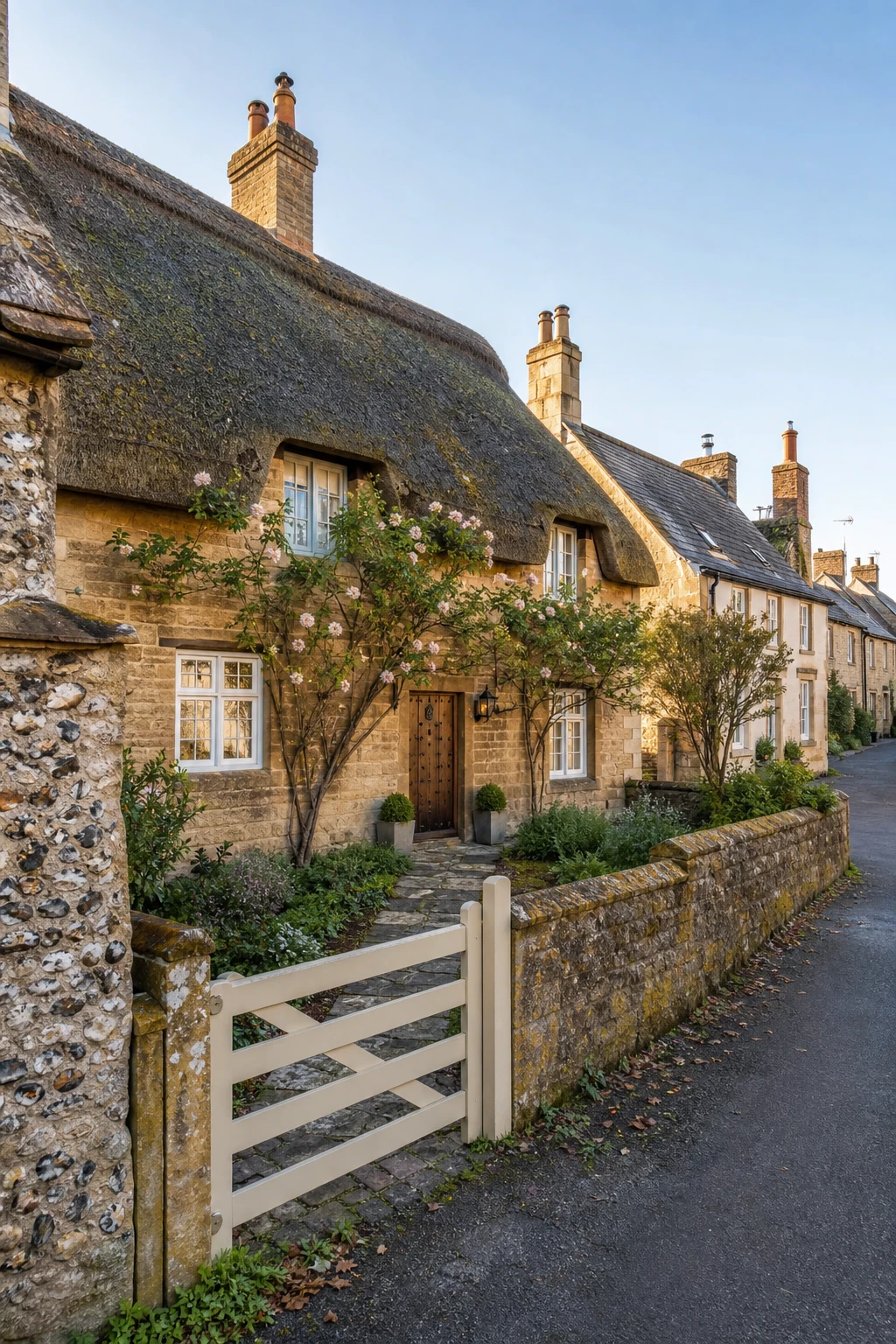
Fitting Into an English Village Street Without Losing Your Own Character
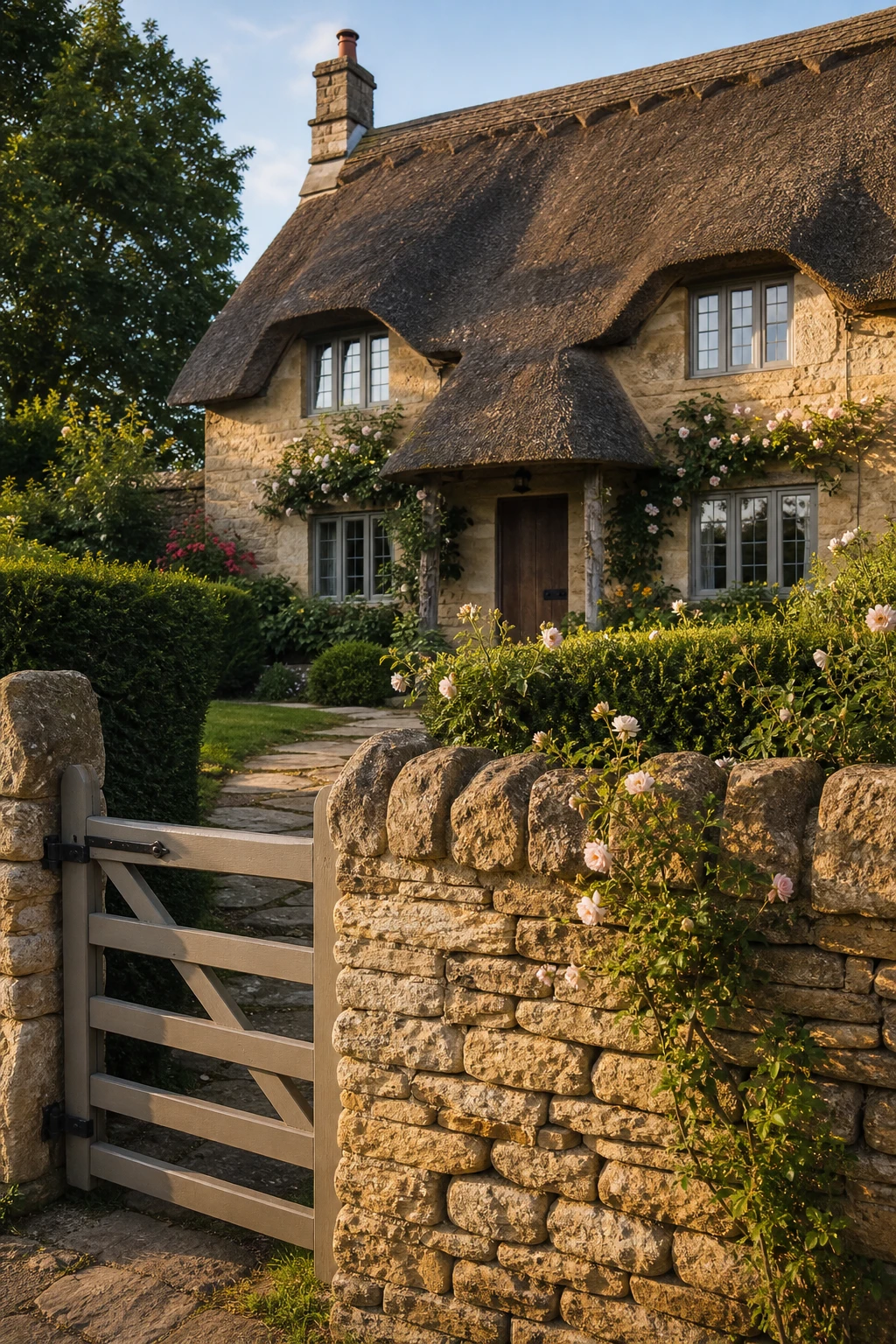
Reading the street before you touch a single detail is the move I always make first. When you pick up one material your neighbours already use, stone coping or a warm brick pier, the cottage settles into the lane as though it has always belonged there. You still get to own the climbing rose, the studded door, the flagstone path, because those personal touches read as character rather than contrast. The neighbourhood does the grounding work, and you get all the charm on top.
The Key Details
Five bar timber gate
Low stone boundary wall
Climbing rose on facade
Flagstone front path
Studded oak front door
Pro TipRepeat the same stone or brick used on the boundary walls nearest to you for your own gate piers, and the join between your plot and the lane will feel seamless rather than stitched.
AvoidA close board panel fence or a metal post and rail lifted straight from a new build catalogue will cut the visual rhythm of a historic lane in one go, making every cottage nearby look slightly worse as well as your own.
What an Irish Cottage Teaches Us About Keeping Things Beautifully Simple
Whitewash everything the same tone and something quietly beautiful happens: the cottage reads as one complete object, not a collection of parts. What I love about Irish cottages is that restraint, the way lime wash pulls walls, surrounds, and low boundary wall into a single breath. You notice texture instead of colour, and that shift is where the elegance lives. Nothing competes, nothing distracts, and the whole thing just settles.
The Key Details
Reed thatch roof with low sweeping eaves
Deep set timber casement windows with stone quoins
Worn flagstone garden path
Simple plank timber front door with iron latch
Rambling roses climbing unpruned across the facade
Pro TipCarry the same whitewash mix across the front wall, window surrounds, and boundary wall so the eye reads the whole plot as one calm, unified composition.
AvoidAdding window boxes in three different colours or mixing painted finishes breaks the spare, unified tone that makes this look work in the first place.
Dry Stone Walls Around a Cottage and the Boundary That Ties It All Together
A dry stone wall that shares the same local stone as the cottage is one of my favourite moves on an English exterior. You get this unbroken conversation between building and boundary, as if the land itself decided where one ended and the other began. What wins me over every time is how the wall roots the whole scene, pulling the garden, the path, and the thatch into one settled composition rather than a loose collection of pretty parts.
The Key Details
Dry stone boundary wall
Five bar timber gate
Flagstone entrance path
Climbing rose over wall coping
Deep overhanging thatch roof
Pro TipSource coping stones from the same quarry as your wall stone so the colour and texture read as one continuous material from gate post to roof line.
AvoidSubstituting concrete block for dry stone, even at the back of a run, breaks the handmade quality the eye is searching for and makes the whole boundary look like an afterthought.
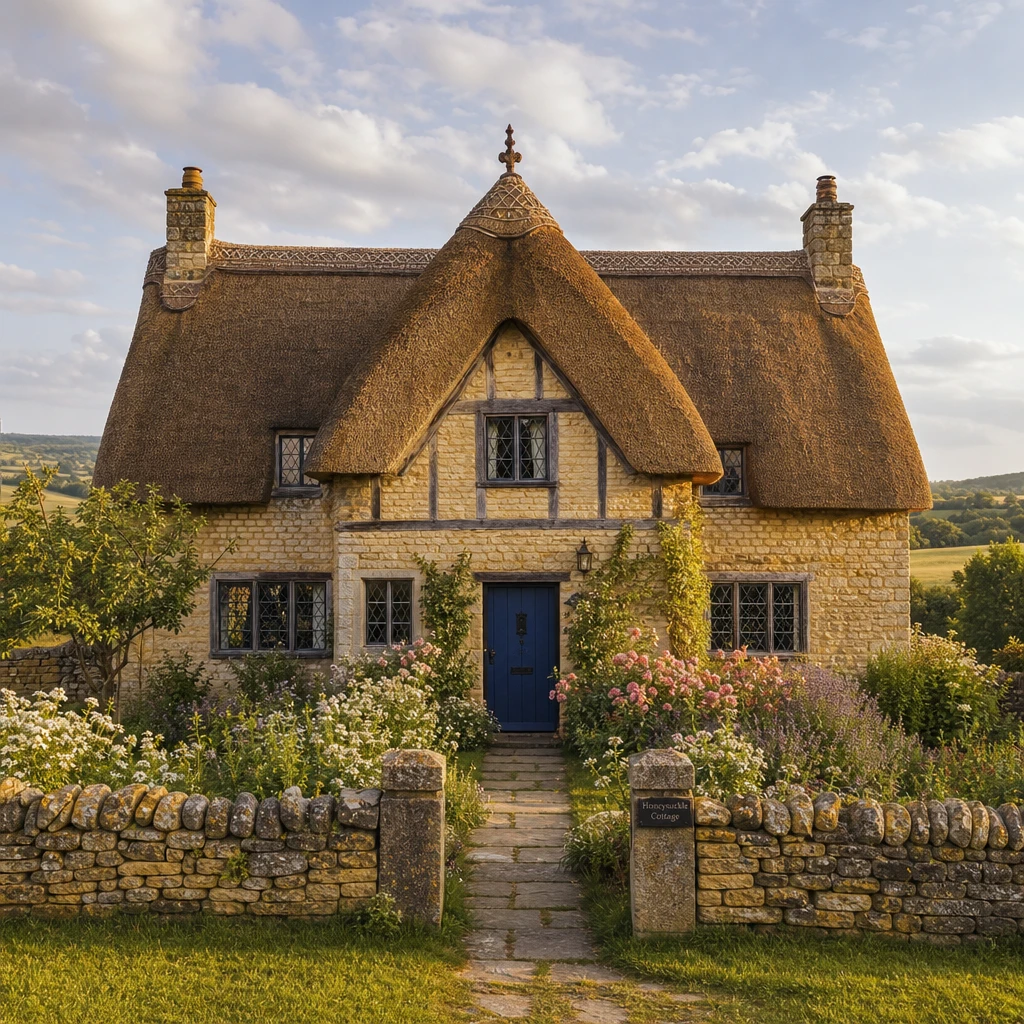
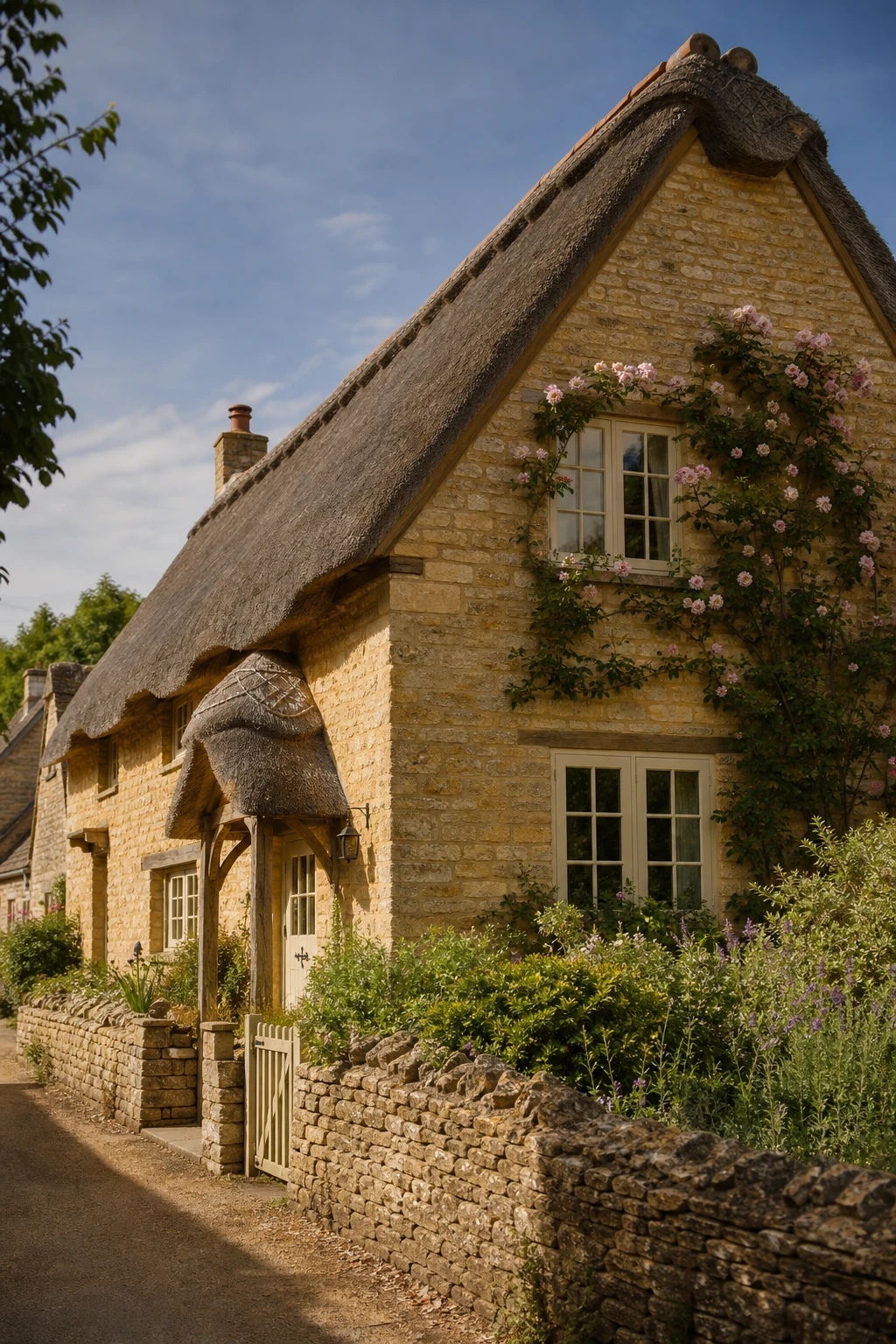
The Honey Stone Look That Makes Cotswolds Cottages So Unforgettable
Cotswolds limestone has this particular golden warmth that changes all day as the light moves across it, and the effect on a cottage facade is unlike anything you get from brick or render. What I love about it is how the colour feels grown from the ground up, not applied, so you get a sense of place that is immediate and completely honest. Pair that with a deep thatch overhead and climbing roses softening the gable and the whole picture just belongs where it stands.
The Key Details
Coursed honey limestone facade
Deep overhanging thatch roof with scalloped ridge
Timber casement windows
Climbing rose on gable
Dry stone boundary wall
Pro TipWhen you need to repair or repoint, source reclaimed Cotswolds limestone from a local salvage yard so the new stone weathers into the old without a colour break.
AvoidPointing with standard grey cement kills the golden tone stone by stone, leaving the facade looking cold and patchy in a way that no amount of planting will ever fully disguise.
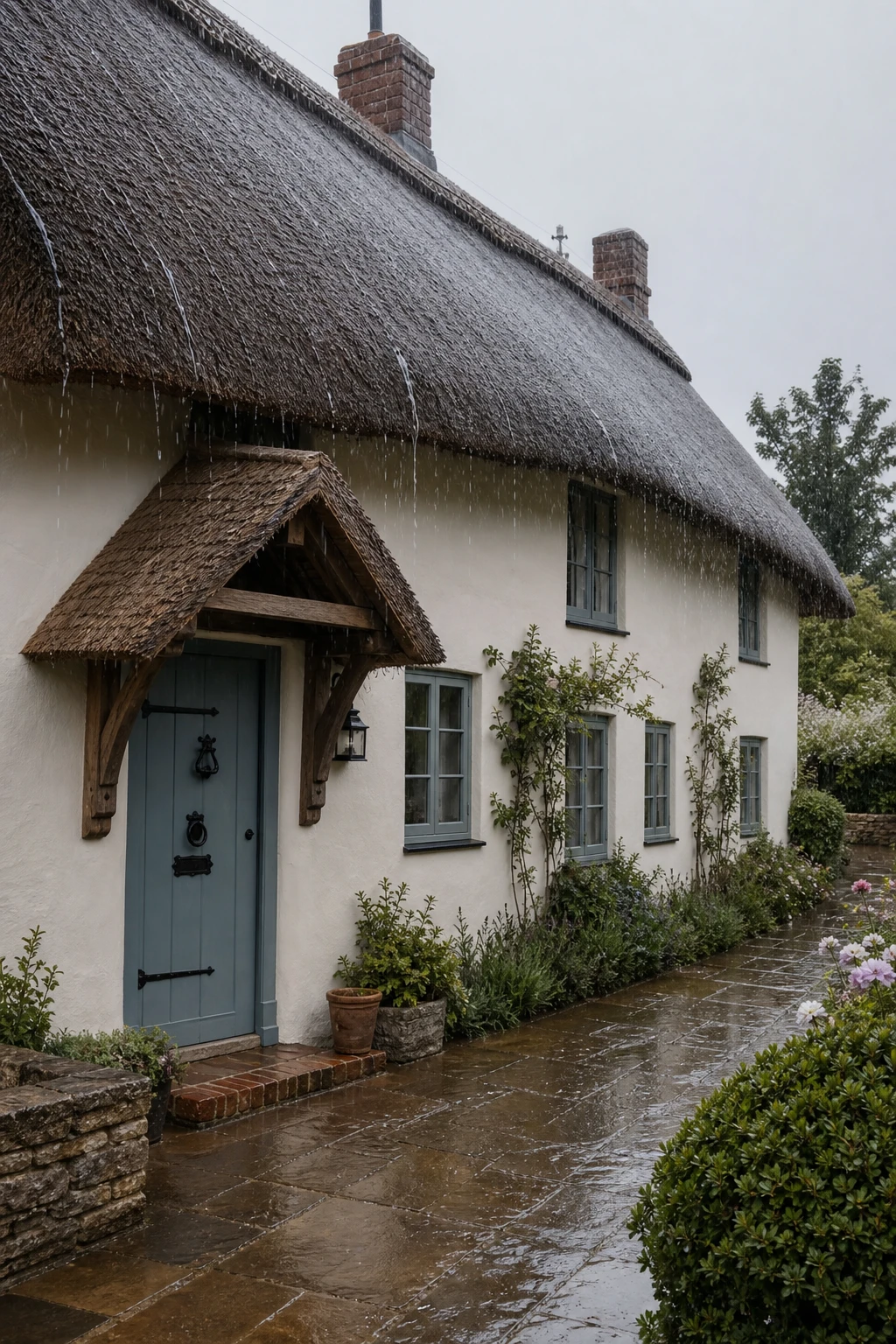
How a Well Laid Thatch Handles the English Rain So Gracefully
A steep pitch is one of my favourite quiet workhorses in cottage design. You will notice how the angle throws rain clear before it has any chance to sit and seep, and the deep overhang carries that water well away from the lime render below. What wins me over every time is how both moves are purely functional yet they give the roofline that generous, sheltering silhouette we associate with the best English cottages.
The Key Details
Steeply pitched water reed thatch roof
Deep projecting eaves overhang
Solid timber canopy hood above door
Lime rendered cottage facade
Stone flagged path beneath overhang
Pro TipClear your cast iron gutters every autumn before the heavy rain arrives, because a blocked gutter sends water sheeting straight down the wall and undoes everything the overhang was designed to prevent.
AvoidShortening the eave overhang to trim build costs leaves the wall face fully exposed to driving rain, and on a lime rendered facade that moisture will find its way in faster than you expect.
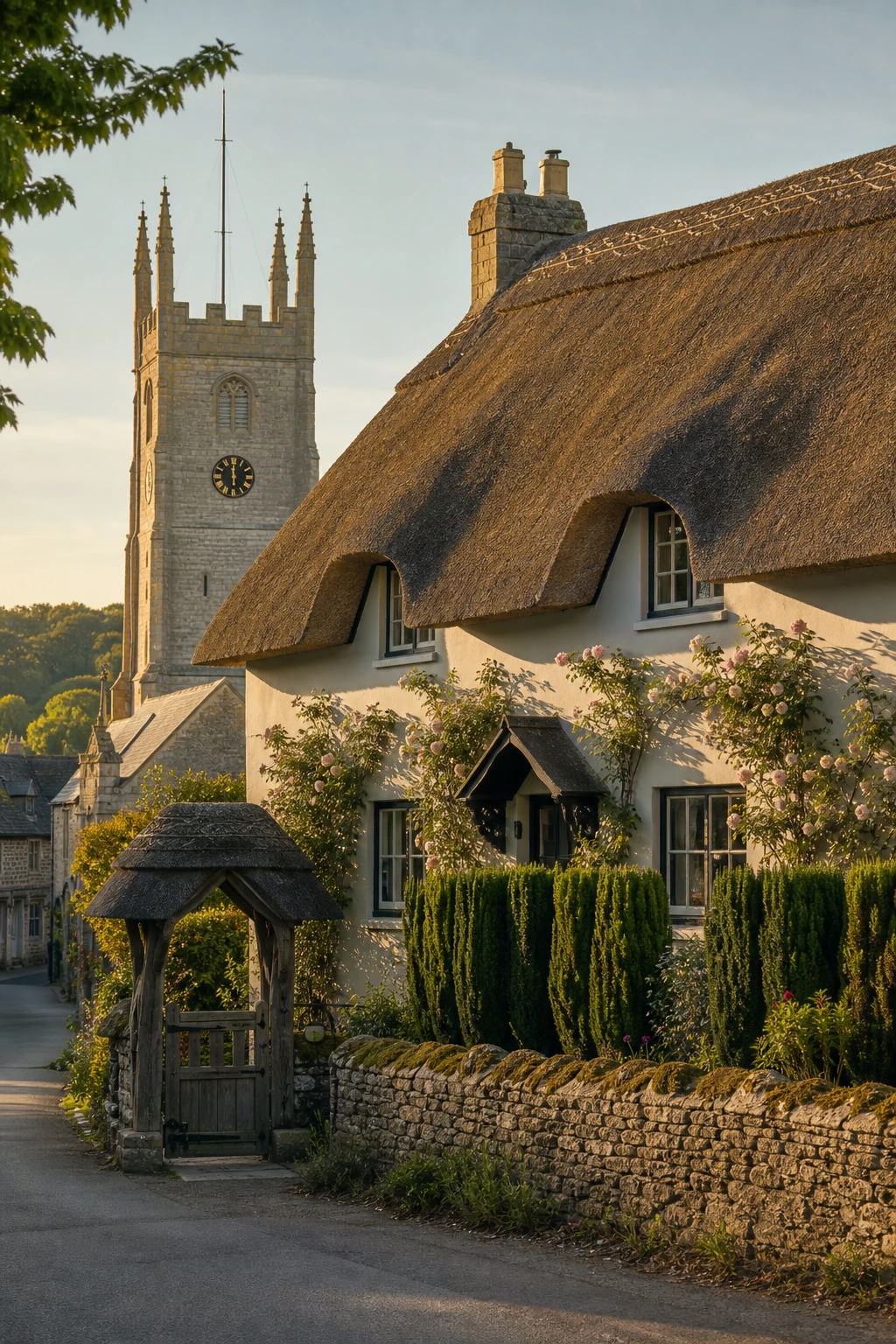
Designing a Roofline That Holds Its Own Beside a Church Tower
Standing a cottage beside a church tower is one of the trickiest scale problems in village design, and the roofline is where you either win or lose it. What I love here is how the steeply pitched water reed ridge echoes the tower’s verticality without trying to match its height, so the cottage holds its place in the skyline rather than shrinking beneath it. The yew topiary row does quiet but important work, stepping the eye gradually upward and bridging the two buildings so you never feel the jump in scale.
The Key Details
Steeply pitched water reed thatch ridge
Dry stone boundary wall
Timber lychgate
Climbing roses on limestone facade
Yew topiary row
Pro TipPlant your topiary columns at roughly two thirds the height of the cottage eaves so they lift the eye gently toward the roofline before releasing it toward the tower beyond.
AvoidA chimney pot chosen for dramatic height draws the eye straight to the comparison with the spire, and the cottage always loses that contest.
Heather Thatching and the Purple Ridge Detail Nobody Expects
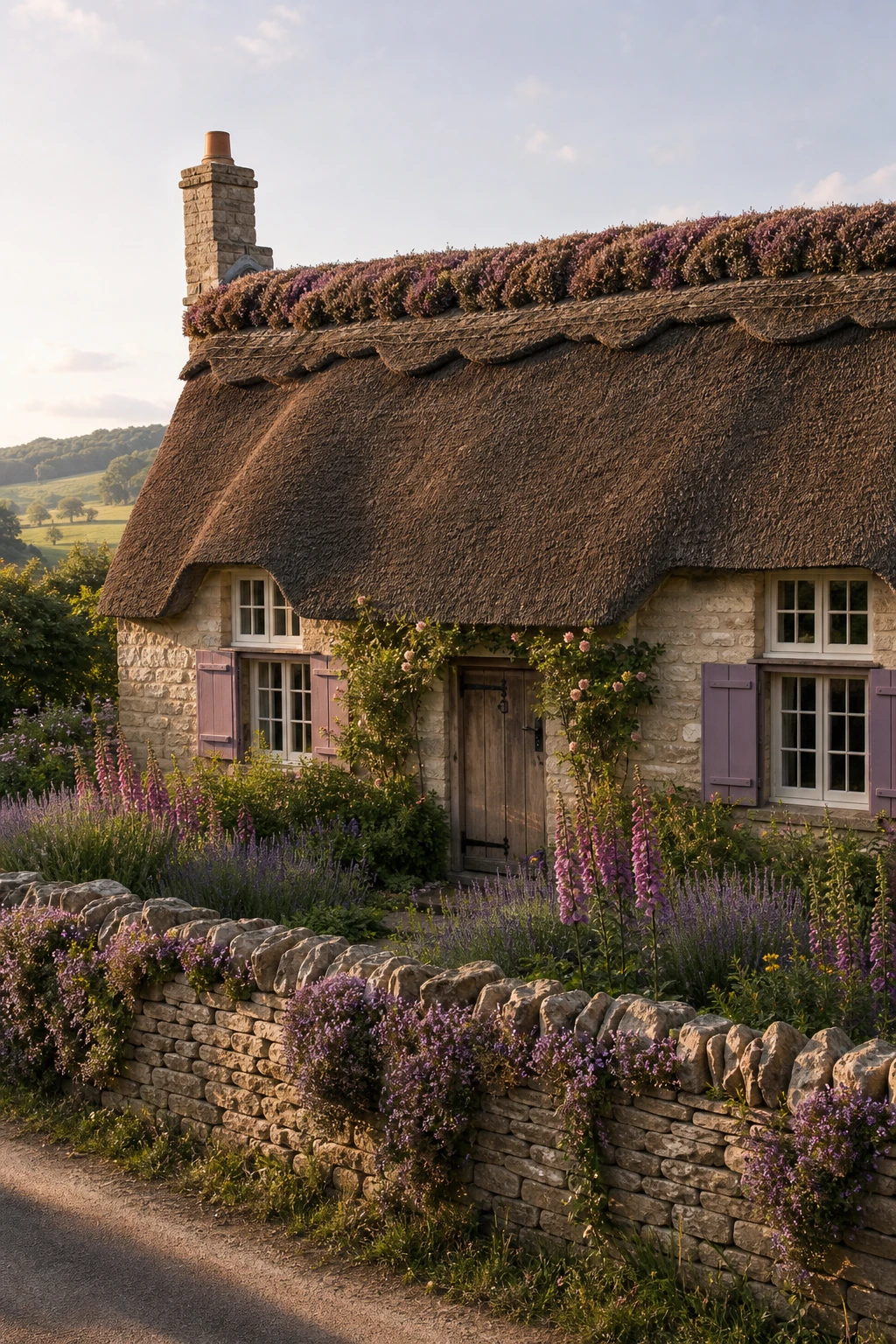
Heather thatch running along the ridge is the detail that stops people in their tracks, and I never tire of it. That natural purple warmth is something water reed simply cannot give you, and the exposed stalk texture catches light in a way that feels almost wild. What I love is how it roots the cottage into moorland and upland landscapes, making the whole exterior feel like it grew there rather than was built.
The Key Details
Heather thatch ridge with visible stalk texture and natural purple tones
Dry stone boundary wall with creeping thyme groundcover
Climbing roses framing a traditional timber plank front door
Cottage garden border of lavender and foxglove
Weathered oak shutters with aged iron hinges
Pro TipAsk your master thatcher whether a heather and long straw combination suits your roof pitch, as blending the two can extend the life of the ridge considerably.
AvoidTreating heather thatch and water reed as interchangeable means you will order the wrong material entirely, and the installer may not flag the error until it is too late to source a proper alternative.
Cottage Shutters That Frame Every Window Like a Little Picture
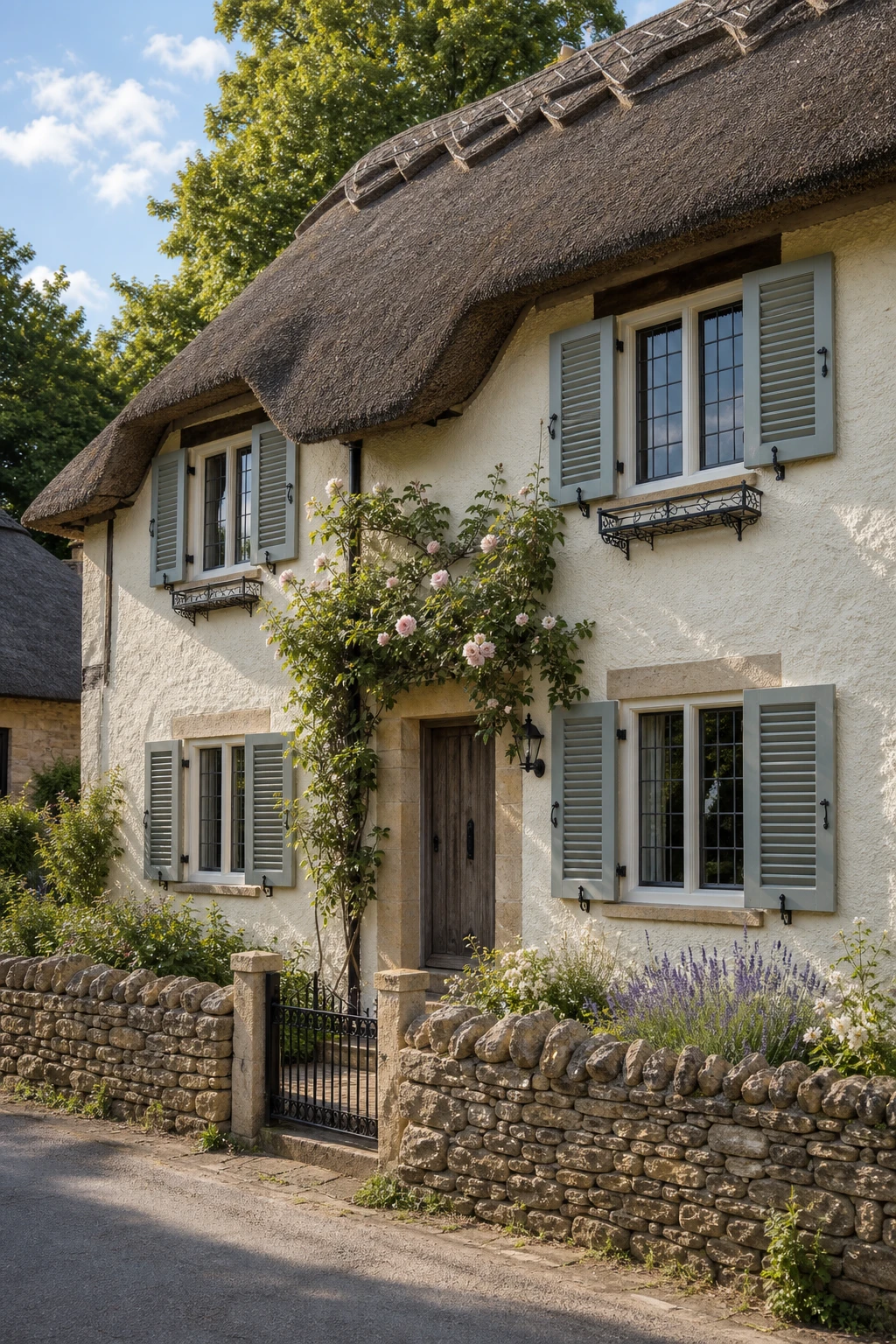
Shutters pull a flat wall into three dimensions, which is why they are one of my first moves on a cottage facade. The shadow a louvred panel throws across old stone gives you a depth you simply cannot get from paint or planting alone. Each window ends up framed like a small painting, giving the eye somewhere to settle and rest rather than sliding straight past. You get a house that looks considered from the gate, not just a wall with holes cut into it.
The Key Details
Louvred timber shutters
Leaded casement windows
Deep scalloped thatch roof
Climbing rose around front door
Low dry stone garden wall
Pro TipPaint your shutters one full shade darker than the wall colour so they read as a quiet accent rather than a loud contrast.
AvoidShutters that are narrower than half the window opening look tacked on and cheap, as if they could never actually close, which cancels the whole effect.
What a Thatched Cottage Gives to the Street It Stands On
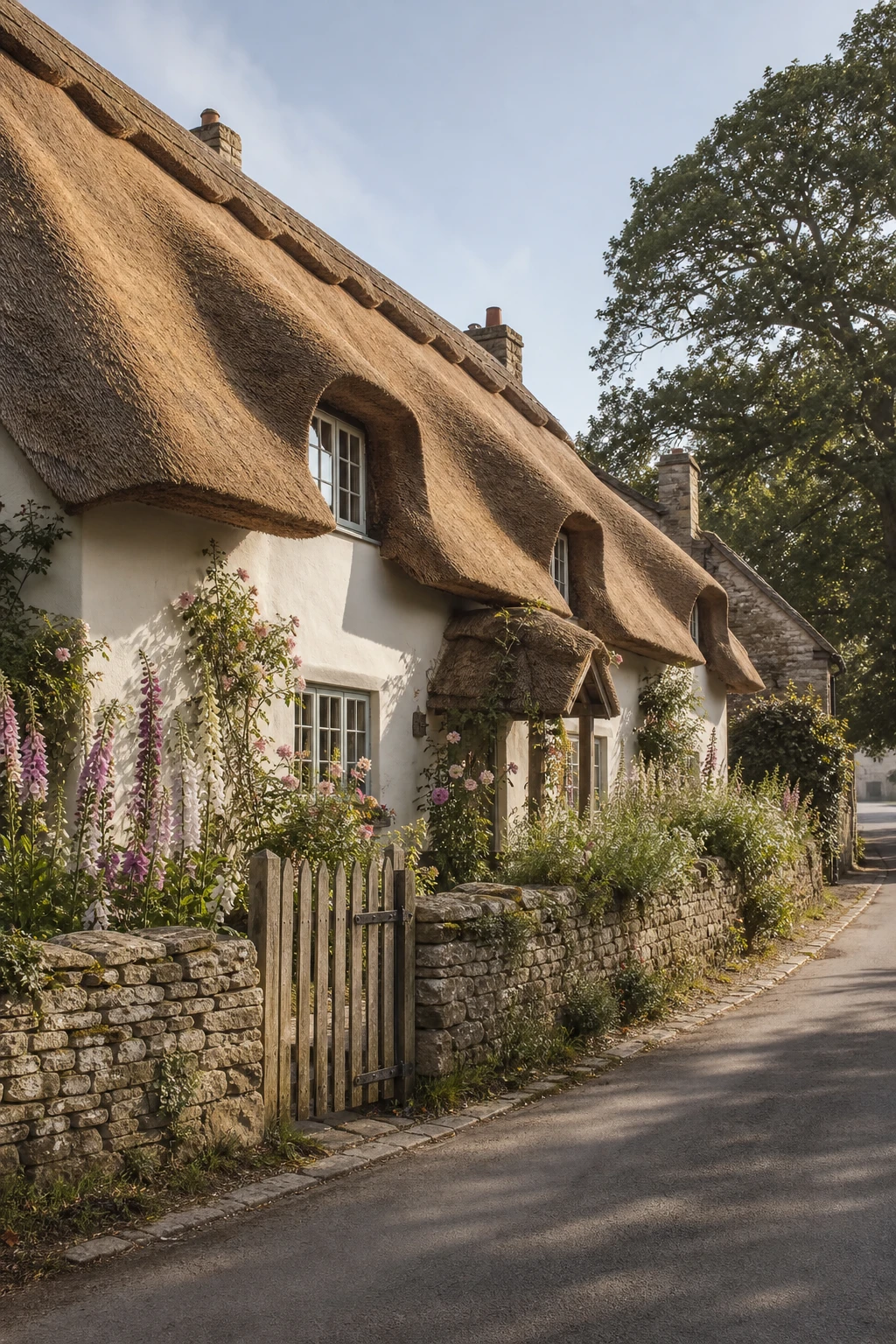
A thatched cottage on a village street does something generous: it gives as much as it shows. The deep overhanging roofline, the foxgloves tumbling over a dry stone wall, the climbing roses framing lime render, you are composing a picture for everyone who passes, not just for yourself. What wins me over every time is that boundary detail, a timber picket gate with hand forged iron hardware that signals care before anyone even reaches the front door.
The Key Details
Undulating deep overhanging thatch roofline
Dry stone boundary wall with timber picket gate
Cottage garden border of foxgloves and climbing roses
Lime rendered facade with smooth finish
Hand forged iron gate hardware
Pro TipKeep the gate freshly painted and the path edges clipped short so every element from the boundary wall to the front door reads as one composed picture rather than a collection of separate details.
AvoidParking a car directly in front of the facade breaks the picture entirely, pulling the eye away from the roofline and the garden before either gets a chance to register.
Bringing Thatched Character to a Barn Conversion Without Losing the Drama
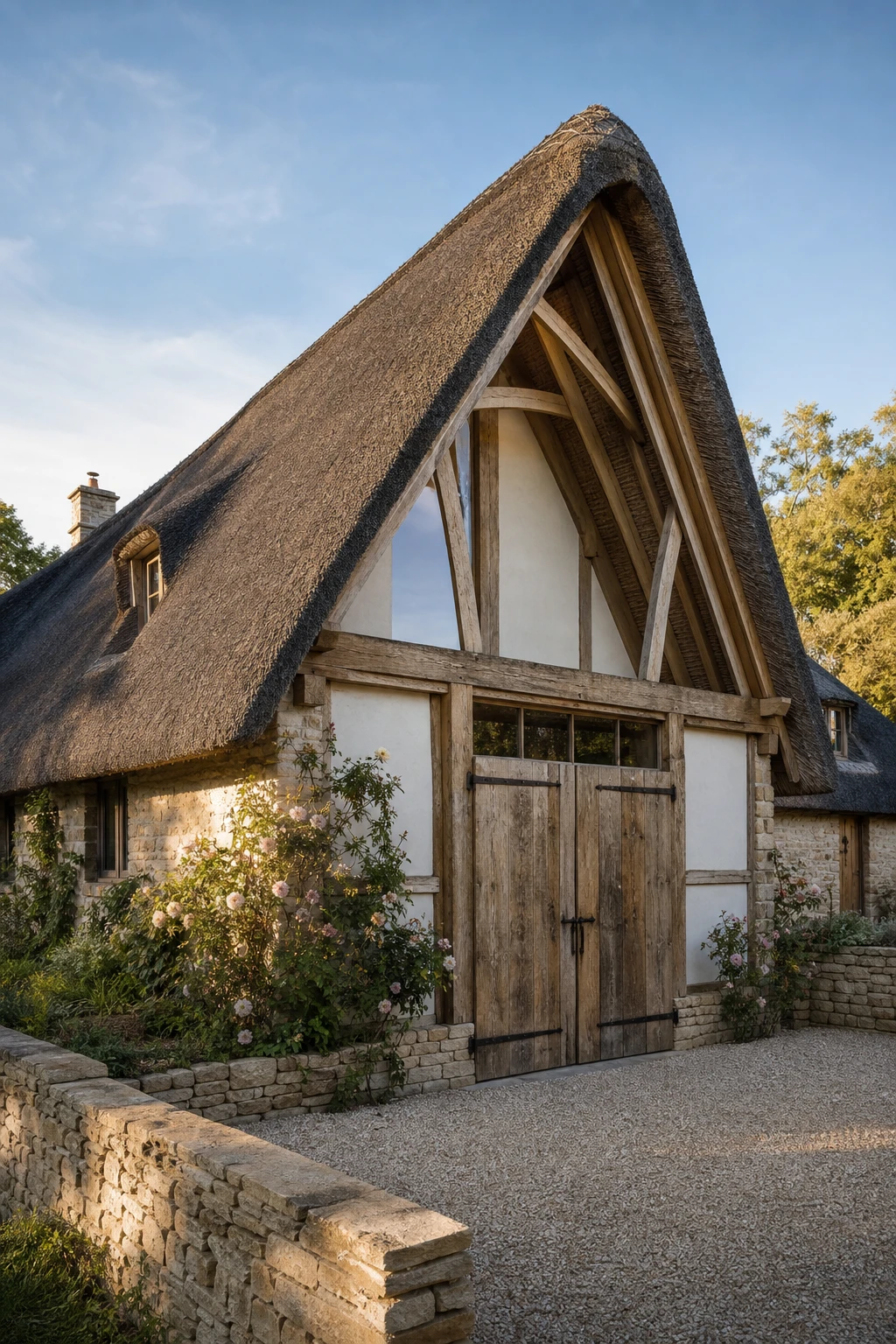
Barn conversions have a scale that fights back against cottage clichés, and that tension is actually what I love working with. The deep ridge water reed roof bridges both worlds: you get the generous sweep of the barn form AND the texture and warmth that makes a thatched cottage feel human. What wins me over here is how the exposed oak gable frame and oversized entrance doors hold their ground against that big roof, so the proportions stay honest rather than fussy.
The Key Details
Deep ridge water reed thatch roof
Exposed oak timber gable frame
Oversized hand hewn timber entrance doors
Dry stone boundary walling
Climbing roses on dressed limestone base
Pro TipFit a traditional straw bird or simple ridge ornament at the apex to break the long roof line and signal cottage character without shrinking the barn’s natural drama.
AvoidPunching a row of small cottage scale casement windows across a long barn elevation leaves the facade looking confused, as though the building cannot decide what it is.
Old Granary Features That Make a Thatched Building Feel Genuinely Historic
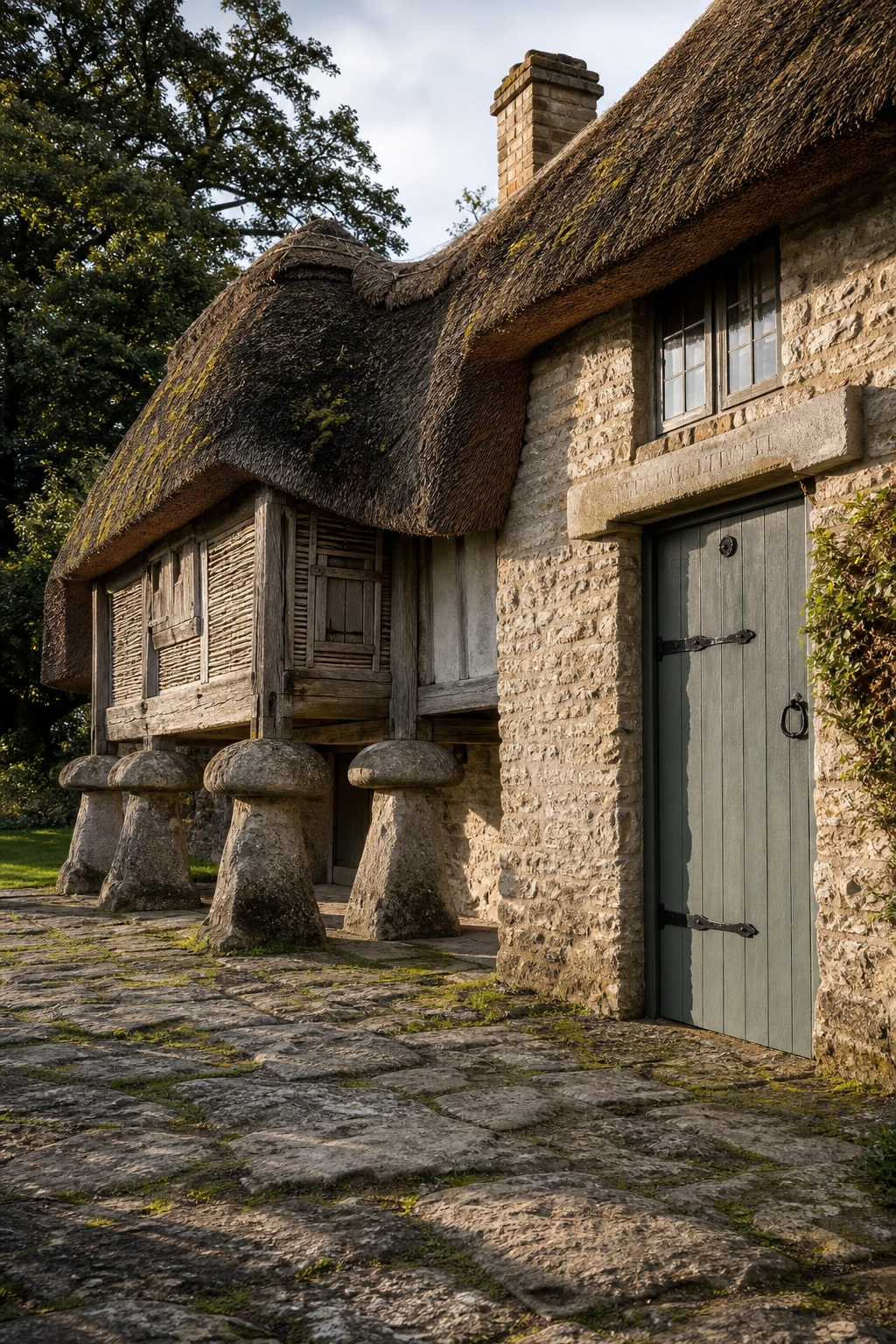
Granary details carry centuries of working life in them, and you can feel that the moment you stand in front of a building that still has them. What I love about staddle stones, hand hewn oak doors and lime washed rubble walls is that no craftsperson today could fake that particular worn quality convincingly. These elements tell a story no new addition can replicate, and that honest age is exactly what gives a thatched building its quiet authority.
The Key Details
Mushroom staddle stones
Raised granary timber frame
Hand hewn oak door with iron strap hinges
Lime washed rubble stonework
Water reed thatched roof
Pro TipSet any original staddle stones you uncover directly into a gravel or grass border near the entrance so they read as deliberate landscape features rather than forgotten leftovers.
AvoidSwapping an original timber door with iron strap hinges for a modern composite replacement strips out the single most characterful detail on the whole elevation and leaves the building looking like a replica of itself.
Timber Cladding Under Thatch and the Texture Combination That Feels So Warm
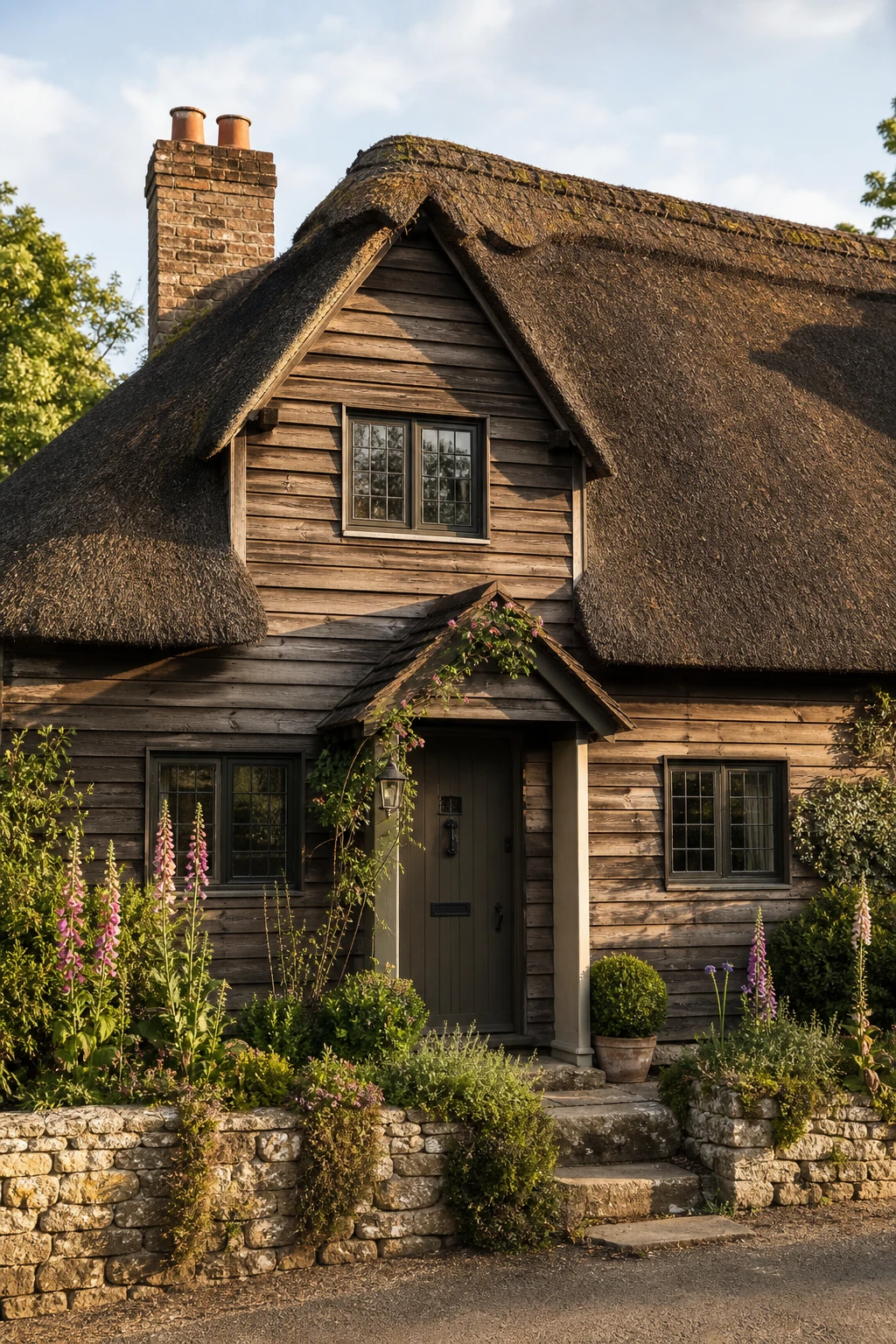
Timber cladding beneath a thatch roof is one of my favourite texture pairings on any English cottage facade. You get two entirely natural materials reading at different scales, the fine horizontal lines of the boards against the deep, shaggy mass of the reed above, and that contrast is what gives the wall its life. What I love most is the warmth it lends even on a grey morning, before a single plant or pot has gone near the door.
The Key Details
Oak weatherboard cladding
Hand cut reed thatch roof
Leaded casement windows
Dry stone boundary wall
Aged iron door ironmongery
Pro TipLet the oak weather to its own silver rather than forcing a stain, because the natural patina sits far more quietly beside aged thatch than any product from a tin.
AvoidTreated softwood cladding looks fine in the yard but off gasses resins, lifts at the edges and cups badly through an English winter, leaving you with a facade that looks worse every year rather than better.
Grass and Sedum Thatching and the Living Roof Look Making a Comeback
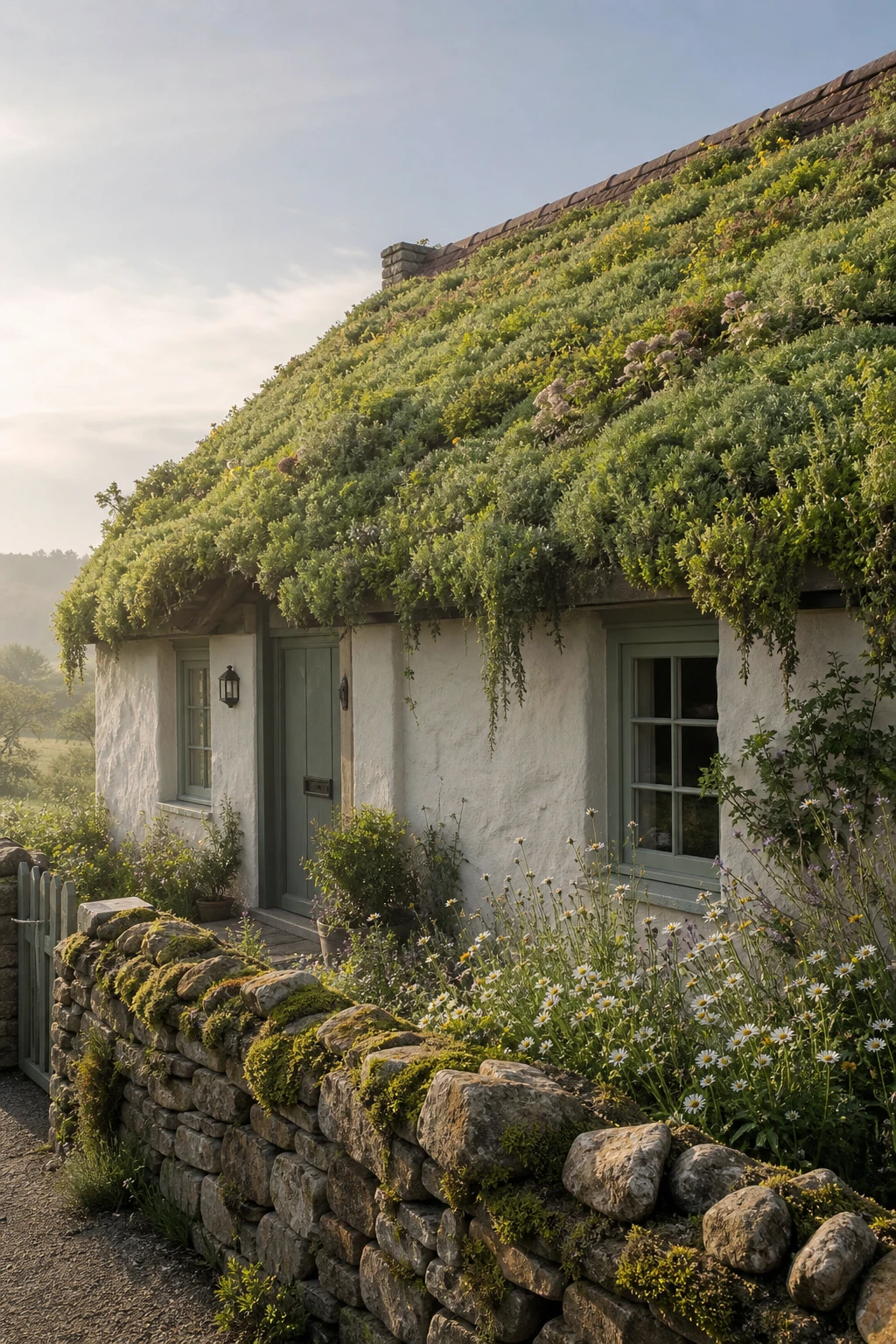
A sedum roof blurs the line between building and landscape in a way few other finishes can manage, and that is what draws me to it. The shifting greens and purples of the mat read differently through every season, so the cottage feels alive rather than static. Against lime rendered walls there is a softness on the roofline that no tile or painted finish comes close to matching, as though the hillside simply grew up and over the building of its own accord.
The Key Details
Sedum and grass living roof mat
Lime rendered cottage walls
Mossy dry stone boundary wall
Aged oak timber front door
Wildflower meadow cottage garden border
Pro TipBefore you commit to a living roof layer, bring in a structural engineer alongside your roofing specialist to confirm the rafters and supports can carry the saturated weight of a mature sedum mat.
AvoidLaying sedum matting over a traditional thatched base without a structural assessment first puts serious load on timbers that were never designed for it, and the repair bill will far outweigh any saving you made skipping that survey.
The Ridge Ornament Sitting at the Top of a Thatched Roof and Why It Matters
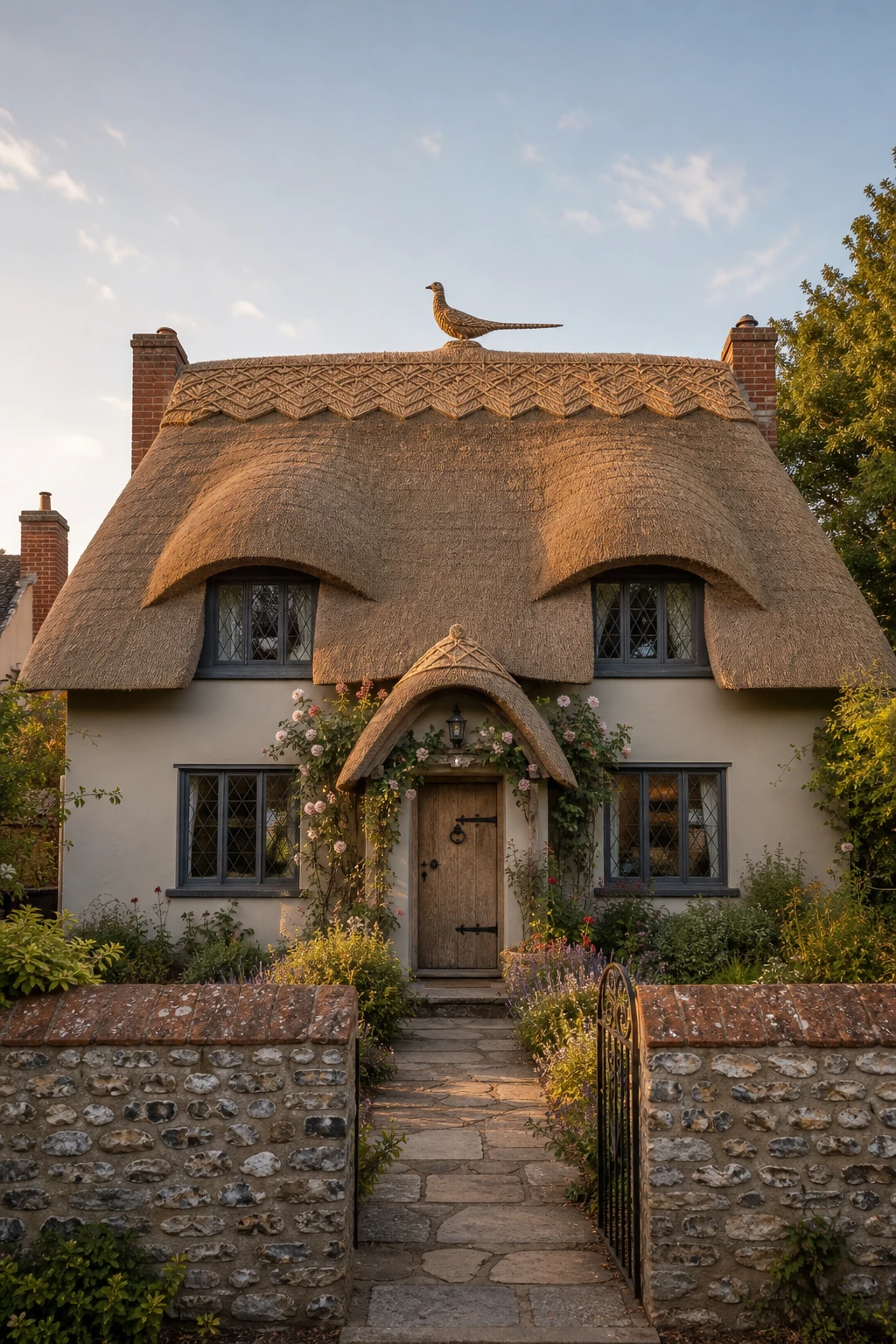
The ridge ornament sitting at the very top of a thatched roof is the thatcher’s signature, and what I love is how a well chosen figure ties the whole elevation together from fifty feet away. A sculpted pheasant or peacock in twisted straw catches the light and tells you immediately that a master craftsman finished this roof. You will notice the chevron liggers framing it below, those decorative hazel rods, which give the ridge its clean geometry and make the ornament read as intentional rather than decorative whimsy.
The Key Details
Sculpted straw ridge ornament with chevron liggers
Deep honey gold wheat reed thatch
Leaded casement windows
Climbing roses framing oak front door
Flint stone garden boundary wall
Pro TipAsk your thatcher which regional bird or animal figure is traditional for your county, as a Suffolk pheasant or a Cotswold peacock will feel rooted and right rather than imported.
AvoidChoosing a novelty figure, a fox, a cat, a cockerel wearing a hat, that delights at close range but shrinks into confusion when seen from the garden gate, undercutting the dignity of the whole roof.
The path leading to a cottage door sets the mood before you even knock, and getting it right is something I feel strongly about. A gently curving line of worn York stone, softened by thyme creeping between the joints, tells the whole story of the house in just a few footsteps. You get that feeling of arrival, of something cared for and unhurried, which is exactly what a thatched cottage should give you.
The Key Details
Irregular York stone pavers
Climbing roses and lavender border planting
Aged oak five bar gate
Deep thatched roof ridge
Lime washed rendered facade
Pro TipPlant low creeping thyme or chamomile between the flagstone joints so each footstep releases a little scent and the path feels grown in rather than freshly laid.
AvoidA perfectly straight concrete path cuts through the garden like a car park kerb and strips every last drop of charm from even the prettiest thatched facade.
Alan launched Edward George London in 2017. Since completing his masters in Town & Regional Planning (MPlan) he has combined the skills he learned at the University of Sheffield with his passion for design, to help create a foundation for those looking to create a beautiful home.