Newsletter Subscribe
Enter your email address below and subscribe to our newsletter


I would choose blackout curtains for daytime sleep in a Japandi bedroom by checking the window with the covering already drawn. If you can see a bright line after a night shift, find out where it starts. Light above the rail, beside a panel and through the cloth points to three different fitting decisions. I would measure only after making that check.
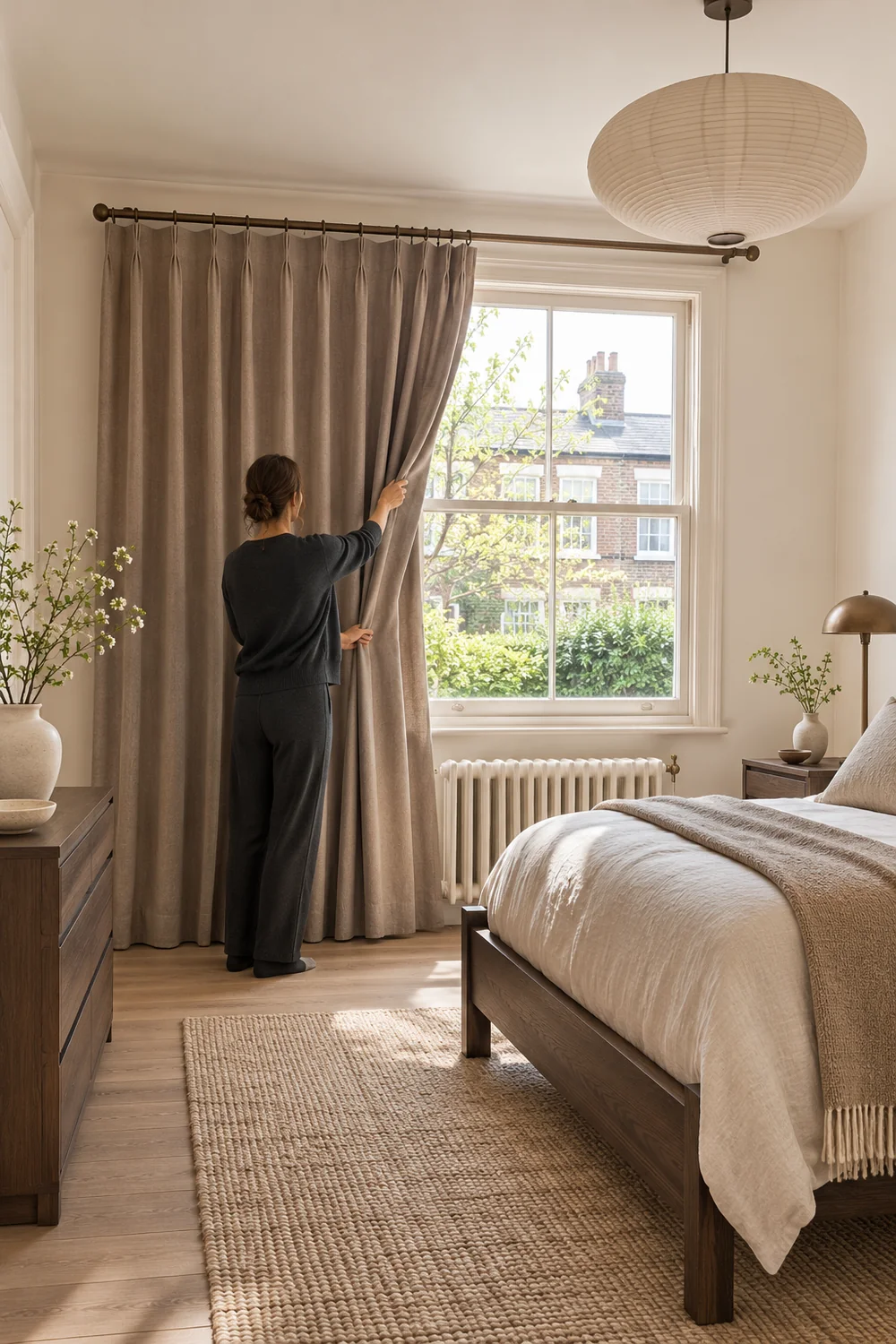
Close the existing curtain at the time you would normally sleep after a shift, on a day you can do the check without interrupting your rest. Look from both the doorway and the pillow. I would observe the curtain from top to bottom. Is the fabric glowing across its full face? Is there a band of light over the heading? Does the right side look bright because the panel stops short or hangs forward of the wall? Make a note beside each part you can identify.
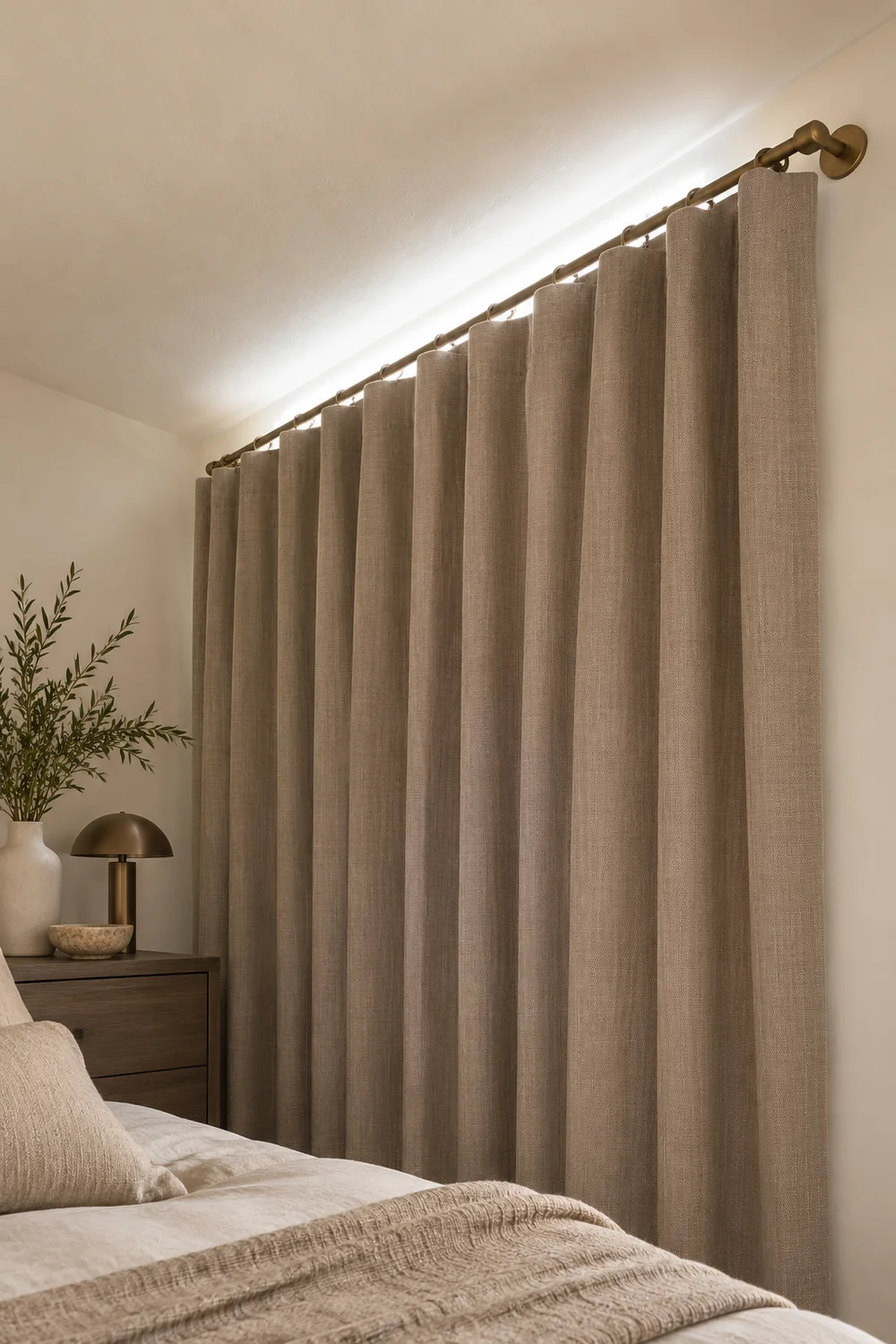
A vertical line through the middle gives you a useful test. Bring the two existing panels together with your hand while someone looks from the bed, or check the result yourself after letting the cloth settle. If the line disappears when you bring the panels together, record the join. If it remains across the face of the fabric, record the cloth separately. I would give the fitter both observations when they occur together. The heading may need to close more consistently as well as carry a different lining.
Do the same with a bright outer edge. Look at where the curtain sits in front of the wall and where it stops beyond the glass. A panel can be wide and still leave a bright path behind it where the rail projects. At the top, compare what you see from the bed and from standing below the rail. A bright reflective wall may be catching light from above the heading.

I would resolve window light first when it is the source we can point to. If closing the curtains leaves a glow in the corridor or beneath the door, write that separately. The broader bedroom sleep ideas guide covers other room conditions you might want to assess. This curtain brief deals with the window, so the notes you carry forward should name exactly what the cloth or hardware has to do.
The daylight check gives you words a fitter or curtain supplier can work with. Over the rail, beside the right hand panel and through the centre tell them more than asking for the darkest fabric. Save one photo of the closed view and another of the window when it is open. Those two views will help when you measure the surrounding wall.

Record the width of the opening first, then record the wall space available beyond it on both sides. I would sketch the window elevation and mark the handle, sill, radiator, wall return and anything you cannot cover or move. Note whether the window opens into the room and which parts need to stay accessible. If the window is part of your escape route, make sure the proposed treatment leaves it ready to open.

Now measure the existing rail or pole, if you have one, using the supplier’s method for the type of heading you choose. The figure the maker asks for may be the usable track length or another specific measuring point on the hardware. Record both what you measured and where you started the tape. For the drop, take the measurement from the point the chosen heading will hang and mark the intended hem position. Check more than one point where the floor or sill varies. John Lewis’s curtain measuring guidance illustrates why the start point differs between common headings.
In a worked example I might find a 128 cm opening with 29 cm of wall on the left and 17 cm on the right. Those figures tell me the right side will have less room for the open curtain stack. They also tell me to ask how much room a particular heading and fabric need when gathered. I would write all three figures on the sketch, then give the maker the usable rail measurement if that is what their order form requests. The three measurements describe the room. The supplier’s required measurement controls the order.
I would also ask to see how the panels stack on a rail with this imbalance. If the fabric needs more room on the side with the handle, a wider panel could make the open state worse. Sketch the gathered position on each side before agreeing the split. If you are keeping the rail, tell the maker which way each panel travels and which end needs to stay clear.
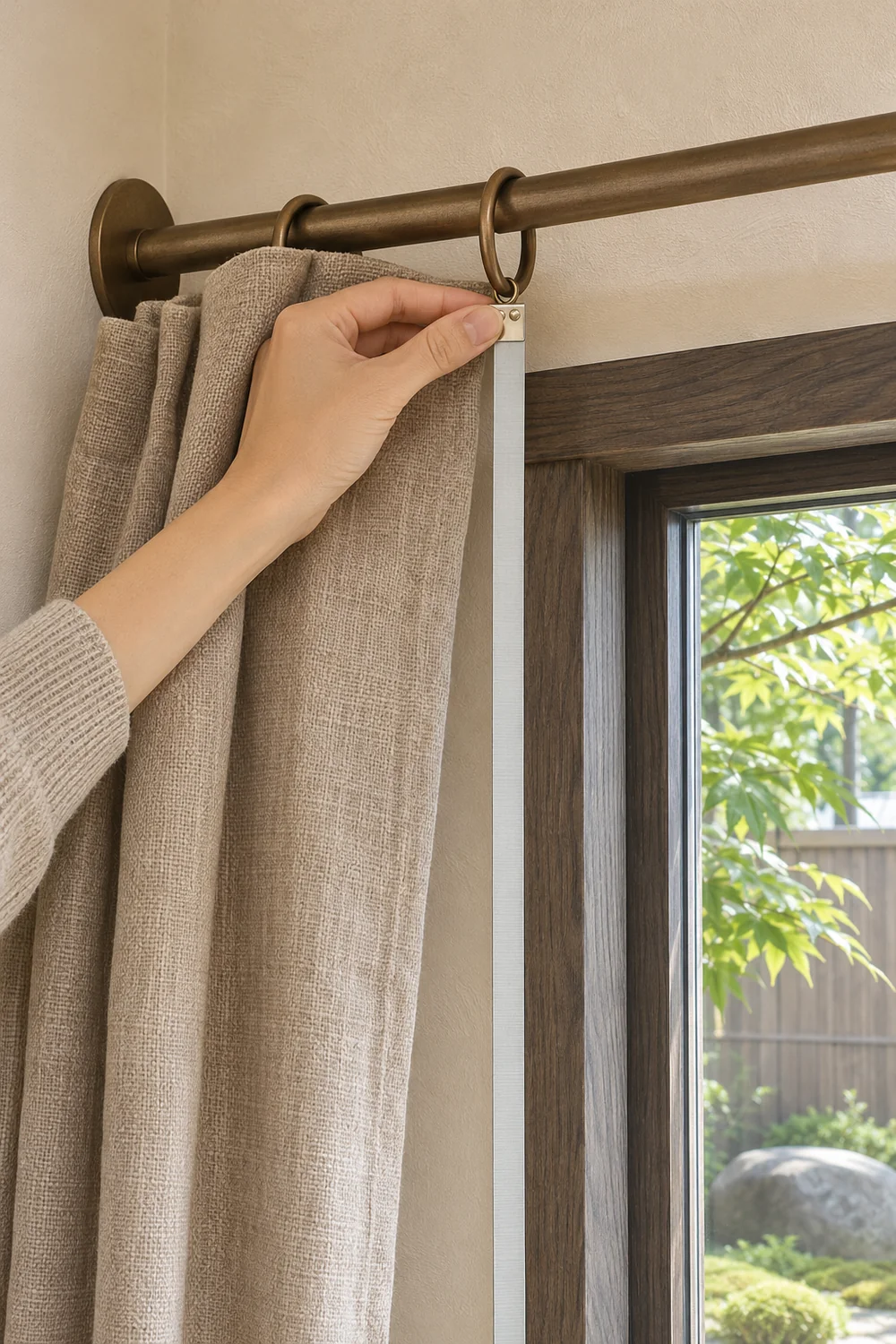
A desk or radiator may affect where the hem can hang and whether the fabric can fall freely. Work from the equipment instructions and use the available space. Check handle clearance with the window sitting as it does in use. I would measure each opening separately even if you want the coverings to look like a pair. The existing two bedroom windows example is useful for seeing how paired windows can read together in a Japandi room. Your order still needs the figures for each window.
For a useful handover, mark the width of the opening, wall space on both sides, track span with start and end points, drop from the correct point, obstructions and the direction of opening. Add a photo showing where light starts. The person checking the order should be able to tell whether you measured the glass, recess or rail without guessing. If the maker asks for the overall track length, confirm whether their figure includes end fittings or any section that turns towards the wall. Ask them to mark the tape start and finish on your sketch. That makes later comparisons easier if you get a second quote using a different track.

I would start with a fabric face you like in daylight and check the lining separately. A mushroom linen look can sit quietly next to warm plaster and smoked ash. If you need blackout, look for the maker’s description of the actual construction. Retailers can offer products described as filtering, darkening or blackout. Ask what the particular curtain or lining is designed to do when the cloth covers the opening. Where a sample is available, hold it against a bright part of the window and compare its face with the other material you plan to keep.
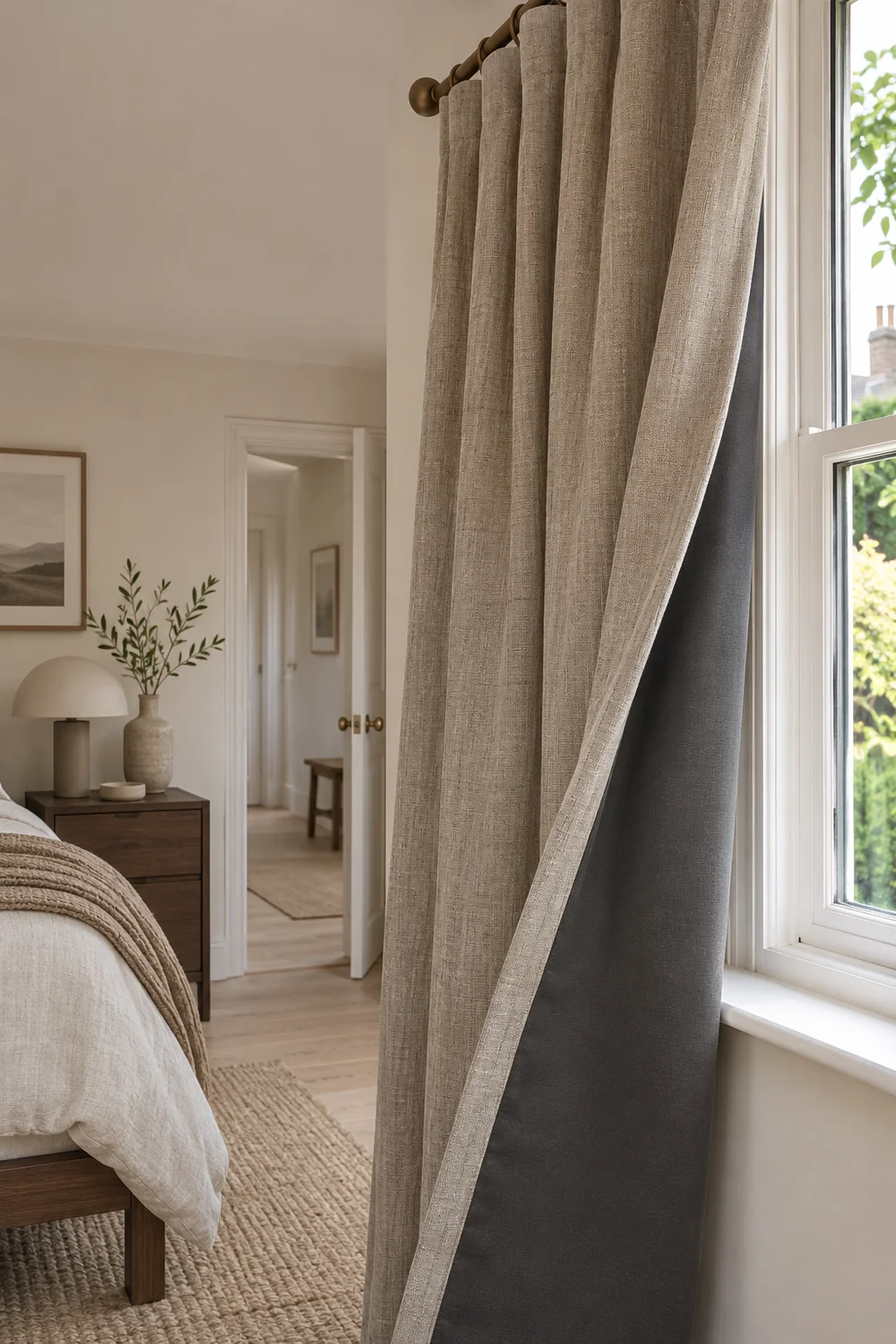
If the existing curtains have the right size, hang neatly and already close the edges you want, ask whether they can take a blackout lining. Check how the extra layer changes the weight, the folds and the space needed for the open stack. For a replacement, ask the supplier to match the heading to the track and confirm that the hardware and its attachment are appropriate for the total weight. The maker or fitter can assess the wall or ceiling fixing where there is uncertainty. If the window needs a corded covering and children may use the room, choose a compliant setup and follow the product instructions.
Take daylight into account when choosing the front fabric. See how one sample reads beside the pale wall while another looks darker against the frame. The Japandi bedroom guide shows why a lighter day layer can work with timber and neutral textiles. I would keep the sheer separate where it helps privacy and still opens easily. The exact rail arrangement needs enough space for both sets of folds and enough room to move them without catching.

Check what happens when the curtain is gathered. A heavier lining can make the open stack deeper. If the stack touches the handle or covers the side of the window you need to open, ask to see a compact heading or another compatible way to place the layers. I would mark clear access as part of the fitting brief. It is one of the things I would check on the day the curtains go up.
I would read the outside edges from the bed as well as standing at the window. If the left side sits visibly away from the wall, ask whether the chosen track can bring the edge back toward the wall using a compatible return, or whether the wall and hardware give you room to position the covering differently. Compare that against your measurements. A return has to work with the operating window and available fixing. Confirm the fitting detail with the supplier before specifying it.

At the top, look at how far the assembly projects and whether light can pass above the visible heading. If the proposed hardware leaves that route open, ask the maker what options fit that system and the available headroom. A cover that fits the curtain properly may help with the bright line. Check that it leaves room to draw and remove the curtain as intended. I would carry the existing photo to that conversation so the chosen detail answers the gap you can see.

At the centre, close the curtains using the normal pull. You want the two leading edges to meet reliably. If you find yourself bringing them together by hand, check the carrier and overlap options the supplier offers for that system. Consider a single moving panel only if the window, rail and available stack space suit it. After trying any new arrangement, open it fully and check the handle again. Looking at the sheer window treatment in the Japandi bedroom textiles example can help you picture how the daylight layer reads once the main panel is back.
A small complete specification might say that the rail must leave room at the right hand handle, that the outer edge closest to the bed needs a compatible return, and that two panels should close across the centre with the supplier’s overlap device. I would ask the fitter to demonstrate each part in place. The wording describes what to test, with hardware choice coming from the manufacturer.

Run the same check on the first bright day you can use without disturbing your sleep. Draw the curtains normally and wait for the fabric to settle. Sit on the bed and look toward the top, both sides and the centre. Check the face of the cloth separately. I would make a brief note of which bright areas you can see and where the edges sit. Take an image from the original position if that helps you compare locations.
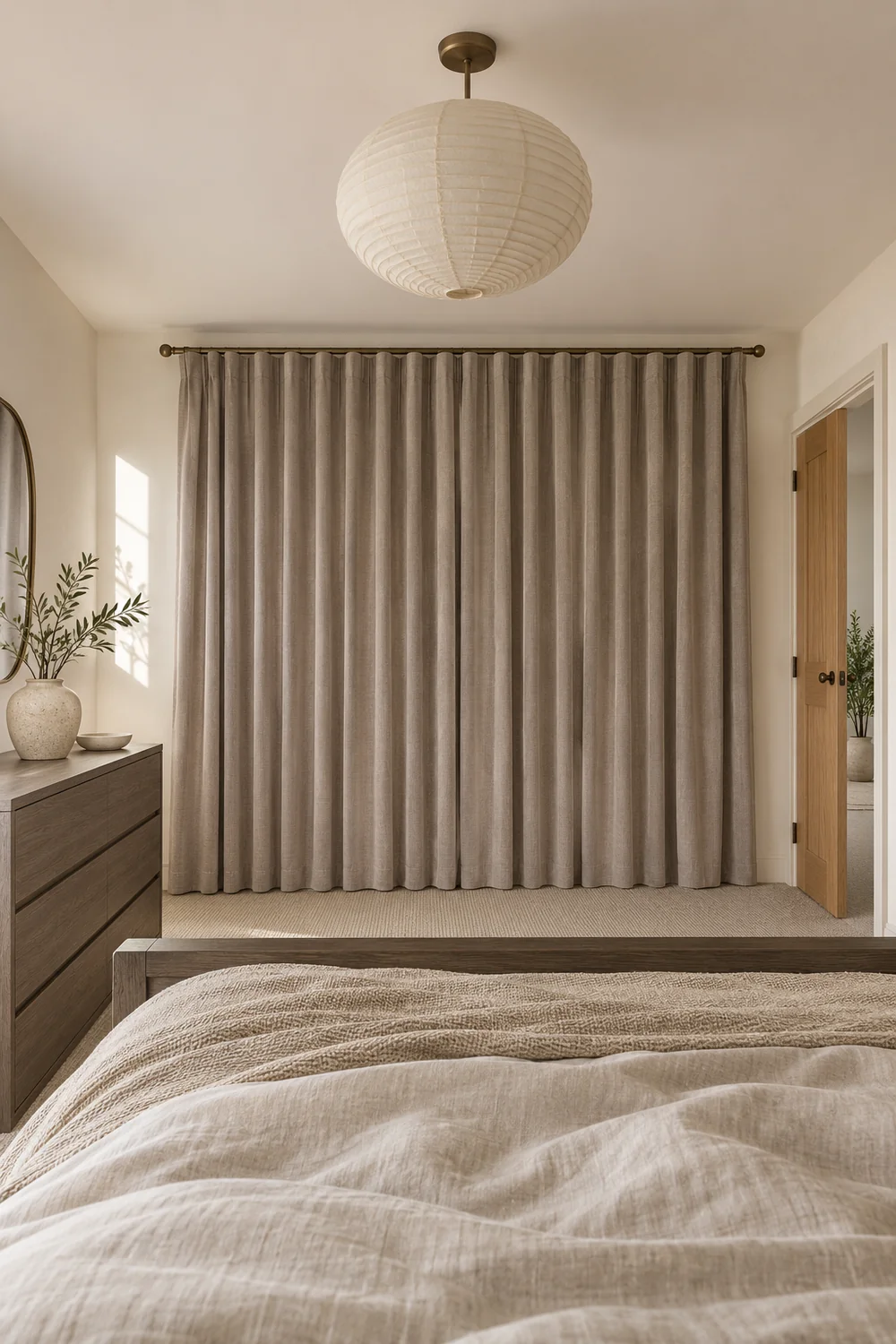
Suppose the long line through the centre has gone, but there is now one bright patch on the wall beside the bed. Stand beside the window and see if the patch lines up with the outer edge. If it does, ask the fitter to review the return or position against the original brief. If it does not, reopen the daytime sleep plan and trace the light again. It could be entering from a different source, including the doorway. That check helps you choose what to adjust next.

Finish by reopening the room. Confirm you can reach the handle, use the window normally and walk to the door without leaning round the fabric or moving furniture. Check that the day layer settles where you intended. I would also close the curtains once more from your usual standing point. The test is finished when you have checked the original leak and operated both room states in the way you do on a normal day.
I would keep the original sketch, the supplier’s measurements and a note of what changed after the first bright day. If a panel needs replacing later or the rail starts to stick, those records tell you which part was doing the work. Keep a photo from the bed as well as the usual full room view. You will be able to find the exact edge that was bright and compare it with how the curtain hangs now.

The useful result is a covering you can draw as you normally would after a night shift and open easily when you are awake. Before signing off the job, check the view from your bed, the way the panels meet and how the window works with the fabric pulled back.