Newsletter Subscribe
Enter your email address below and subscribe to our newsletter

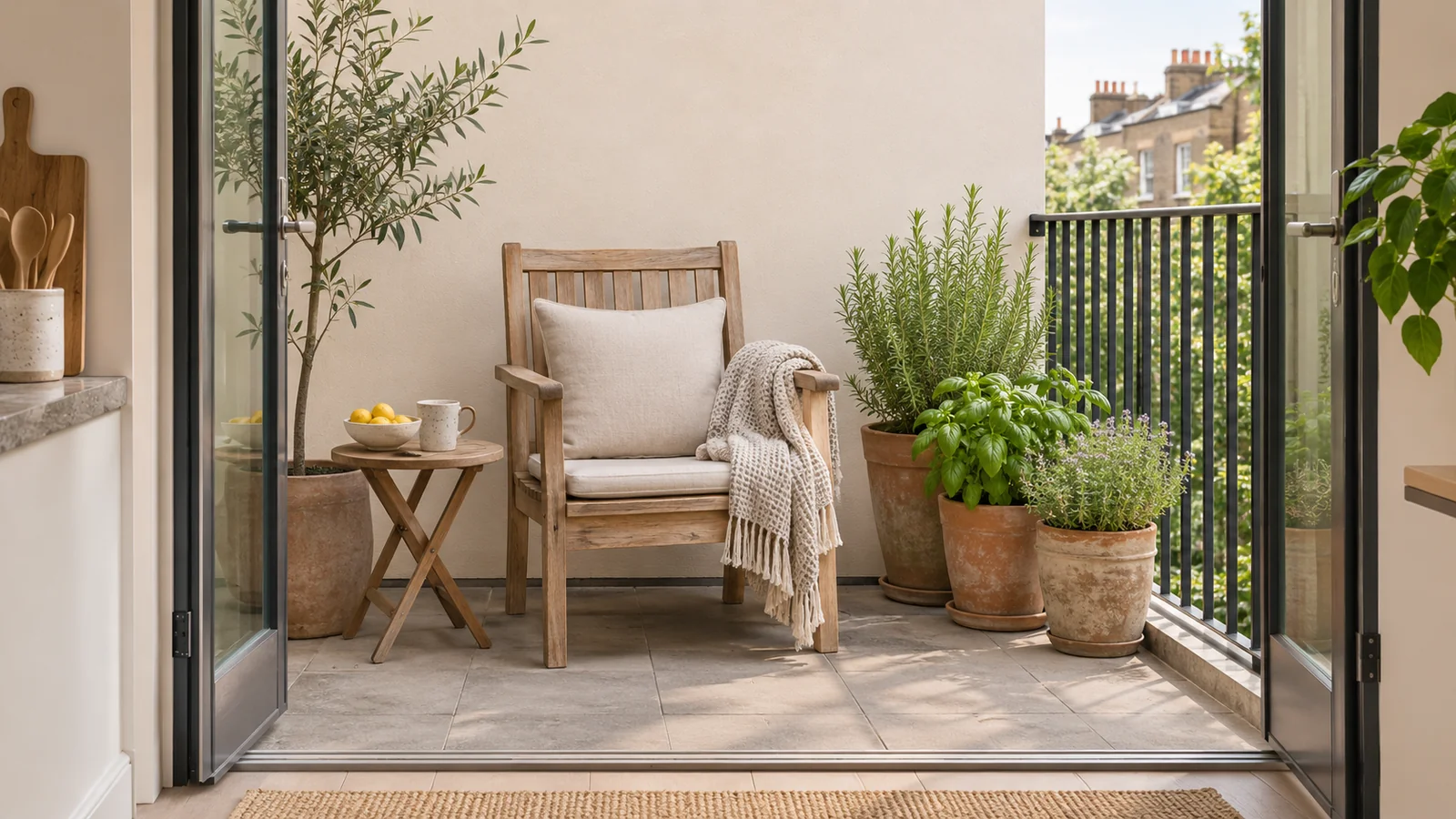
The balcony herb garden ideas I’d try in a small rental all start with dinner. Think about what you’d step outside to snip while the potatoes are boiling, and the chair you still want to sit in afterwards. One generous pot, a sunny pair or a small sheltered group can each make sense. Here’s how I’d choose between them.
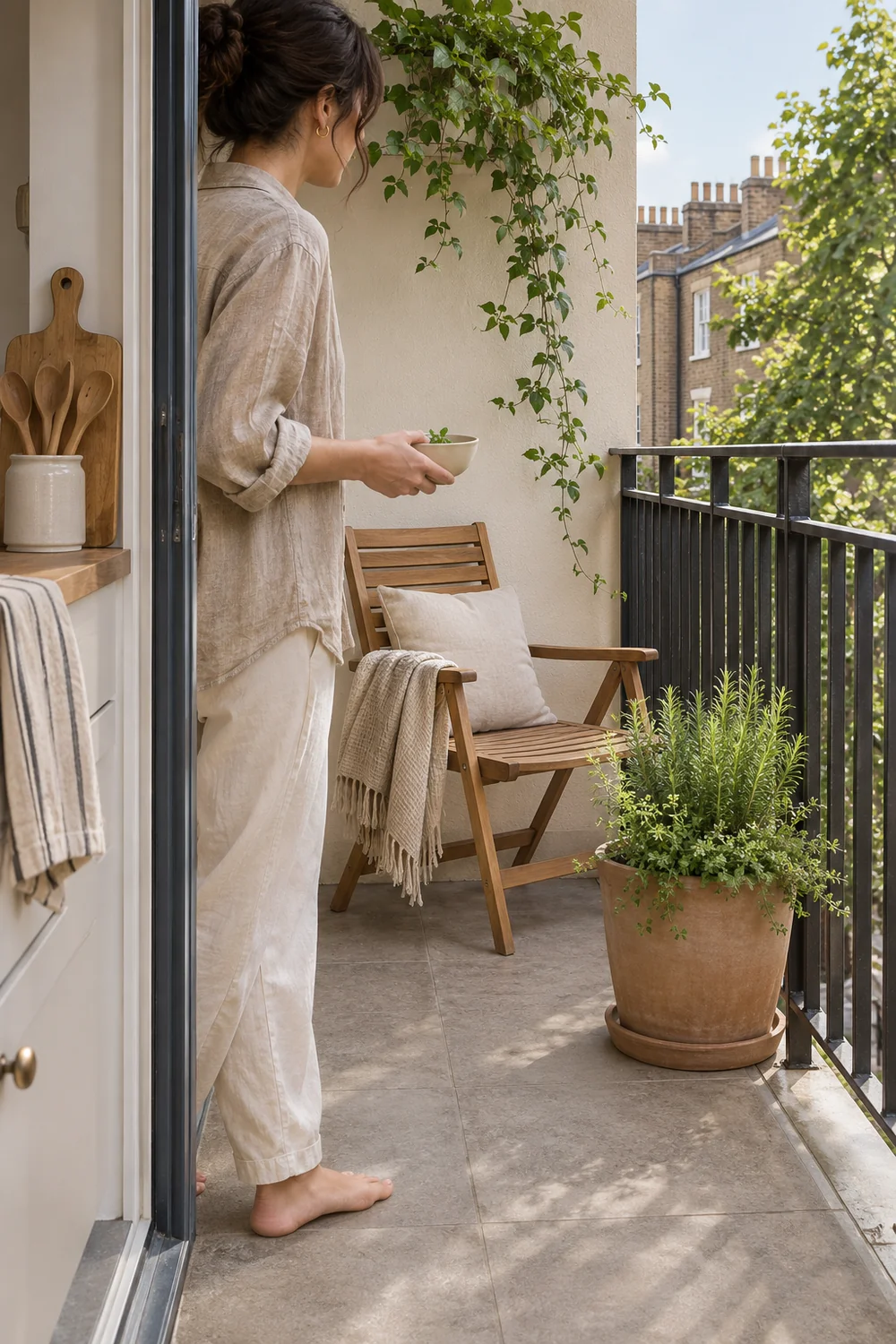
Open the fridge and look at what you bought fresh last week. I would count the herbs I finished, the ones I bought for a single recipe and the ones I wished I’d had on hand. Parsley might go into tonight’s bean salad and tomorrow’s soup. A packet of sage for one roast could sit there until it needs throwing away. Start with the herbs you keep reaching for.
Write down three ordinary dinners and one quick lunch. Think about where the herbs have to be when you need them. If you mostly chop a handful of parsley before you turn on the stove, stepping out onto the balcony may fit that routine. If you add basil at the last moment and the balcony is through two rooms, a suitable kitchen windowsill could be a better place for it.
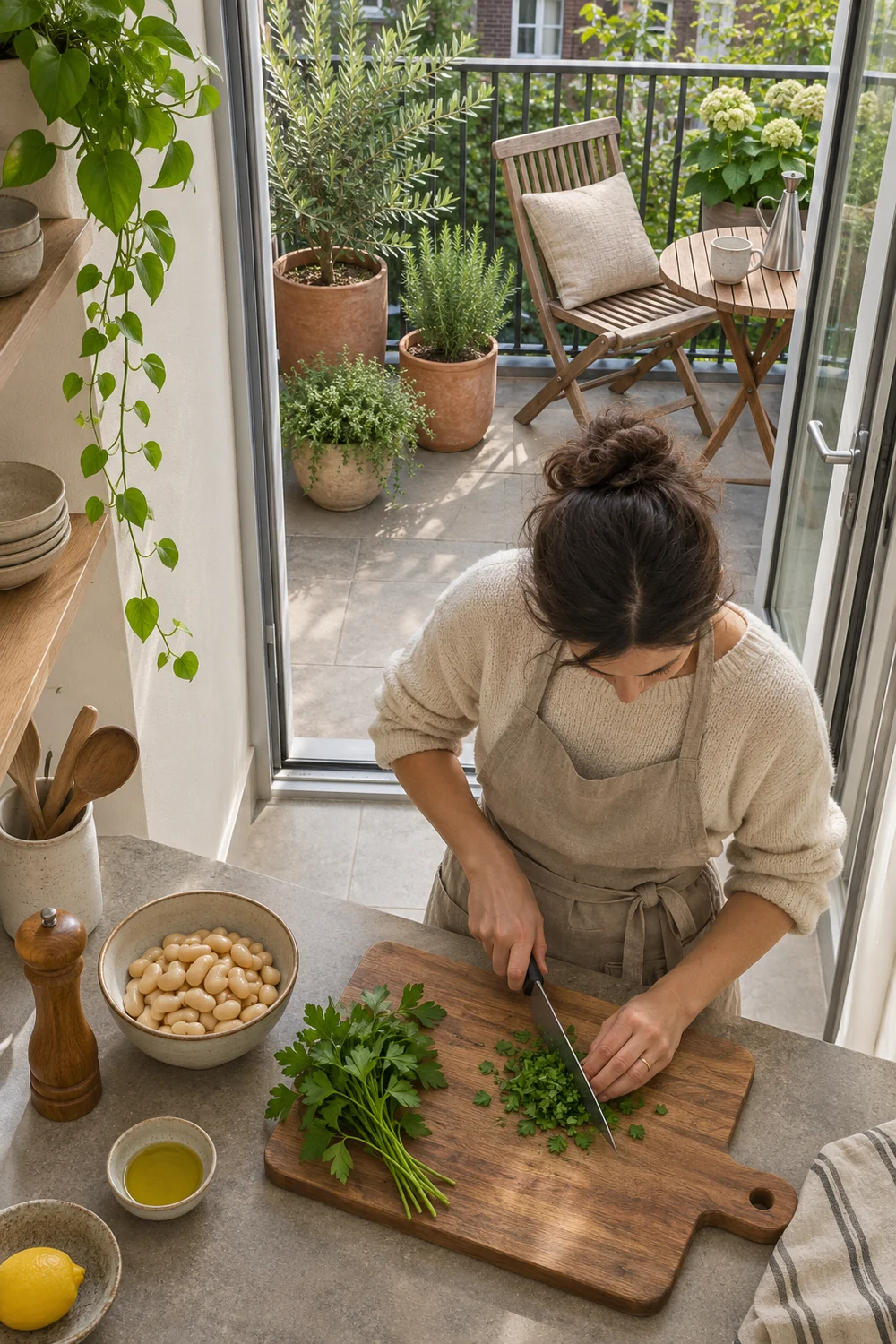
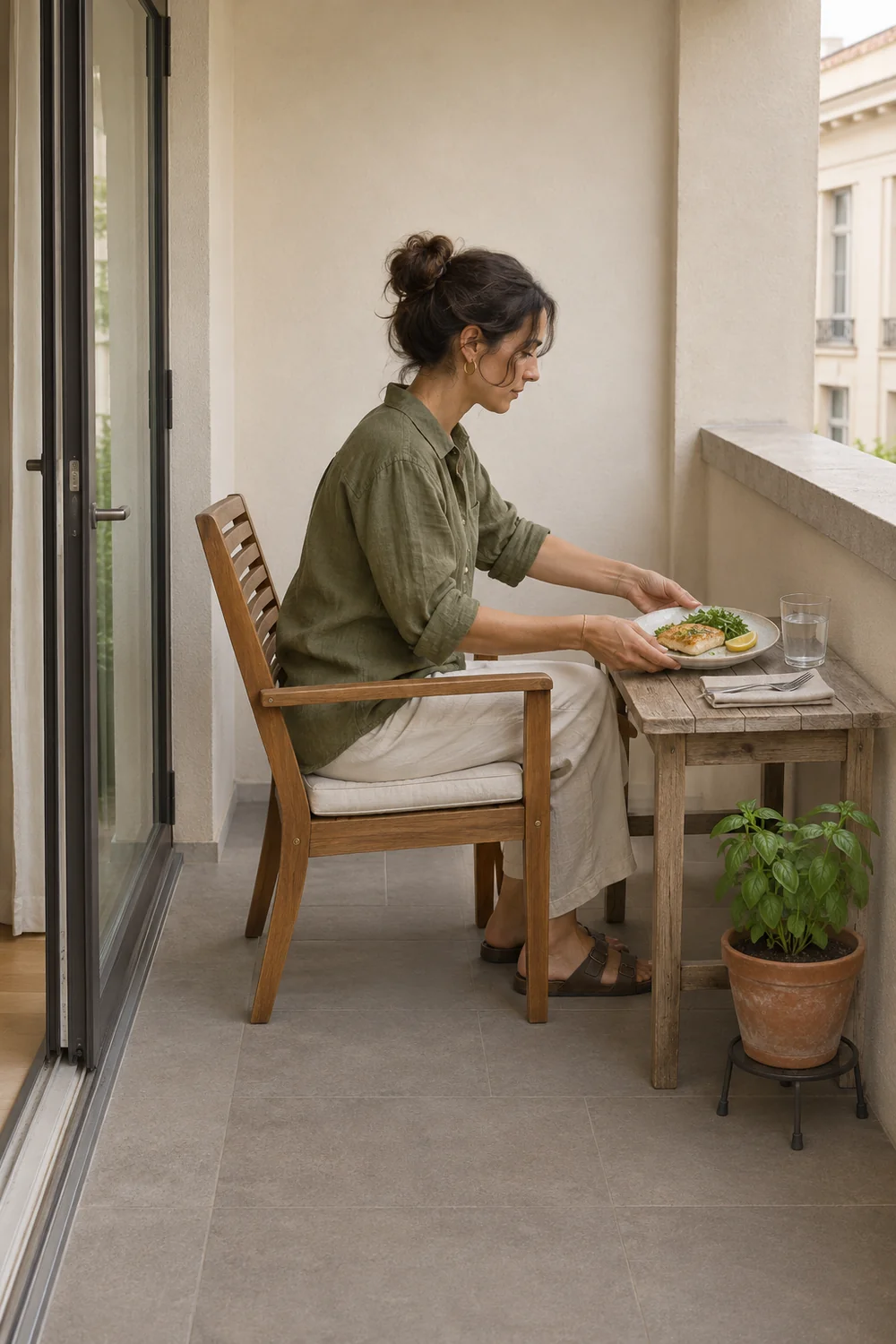
I like the idea of choosing planting and seating together. The kitchen garden ideas in a French country patio show how enjoyable it can be to sit beside something you also cook with. On a rental balcony, I would borrow the relationship between the seat and the plants. A single useful pot can do that job.
Try writing the choice as one sentence. “I want leaves for soup and eggs without carrying a bowl through the living room” already tells you more than a list of six herbs. It names a job, a route and a reason to keep the group small. If you cook differently at weekends, decide which habit earns a place every day.
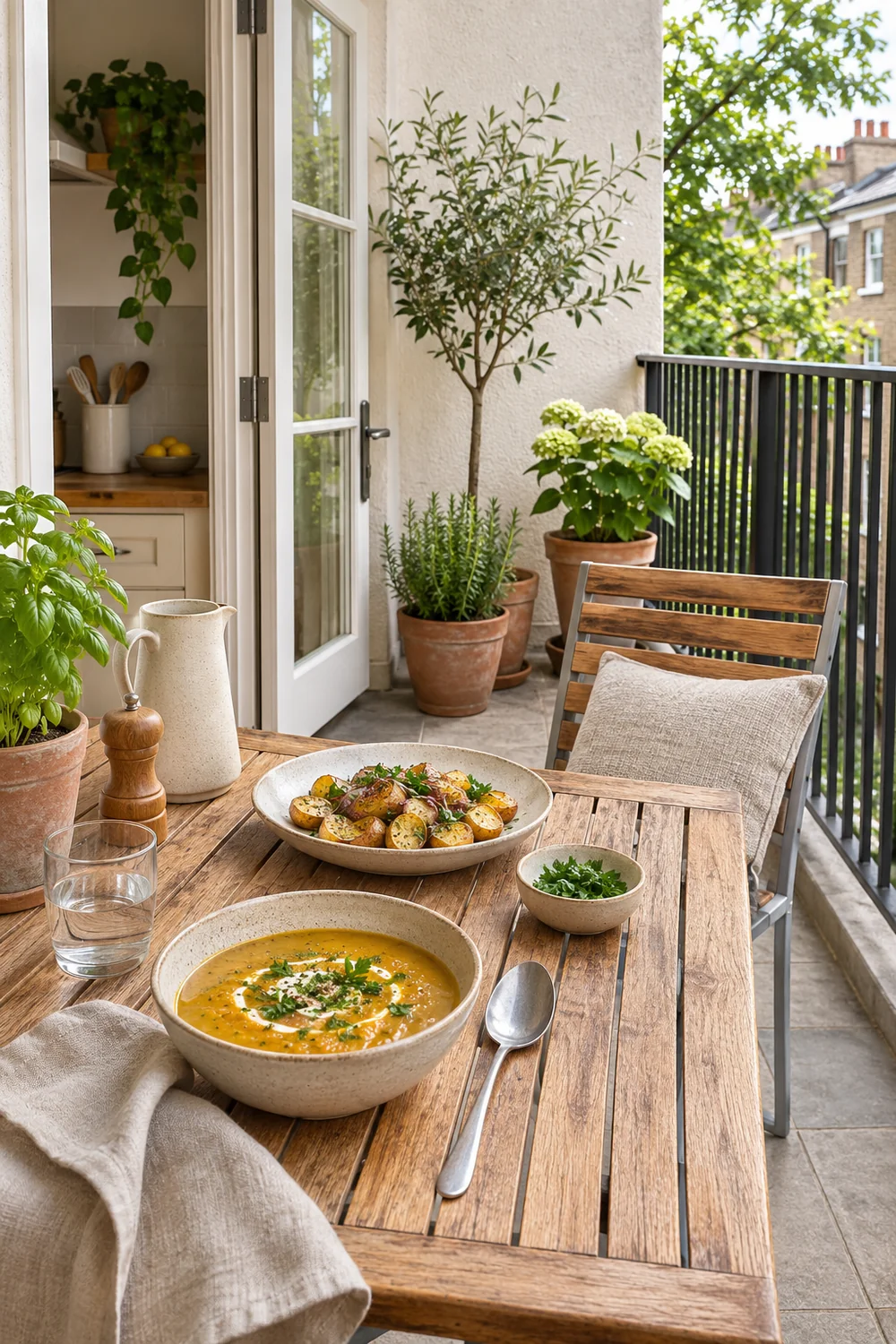
One pot is the arrangement I’d try on a balcony people already use. Put it on the side of the seat you walk towards, where you can reach it from the door and turn around with a bowl in your hand. Imagine the plant at its fuller size. The foliage can soften the chair without pushing you towards the railing.
An upright shape feels deliberate beside a simple timber chair. The round leaves of a bushier herb look softer against angular concrete. In a deeper recess I would test a taller pot shape, within the limits of what the plant needs and what the space allows. The Japandi garden ideas show how one distinctive silhouette can carry a quiet composition.
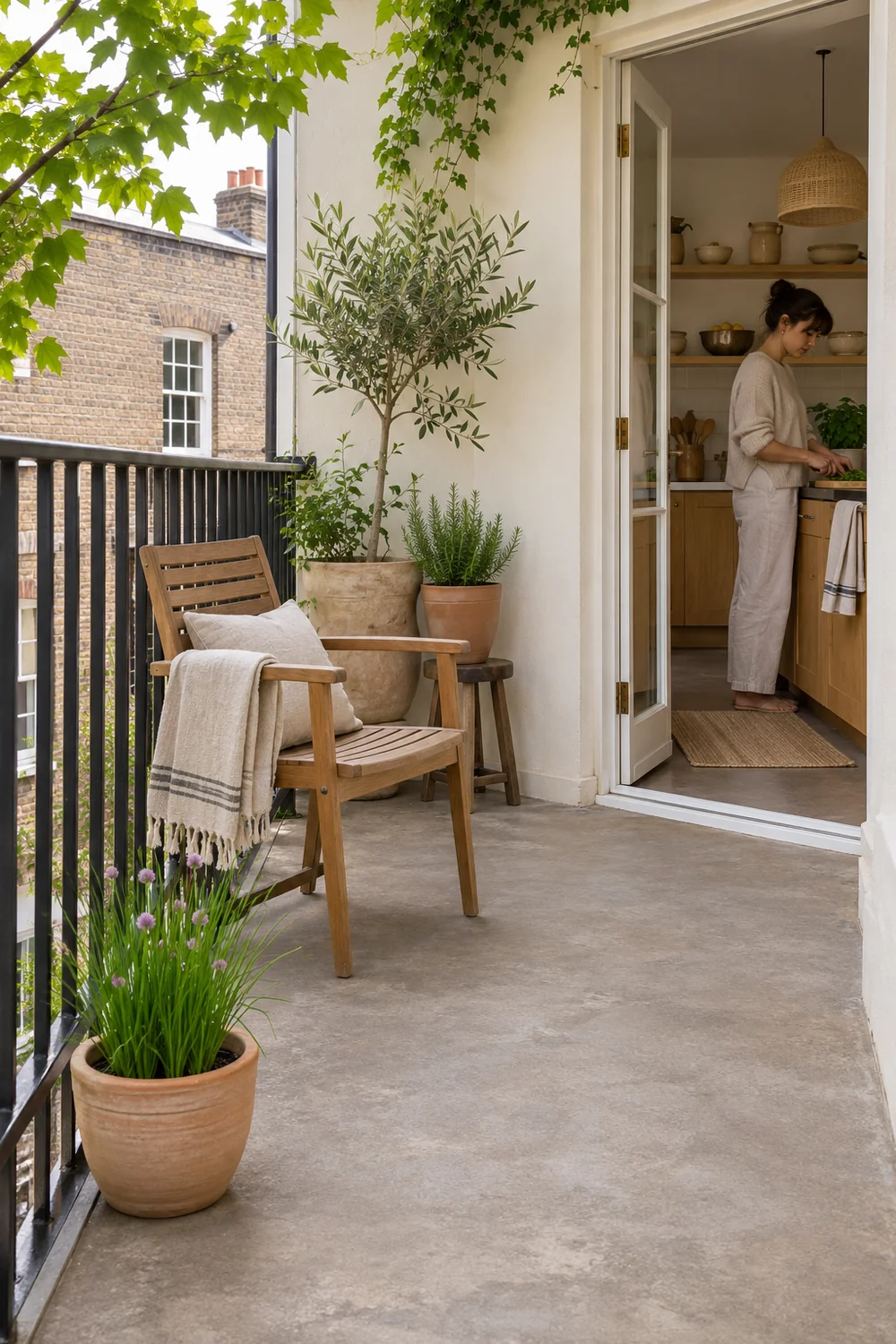
Stand in the room and cover the possible pot position with your hand in a photograph. Compare that empty view with the idea of a plant there. The best spot to pick from may sit outside the main sightline. That’s fine if the arrangement is mainly for cooking. If you’d like to enjoy it indoors too, see whether shifting the pot slightly makes it visible without narrowing the route.
I would choose this version when one herb comes up several times on the meal list, or when the outdoor chair has a footprint you’d rather keep. Leave a patch of floor beside it. You’ll want somewhere to stand, use a watering can or set down a small bowl without having to move the chair every time.
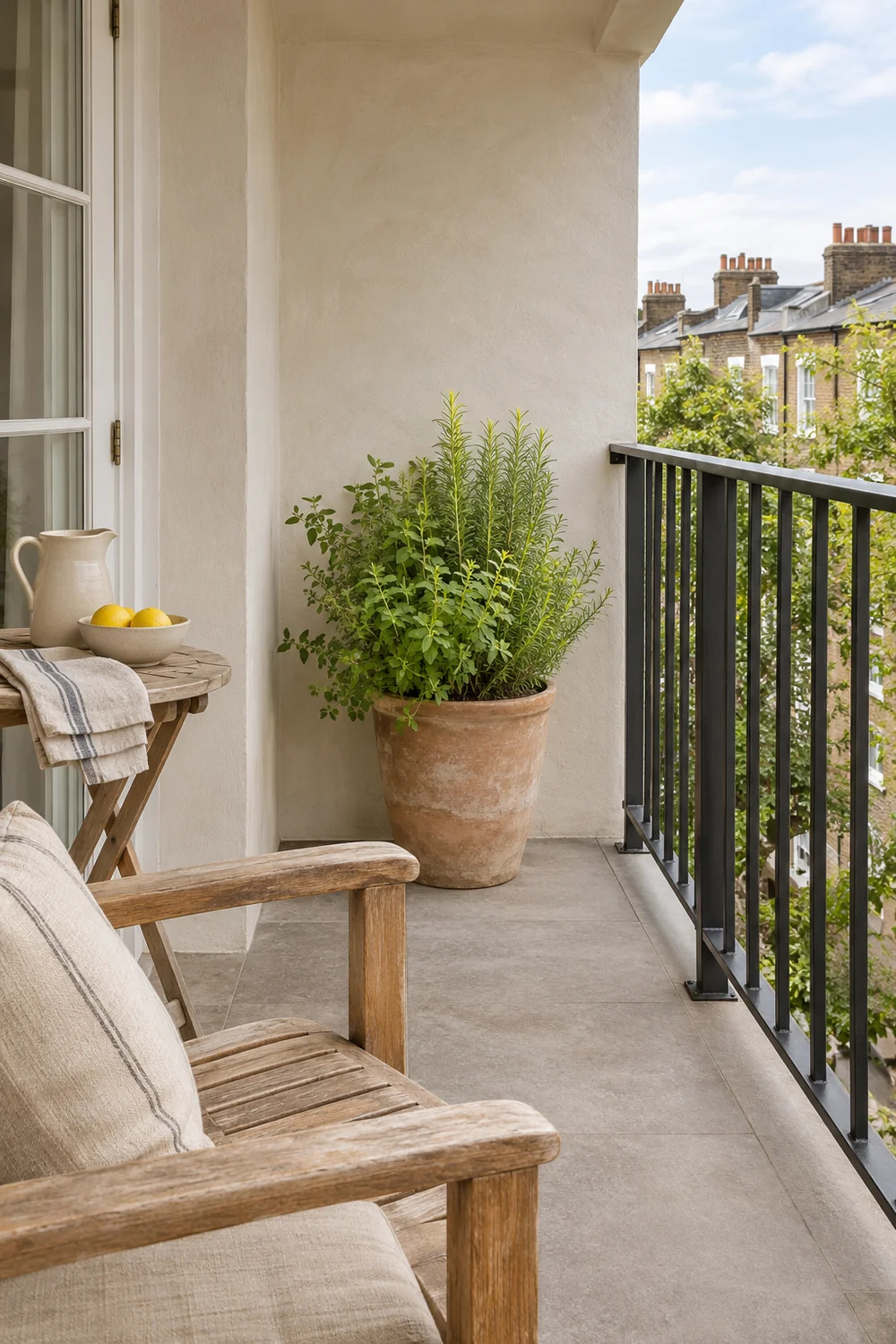
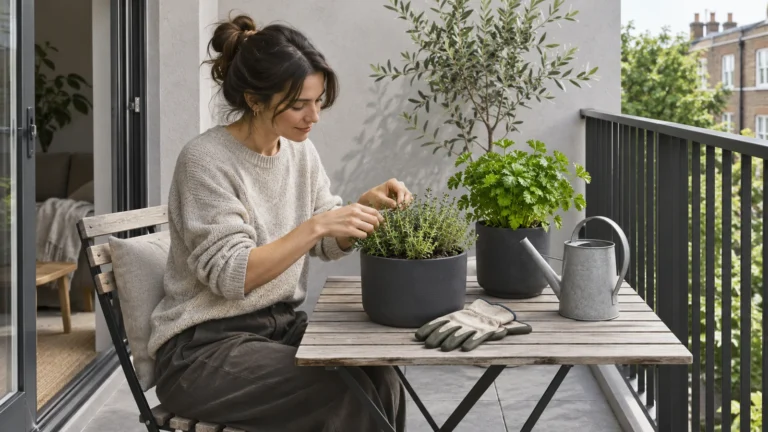
On a bright balcony with a clear side wall, I’d try two pots as a group. Imagine one with an upright, woody shape and one with a lower, finer edge. Give them a shared pot finish and distinct silhouettes. The two will read as one planted corner even if they eventually need different care.
Compare them near the seat and at the far end of the balcony. Alongside the seat they can make a comfortable edge around the sitting area. Farther away they free up more elbow room and might be better seen from inside. I’d decide by walking out with a cup, setting it down and then returning for a few sprigs. That is a better test of the relationship than a straight photograph of the railing.
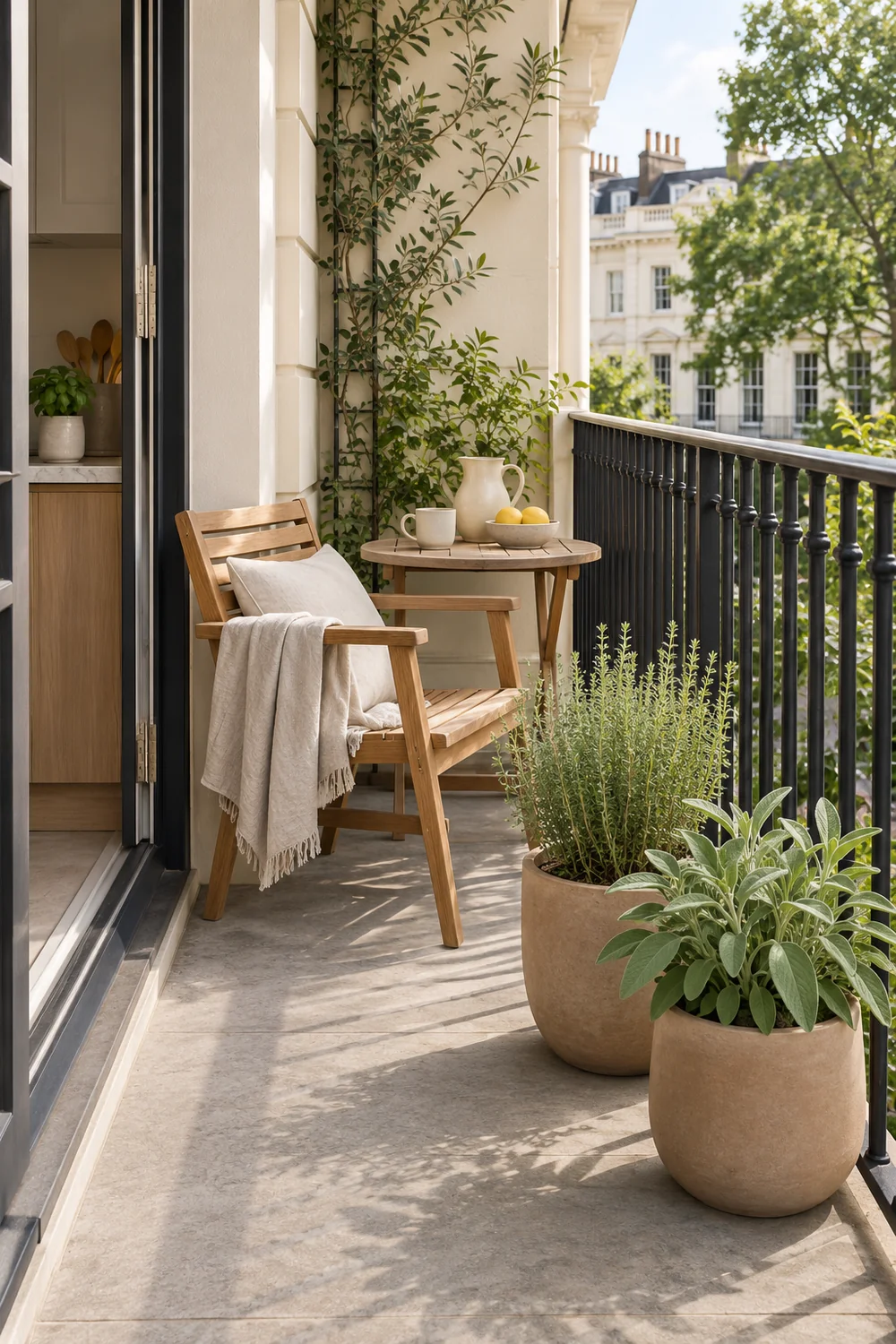
The terracotta herb pots in a sunny garden vignette make the contrast between earthy clay and silver or lively green leaves easy to see. On a balcony I’d put both pots on a permitted, stable surface within the railing. You can get the same family of colour using two pots with different profiles on one level.
Choose a pair if you actually cook with both flavours. You may want one for roast vegetables and a second for beans or a pan sauce. If one would only be there to balance the composition, I’d leave that place open for a while. An upright plant can make an attractive corner by itself.
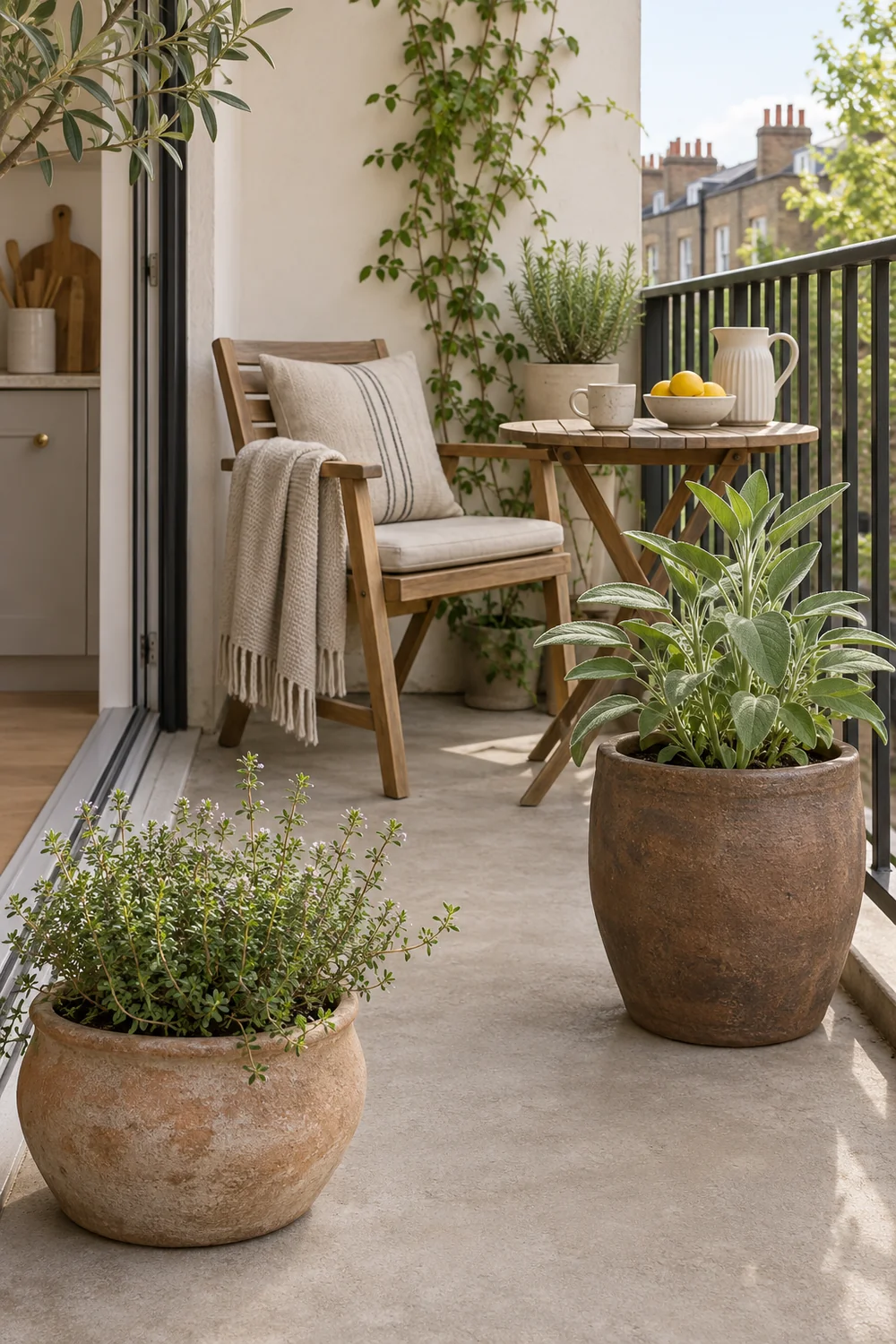
On a bright but less sunny balcony, the useful area may be a small spot against the inner wall. I’d try a loose group of leafy herbs you already use with eggs, soups or dressings. Think about how foliage hangs over a pot rim. Clipped stems, divided parsley leaves and broader leaves can look quite different even when the pots are all the same colour.
A low group can be as much about reach as appearance. I’d put the plant picked most often on the side closest to the door and set the others slightly farther back. Try imagining it from the direction you actually arrive. If one corner makes you lean across another plant to pick, stagger the pots until each one has a clear approach.
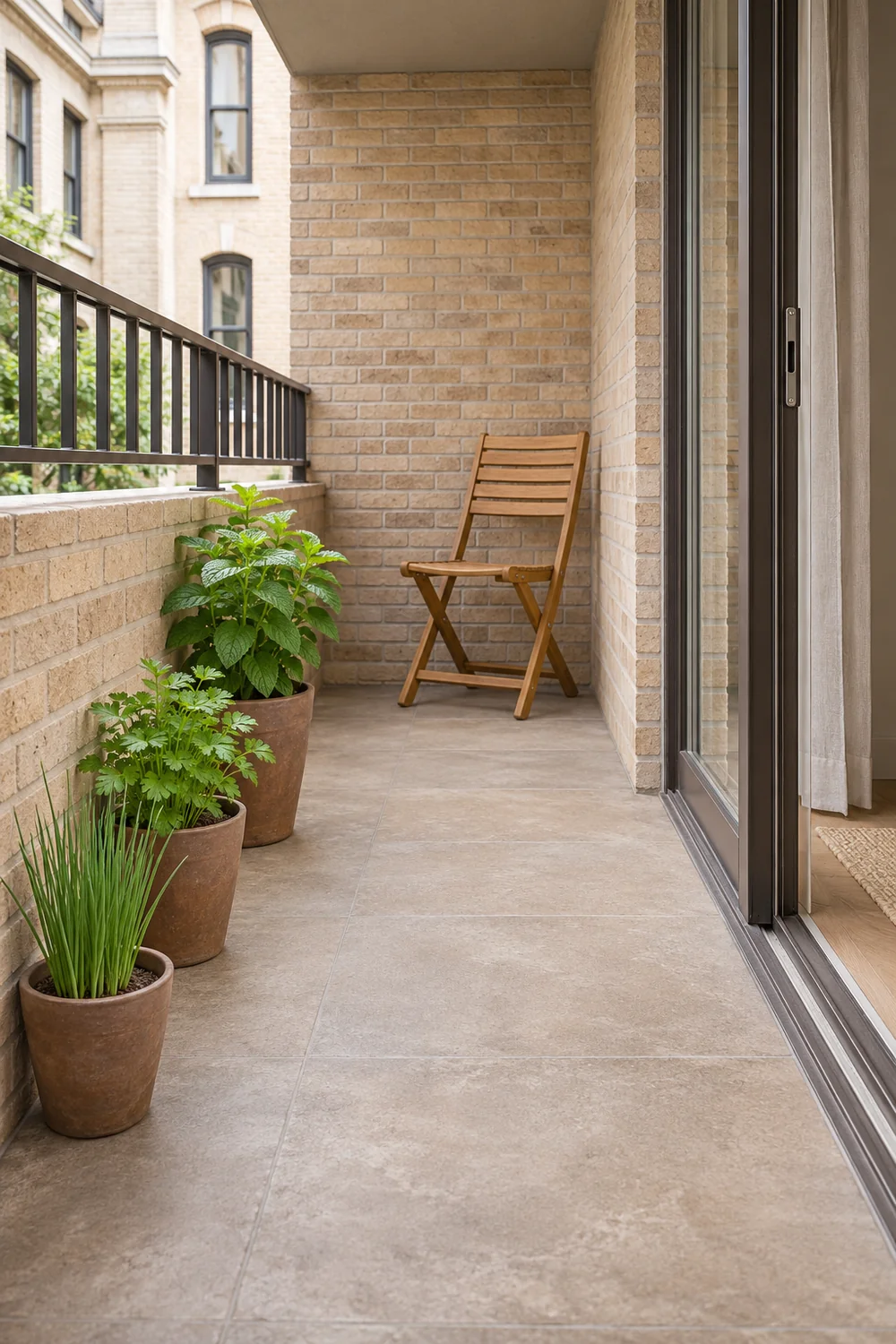
The small Mediterranean garden is a helpful example of treating a sunny patch and a cooler wall as parts of the same view. I’d apply that visual lesson by keeping similar pot colours and giving each plant the conditions it needs. There’s no obligation to make both sides of the balcony match.
Choose this version if your meals use more than one leafy herb and the balcony offers enough light for the ones you plan to grow. In deep shade I’d keep the chair and test a suitable growing position indoors. An arrangement seen in somebody else’s afternoon sun is only useful if the conditions on your side of the building can support it.
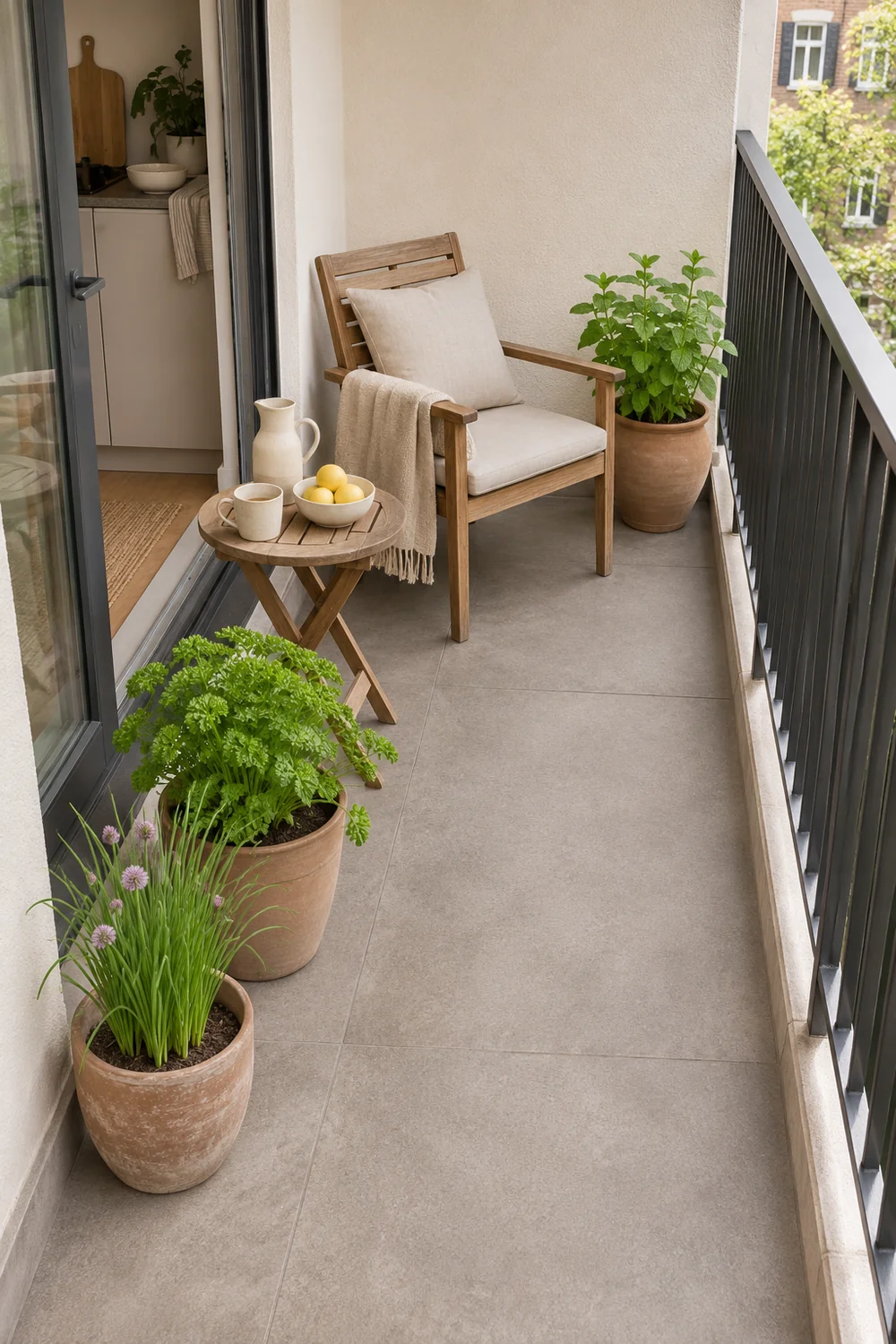
Take a photograph from the place indoors where you see the balcony most often. The camera might be beside the sink, at the dining table or halfway across the living room. I’d take another from the open doorway at the height you normally look out. Look for the spot where the pot rim, chair leg and railing come together. A small shift can separate overlapping shapes.
If the room already has warm timber, try a clay tone near the door. It can repeat a little warmth without asking you to change the outside floor. If there’s a lot happening indoors, a quieter, grey pot can make the leaves the natural point of interest. The Japandi balcony examples are useful for seeing how restrained pot colours sit beside wood and dark railings.
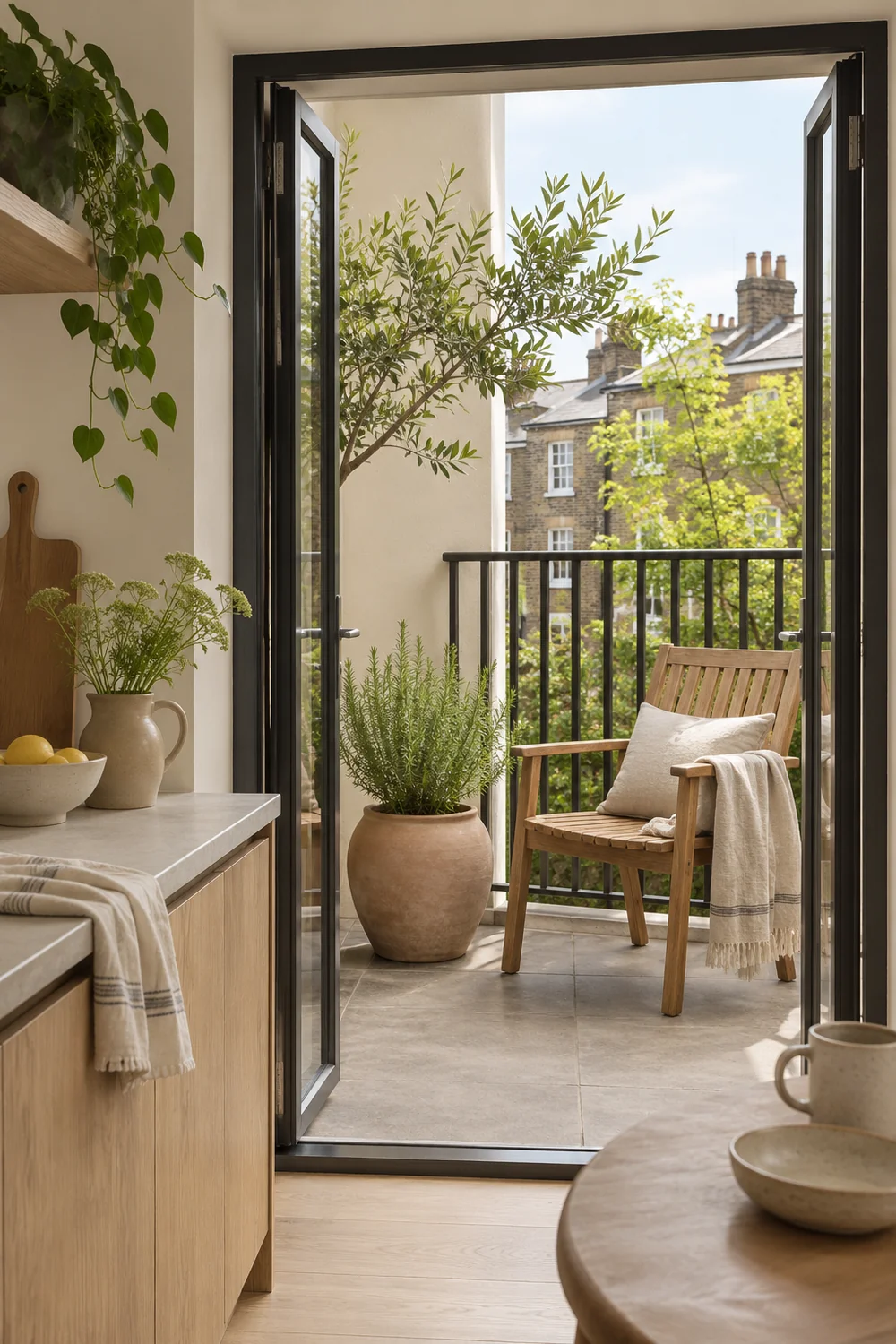
I’d look at both photographs with the door fully open. A pot that appears centred through the glass can be in the way once the door swings. You want to see plants in the view and still be able to carry a plate outside. On a sliding door, check your approach to the handle and the place where you turn as you step across the threshold.
Clear the small things that would accumulate in the picture before adding another planter. A watering can can live just inside if that makes it easier to reach. Leave a gap at the threshold and a strip of clear floor between the furniture and planted area. Those empty bits help you enjoy the whole view from indoors.
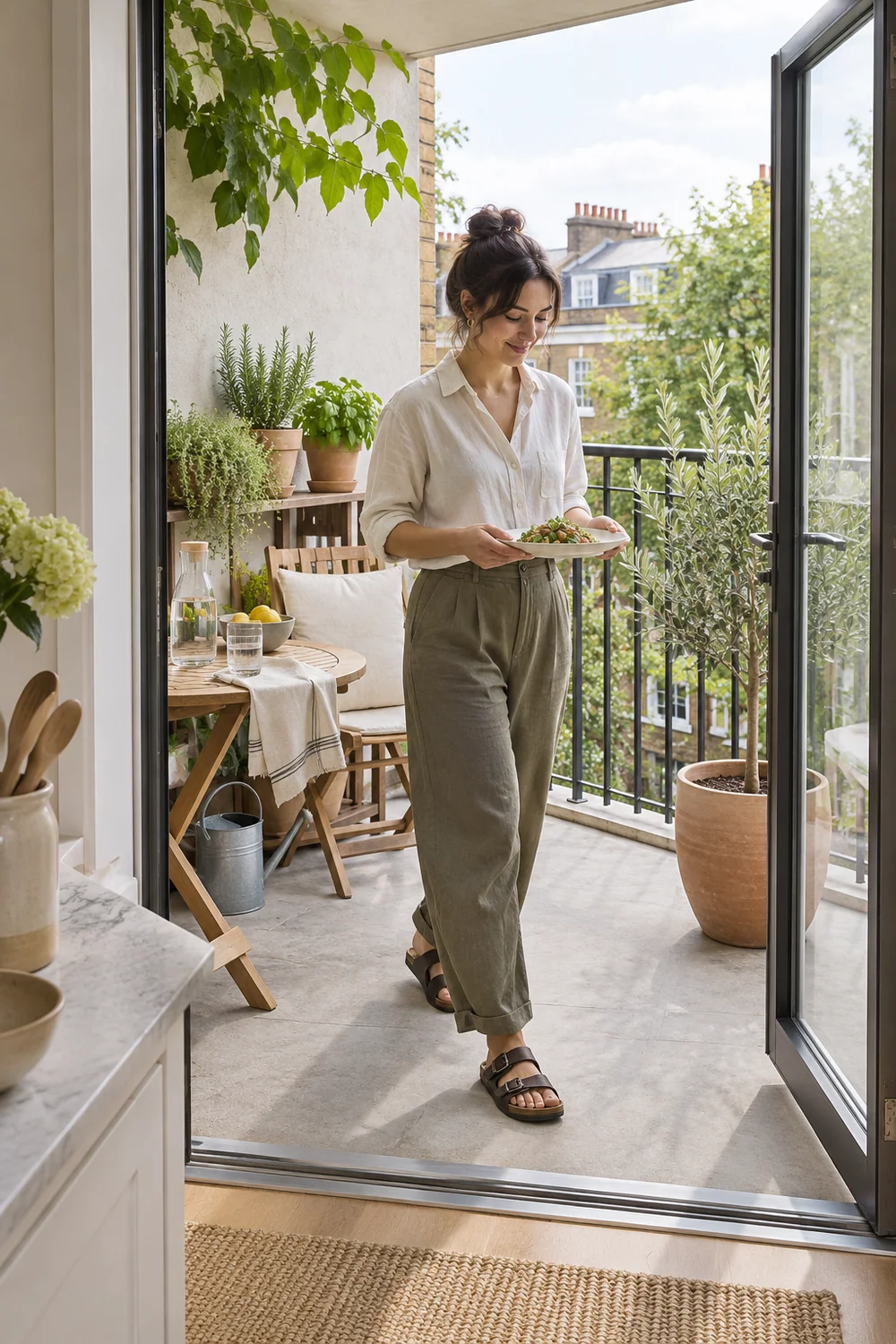
I’d start with one pot finish you’re happy to see from the living room. Muted clay looks good beside a weathered wood chair. On a pale concrete floor, a graphite finish can repeat the rail and make bright leaves stand out. A single group can include more than one shape while still feeling connected if the finishes share a similar warmth.
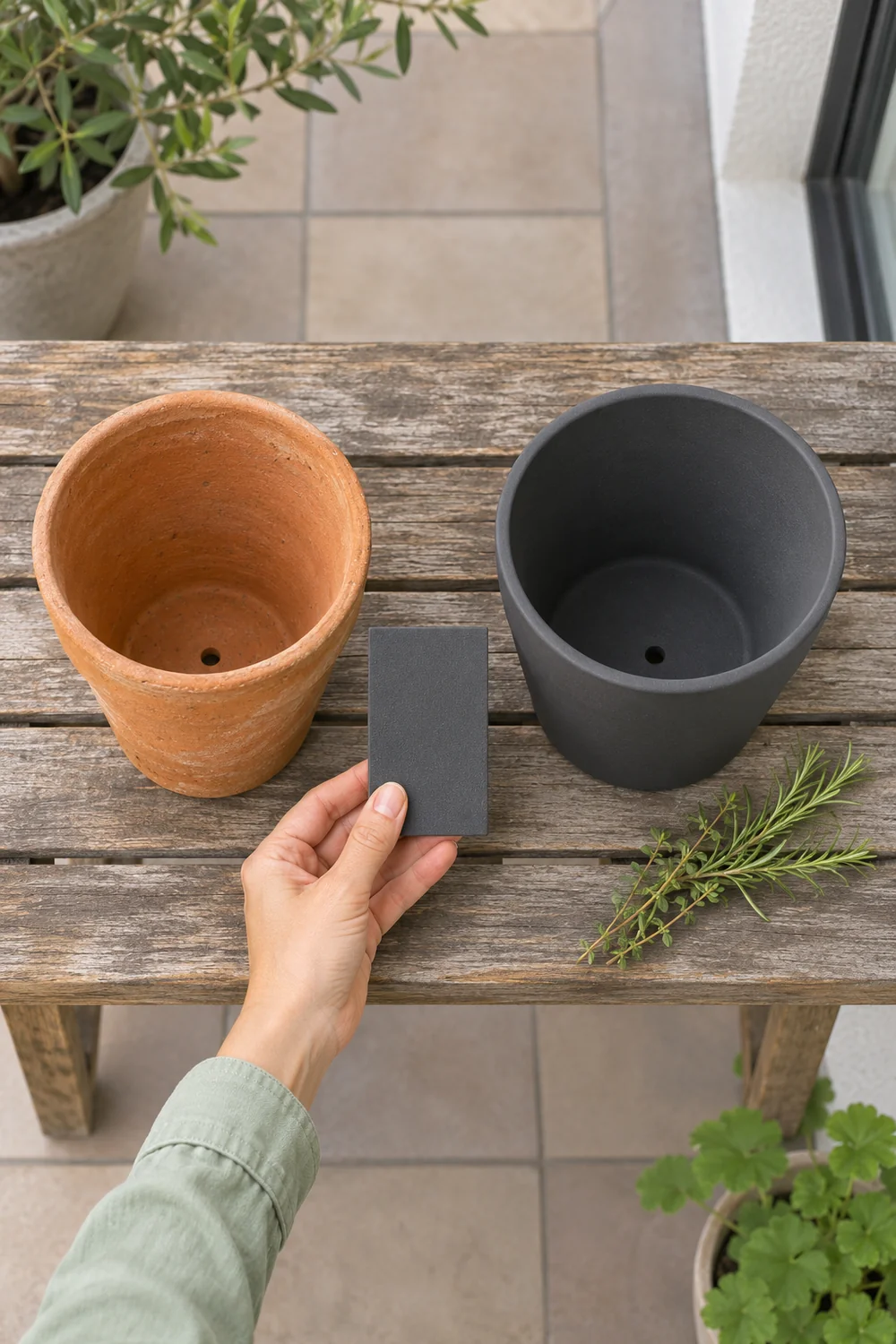
Try a finish you already have at home by placing a colour sample or an empty pot in view. An unglazed clay finish can absorb water and dry differently from plastic, and the weight you handle is the weight with the plant and wet compost in it. Check what the building allows and what you can move comfortably before choosing a heavier look. Empty samples should come back indoors once you’ve made the comparison.
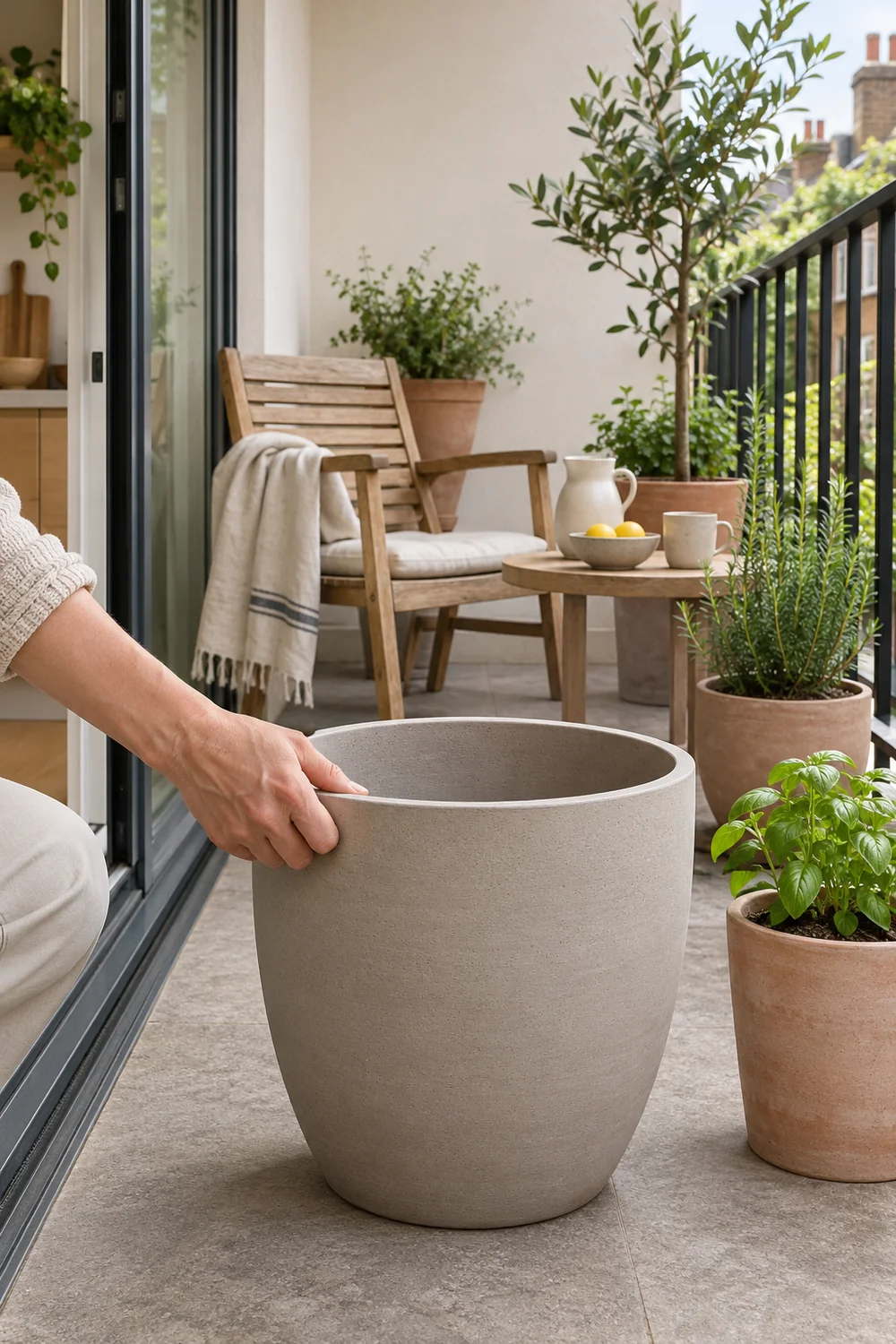
The Japandi balcony furniture guide explains how to compare outdoor materials with the fixed floor, the weather and the things you need to bring inside. I’d do that with the pots as well as the chair. A matte lightweight planter can look at home beside clay without adding the weight of another ceramic container.
Use the colour to bring things together, then let the plants do the variation. I’d keep a dark container matte, especially against a shiny railing, and go for an earthy clay beside pale cement rather than an orange showroom glaze. From inside, the best finish will still look like part of the balcony when the plants are small.
I’d put the three options on one sheet and give each a simple test. Would you use the herb twice in an ordinary week? Can you sit with your knees and feet where you want them? Can you reach the plant without leaning over furniture? Can you bring the filled pot in or move it to a suitable place when you need to? Give up the option that asks you to change the most established habit.
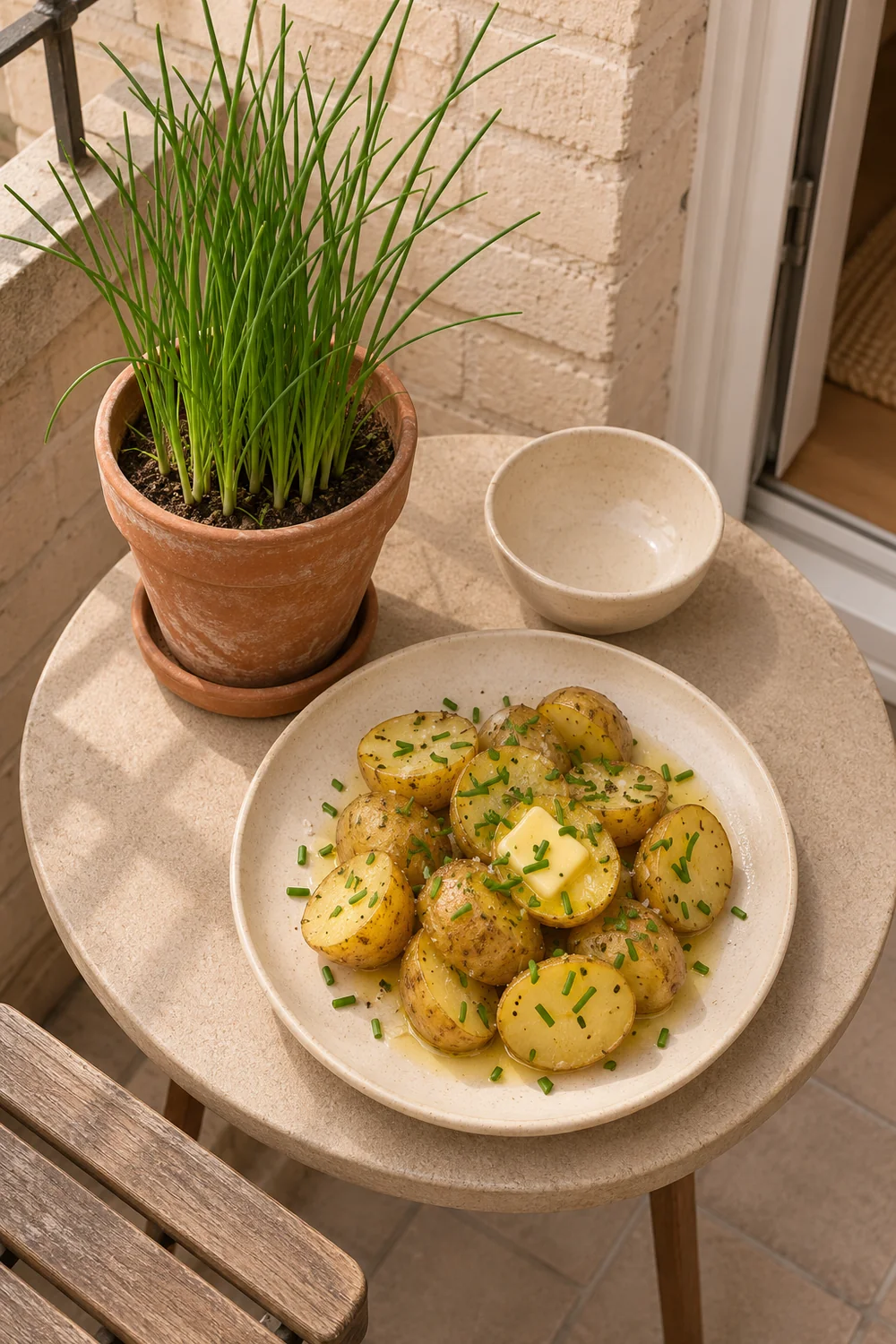
For a worked example, imagine a renter who makes buttered potatoes and eggs on weekdays. A pot of chives, placed beside a chair with a path back to the kitchen, could earn its spot quickly. Someone who cooks beans, roasts vegetables and regularly reaches for two woody herbs might prefer the low sunny pair. The size of the scene follows the meals.
Once you know which arrangement you want, make a Japandi balcony plan to mark the route, the pot area and the conditions you actually have. I’d sketch enough space to reach the pot and leave the drain clear. Check anything the rental or building rules put in doubt before you choose the containers.
If you’ve already marked the allowed spot and checked its light, the guide to herbs in containers helps you choose plants for that position and pots that you can realistically care for.
Pick the smallest arrangement that gives you herbs you want to eat and a space you still want to sit in. For your first pass, leave some floor showing beside the chair. Sit with a drink, look back at the door and think through carrying a bowl to the pots. If the view feels bare, give the plants time to grow into it. If the route feels awkward while the pots are empty, choose the smaller arrangement now. You’ll know where another plant could go if cooking from the first one becomes a habit, and you’ll know which plant to add because you’ll already have a meal in mind.