Newsletter Subscribe
Enter your email address below and subscribe to our newsletter

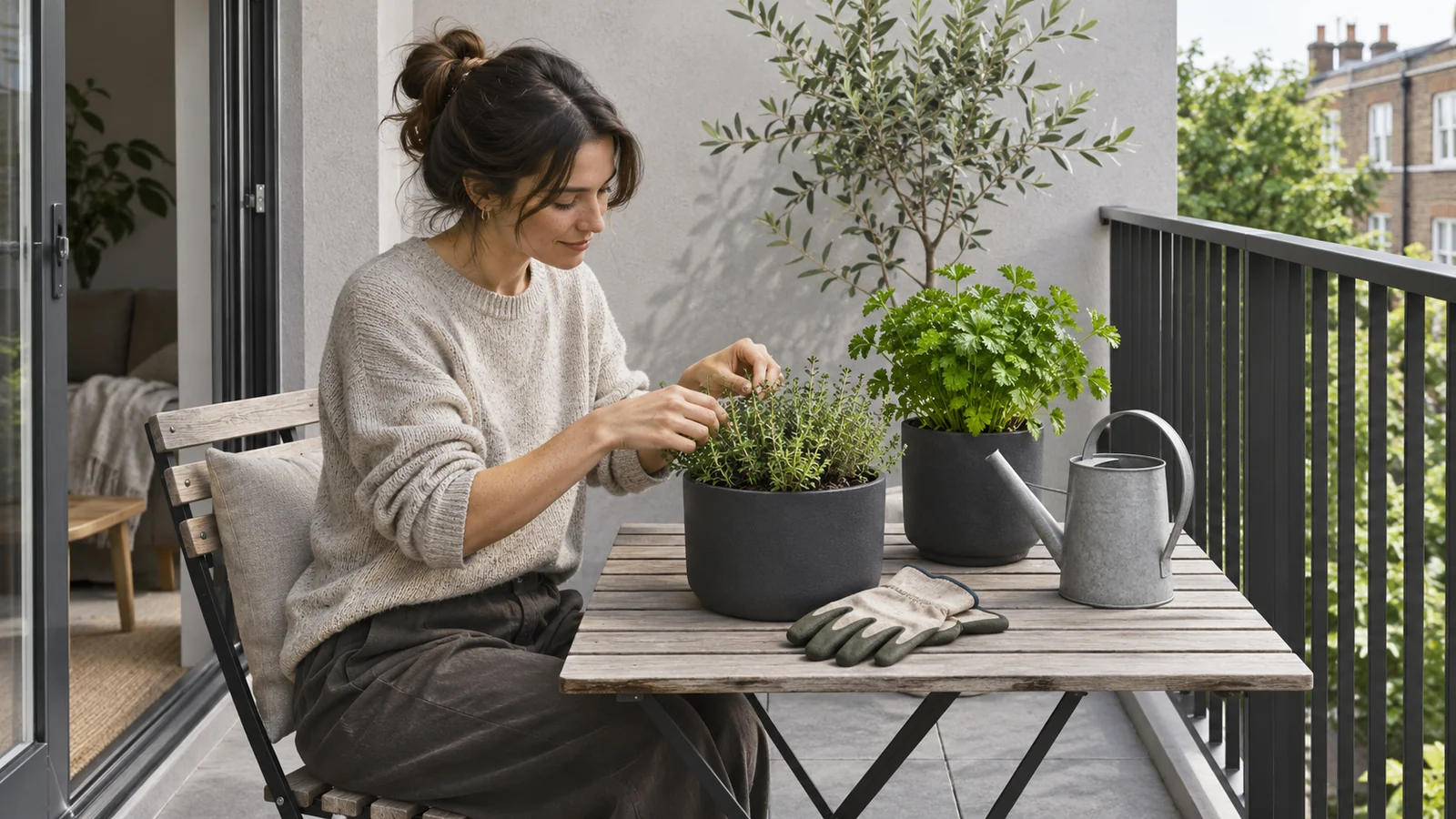
Growing herbs in containers on a rented balcony starts with a spot you’re allowed to use and a few meals you cook often. I’d choose the plants for the light that reaches the pots, then make sure you can water and move them without giving up the seat. Here’s what I’d put on the shortlist for a UK spring.
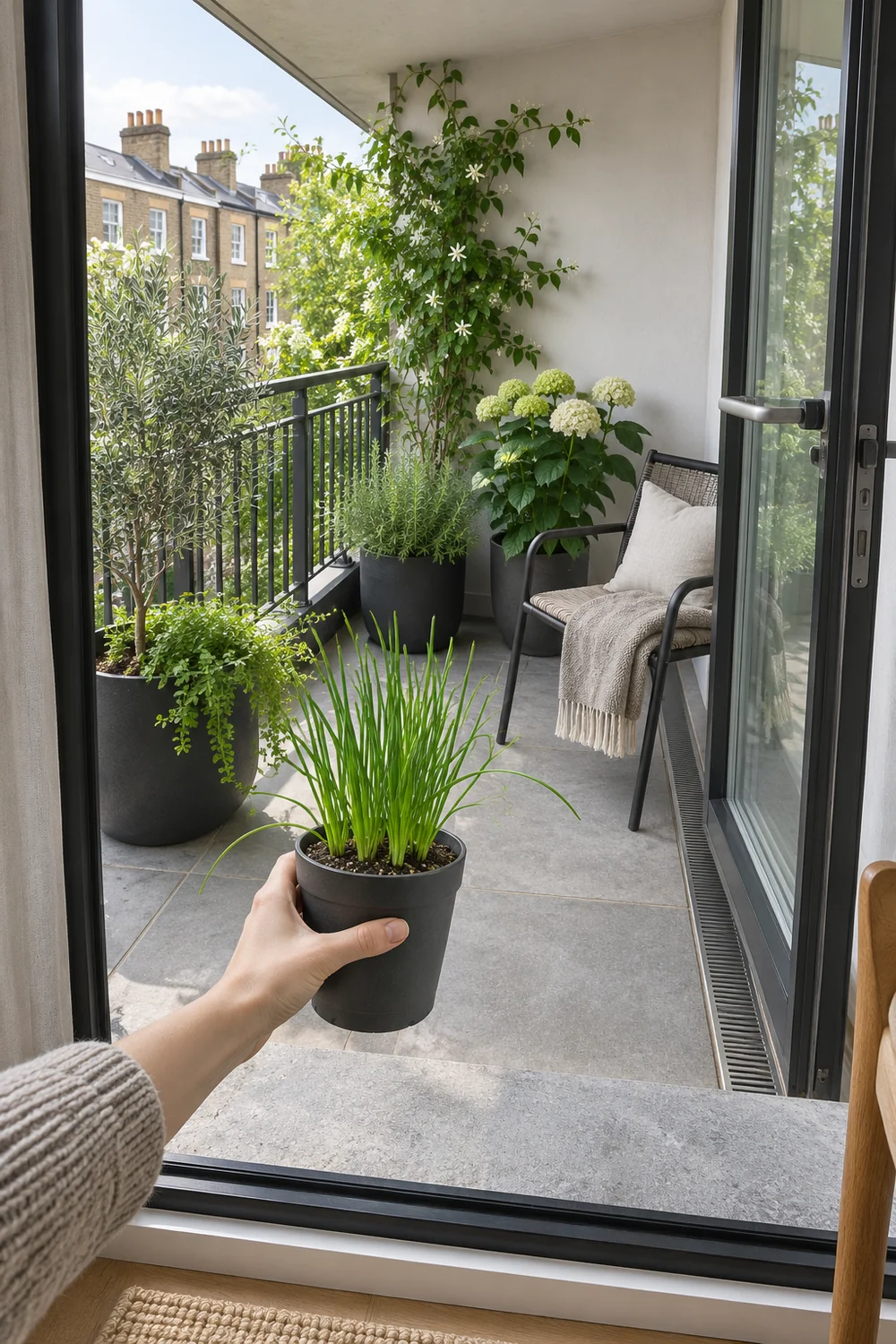
Put your sketch by the balcony door. The place that looks brightest through the glass can turn out to be exposed, while a covered place can stay dry even when it has rained all afternoon. I’d choose a day to look at the marked spot at breakfast, lunch and late afternoon, and repeat the check when the sun is out. Note whether direct sun reaches the leaves and whether wind funnels through the corner.
Use your balcony planting plan to check the space again once the chair is in use. I’d open the door and carry a watering can to the marks on the floor. Make sure the pots will sit on a stable, permitted surface with room to reach the drain. A position that only works when the chair is tucked away usually costs you either the seat or the plants.
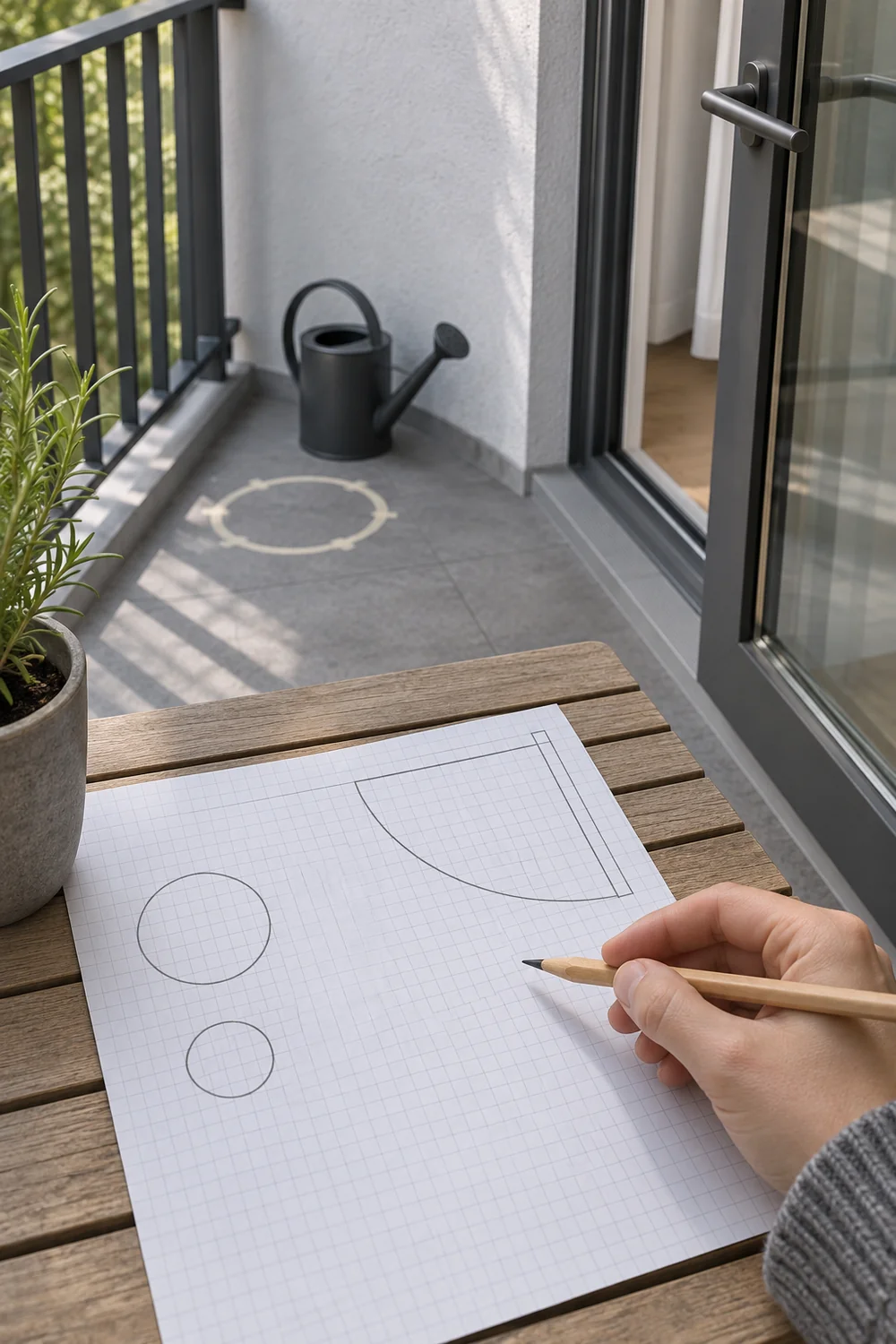
Write down the maximum outline for each pot and the amount of space the plant can occupy when it grows wider. Mark how far you would have to carry it when wet if the weather changes or you move. Ask the building manager about uncertain restrictions before choosing the final container. Measure the floor space you have. Check the building guidance for the load it can take.
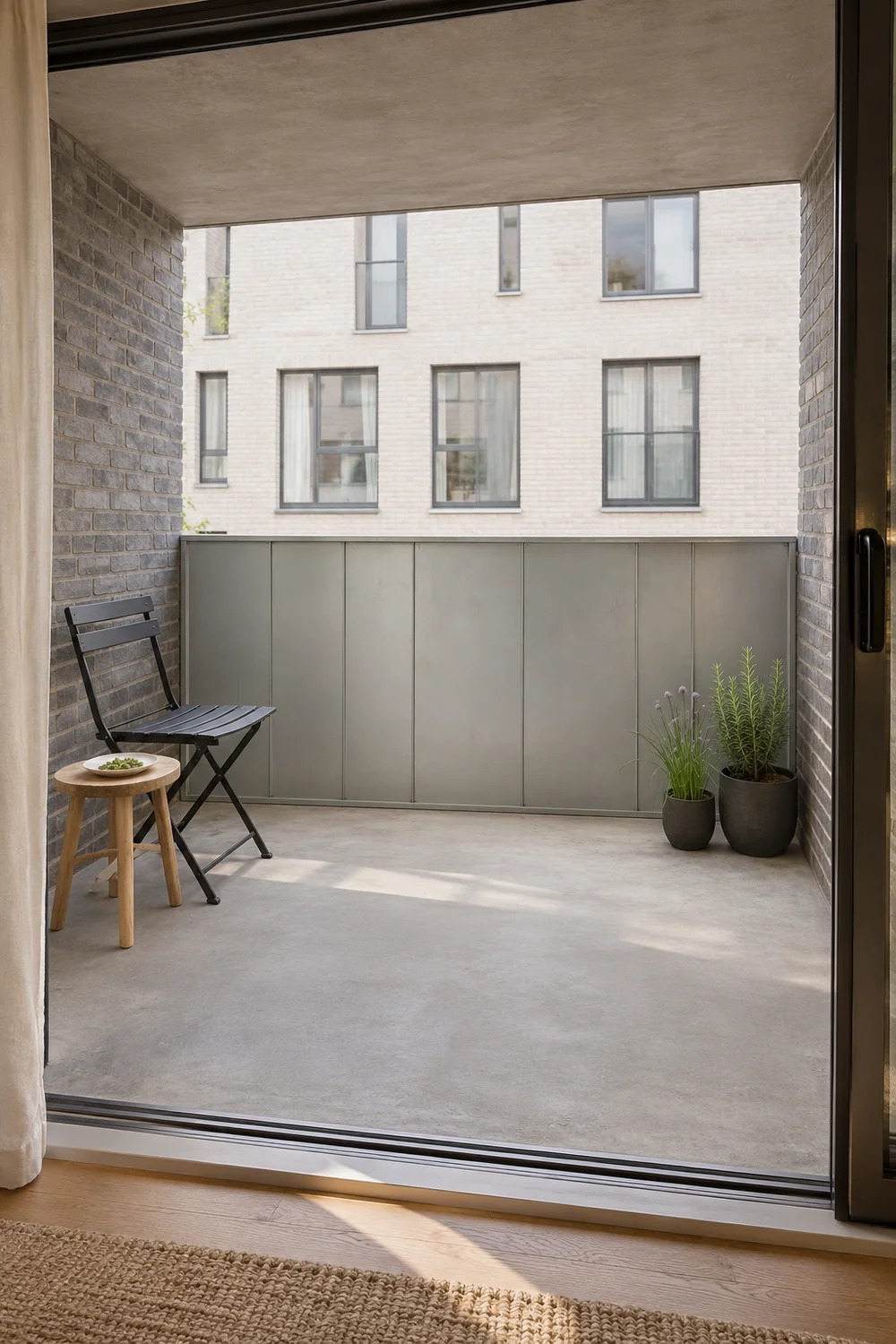
Decide whether the position is sunny and sheltered, bright with partial shade, or too dark or exposed for the herbs on your list. Those are useful descriptions for a nursery visit. In a worked example with a bright spot under an overhang, I would bring that detail along with the pot measurements. The few hours of direct sun and the shelter from rain both affect which plants make sense there.
For the first setup I’d make a one line note for each pot: what you’ll cook with it, how much sun it gets, how much space it has and where it can go if you need to move it. If your favourite herb and the available spot are a poor match, give the spot to a herb you already use and can grow there.
I’d shortlist thyme if you regularly roast vegetables, make a bean stew or use it with mushrooms. It’s useful in small quantities and can suit a sunny spot with a gritty, freely draining potting mix. For one thyme plant, the RHS suggests a pot at least 15 cm wide and 10 cm deep. Look at the spread of the variety you’re buying. A low, compact plant is useful if the only room is beside a chair leg or in front of a deeper pot.
Rosemary is worth making room for if you often use it for roasts or bread. It likes a sunny position and good drainage. The Royal Horticultural Society recommends a pot at least 30 cm wide and deep for rosemary. I’d check the actual footprint of the filled pot and the plant’s size before including it. If that pot removes the only comfortable route to the chair, make thyme your woody herb.
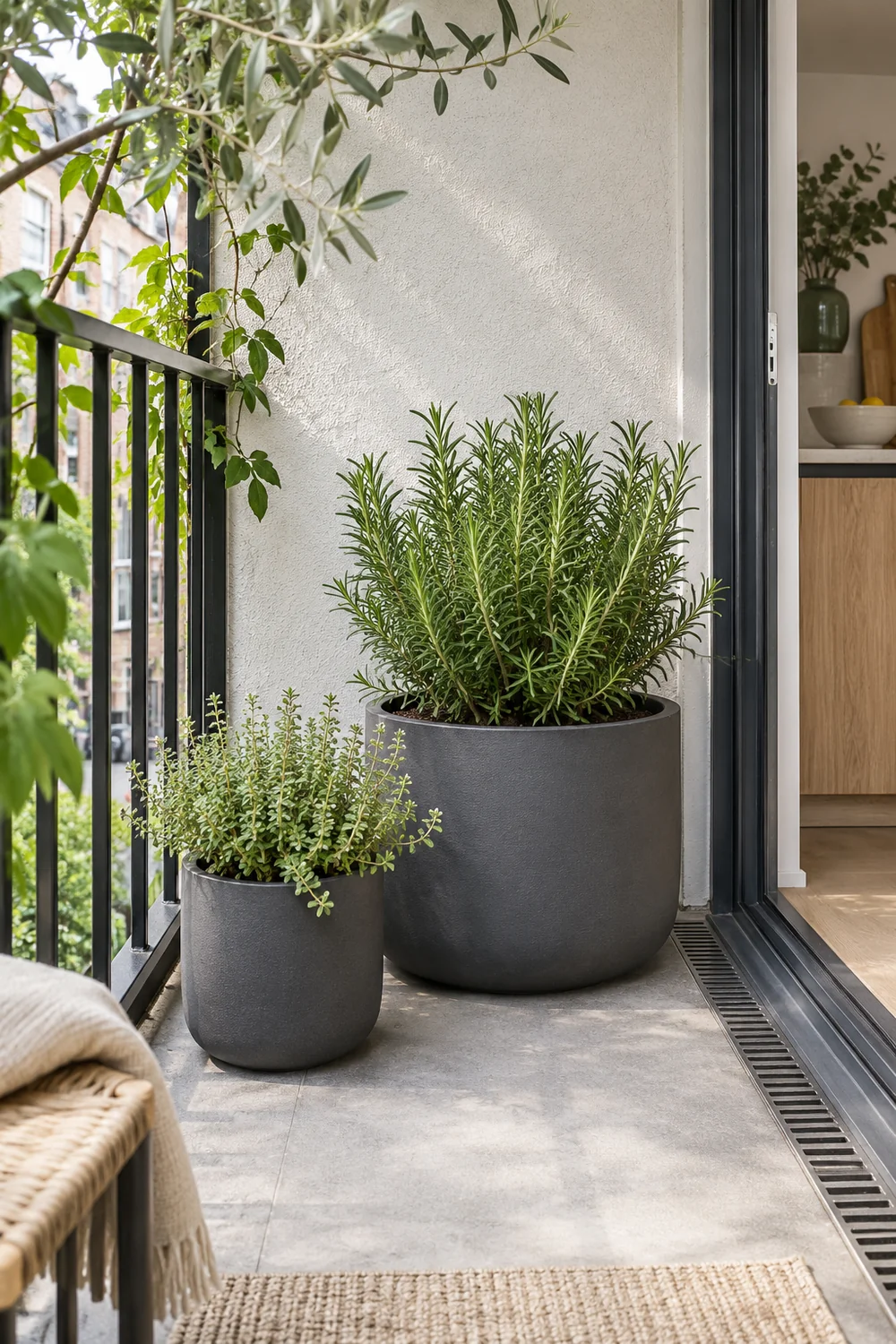
Basil fills a different role. If you buy it for tomatoes and cook with it regularly, it may earn the warmest sheltered spot during the growing season. The RHS advises waiting until the risk of frost has passed before putting tender basil outside. I’d keep basil in a separate pot from thyme or rosemary so I can give it the moisture and seasonal protection it needs. A warm suitable indoor windowsill is also an option if spring conditions outside are unhelpful.
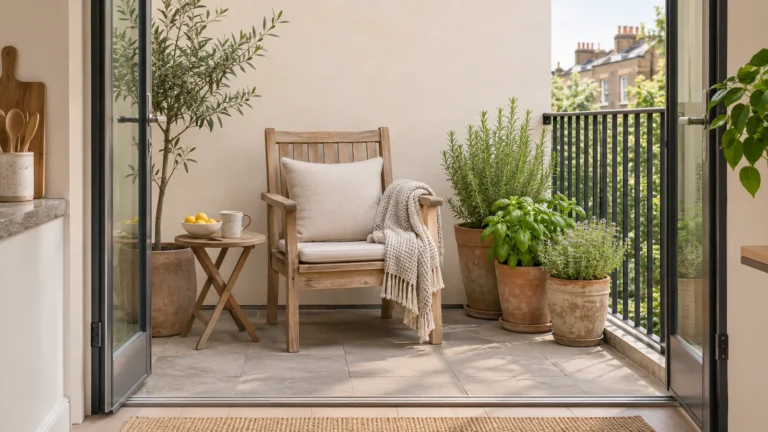
I’d start with two pots at most. For a cook who reaches for thyme and basil, that might mean one modest woody plant outside and one tender plant that goes outdoors when conditions are ready. The planting will look coherent if the containers have a similar finish. The terracotta herb garden shows how stems and leaves with different shapes can still belong together visually.
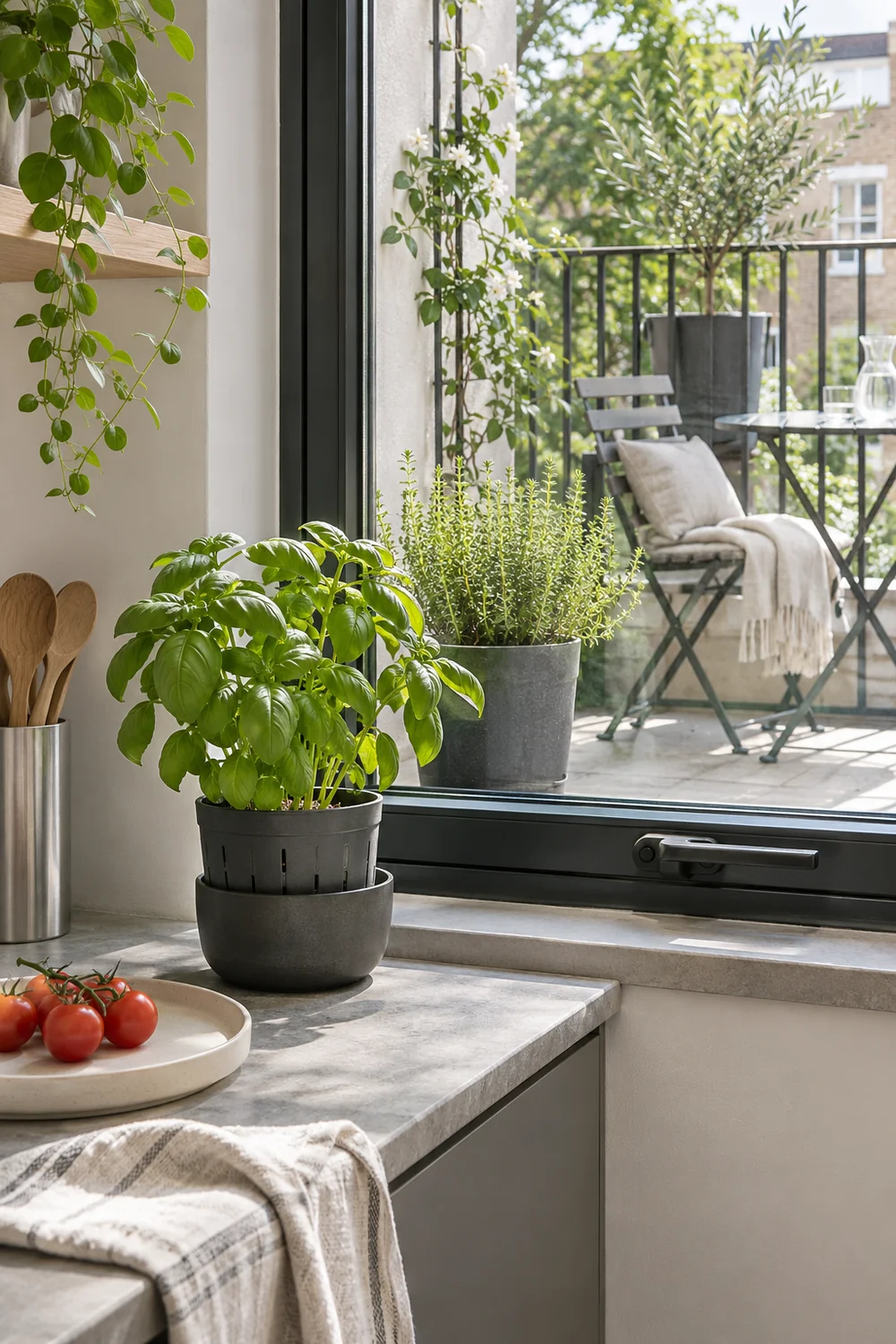
If only one of those herbs fits your meals and your balcony, grow that one. Try a small thyme plant if savoury cooking gives it a regular job, or choose basil for the warmth of summer if you’re making salads most days. A second pot earns its place when you have a second use and a suitable place to put it.
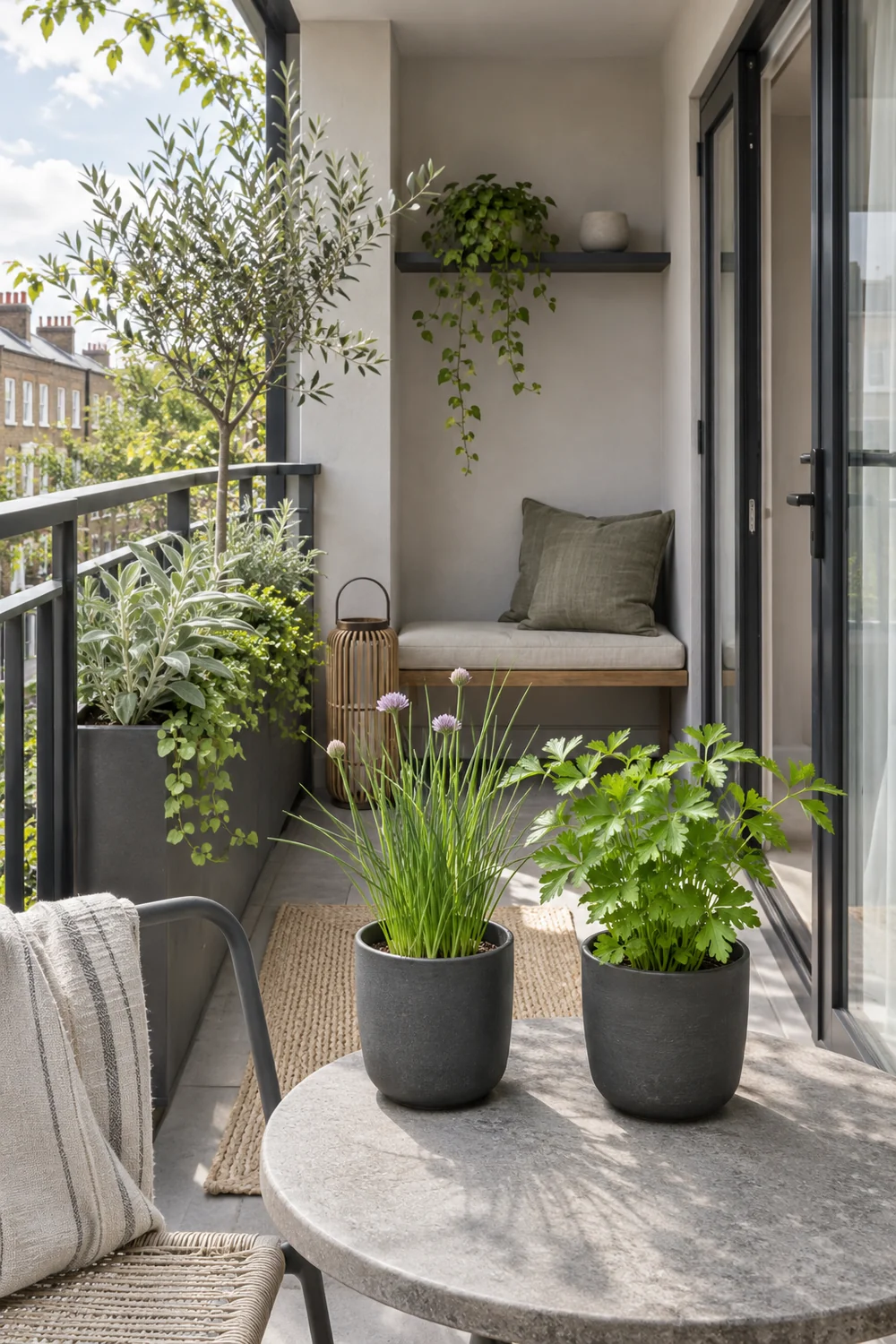
For a site with partial shade, I’d start with chives and flat leaf parsley. Chives are useful with eggs and potatoes. Parsley lends itself to beans, soups and dressings. The RHS describes both as suitable for sun or partial shade. When the site gets little direct light, ask a nursery how much light the specific plants need before buying. Deep shade is a different growing condition.
Give chives a position you can reach without brushing past another pot. The RHS suggests a container at least 20 cm wide and deep for chive clumps. For parsley sown straight into a pot, it suggests at least 25 cm in both directions. Check the space for each container before you decide to grow both. If you buy parsley as seed, allow for the wait before there are leaves to cut. A young plant from a nursery may suit you better if you want to start with a small harvest as the plant establishes. I’d check the label and judge how much to harvest from how much healthy growth the plant has made.
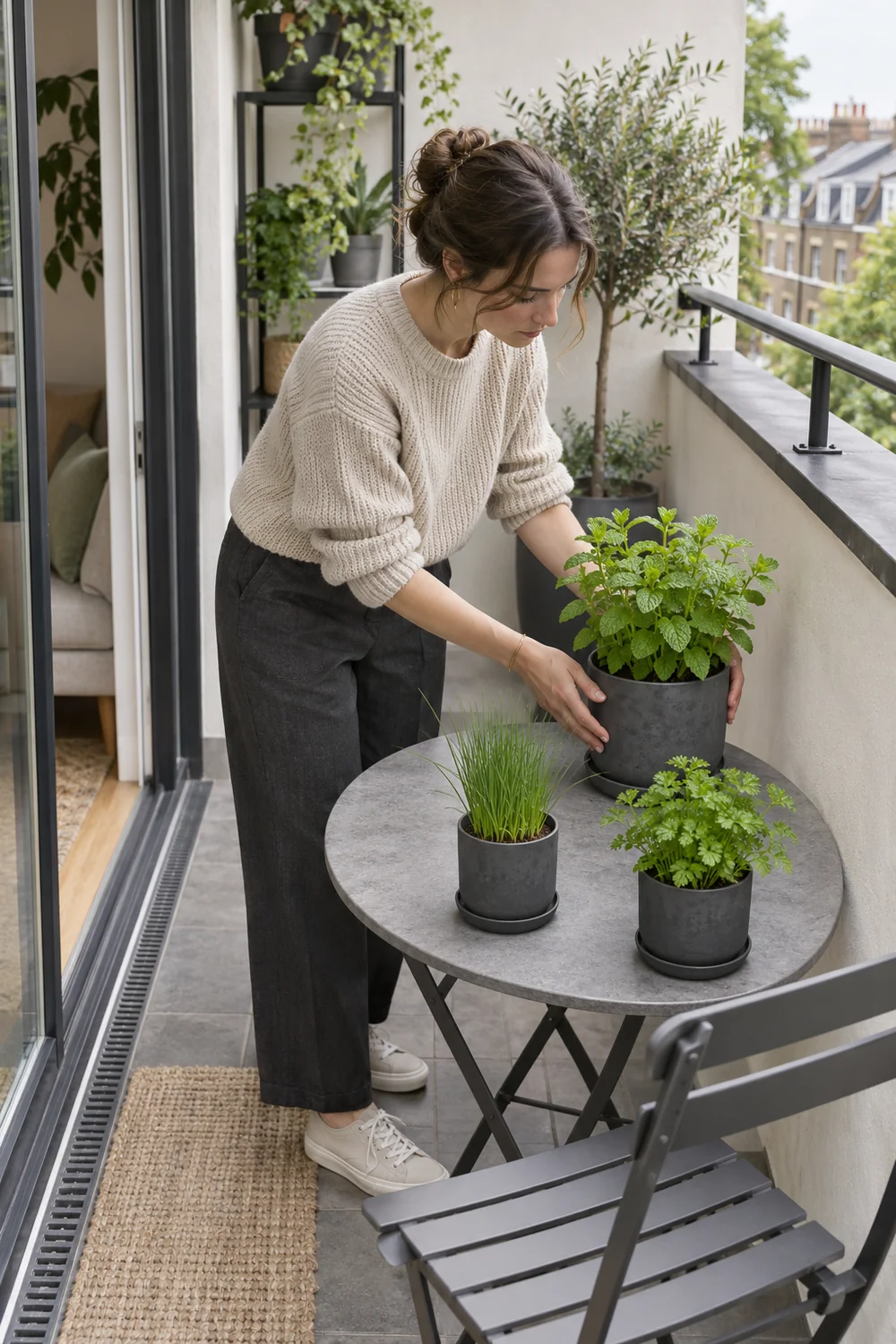
Choose mint only if you regularly use it for tea, peas or dressings. A separate drained pot makes it easier to manage its spreading roots and give it the moisture it prefers. I’d place it where you can observe the compost and carry the container to a sheltered spot if the position changes. If by far the most frequent meal is eggs, the spare space may be more useful left free for access to the chives.
One balcony can have two different conditions. A cooler inner corner may suit herbs that cope with partial shade, while the wall farther from the overhang catches sun. The small Mediterranean garden shows how I’d observe two different positions in a small outdoor space. Where the sun reaches each pot matters more than the overall direction the balcony faces.
Make the same one line note for each shortlisted plant. For a cook who uses chives with lunch and parsley most evenings, I’d put the parsley in the easiest place to reach. If mint is only there because a pot is available, leave the pot empty until you find a reason to use it. The first group is easier to learn from when each plant has a job.
I’d choose each container in this order. Check the root space the plant requires. Check that water can leave through the base. Measure the outside rim and the full height. Then decide whether you can move it filled. A deep pot can be useful for a plant that needs root room, but the size that looks small in a shop might be the one you can barely turn past the seat.
For rosemary I would use the RHS size guidance and check the variety’s mature spread against the marked floor position. For smaller plants, start with the nursery’s potting advice for that plant and make sure there is room for its roots to establish. I’d buy a pot with working holes over a sealed decorative container. If I already had a cover pot, I’d use it only where I can remove the growing pot to drain and can empty any collected water.
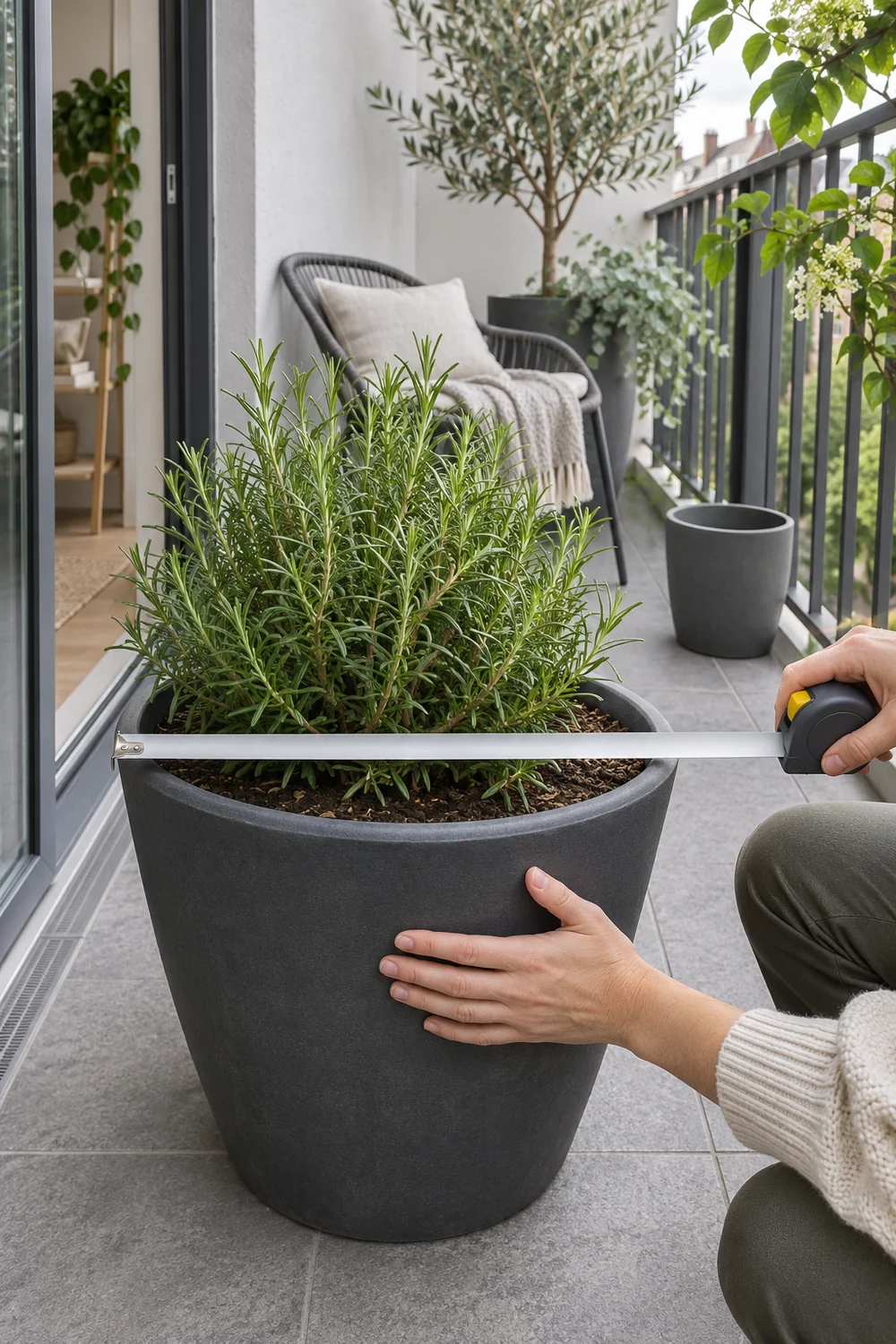
A matte lightweight pot may be easier to handle than a similar shape in clay. Clay can provide a useful visual link to warm wood, but I’d check weight and drying habits as part of that choice. My Japandi balcony furniture guide covers how to evaluate filled containers, permitted loads and exposure alongside the other portable pieces.
Make a small specification card before shopping. Write the plant name, the suitable root space, the largest outside dimension you can use, the drainage arrangement and the place you can carry the pot during severe weather. Add the preferred finish last. If you use containers you already have, make the same checks. Two pots with the same exterior width can have very different depth and weight.
For the cool position I’d use separate containers for chives and mint. You can water and move them independently, and mint’s roots won’t take over the chives’ space. I’d also check that the outer lip is easy to grip when the pot is damp. If the filled setup needs more support, stop and establish what the balcony allows before putting it in place.
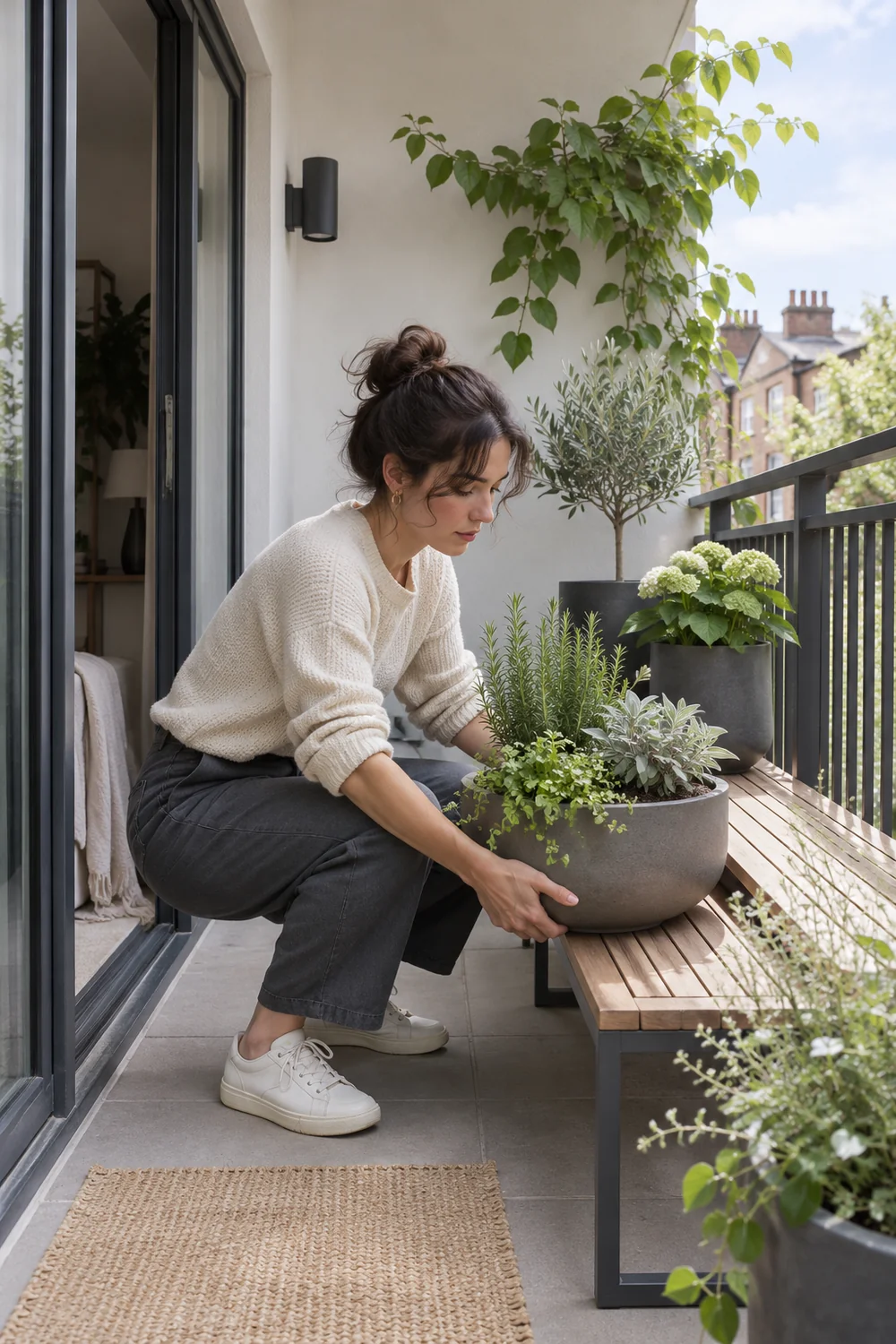
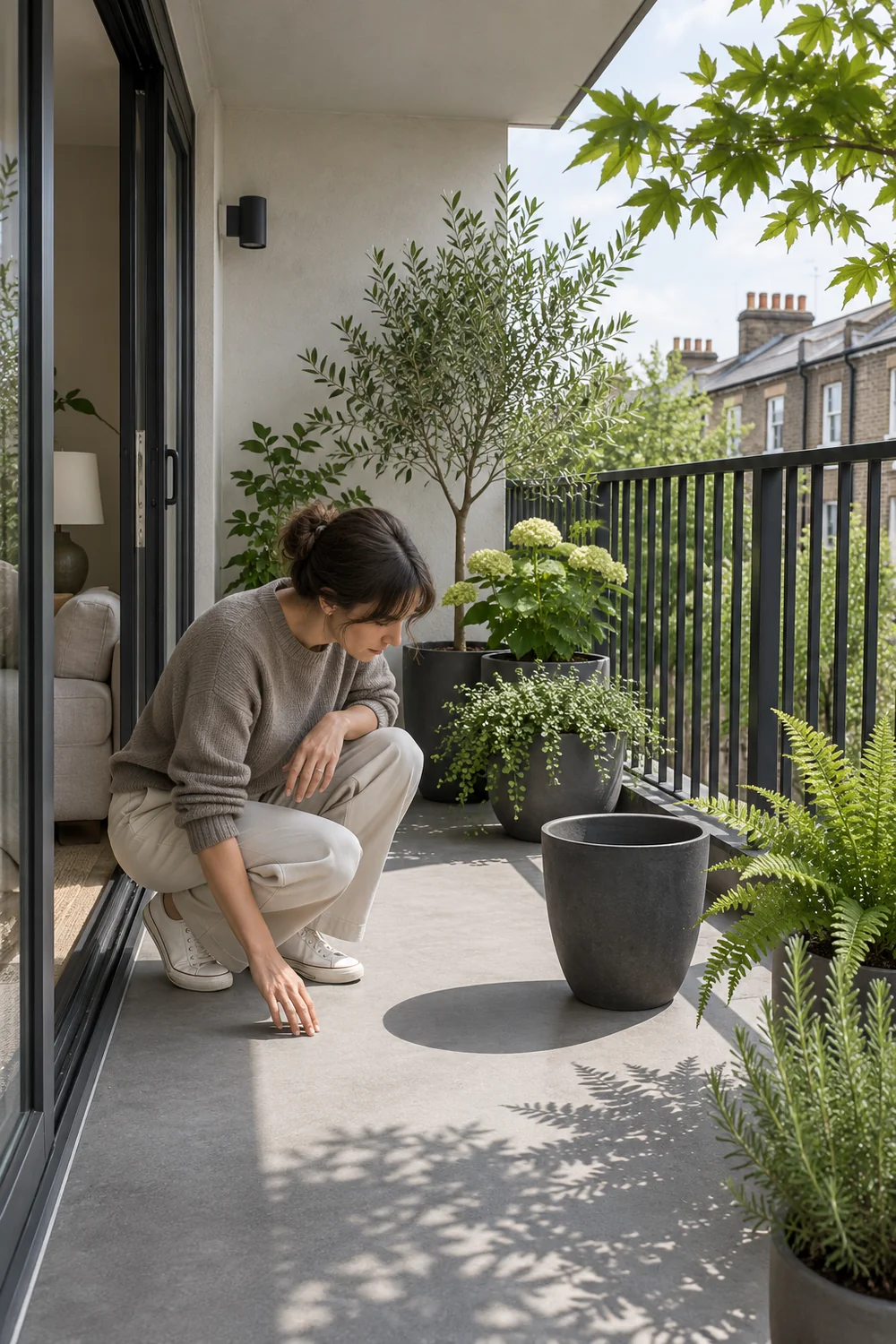
I’d start by setting out the empty pots and trying the whole route once. Keep the drain clear and use the building’s drainage guidance. If a suitable saucer is allowed for catching water from a pot, check it after watering and empty what collects. A catch tray should make it easier to manage runoff without leaving the growing pot soaking.
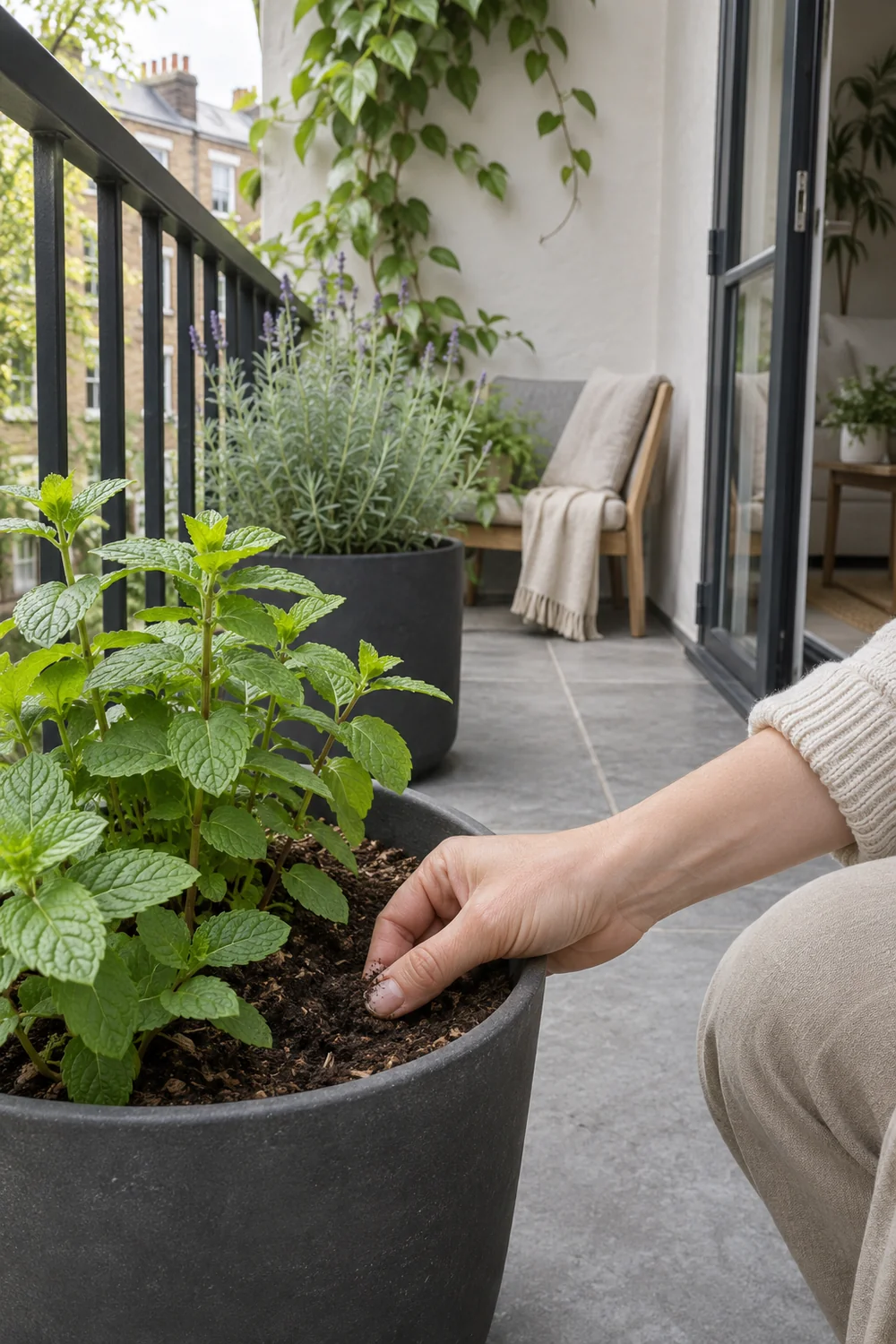
Use the compost and potting instructions suited to each plant. Thyme and rosemary need good drainage. A mint container needs a mix that stays sufficiently moist and still drains. Check the plant label for planting depth and any specific instructions. Plant one pot at a time so you can see where you have put each herb and clean up any spilled compost before it washes towards the outlet.
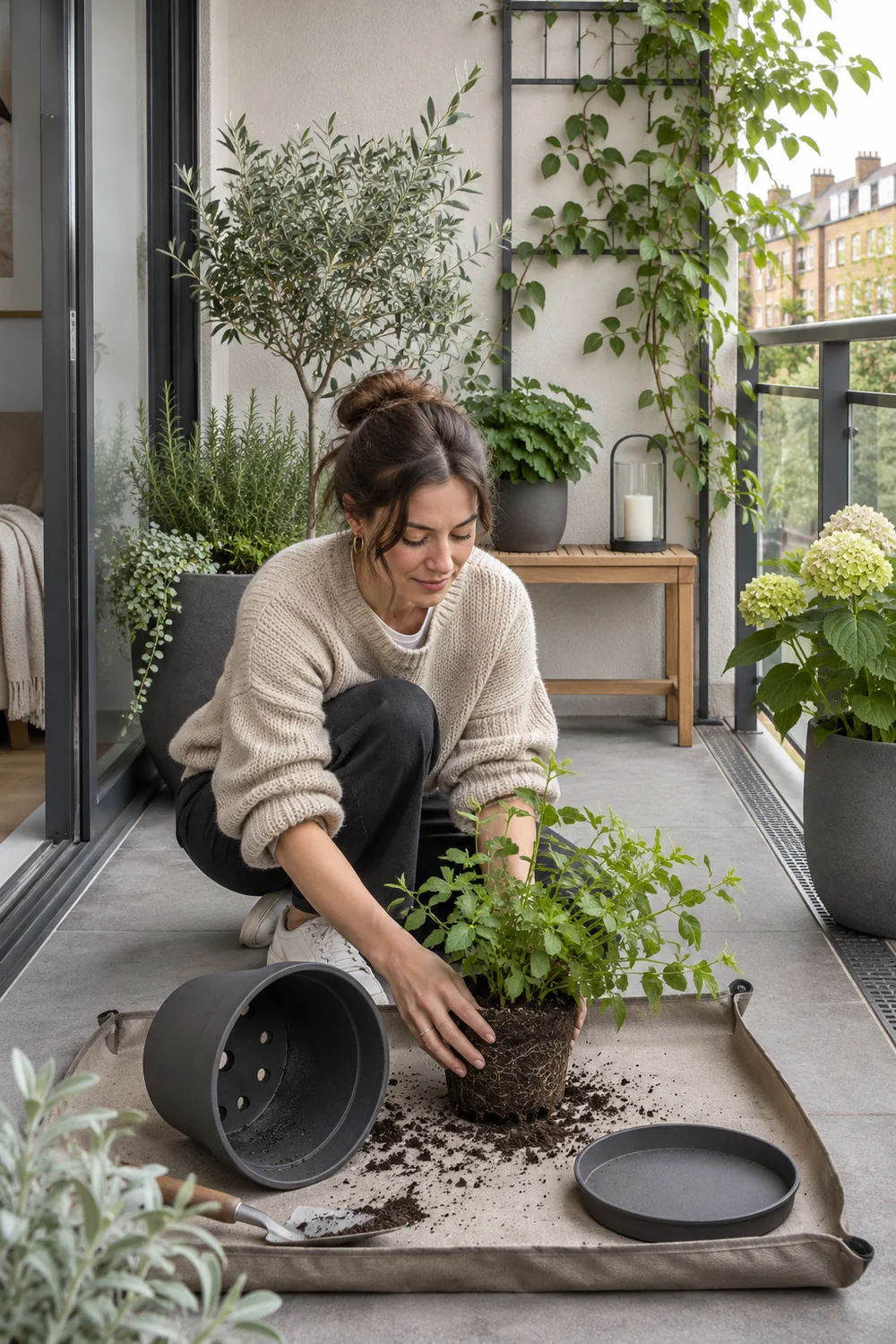
Check what the balcony is doing after actual rain. A covered position can keep a container surprisingly dry, while an unprotected pot can get wet in a storm. I’d look at the compost in each pot before watering and use the growing advice for that herb. If the compost is damp, wait and check again rather than watering everything because one plant needs it.
The balcony container drainage checks are useful if water crosses the route or collects beside the door. I’d address that before adding a plant or changing how often I water. A pot needs a position the balcony can support and a routine you can keep up while you’re cooking and getting on with the rest of the week.
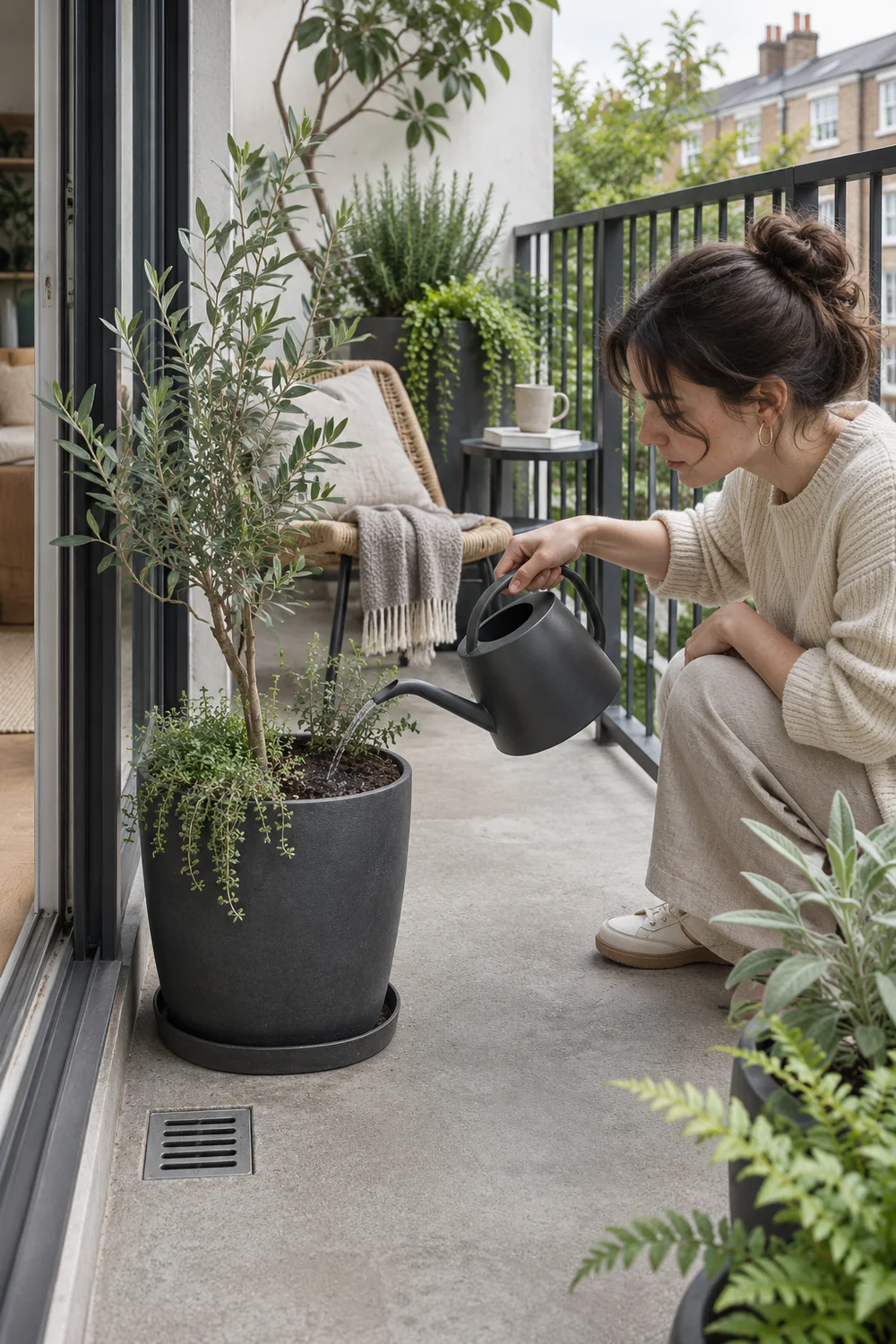
Make a note of when each plant went in. Take a photograph of the healthy plant beside its pot when it arrives so you have something to compare with later. Tender basil belongs outdoors only when the local frost risk has passed and conditions are warm enough. If you start with nursery plants, follow the advice on acclimatising them. When a plant is new, give it time to settle and look for fresh growth before treating it as an ingredient you can pick from every evening.
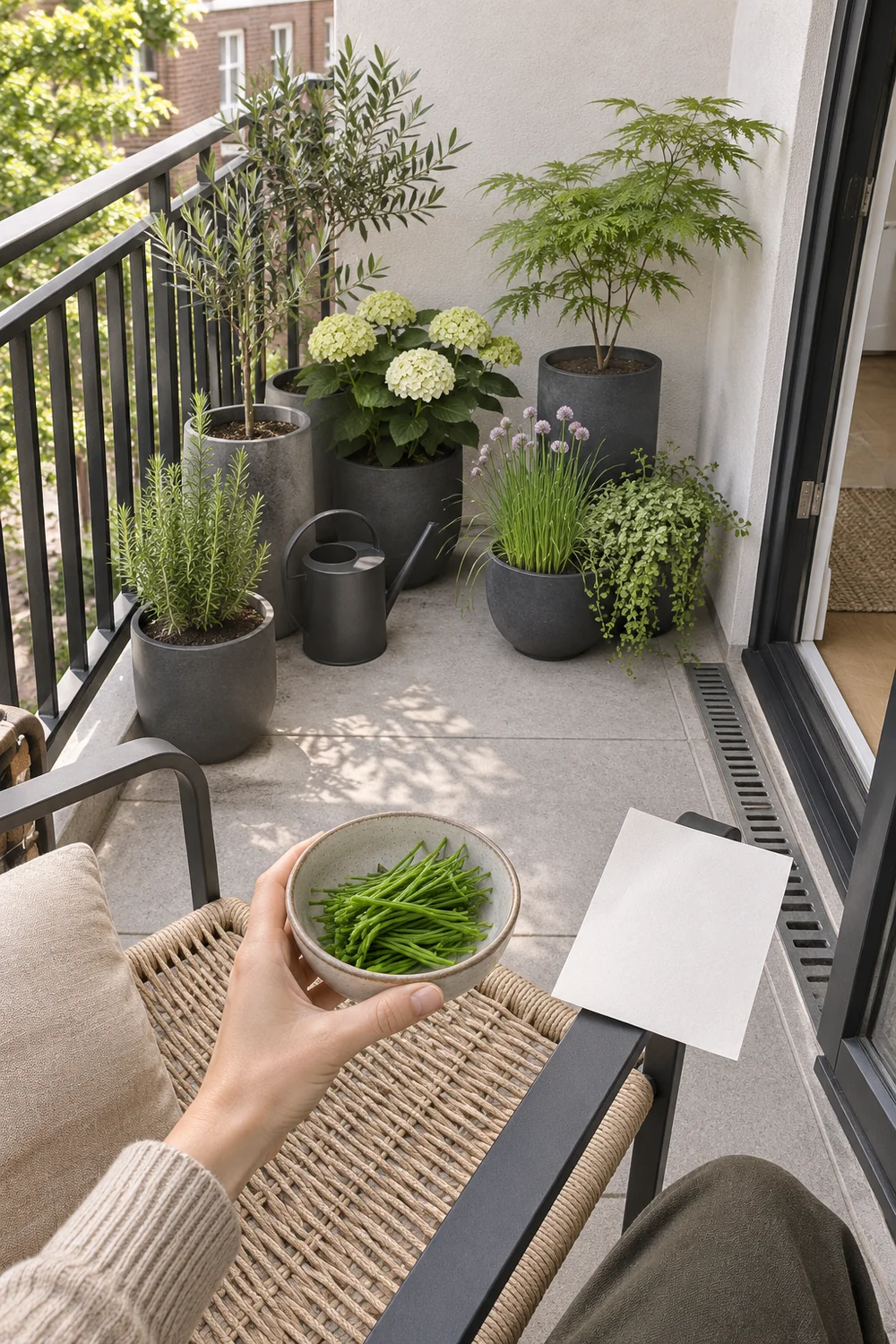
I’d put a piece of paper by the door and mark which pot provided herbs for a meal. Write a separate note for any plant you left alone because it was still settling. That way, two weeks without using basil can mean either that you didn’t cook with basil or that the plant needed more time. The two answers call for different decisions.
Look at where things were difficult. If you picked from the chives several times and had to shift the chair every time, move the pot within a suitable position you’ve already checked. If the mint container kept drying while the other two were fine, check its exposure and compost. Make one change, give it a few days and write down what you notice before changing something else.
Use your Japandi balcony plan again if a position is failing. Recheck what happens with the door open and the chair occupied. A plant that would do better farther back near the light can still be impractical if you can only reach it by leaning over something. I’d prefer a simpler group to a corner that needs rearranging for every harvest.
As the season changes, look at the light map again. Decide where suitable plants can go during cold, very wet or windy weather and which crops will finish for the season. A renter who may have to move the group can keep the plant names and pot measurements on the same card. If the shortlist earns its place this year, those notes are more useful next spring than a photograph of the balcony on its neatest day.
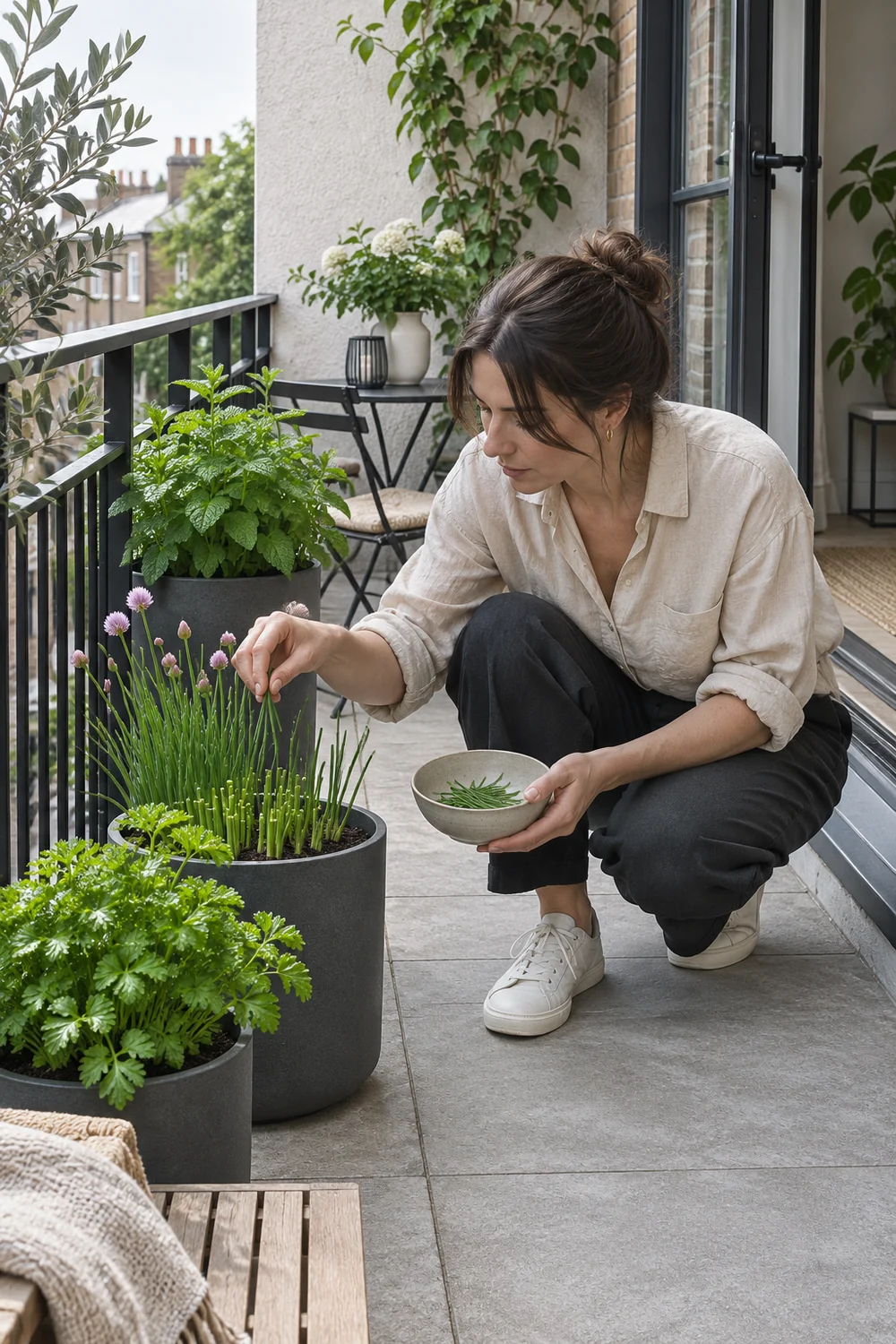
Two weeks in, I’d look for enough growth to take a few leaves for an ordinary meal and enough room to sit with it. If the plants are still establishing, a route that works and pots you can water easily are good signs on their own. When you’re tempted by another plant, give it a job on the meal list and a spot on the sketch. I’d hold off if reaching it means moving one of the pots you already use. The notes from your first few weeks are what make the next choice easier, whether that means another herb or a little more room for the chair.