Newsletter Subscribe
Enter your email address below and subscribe to our newsletter

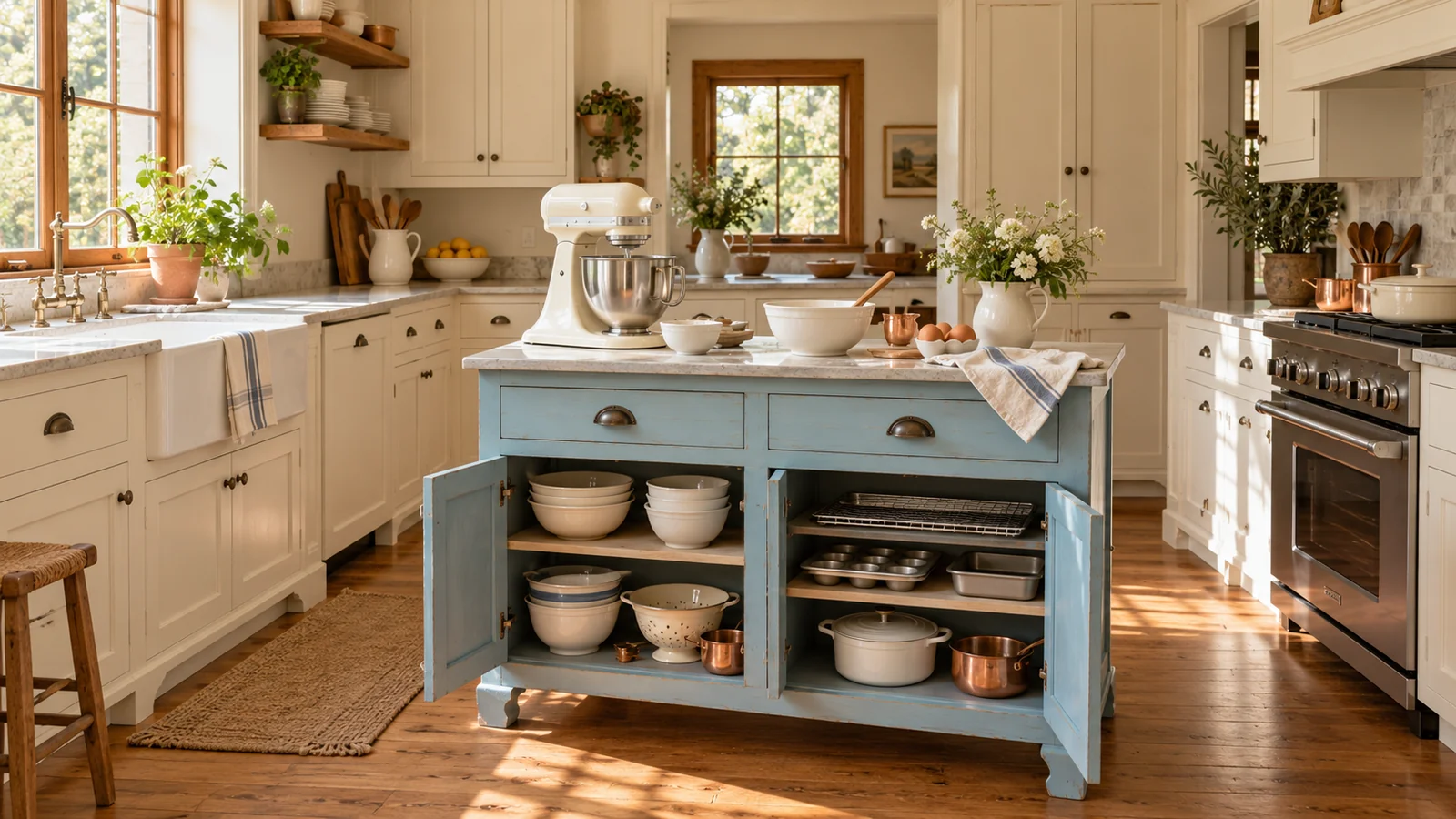
Baking storage works when you can retrieve what you need, use it comfortably and put it away without rebuilding the cupboard. If you bake regularly, a beautiful cabinet can still fail because the mixer only fits with its head closed, the widest tray catches on the opening or a full ingredient container is awkward to lift. I would choose the storage for a French country kitchen around those real states first. Warm ivory doors, a faded powder blue baking piece, medium oak and aged pewter can carry the character while the interiors do the practical work. This guide turns your baking plan into checks for mixer positions, tray dividers, ingredients, small tools and finishes. You should be able to compare a piece you already own with a proposed replacement, make a clear accept or hold decision and keep the arrangement useful after several ordinary bakes.
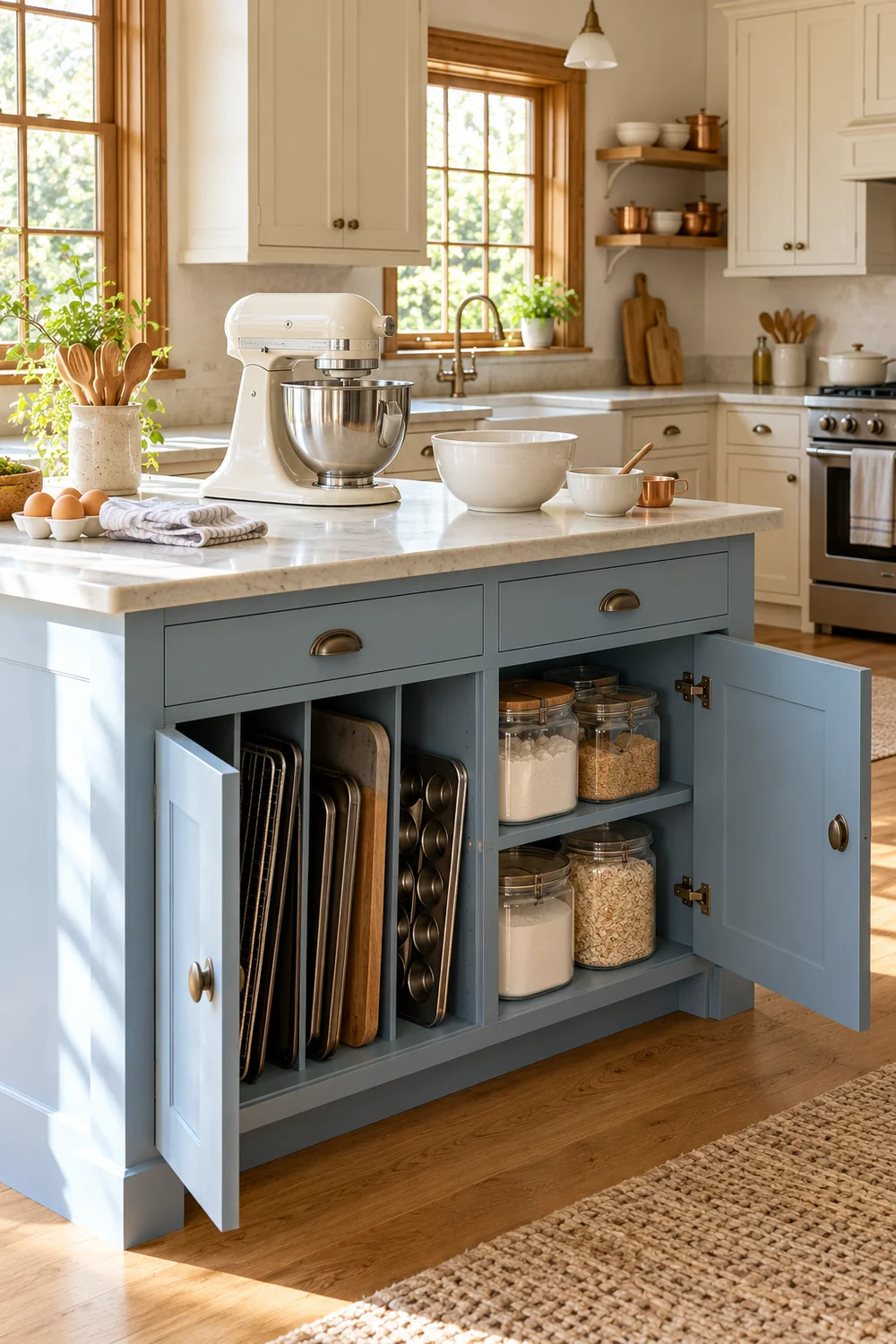
Start with the objects that regularly leave storage, rather than every baking accessory you have ever owned. I would group the mixer and its working parts, the pans used for familiar recipes, everyday measuring tools and the ingredients you actually replenish. Keep occasional moulds and celebration equipment in a separate group. Their storage still matters, but they should not determine the easiest drawer if they come out twice a year. This first sort makes the daily requirement visible before a new cabinet fills with infrequent pieces.
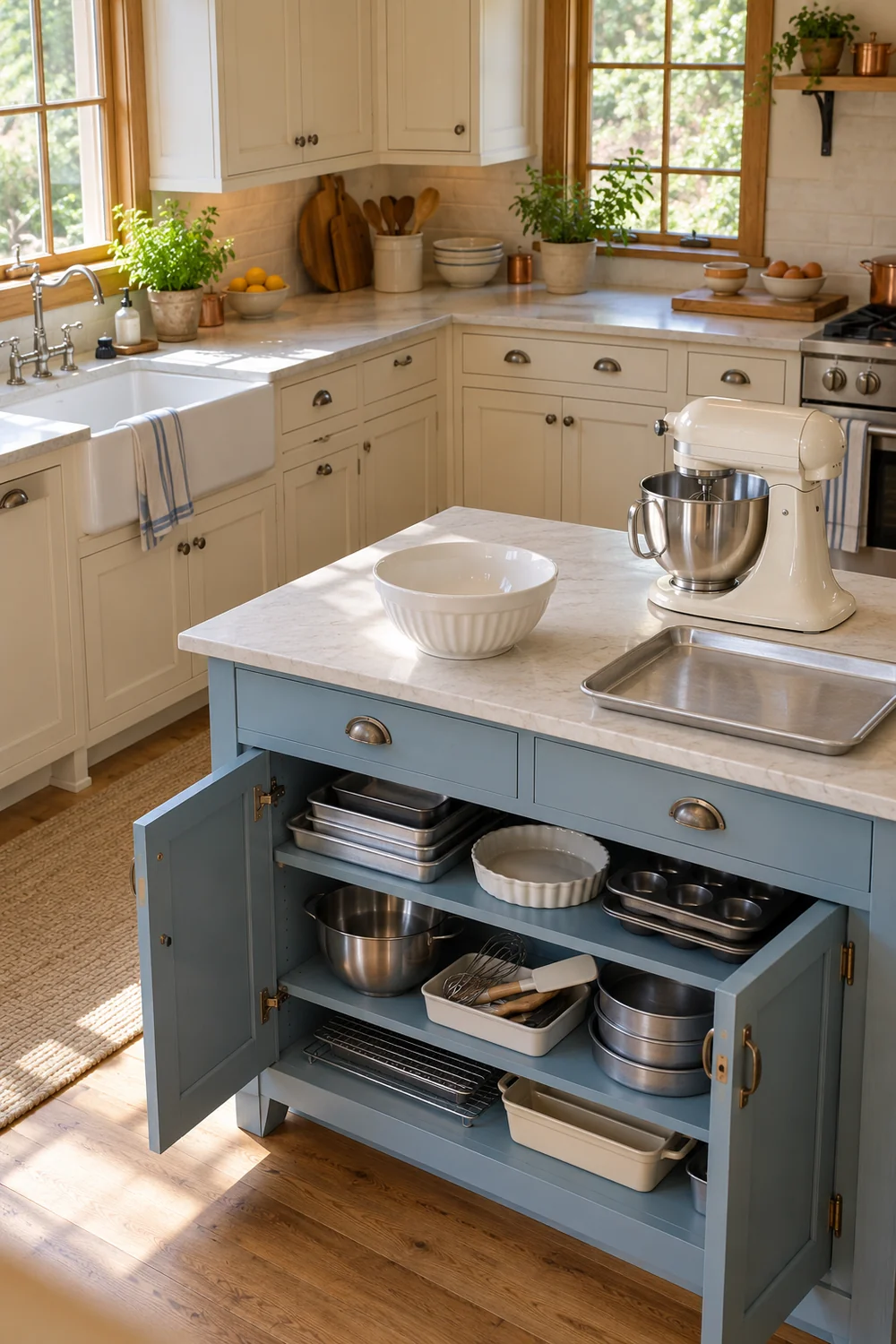
Measure representative objects in the state that matters. A tray includes its rolled rim or handles. A bowl may need room above it for lifting out of a stack. An ingredient container includes the lid and whatever opening movement it needs. Record the largest commonly used example in each group and the quantity that must fit at the same time. I would also photograph the objects together. That photograph makes it harder to compare a generously styled cabinet with a storage requirement that has quietly grown since the first measurement.
The inventory needs the room plan beside it. My baking station guide establishes where mixing, shaping, oven landing and cooling belong around ordinary meals. Bring those positions into the selection decision. A tray drawer can have excellent capacity and still be in the wrong place if opening it blocks the shaping position. A mixer cupboard may be spacious but inconvenient if every use requires carrying the appliance across the kitchen. Storage quality includes the journey between its home and its work.
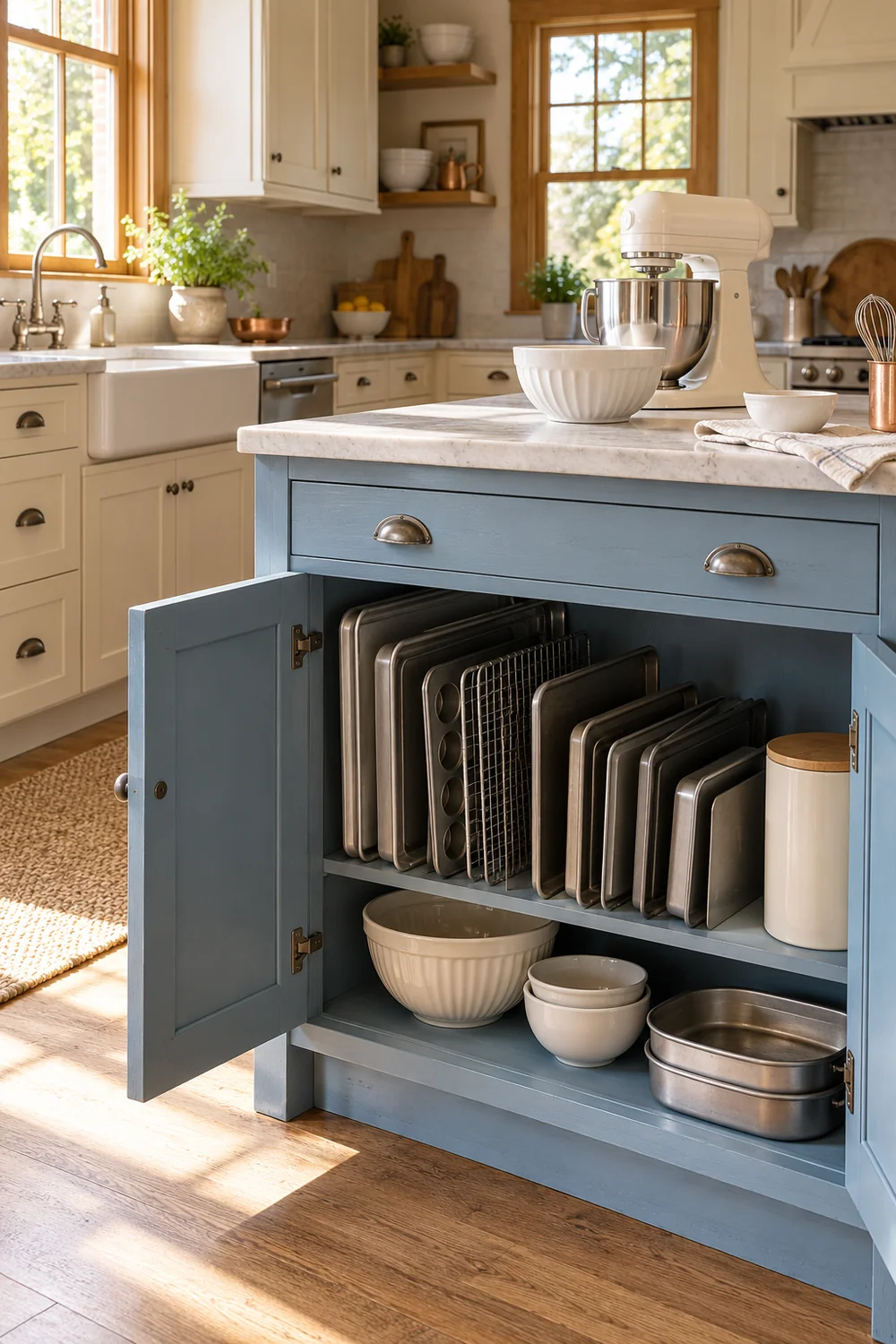
I would finish this section with a short requirement sheet: objects, quantities, usable openings, working positions and the tasks that must remain clear. Mark anything not yet measured as unknown. That is a useful reason to hold a purchase, rather than guess because the seller calls a cabinet spacious. You can refine a requirement after the next bake. It is much harder to change an internal opening after a large piece of furniture has arrived and all the packaging has been discarded.
A mixer has a stored outline and a working outline. I would check both against its own instructions, including the movement needed to raise the head or bowl, remove attachments and lift out the mixing bowl. Record the power connection and any access the manufacturer requires. The closed appliance fitting beneath an upper cupboard proves very little about use. Show the machine in the position where you can actually add ingredients and remove the bowl, then compare that whole arrangement with the proposed surface.
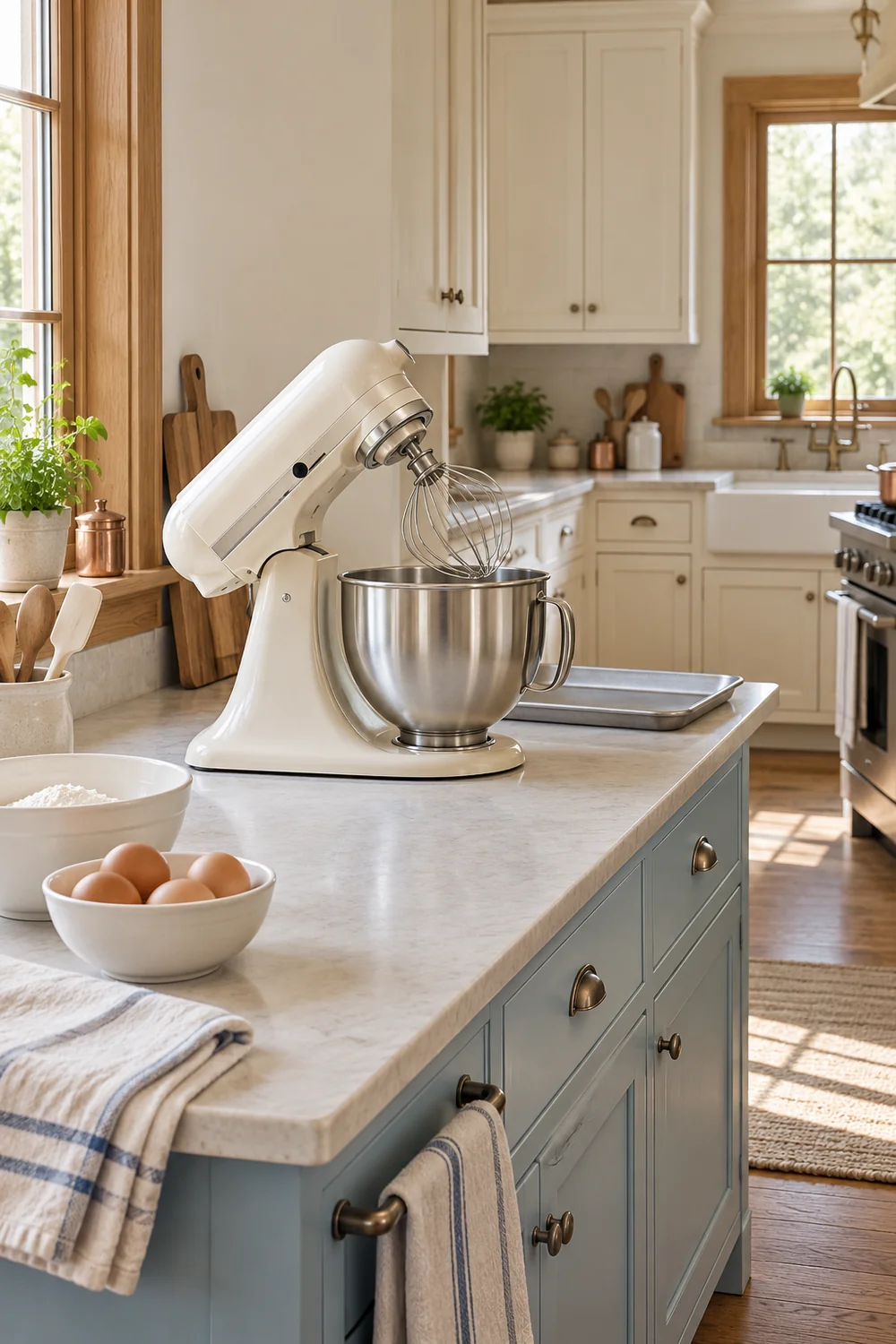
Countertop storage can be the simplest option when you bake frequently and the worktop can spare the operating area. A lower cupboard may suit an appliance that is stored between sessions, provided its weight and your ability to move it are considered realistically. A pullout or lift introduces more hardware and an occupied opening position. I would ask the supplier to confirm compatibility with the actual appliance and installation. The appealing idea of hiding the mixer should not conceal the effort or clearance needed to bring it back into use.
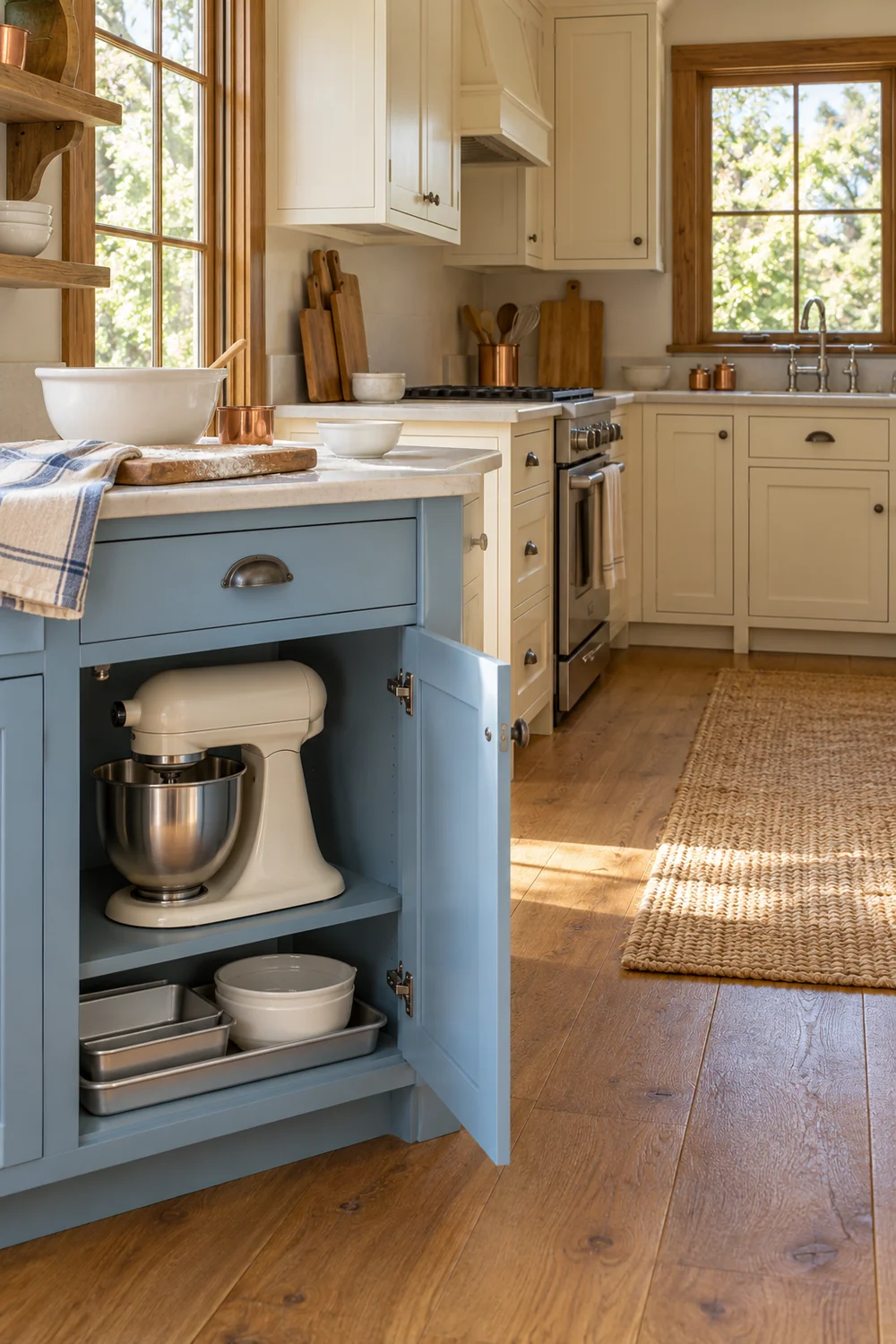
KitchenAid's storage guidance distinguishes countertop, cabinet, pullout and lift arrangements and tells readers to check support for a heavy appliance. I would follow the documentation for your actual mixer and chosen hardware rather than transfer a load or clearance figure from a different product. My general kitchen cabinets guide explains the broader construction and drawer decisions. Here the acceptance question is narrower: does this specific support, opening and working position suit the mixer you own, with its bowl and attachments accessible?
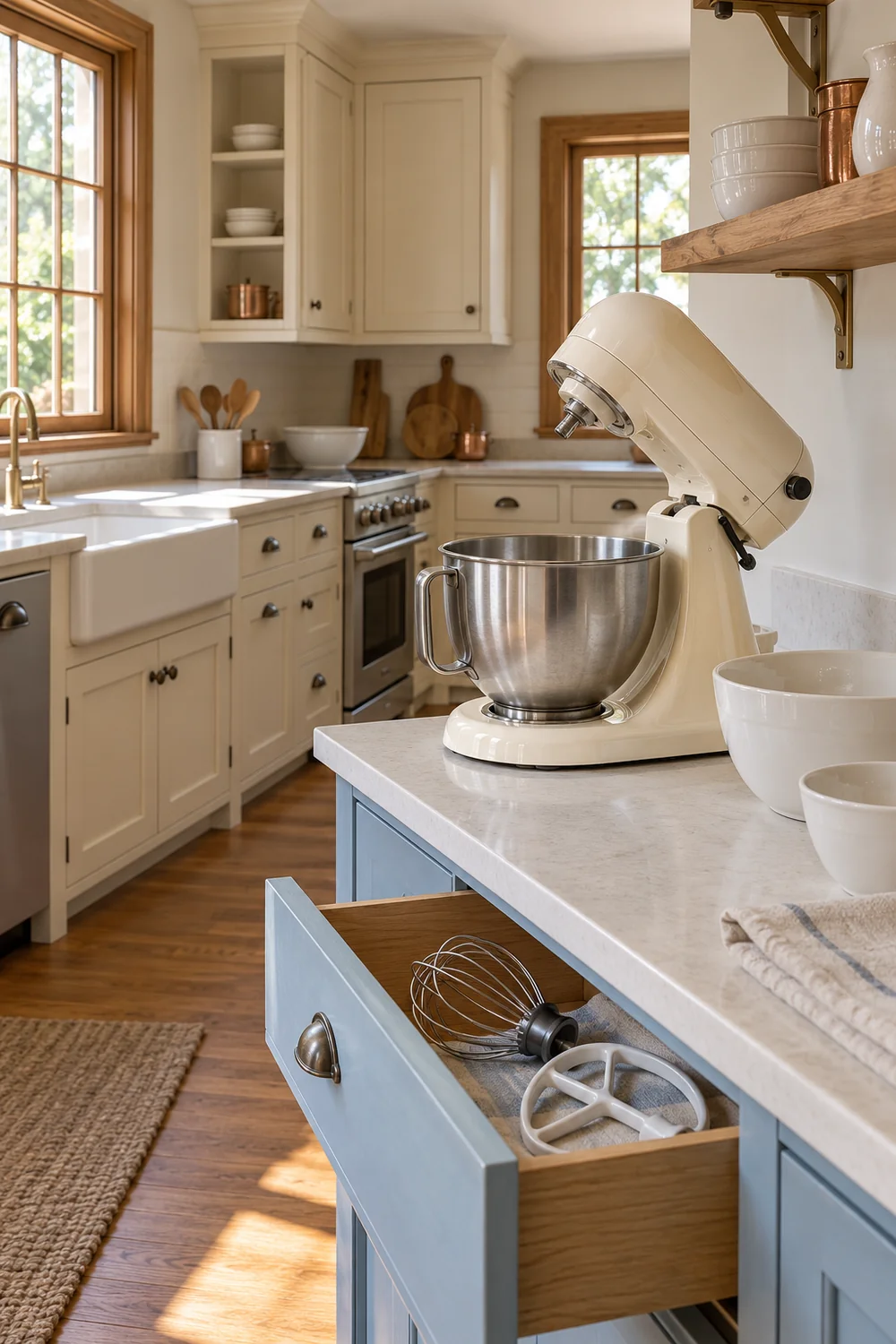
Test a proposed position with the appliance switched off and handled according to its instructions. Can you reach the controls, open the machine, remove the bowl and return the attachments without moving unrelated objects? Can the adjacent cupboard still open when someone stands there? I would accept the position only when those actions and the support requirements are resolved. Hold it when a supplier confirmation is missing. Reject it when the operating arrangement takes the surface that the baking plan reserved for shaping or safe oven landing.
Tray storage should release a pan, not simply contain a neat stack of metal. I would begin with the largest tray used in a normal batch and record its full rim to rim size. Compare that with the usable internal opening and the path needed to withdraw it. Hinges, drawer sides and divider thickness can reduce what the advertised external dimensions suggest. A cabinet may look wide enough while its doorway or internal hardware catches the pan at exactly the point where you need to turn it.
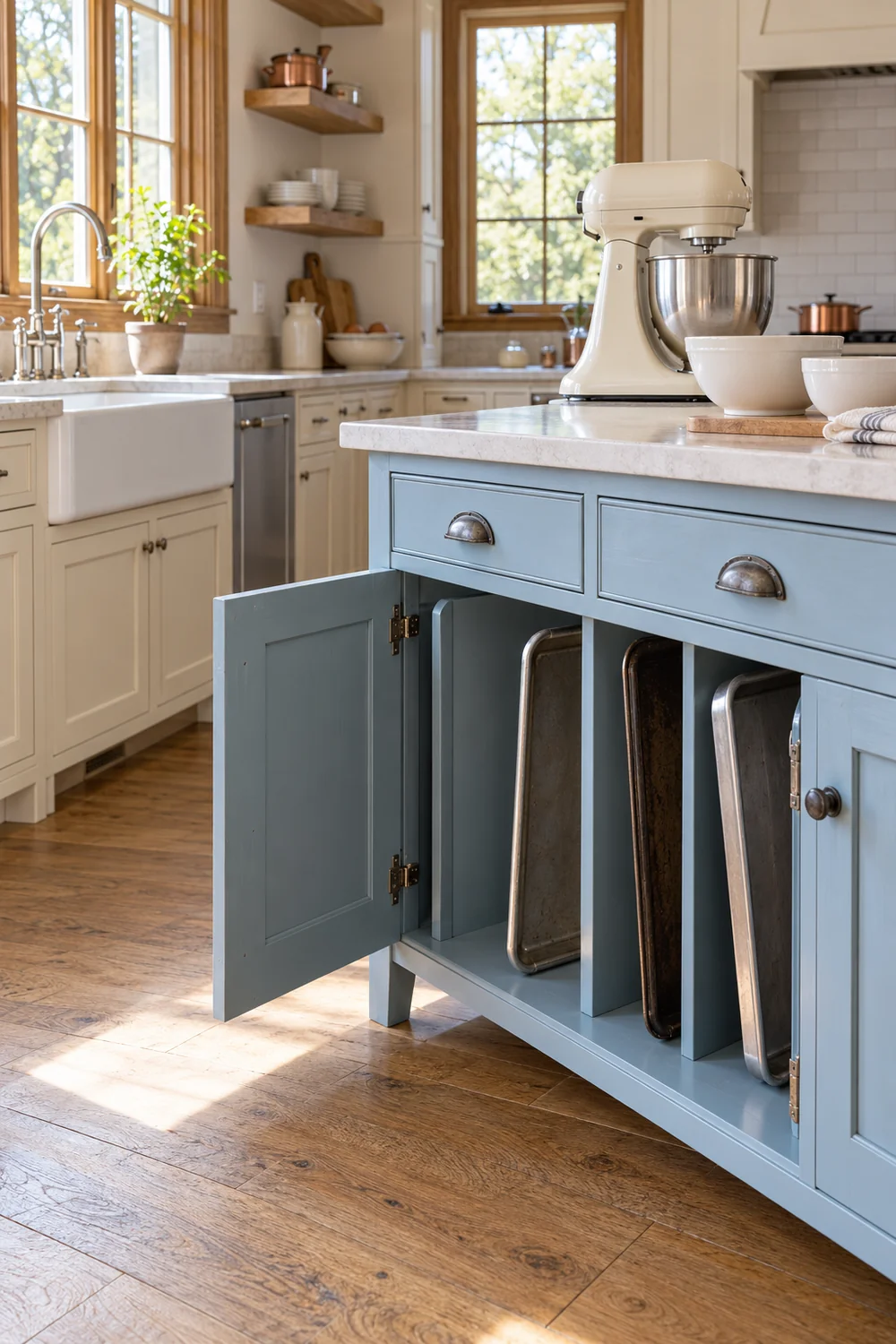
Vertical dividers are useful when the pans can stand securely and individual pieces can be removed without dragging the whole group forward. Choose the spacing around the objects you own. A narrow baking sheet and a deeper roasting tin should not be treated as identical slots. I would separate the frequently used trays from bulky occasional pans where space permits, giving each a clear route out. The aim is a deliberate retrieval arrangement rather than a dense file of metal that only stays tidy while nobody uses it.
Drawers can work well when their usable dimensions, support and opening position suit the contents. Nested pans may be reasonable for occasional equipment, but I would avoid putting the weekly tray at the bottom of a heavy stack if there is a practical alternative. Place the actual group in a temporary arrangement and remove the most used piece several times. Notice whether you need two hands for the stack or somewhere else to set it down. Those extra actions are part of the storage requirement, not a failure of your organising habits.
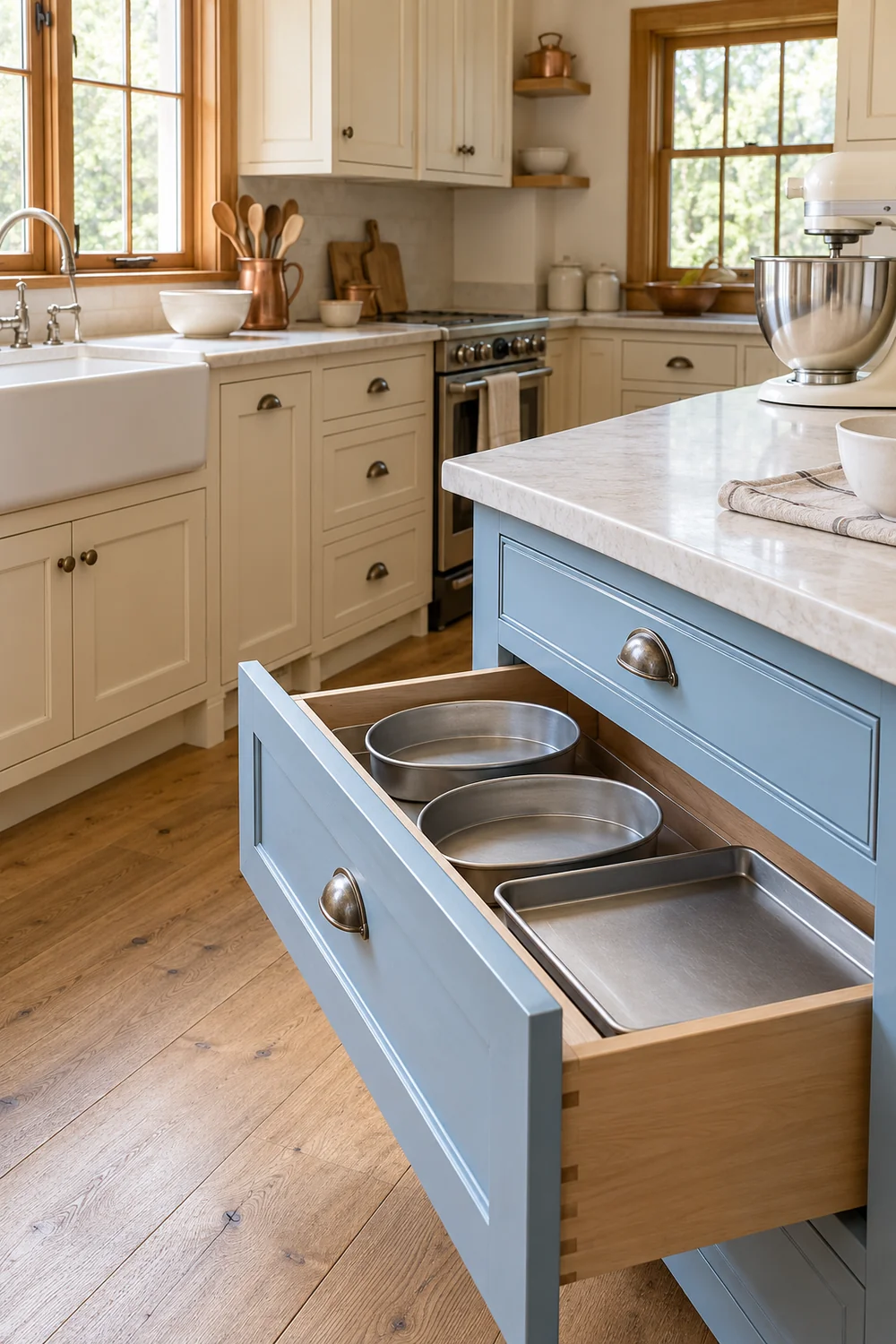
Before accepting a divider or drawer, check the kitchen around it with the opening extended. Someone should be able to retrieve the tray in the way the room plan expects, without borrowing the cooling position to dismantle a stack. Keep a photograph of the accepted arrangement and the measurements that made it work. If a new pan later joins the collection, compare it with that record before forcing it into the same slot. A small change in the equipment can require a different grouping without requiring a completely new kitchen.
Ingredient storage begins with what the ingredient requires, then what the cupboard can hold. Follow package guidance and retain the information you need to identify the contents and relevant dates. King Arthur Baking recommends sealed storage for opened flour and explains that different flours and patterns of use can need different conditions. I would not choose an exposed decorative jar simply because it suits the room. Choose a container intended for the contents, then confirm that your actual supplies and handling routine fit it.
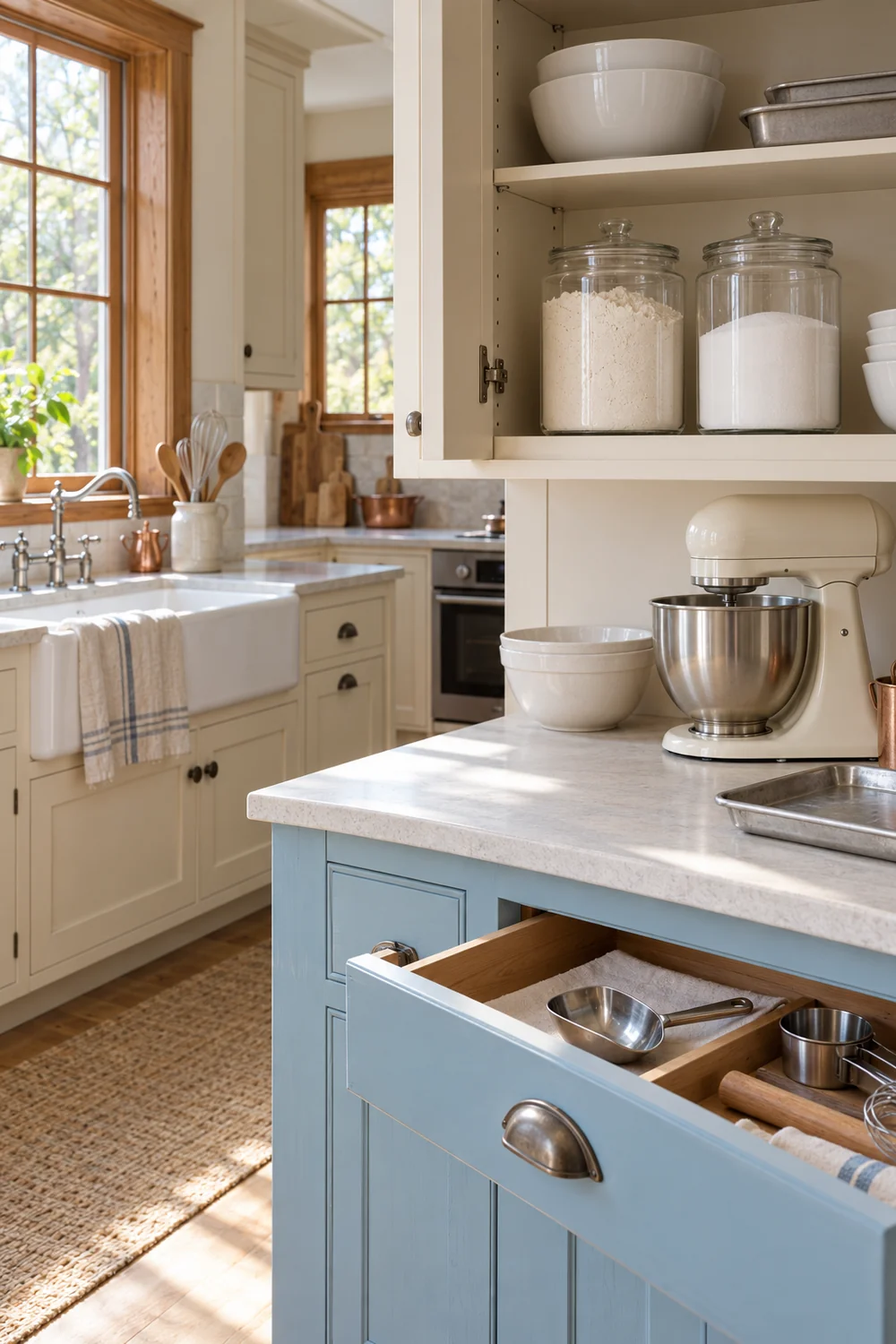
Capacity should be checked with a real refill quantity, not inferred from the height of a canister. Compare the container's stated usable capacity with the ingredient package and leave the opening usable for the scoop or method you employ. Then check the filled weight against the shelf and your own comfortable handling. A container that looks elegant when empty can be awkward when full. I would prefer a manageable daily quantity with appropriate reserve storage to one impressive vessel that is difficult to lift from the back of a deep cupboard.
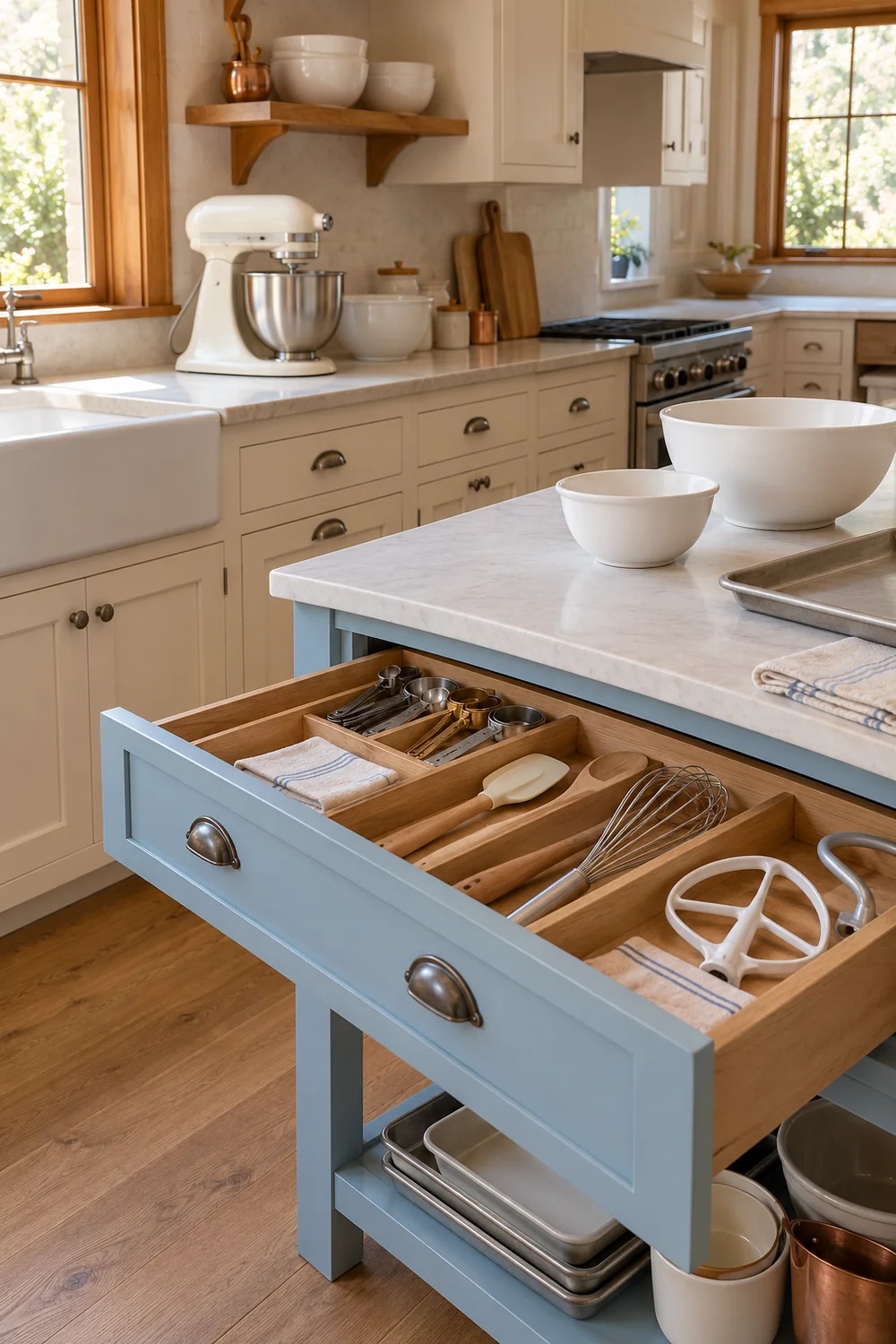
Small tools need equally ordinary homes. Keep the scale, measuring spoons, scraper and frequently used attachments where they can return dry and be found without rummaging. A shallow divided drawer may serve that job better than another decorative basket. Give each group enough space to recognise its contents while avoiding a special compartment for every possible gadget. I would leave some flexibility for the tools that vary between recipes. An arrangement that only fits one perfectly photographed selection will become frustrating as soon as a different bake needs another utensil.
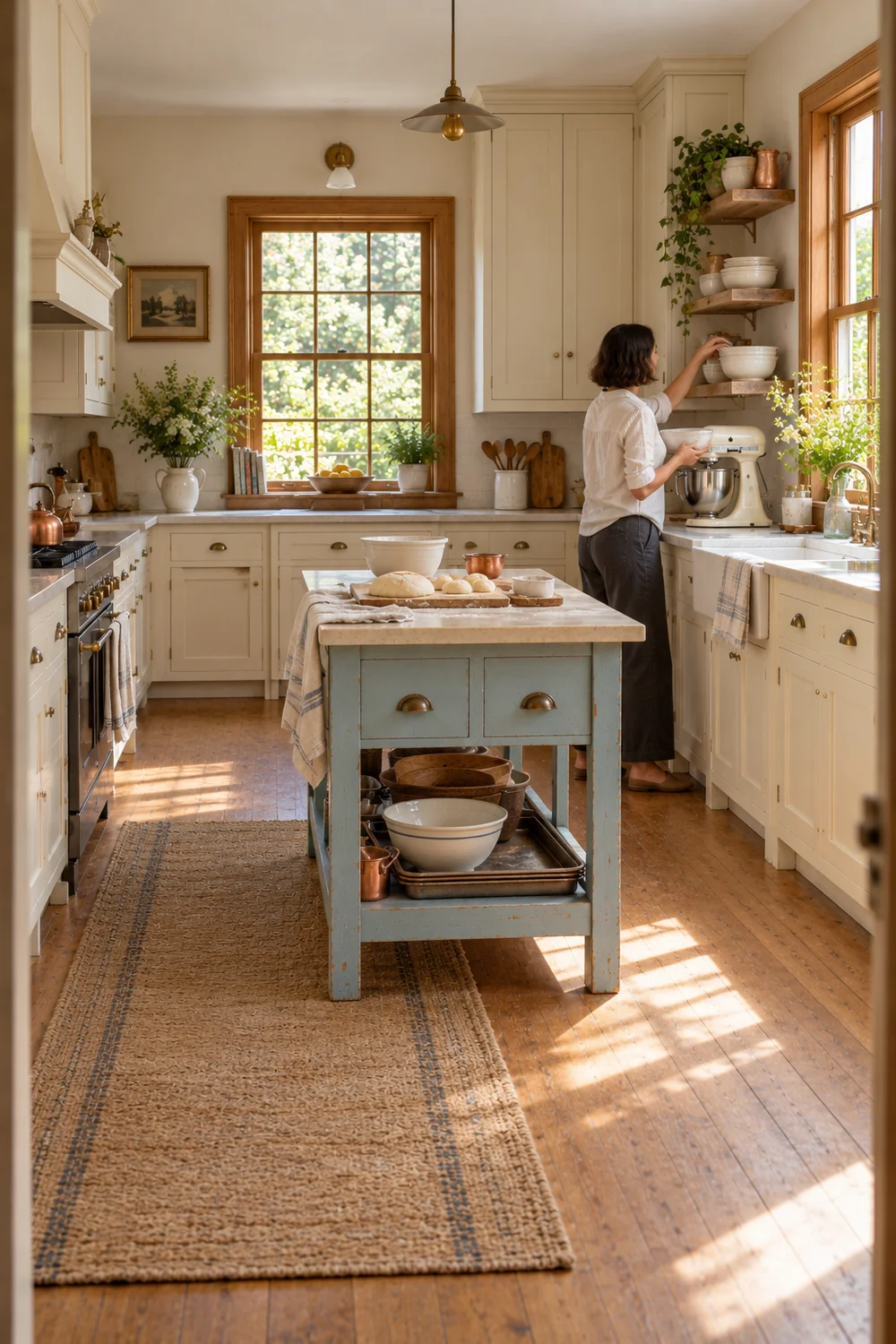
Useful bowls can remain visible if the shelf is accessible and their position does not interfere with work. My French country kitchen inspiration shows the relationship between functional display and closed storage. I would apply it selectively: everyday ceramics can contribute to the room, while packets, spare equipment and awkward shapes can live behind doors. The distinction is about use and suitable storage, rather than deciding that every baking ingredient must become part of a styled shelf.
The visible cabinet can be characterful while its working surfaces remain straightforward to care for. I would keep faded powder blue on the outside of the baking piece, warm ivory on surrounding cabinetry and medium oak in a limited supporting role. Inside, choose finishes that let you see the contents and follow the supplier's cleaning and loading guidance. Decorative ageing should not make a handle uncomfortable or introduce roughness where you regularly retrieve tools. The practical contact points deserve as much attention as the overall kitchen view.
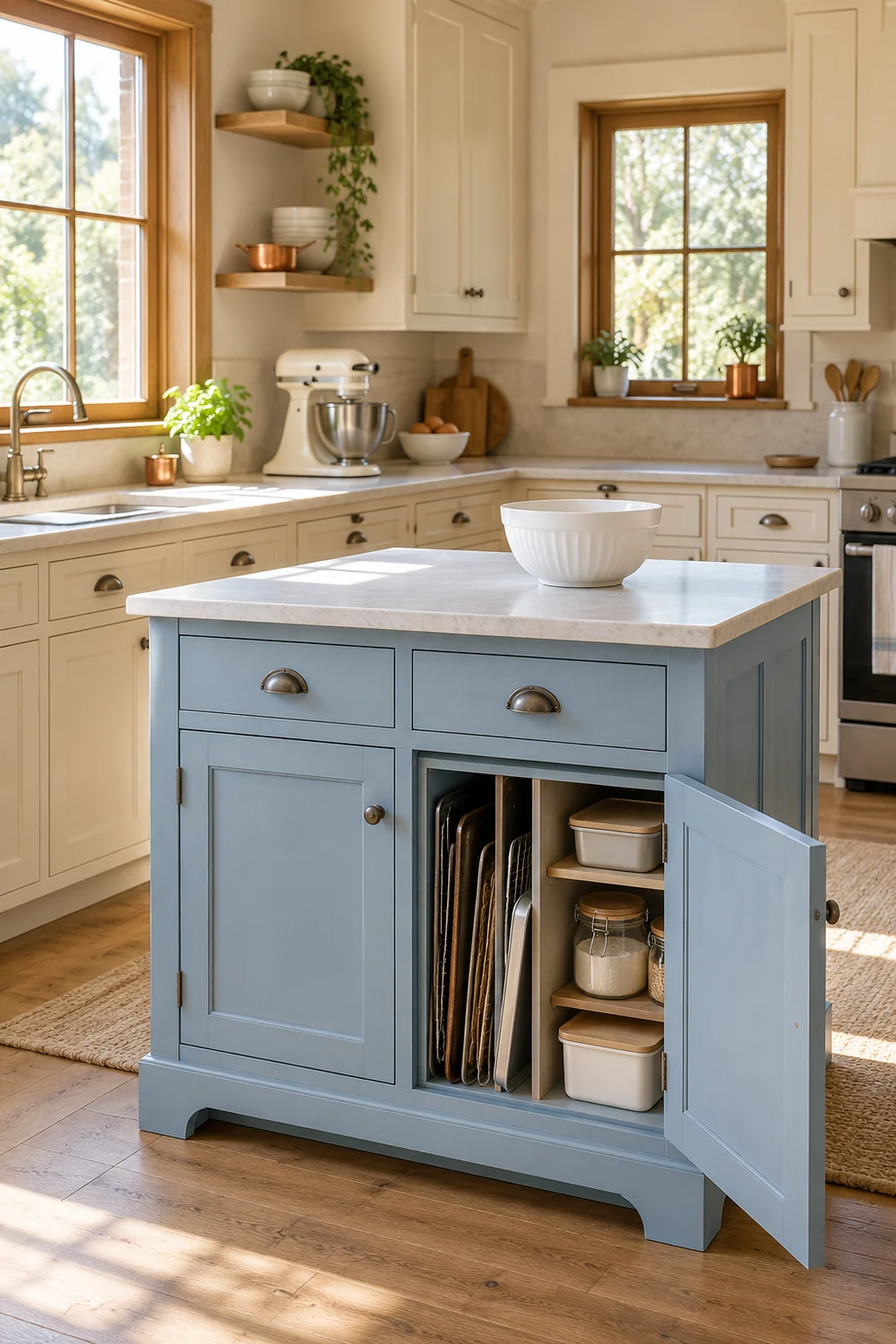
Compare a retained cabinet, an adapted piece and a new unit against the same requirements. The retained piece wins when its construction, usable openings and condition genuinely work. An adaptation needs clear confirmation that the proposed dividers, drawers or hardware are compatible. A new unit should provide a specific improvement, such as a usable tray opening or a mixer position that the old cupboard cannot offer. I would not replace sound furniture solely to make the powder blue more consistent. Paint colour can be considered after the storage answer is proven.
Work surface selection needs the actual product's intended use and care instructions. Separate a surface that supports the mixer from one used directly for food preparation, and check any board, mat or protective layer in that context. Do not assume that a distressed timber top, a decorative stone offcut or a vintage finish is suitable for every baking task. I would choose the practical surface and its maintenance commitment deliberately. You should know how it is used, cleaned and protected before judging how convincingly it resembles a farmhouse work table.
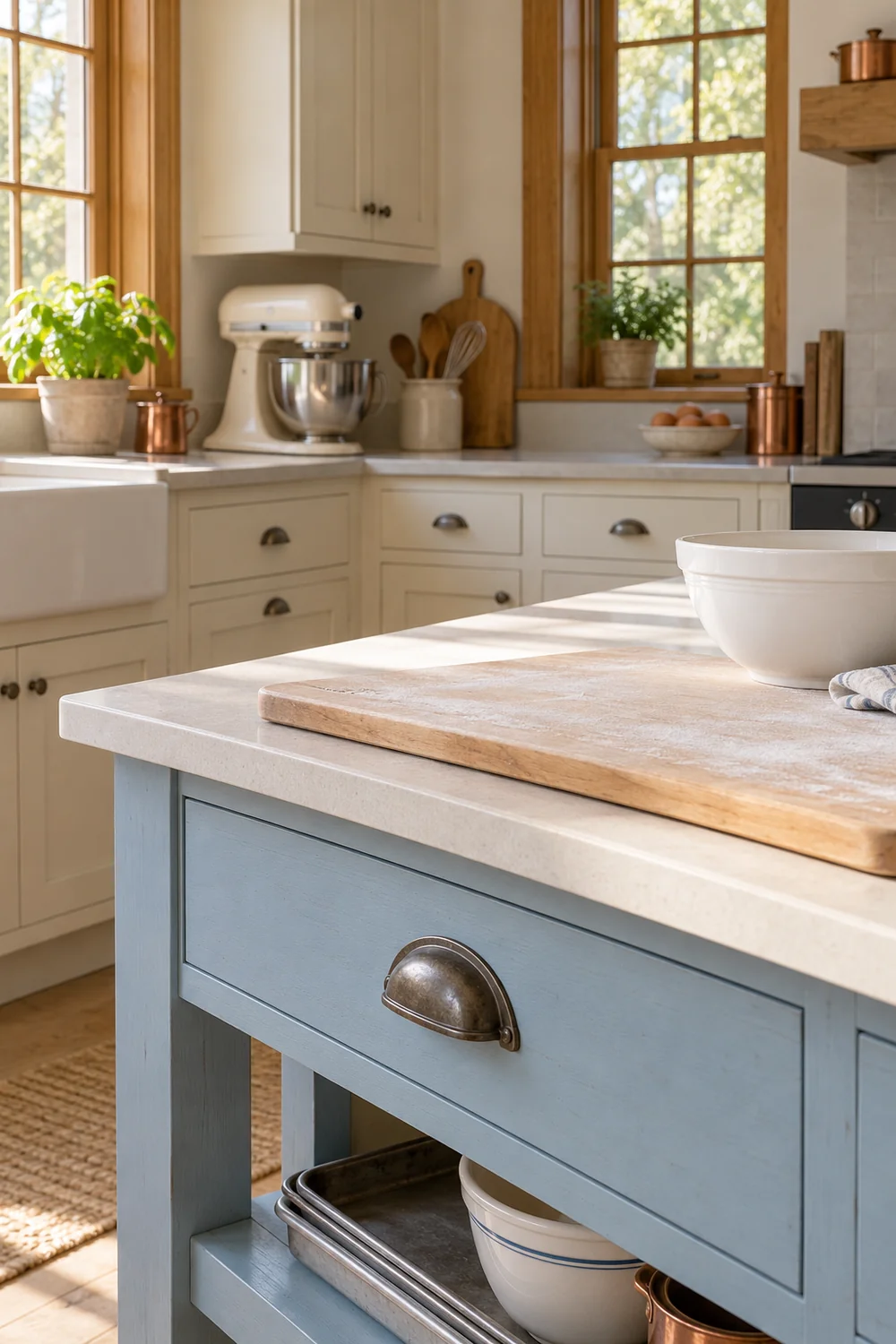
The French country color palette guide can help you relate the accepted pieces to the rest of the kitchen. I would compare the blue, ivory, oak and pewter together in the room's daylight, alongside the actual mixer and bowls. Keep the colour emphasis restrained if the existing floor or worktop already has a strong presence. A coherent kitchen does not need every surface to match. It needs the new baking piece to look intentional while fulfilling the storage and maintenance jobs you selected it for.
Run an entire familiar bake through the accepted storage arrangement before calling it finished. Begin with the ingredients and equipment put away. Retrieve them, follow the planned sequence and return each dry item to its home as the recipe allows. Notice where you hesitate, which drawer needs another object removed first and whether the cooling rack displaces the next meal. This test can reveal a storage problem that individual measurements missed. The cabinet might hold everything while still asking you to perform too many awkward transfers during ordinary use.
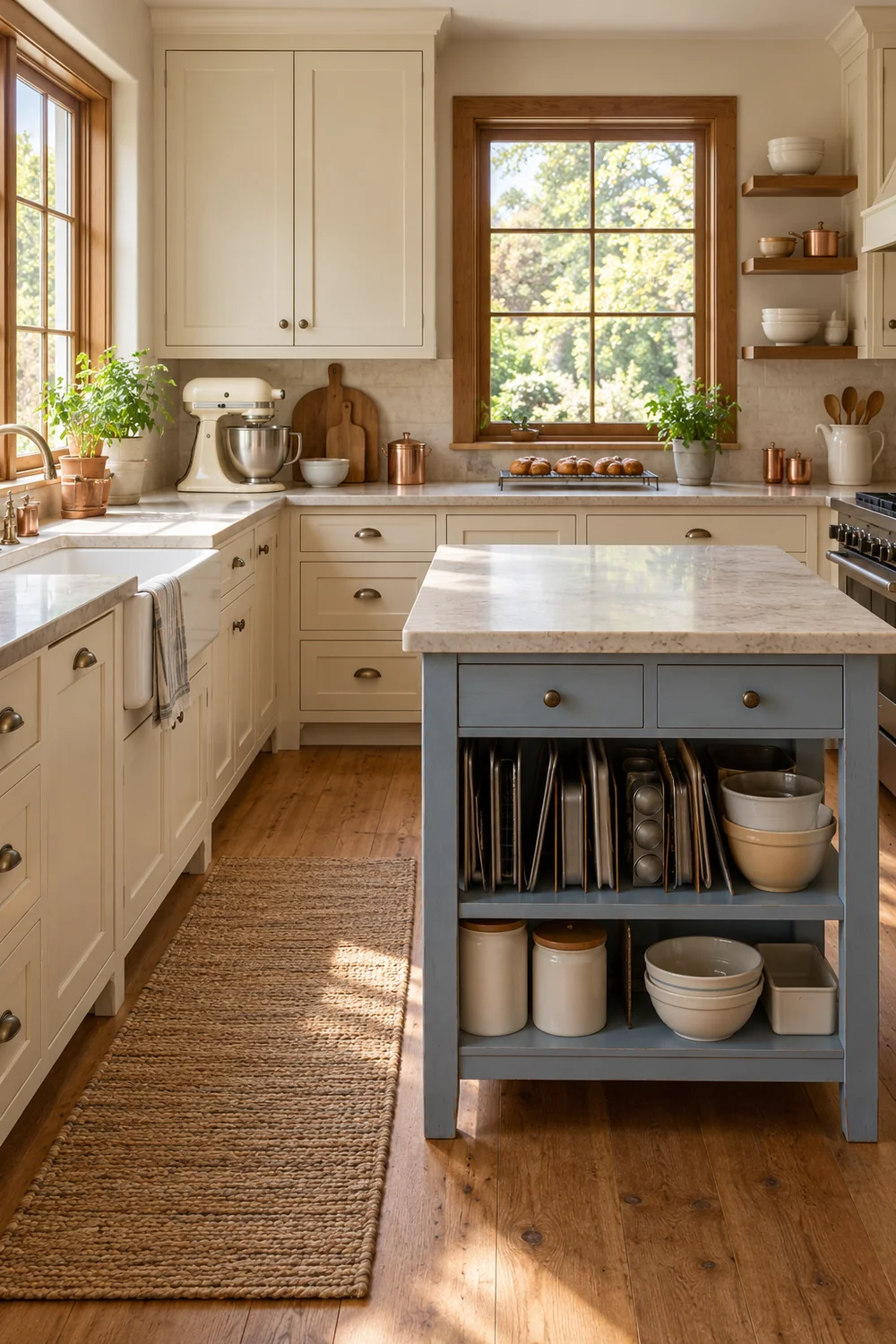
I would use three plain outcomes. Accept means the objects fit, supplier requirements are resolved and retrieval works within the kitchen plan. Hold means a measurement, product instruction or hardware confirmation is still missing. Reject means the arrangement fails an essential job, such as preventing the mixer from opening or trapping the weekly tray behind a heavy stack. These are decisions about the specific configuration, not permanent verdicts on the furniture. A different divider position or a smaller daily tool group may turn a failed arrangement into a useful one.
After several bakes, check the return journey as carefully as retrieval. Are the dry attachments going back where you expected? Are ingredient packages accumulating outside the cupboard because refilling is awkward? Has the cooling rack acquired a permanent home on the dinner preparation counter? Adjust the grouping that causes the repeated problem and follow current care instructions for the equipment and surfaces. I would keep the reset modest: clear the working area, return the actual contents and notice what no longer fits, rather than restyling the entire kitchen after every session.
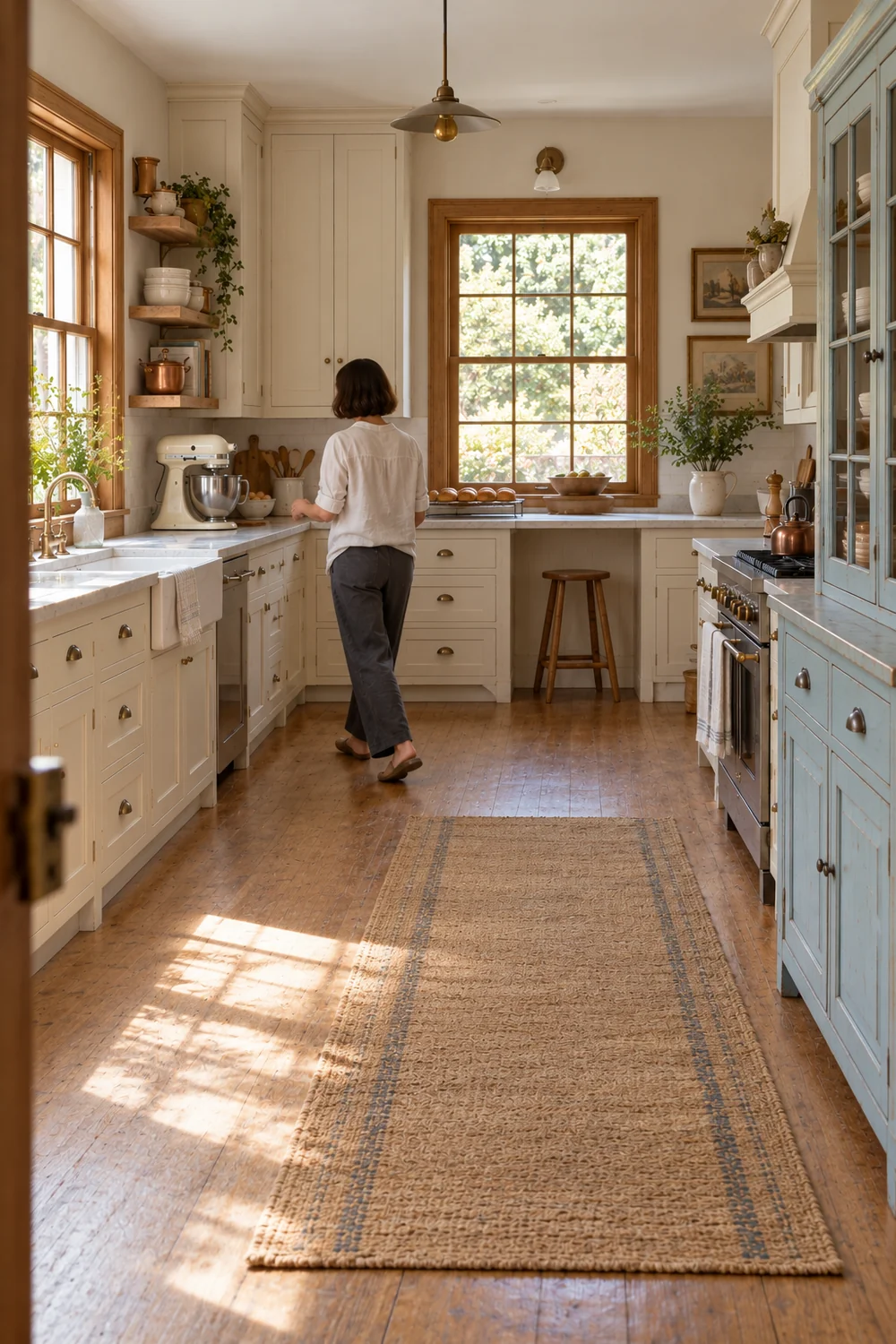
Return to the baking station plan when a new mixer, larger batches or a changed meal routine alters the surface jobs. A storage adjustment cannot always solve a workflow that has genuinely changed. Recheck the mixing, shaping, landing and cooling positions before buying another cabinet. If the original sequence still works, the answer may simply be a different tray grouping or a more manageable container. Keeping that distinction clear prevents a small inconvenience from becoming an unnecessary room renovation.
I would consider the baking storage complete when the useful objects have suitable homes, the operating equipment has the access it needs and clearing away returns the kitchen to ordinary use. You have checked the real trays and filled supplies, resolved the supplier questions and tested the arrangement through a familiar bake. The powder blue cabinetry, warm timber and visible bowls can now feel relaxed because they are carrying a practical system. Keep the measurements and the few decisions that mattered. They will help you make the next change with the same care when your equipment or baking habits evolve.