Newsletter Subscribe
Enter your email address below and subscribe to our newsletter

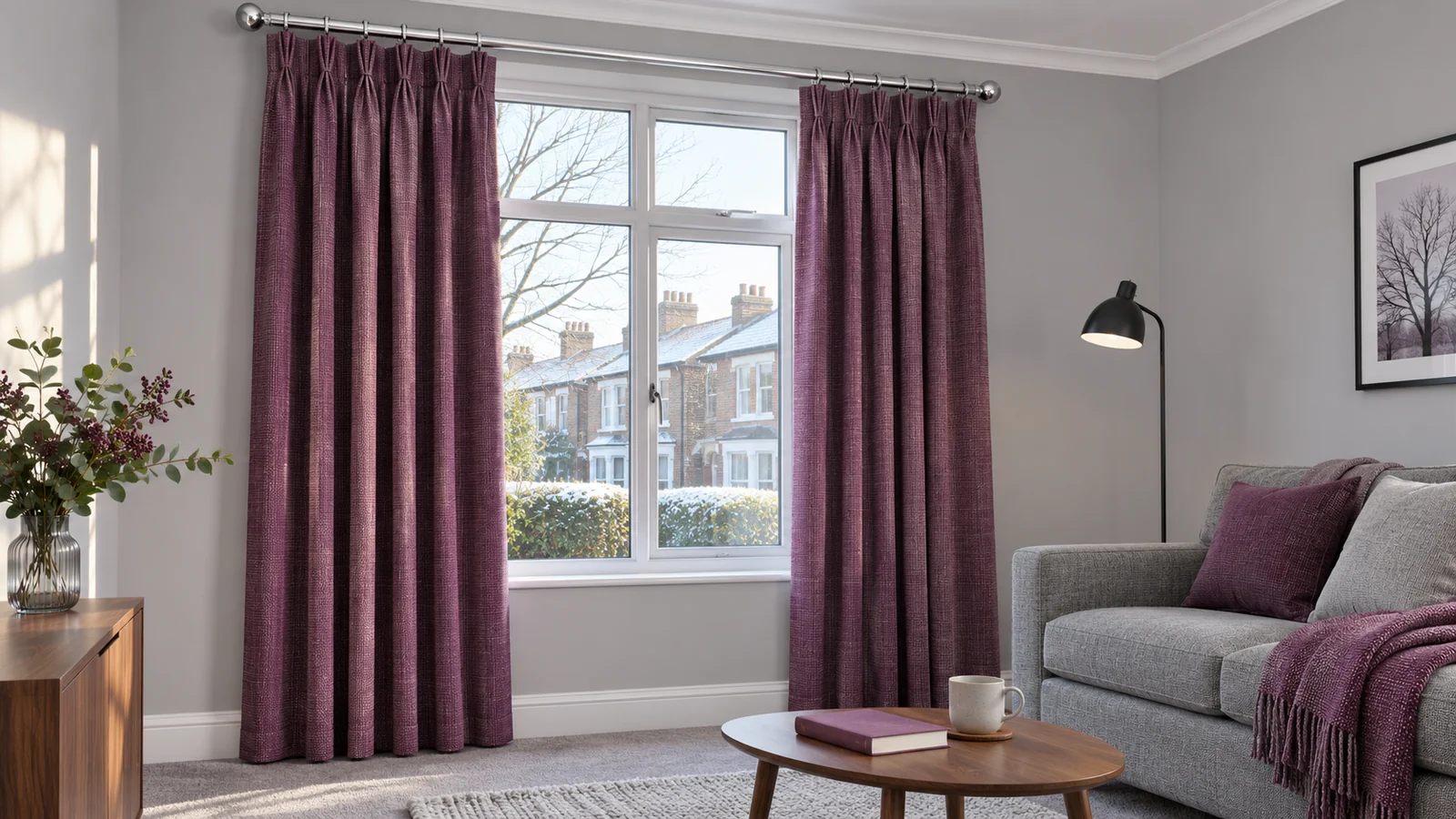
I would choose winter living room curtains around the pole or track already in the room. If you rent, that means settling the lining, heading and drop before falling for a fabric. I would aim for a window that looks considered, closes easily and still gives you useful daylight, with a setup you can check before committing to alterations.

Before looking at fabrics, I would photograph the existing pole or track and the way the current curtains attach to it. Note whether you have rings, gliders or eyelets, and whether the fittings move properly. That information narrows the choices far more usefully than starting with a picture of a different room whose window hardware you cannot reproduce.
Give the change one main job. Perhaps the current curtains look thin when closed, evening privacy is poor, or the room needs a richer textile beside the sofa. Write that job down. Winter comfort may be part of the brief, but a curtain purchase should still answer the actual window and the way you use the room.
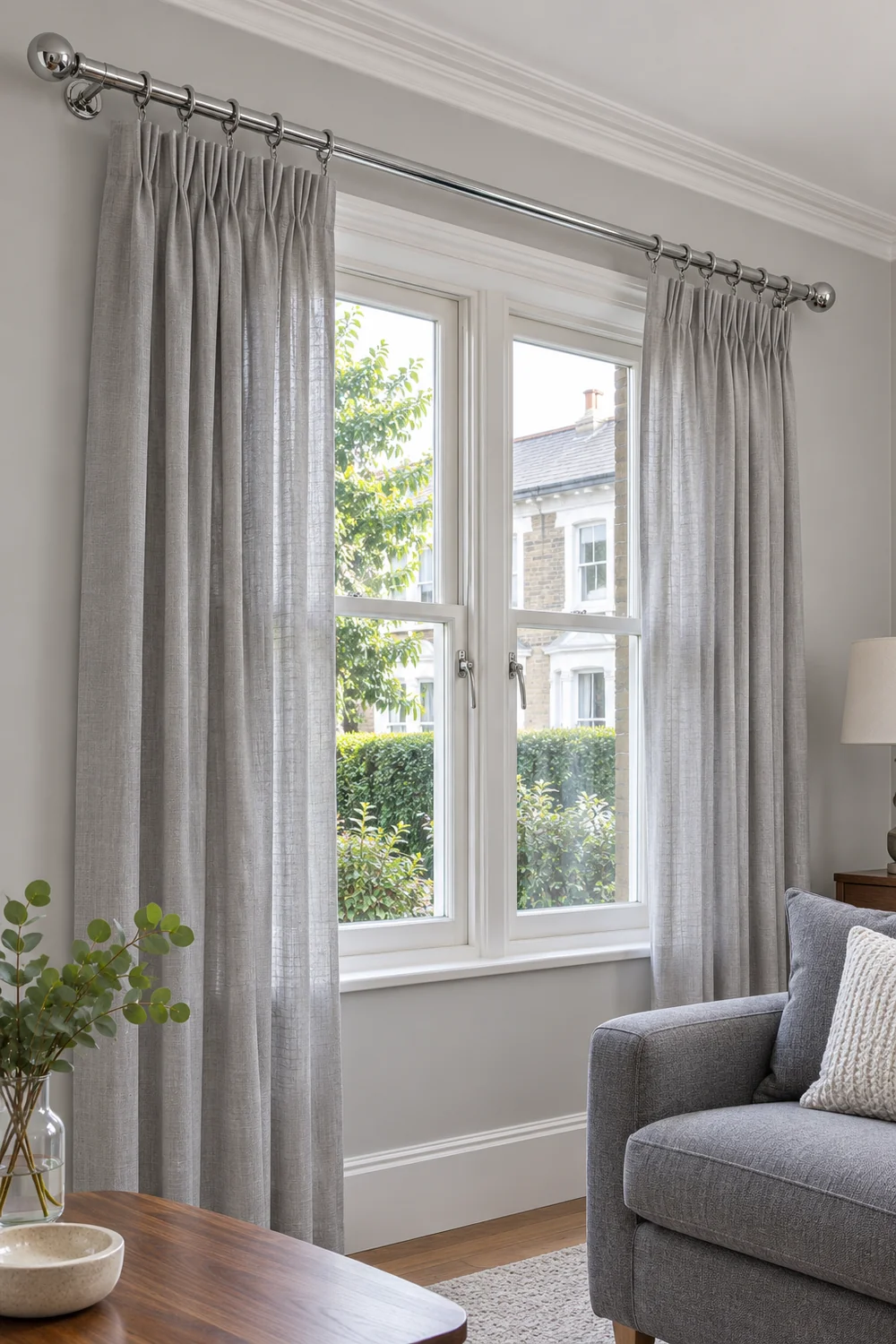
I would check the fitting’s product information for supported weight and compatible components. A pole that carries the current light curtains does not automatically suit heavier fabric plus added lining. If the fitting cannot be identified or looks loose, resolve that with the landlord or an appropriate fitter before buying a heavier treatment. Its appearance alone does not establish what it supports.
The renter friendly living room plan helps place that window decision within the room. If the sofa, reading chair and route already work, keep them as the reference points. Choose curtains that open without catching the furniture and can be reached without moving the seating every day.
For the simplest brief, I would record:
Renting does not mean every household has the same restrictions. Check your own arrangements before replacing hardware or changing a fixing. If you are retaining the original curtains for the end of the tenancy, photograph their position and keep their components together. A winter change is easier to reverse when you know what belonged to the original setup.
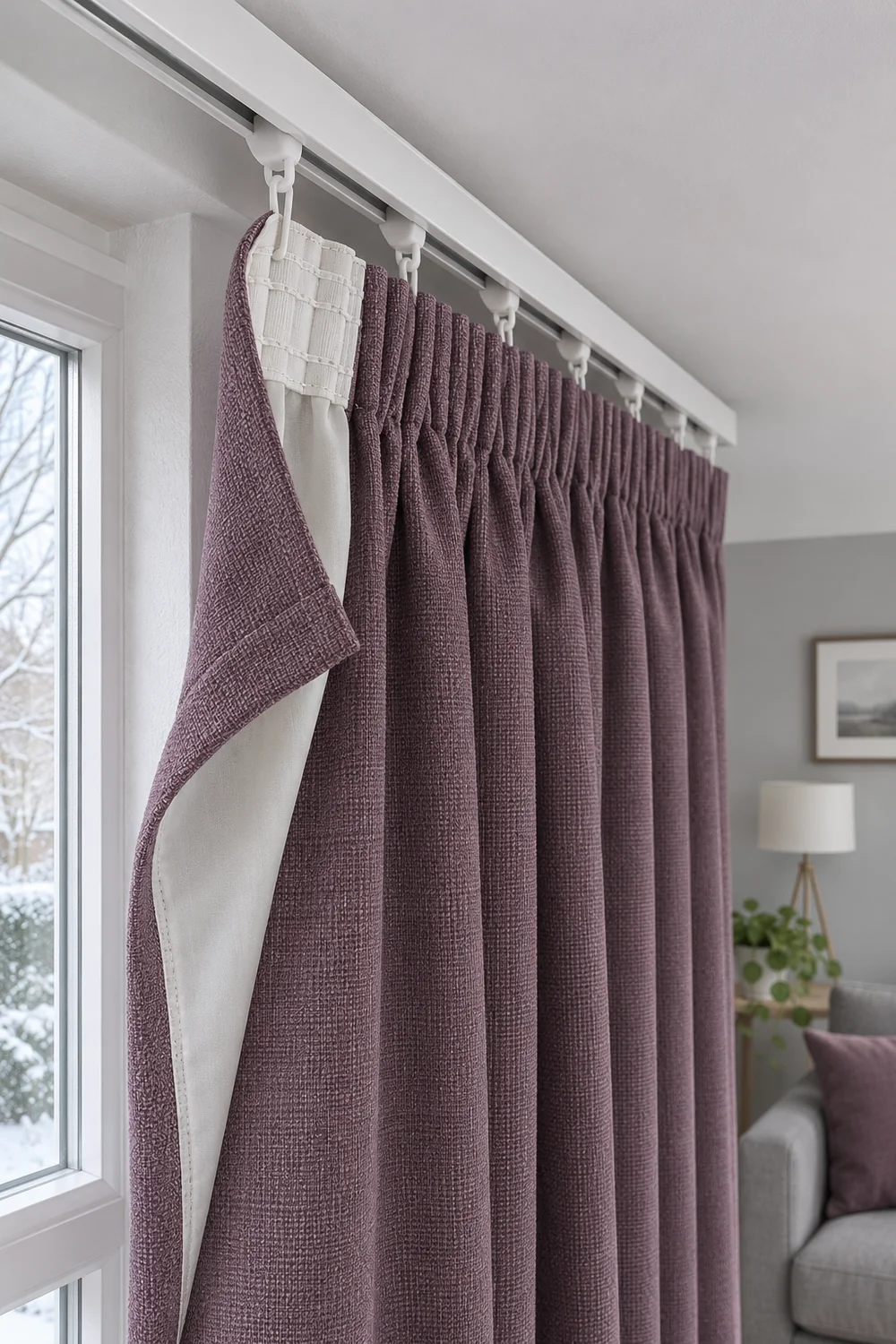
I would separate the look of the face fabric from the lining’s stated function. Velvet, a textured weave and a plain woven fabric can all create different winter looks, but their appearance does not establish the performance of the finished curtain. Read the specification for the complete product, including its lining and cleaning requirements.
For a room that feels visually bare, I might choose a substantial textured weave in muted plum, with a softer grey elsewhere in the room. A subtle herringbone can give interest without a large print. If the sofa is already patterned, a plain curtain may be the calmer partner. These are visual choices; I would still check weight, dimensions and lining separately.
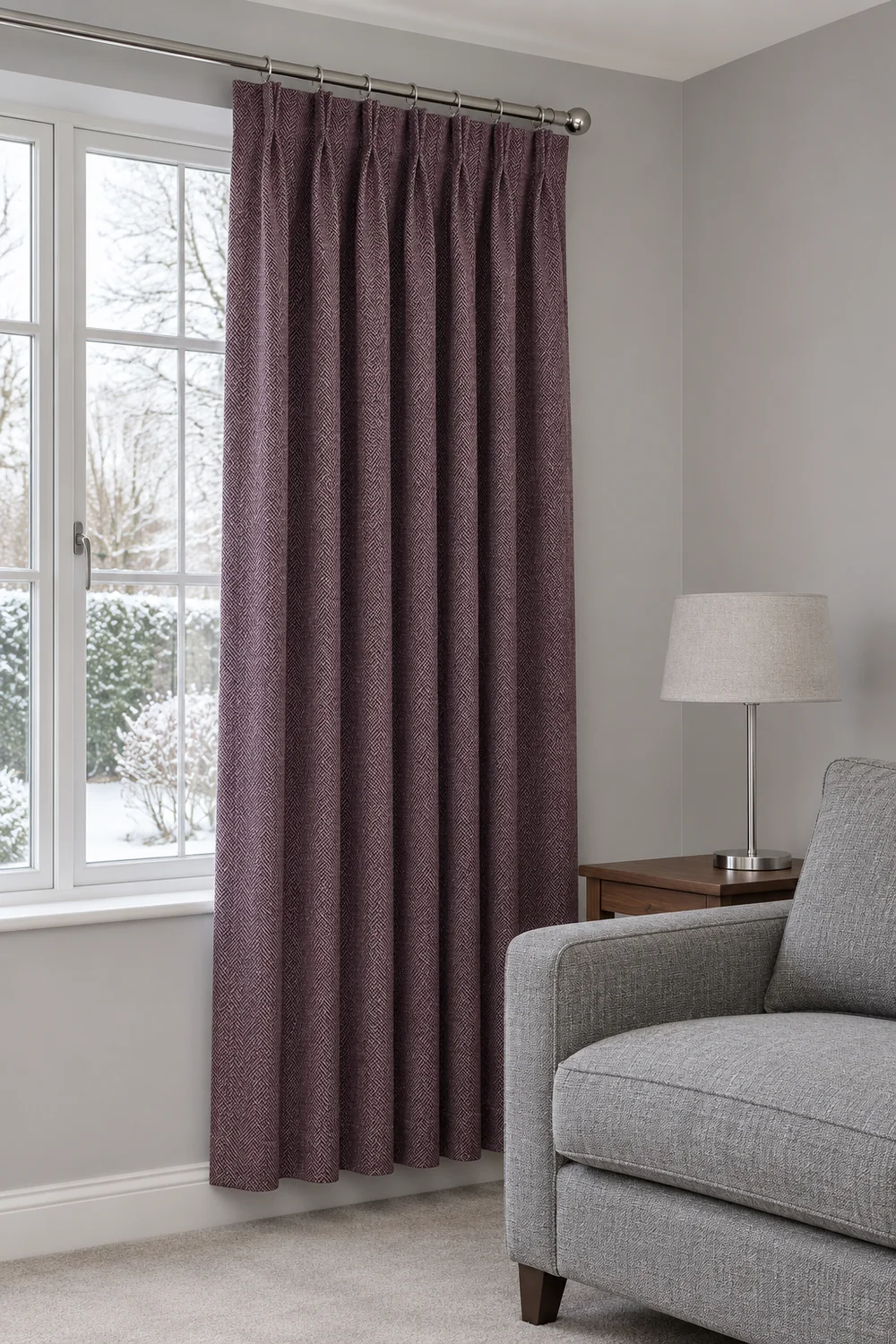
Energy Saving Trust includes heavy curtains among its winter measures for rented homes. I would use that as a reason to consider an appropriate curtain, without promising a particular bill reduction. A product sold as blackout is intended to address light; do not assume that word alone gives you the thermal specification you want. Look for the actual stated functions.
Compare these routes against your brief:
Added lining needs to work with the curtain’s heading, size and fittings. I would ask for the relevant attachment instructions before buying it. A sheer is a separate layer, rather than a substitute for a specified winter lining. If adding a second layer requires different hardware, include that change and any permission in the decision instead of assuming the current fitting accommodates it.
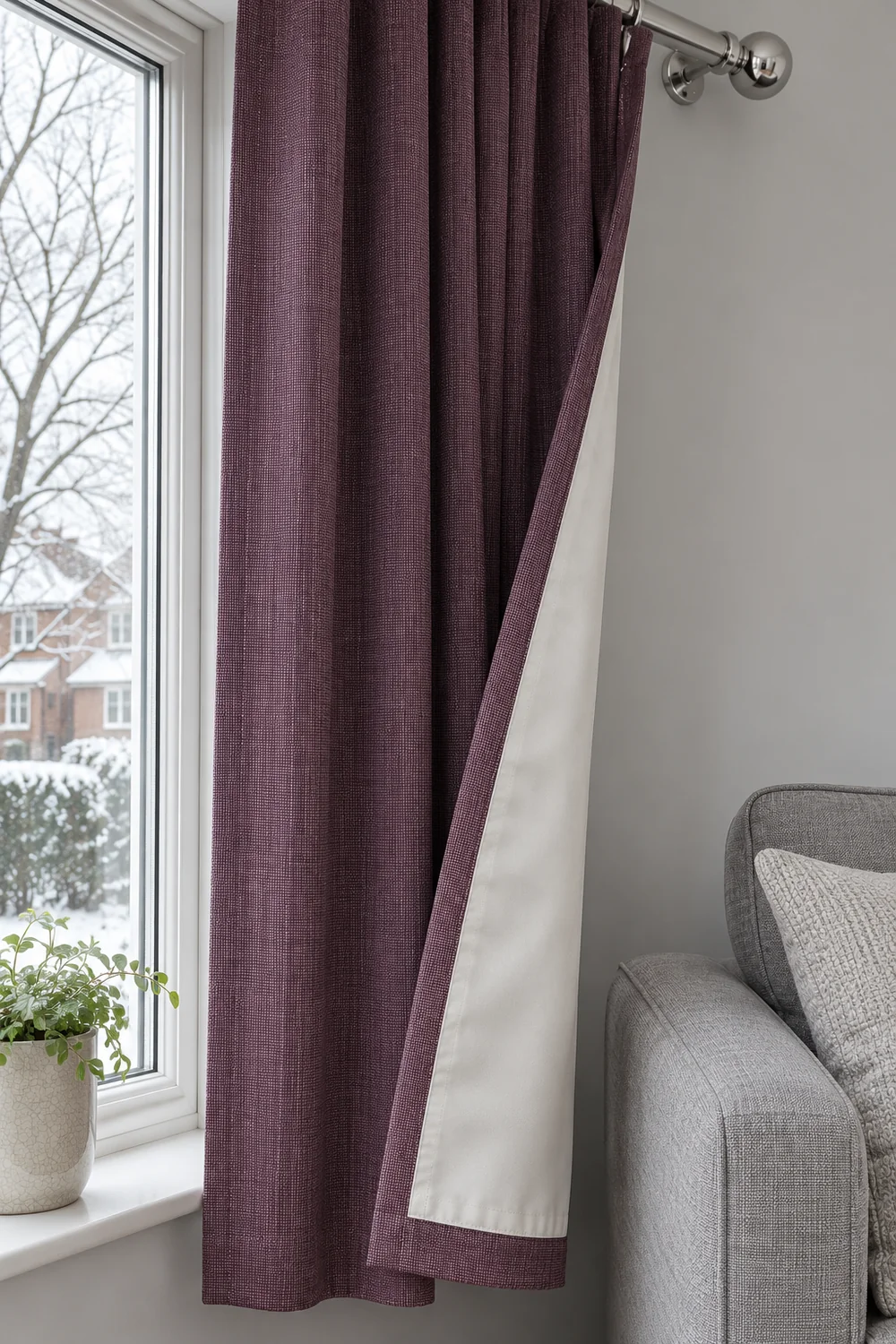
The living room curtains guide can help compare texture, pattern and colour once these functional choices are clear. I would narrow that visual shortlist to two fabrics. Then compare the complete specification and sample of each, rather than ordering the one that looks richest in a close photograph.
I would measure the fitting you will actually use, rather than the glass alone. Record the usable pole or track width and identify where the chosen heading hangs. Dunelm’s measuring guidance distinguishes the starting point for eyelet and pencil pleat curtains. Follow the measuring instructions for your particular heading, then record the intended lower edge from that point.
Width needs the same care. Check whether the seller quotes a single panel or a pair, whether the stated width is flat or finished, and what fullness the product requires. Two panels whose flat widths merely add up to the fitting width may not give the folds you expect. Use the maker’s sizing guidance rather than transferring a rule from another heading.
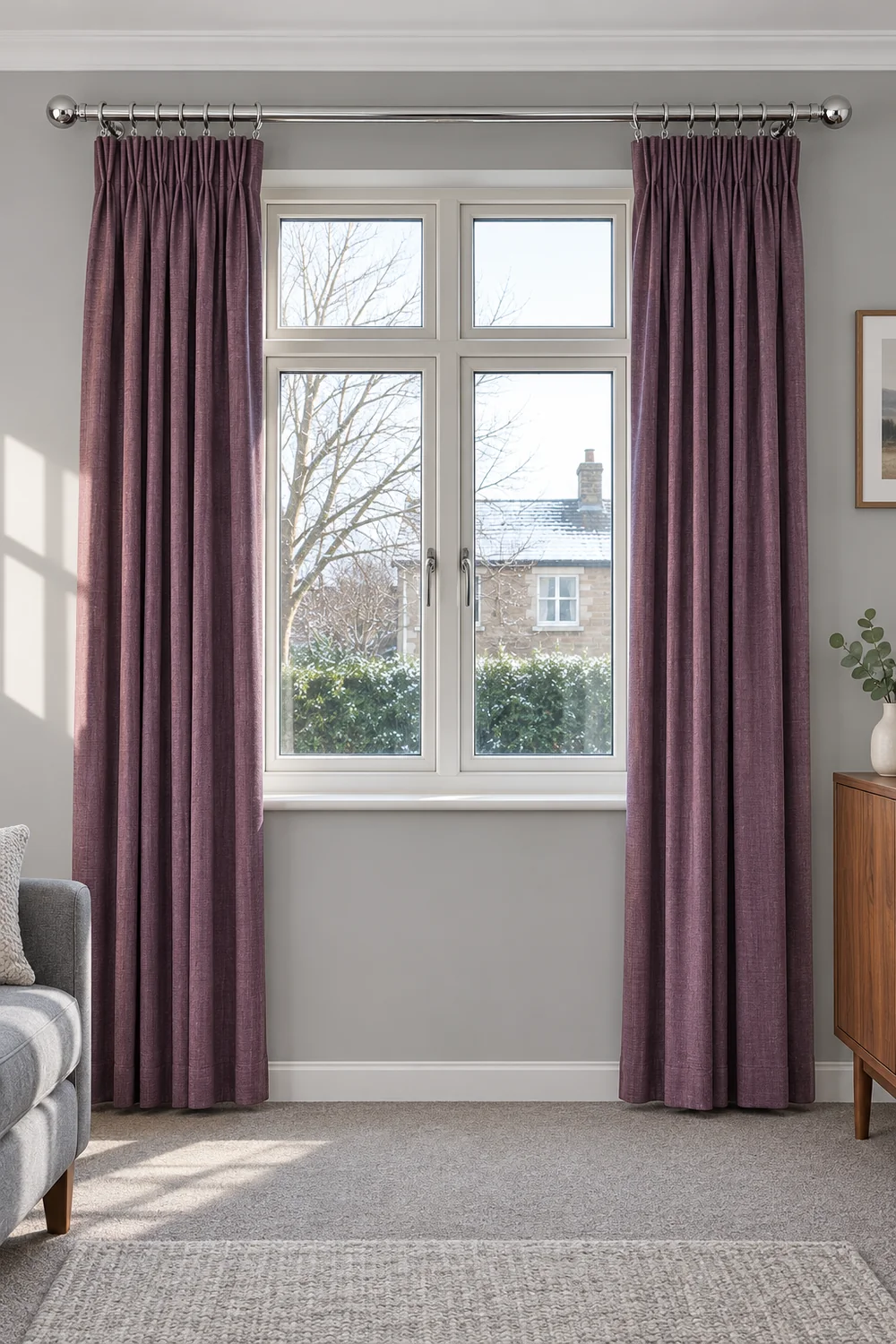
I would decide the drop at the window. Floor length can create a strong vertical line, but a radiator, heater or opening may require a different solution. Follow the appliance instructions for clearance and keep necessary ventilation available. There is no single decorative gap that makes every heat source and curtain combination suitable.
For an ordinary window without an obstruction, I would favour a hem that clears the floor rather than a pool of fabric across it. In a room with a heater beneath the sill, I would settle the permitted curtain position before ordering. A shorter treatment that works with the room can look deliberate; copying a floor length photograph is not worth an incompatible setup.
The existing window section in renter friendly wall decor is useful for coordinating fabric with the surrounding room. Here I would add a measurement sheet for the curtain itself: heading, fitting width, finished drop, panel count, fullness guidance and the space each panel occupies when open.

Check the open position before treating the measurements as finished. Can you reach the handle? Does the fabric stack against a cabinet or cover more glass than you want? If your retained fitting offers little space beside the window, a bulky curtain may leave the room darker during the day. Compare that consequence while choosing fabric weight, rather than discovering it after hanging.
I would compare the two shortlisted samples beside the sofa and wall in natural daylight. Then move them to the window, where light may show their texture differently. A small sample cannot demonstrate the full curtain’s coverage or drape, but it can help you reject a colour that feels wrong against the things you are keeping.
With a grey sofa, I might compare a muted plum weave against a charcoal fabric with a small warm fleck. The plum can become the room’s main colour, while the charcoal gives a quieter outline. I would keep the rest of the textiles restrained until choosing between them. Neither option needs a matching cushion purchase to justify it.
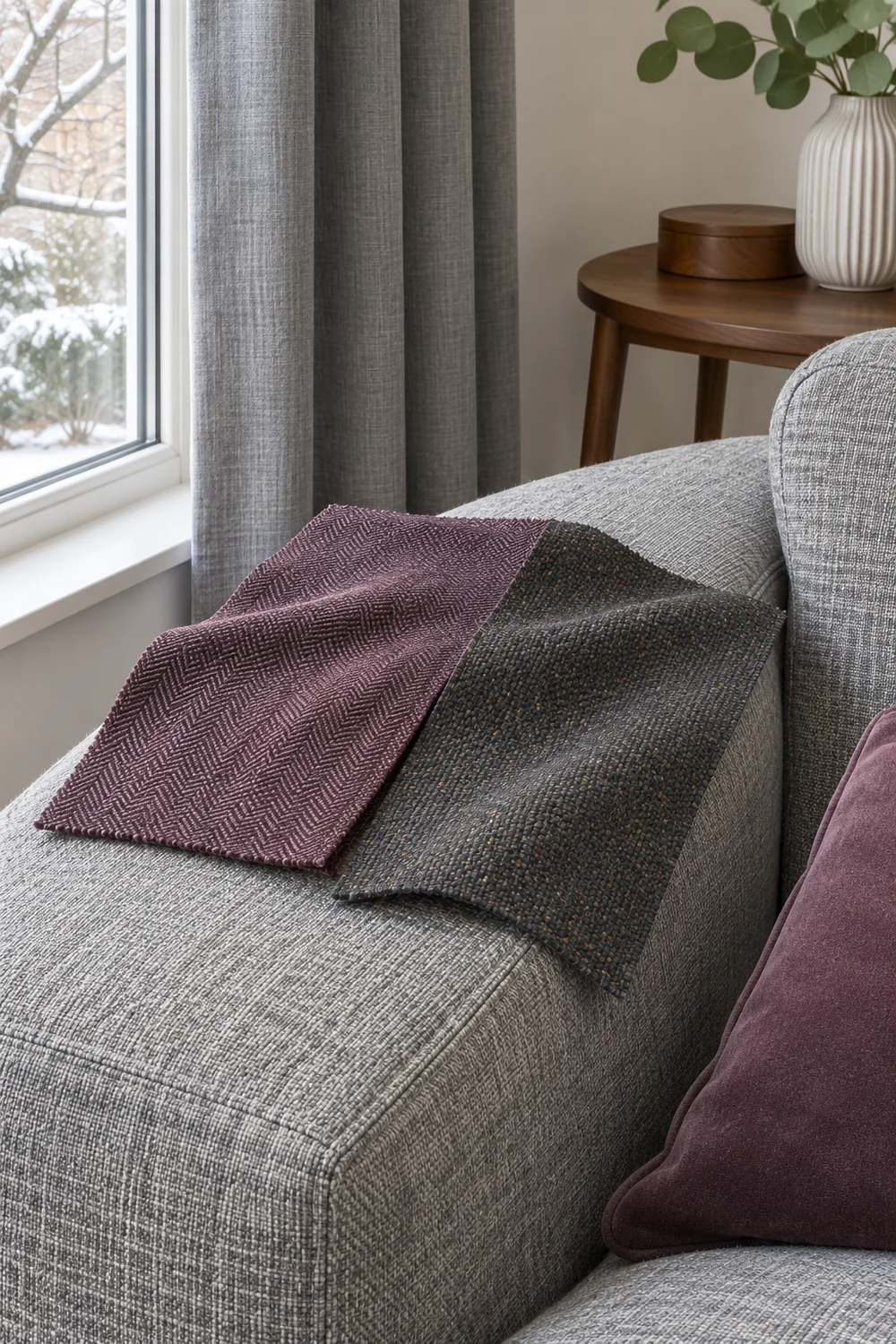
The material combinations in a modern living room can help you consider the whole arrangement. Look at the relationship between the curtain, upholstery, timber and visible metalwork. A curtain can pick up one existing tone without matching every object. I would keep a good sofa and retained pole as fixed references, then let the fabric connect them.
Repeat the colour comparison with the lamps you normally use in the evening. Look from your usual seat as well as the doorway. A fabric that seems subtle beside the window can become a strong block when the full pair is closed. Ask whether you want that emphasis before ordering several metres of it.
I would also compare the practical details while both candidates are in front of me: cleaning method, lining, complete curtain weight, sizes, delivery contents and alteration options. Check the retailer’s current return terms before gathering headings, modifying panels or paying for custom work. The sample decision should lead to a product you can maintain and fit, as well as a colour you like.

Write the final choice as a short specification. For example: muted plum face fabric, the selected lining, a heading compatible with the retained track, the measured finished drop and the required panel configuration. Put unresolved details beside it. If the supported weight or heading remains uncertain, the specification is still a question to settle, not an order ready to place.
Once the product and fitting are confirmed, I would clear the area and lay out the panels and compatible components. Check the order against the specification before changing anything that affects returns. Keep the original curtains and hardware labelled together. Use suitable access equipment and arrange help where the weight or position calls for it.
Follow the supplied heading instructions. Eyelets, pencil pleats and other headings do not all attach in the same way. For a hook based heading, use the specified pockets and compatible rings or gliders; for an eyelet curtain, confirm the pole is suitable. I would not improvise a mixed attachment simply because the panel can be made to hang for a photograph.
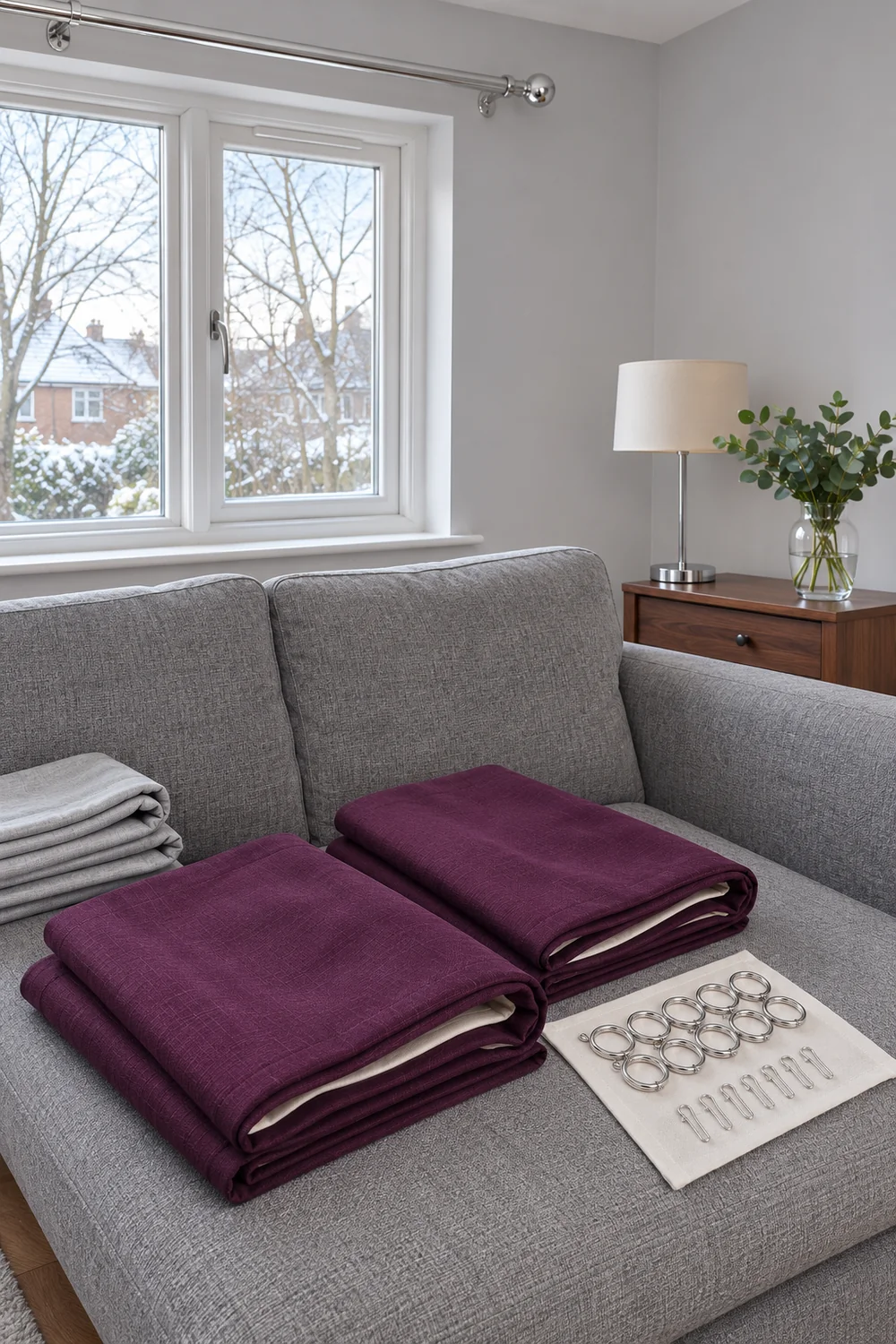
My setup sequence would be:
Look for a cause when something fails. If the hems are uneven, check the heading positions and the measured floor before altering fabric. If the panels do not meet, check orientation, gathering and ordered width. If the treatment is difficult to draw, stop forcing it and check the hardware compatibility and instructions. More pulling is not a useful correction.
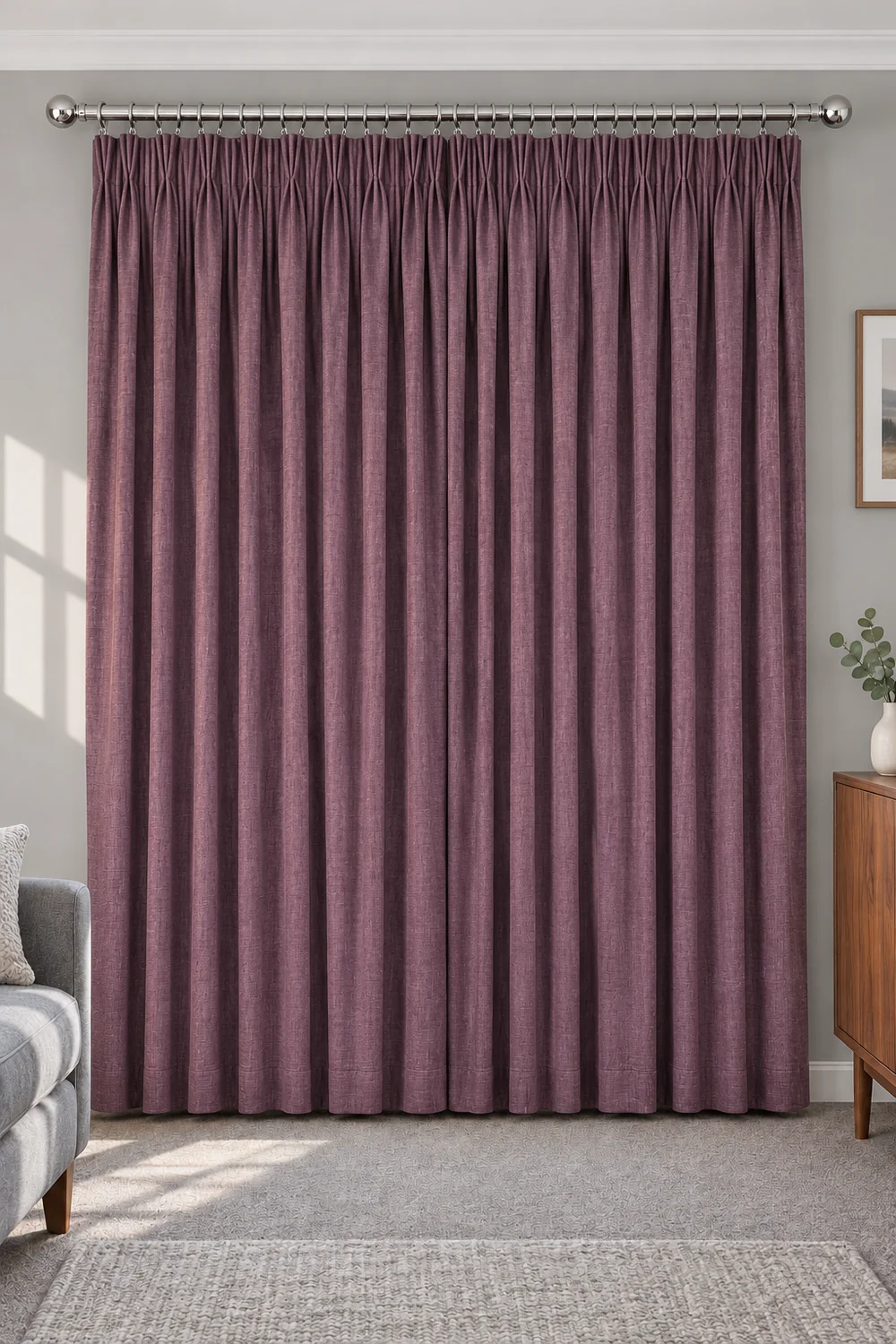
I would test the room in two conditions. In daylight, open the curtains and check the remaining glass, window access and fabric stack. In the evening, close them and assess the coverage and privacy you actually need. A sheer should be checked under the conditions in which you intend to use it, rather than assumed to provide the same privacy after the lights come on.
Now sit, stand and walk past the window. The living room furniture guide can help if the issue is a crowded route or badly placed chair. Move an easily repositioned piece if that improves the room, but do not trap curtain fabric behind furniture or compromise required heater and ventilation clearances just to keep a particular arrangement.

I would use the curtains through an ordinary week before deciding whether the decorative choices need adjusting. Notice the repeated actions: opening them in the morning, reaching the window and closing them in the evening. A fabric that looks beautiful but needs constant rearranging may need a setup correction rather than another decorative layer.
Keep the review specific. If daytime light feels reduced, look at the open stack and whether another layer is covering the glass. If evening coverage disappoints, revisit the meeting edges and the product’s stated function. If the hem catches, recheck the drop and heading. Change one thing at a time so you can tell whether it improves the actual problem.
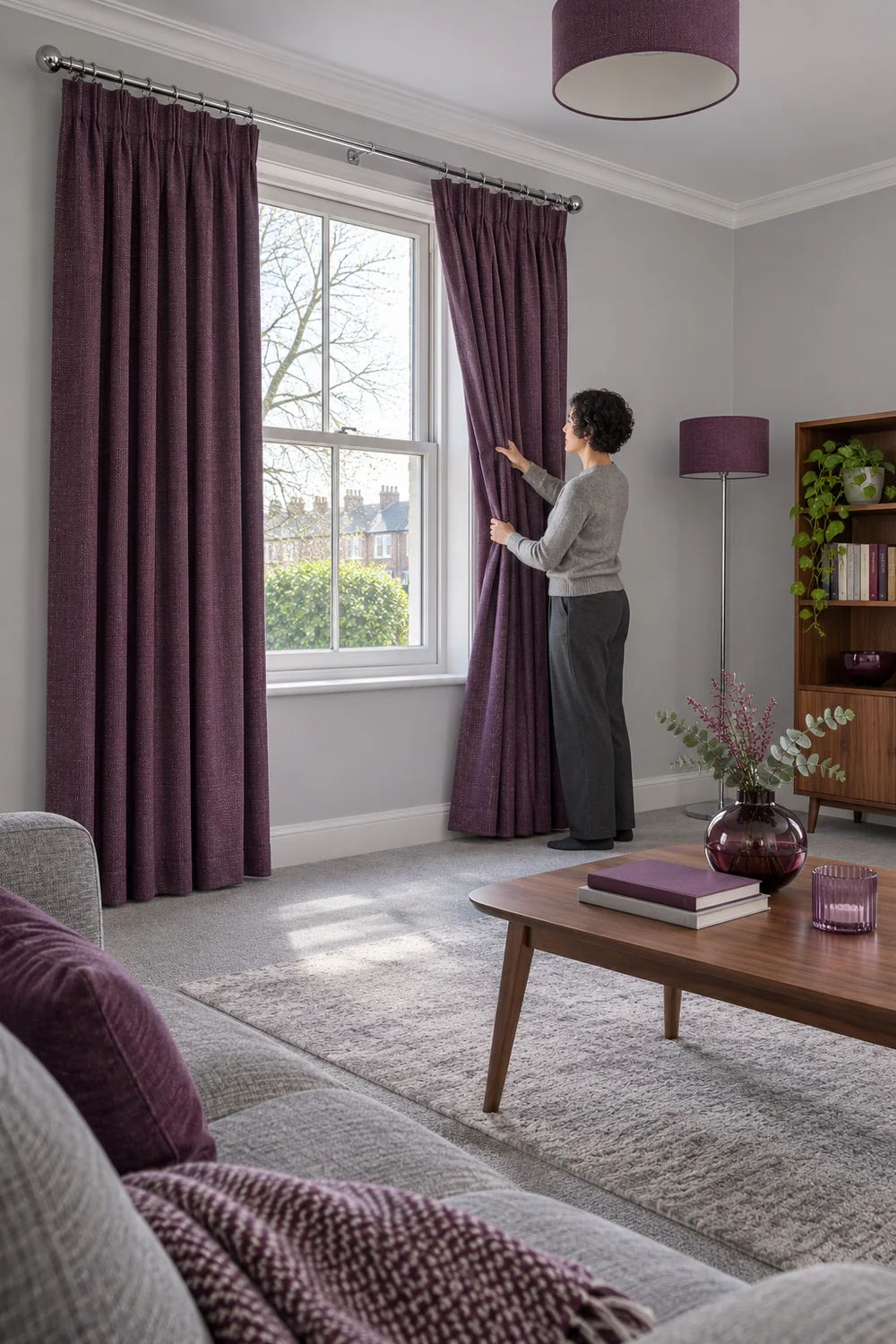
I would also check that the fabric remains clear of required heat and ventilation routes during normal use, not only immediately after arranging it. If it repeatedly falls into an unsuitable position, reconsider the treatment or drop with appropriate advice. Do not rely on remembering to move it every time. The finished setup should suit the way the room is used.
For creases and cleaning, follow the care label for the complete curtain and lining. Do not assume that a face fabric’s fibre name makes the finished product machine washable or suitable for steaming. Dunelm’s care guidance also advises checking the label before ironing persistent packaging folds. I would keep that information with the order details rather than rely on a generic curtain care tip.
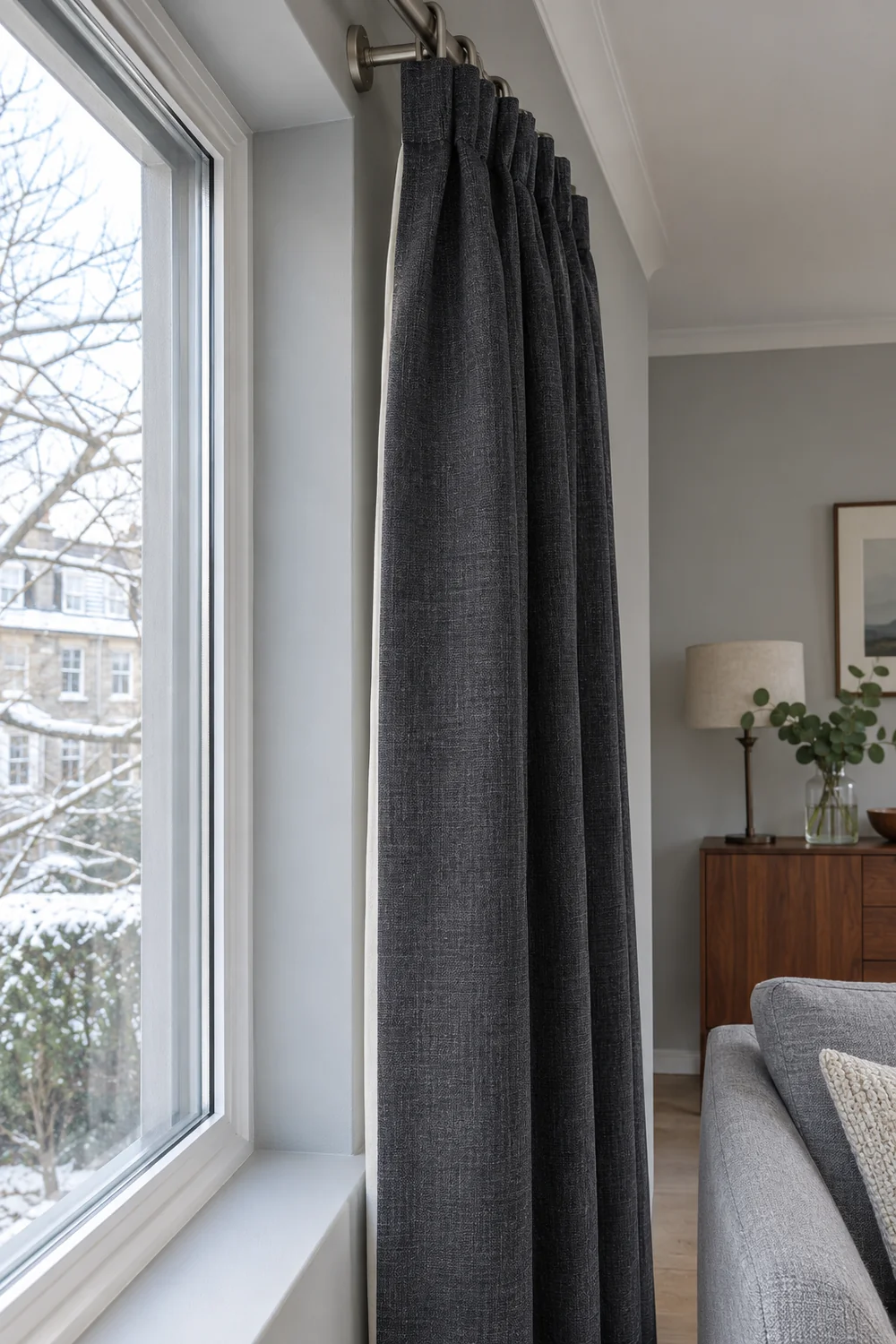
Save the final fitting width, heading, panel sizes, drop and product names. Photograph the finished open and closed positions. If the original rental curtains are stored, label the bag with the room and keep the matching components beside it. Those details will help when you clean, replace a panel or return the window to its earlier arrangement.
Return to the lining and fabric choice if your first week reveals a different priority. You may find that easy daily opening matters more than an extra layer, or that a simpler treatment gives enough privacy with better daylight. I would keep the combination that fulfils the brief and works with the retained fitting, then let its colour and texture finish the room.