Newsletter Subscribe
Enter your email address below and subscribe to our newsletter

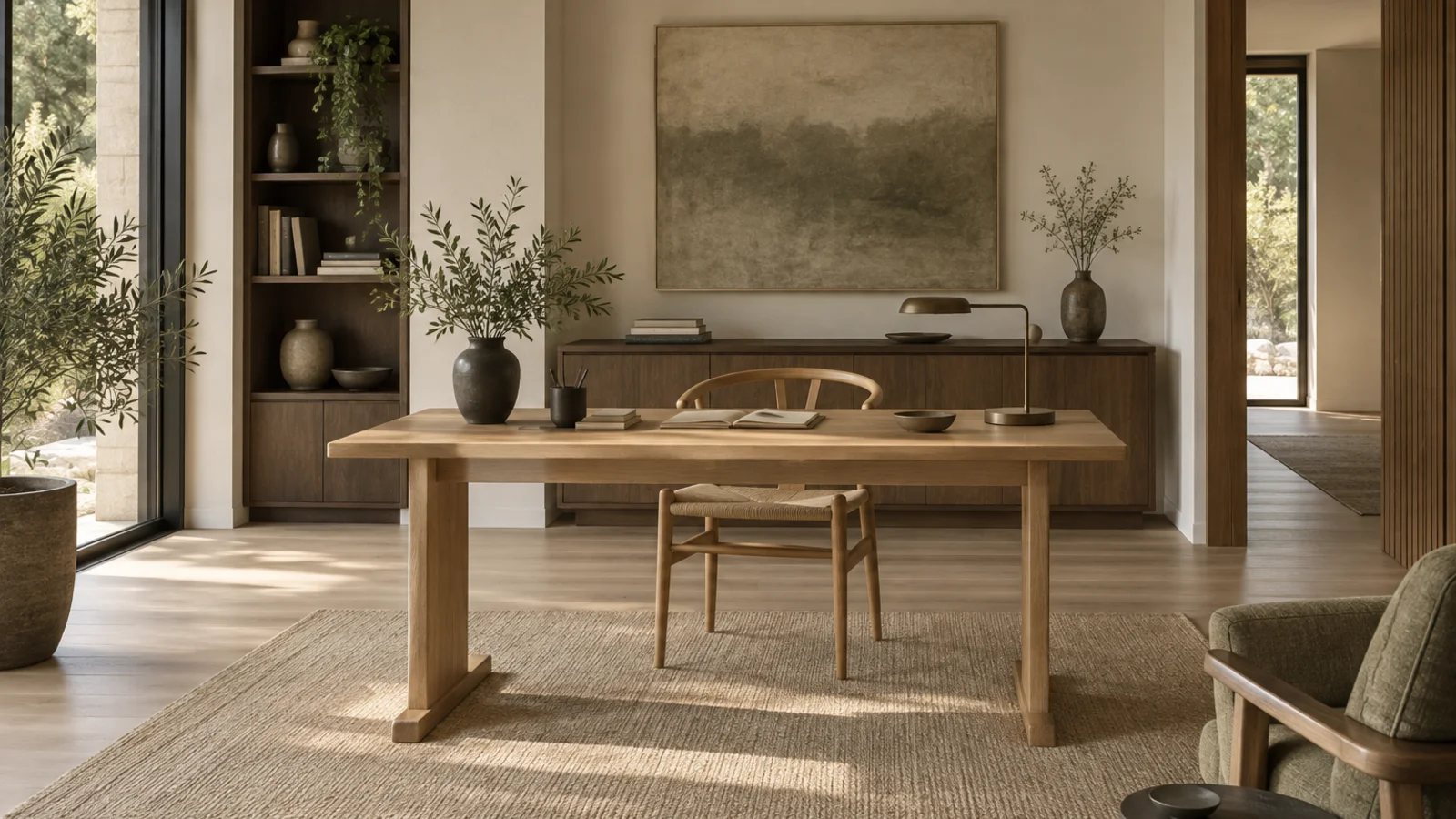
A Japandi desk should support the way you work while bringing warmth, restraint and useful order to the room. Its timber, shape and proportions matter, but the best choice begins with equipment, posture, circulation and storage rather than style alone. A desk that is too shallow, crowded with drawers or awkward beside a window will not feel calm once daily work begins. This guide helps you measure the task, compare size and material, check chair and cable clearances and build a simple Japandi desk setup around the final choice. Use it after deciding the broad room layout, and take your measurements and equipment list with you whenever you compare furniture so appearance never replaces function in the room every day.
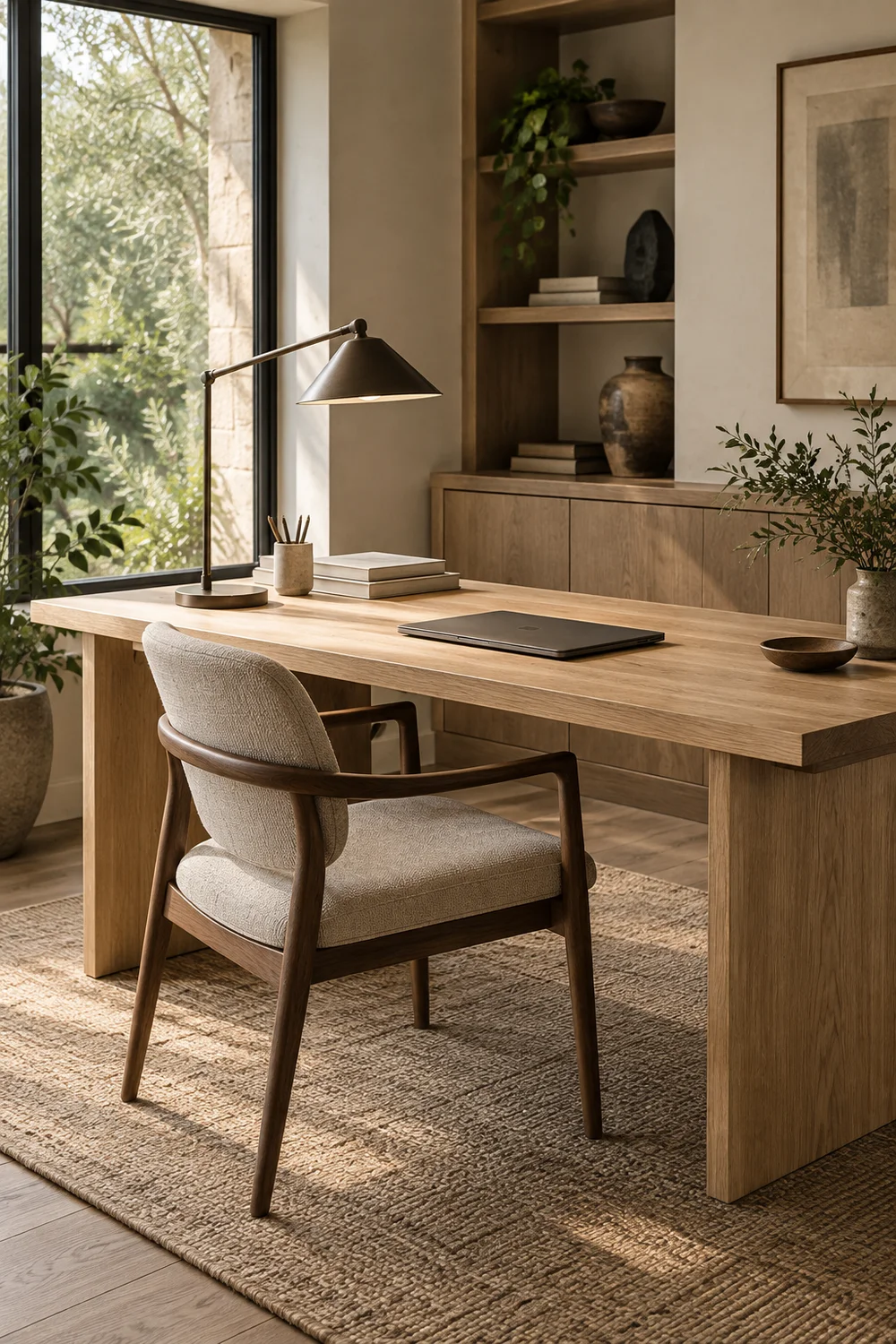
List every activity the desk must support. A laptop, notebook and occasional call need a different surface from two screens, a keyboard, drawing tools and reference books. Record what stays on the desk all day and what can be brought out only when needed.
Once the measured room is viable, these shed office interior choices help you check the desk, chair, lighting and storage as one working set.
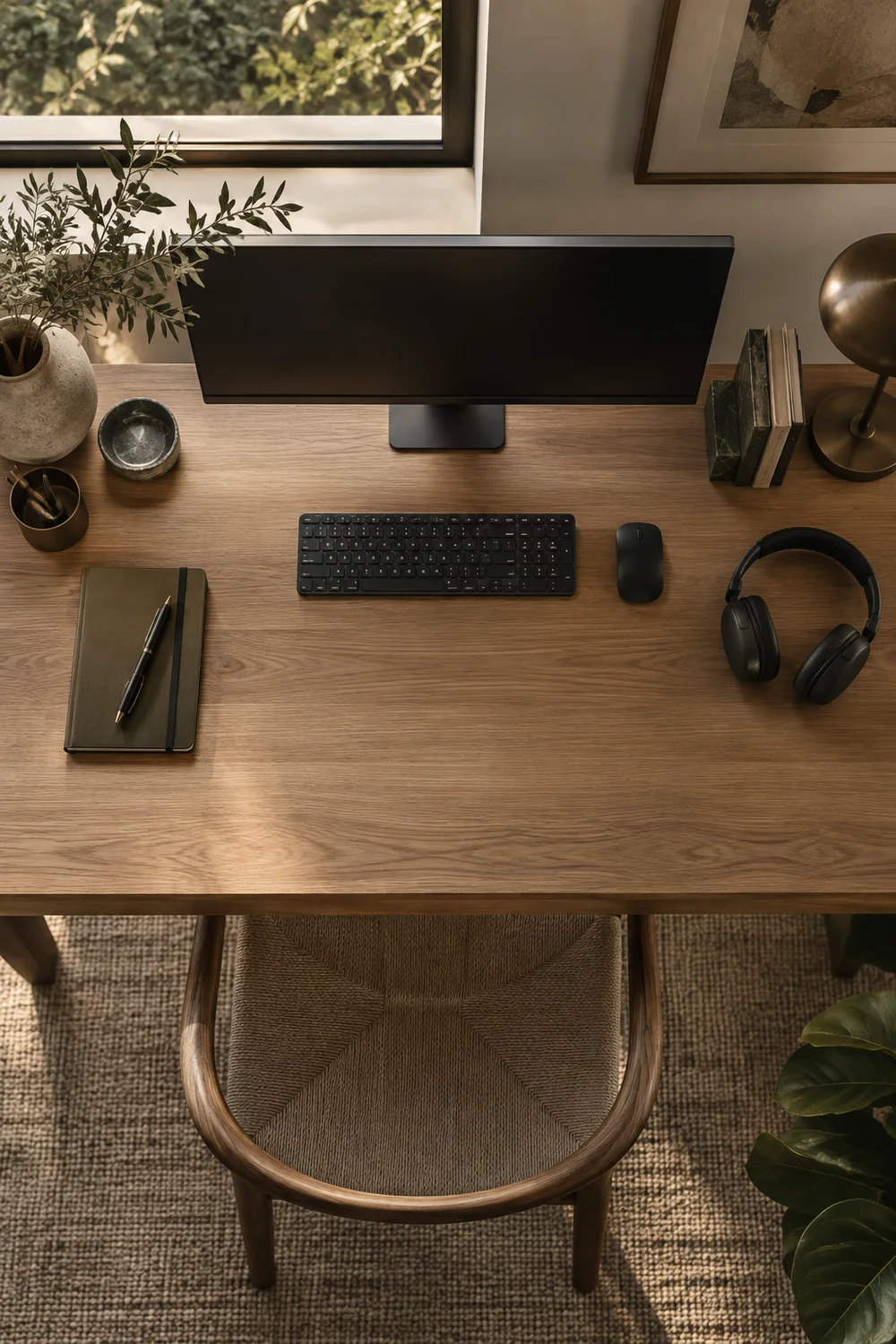
Measure the equipment itself. Note screen width, stand depth, keyboard, mouse area, lamp base and any audio device. Arrange them on an existing table and observe the clear space left for writing. This practical mockup gives a more reliable minimum than choosing a desk from a styled product image.
Think about work changing through the day. If you move between screen work and sketching, the surface may need a clear side zone. If calls are frequent, you may need space for a notebook without moving the keyboard. If the desk serves two people at different times, adjustable equipment matters more than extra decoration.
Include the objects that usually create clutter. Chargers, headphones, paper and a water glass all require a position. Decide which belong on the surface, in a drawer, on a nearby cabinet or on a wall shelf. The desk should not be expected to store the whole office.
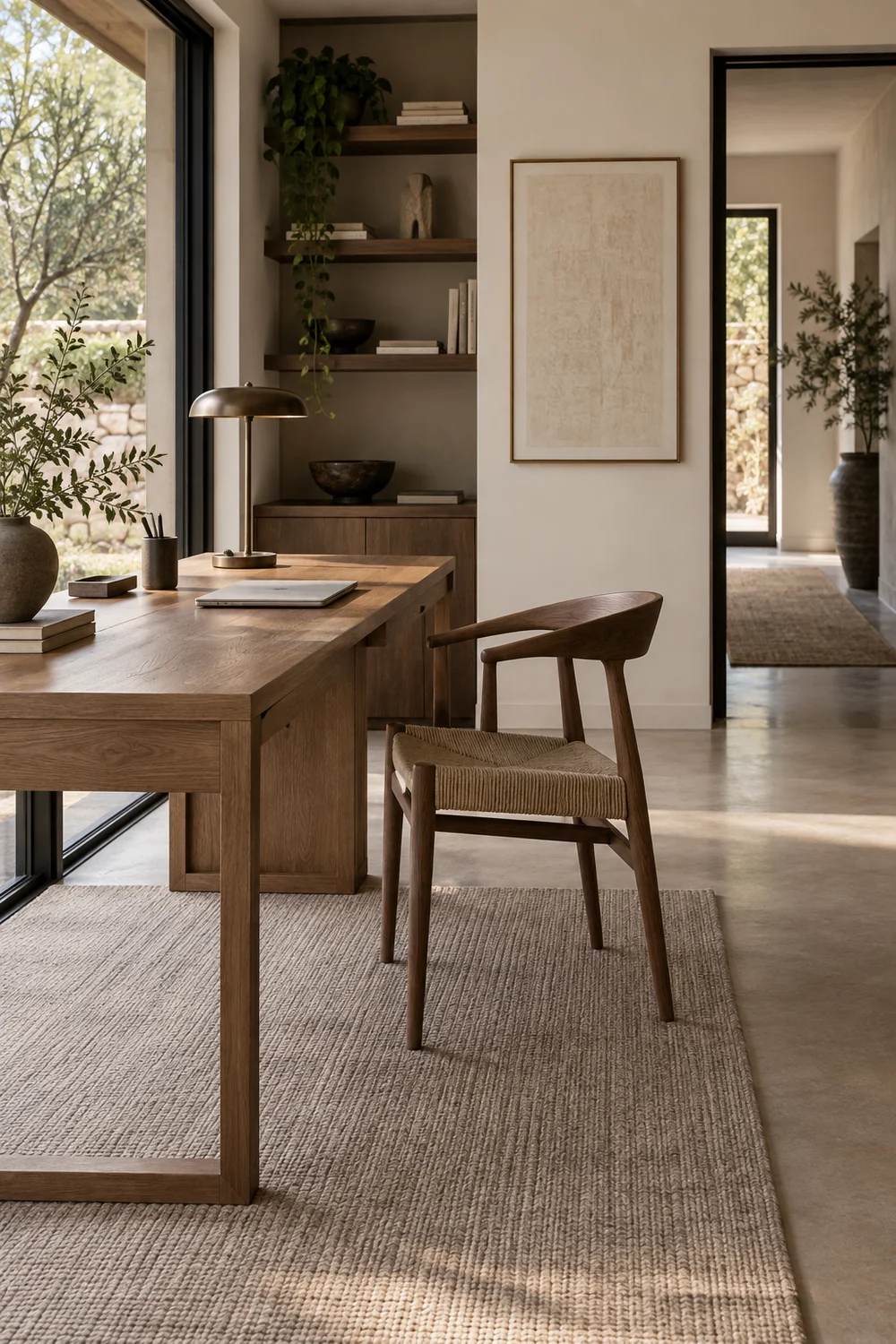
Finally, record any constraints set by the room: a narrow wall, low window, radiator, socket or door swing. Your choice must work inside those facts before its colour and edge profile are considered.
Photograph the taped footprint and equipment mockup. The image becomes a useful reference when comparing desks online or in a showroom and makes it harder to overlook a practical constraint.
Mark the proposed desk on the floor with tape. Add the chair in its working position and again when pulled back. Walk behind it, open nearby doors and reach any cabinets. This test reveals whether a desk that fits the wall also fits the movement of the room.
Width should follow the active equipment and the need for clear working space. More width can be useful, but an oversized desk may dominate a small room and invite piles. Choose enough surface for the real task and keep secondary storage elsewhere.
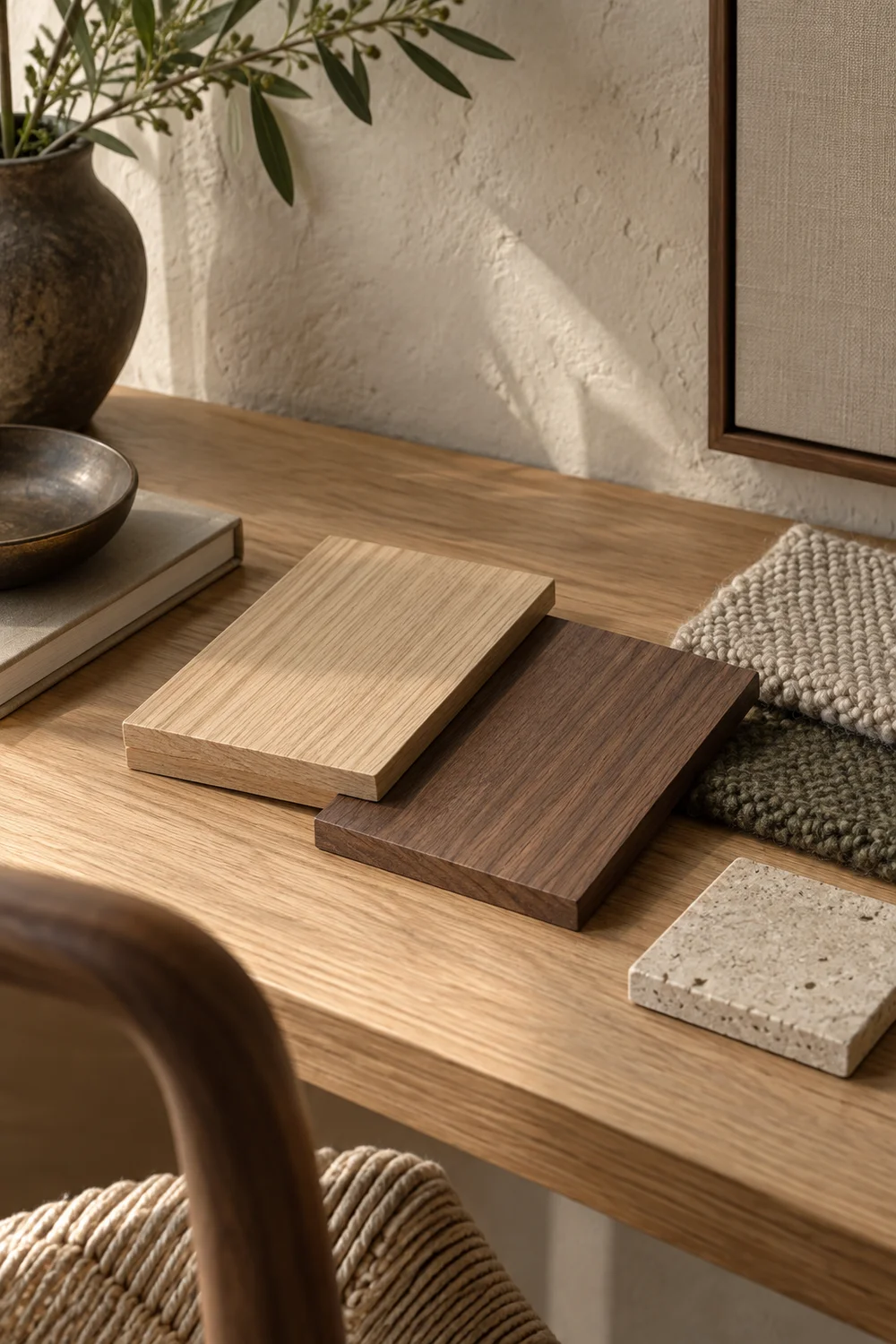
Depth is equally important. A shallow console can look elegant but may place a screen too close or leave no room between keyboard and edge. Test your equipment on a surface of similar depth. The Health and Safety Executive workstation guidance recommends arranging the screen and keyboard centrally and positioning equipment so the user can work comfortably without twisting.
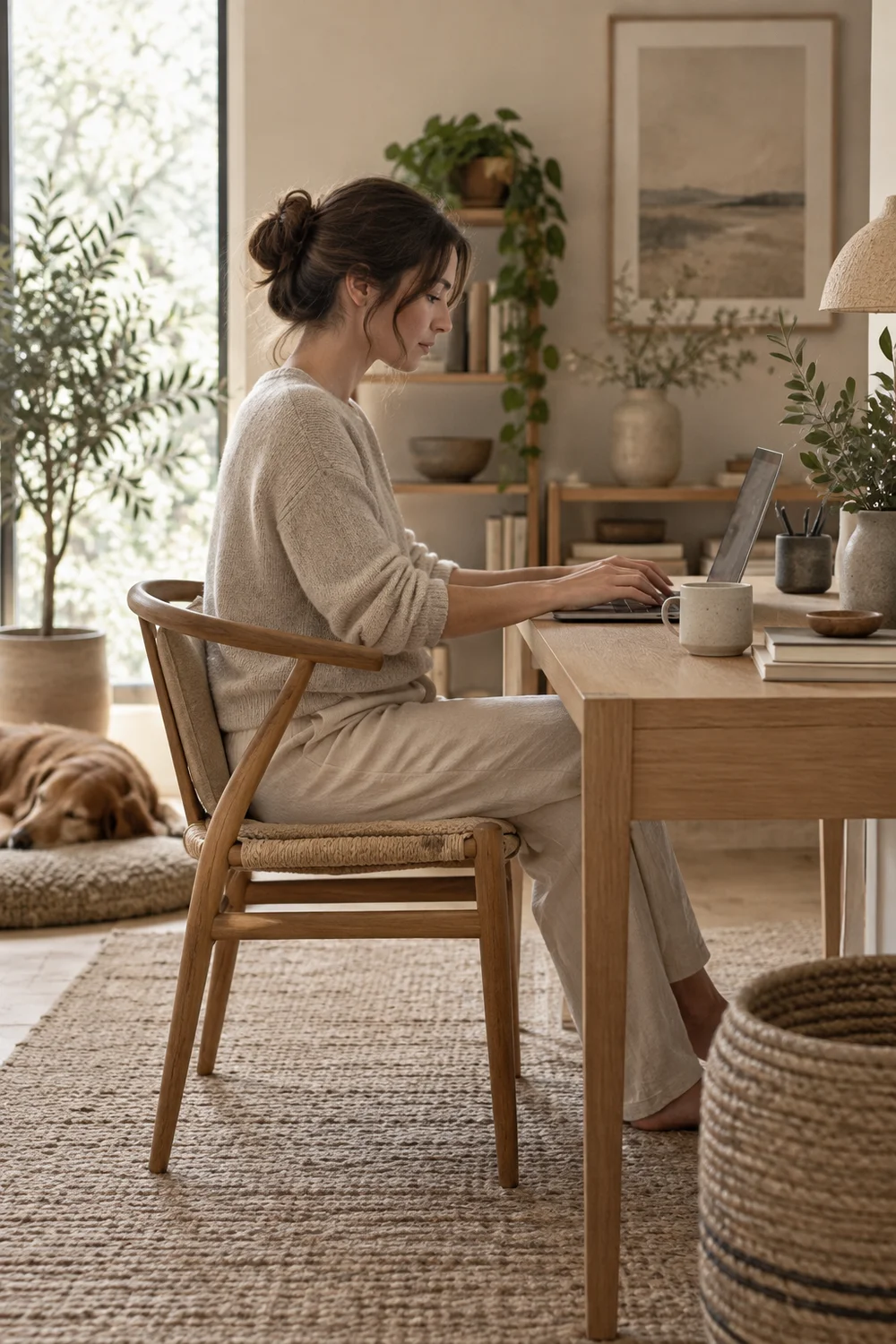
Check height with the intended chair. Furniture descriptions often provide a single dimension, but the relationship between seat, work surface, keyboard and user is what matters. Sit at a comparable table and notice whether shoulders remain relaxed and forearms feel supported. Individual needs differ, so adjustable seating and equipment can be more useful than chasing one universal number.
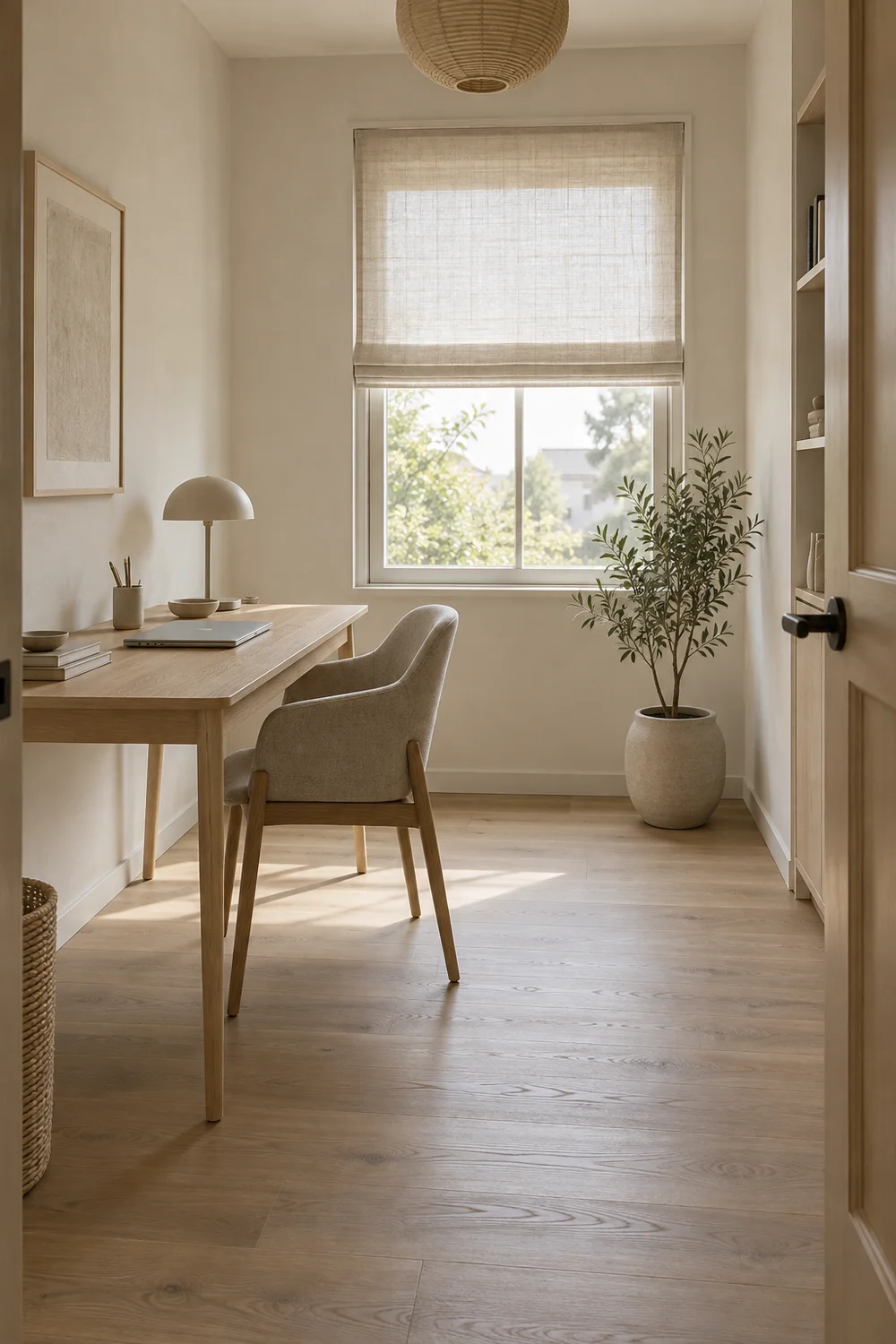
In a small room, a visually light desk can preserve openness. Slender legs, a modest top and visible floor help, provided the construction remains stable. In a larger room, a more substantial timber desk can anchor the composition without becoming a bulky executive statement.
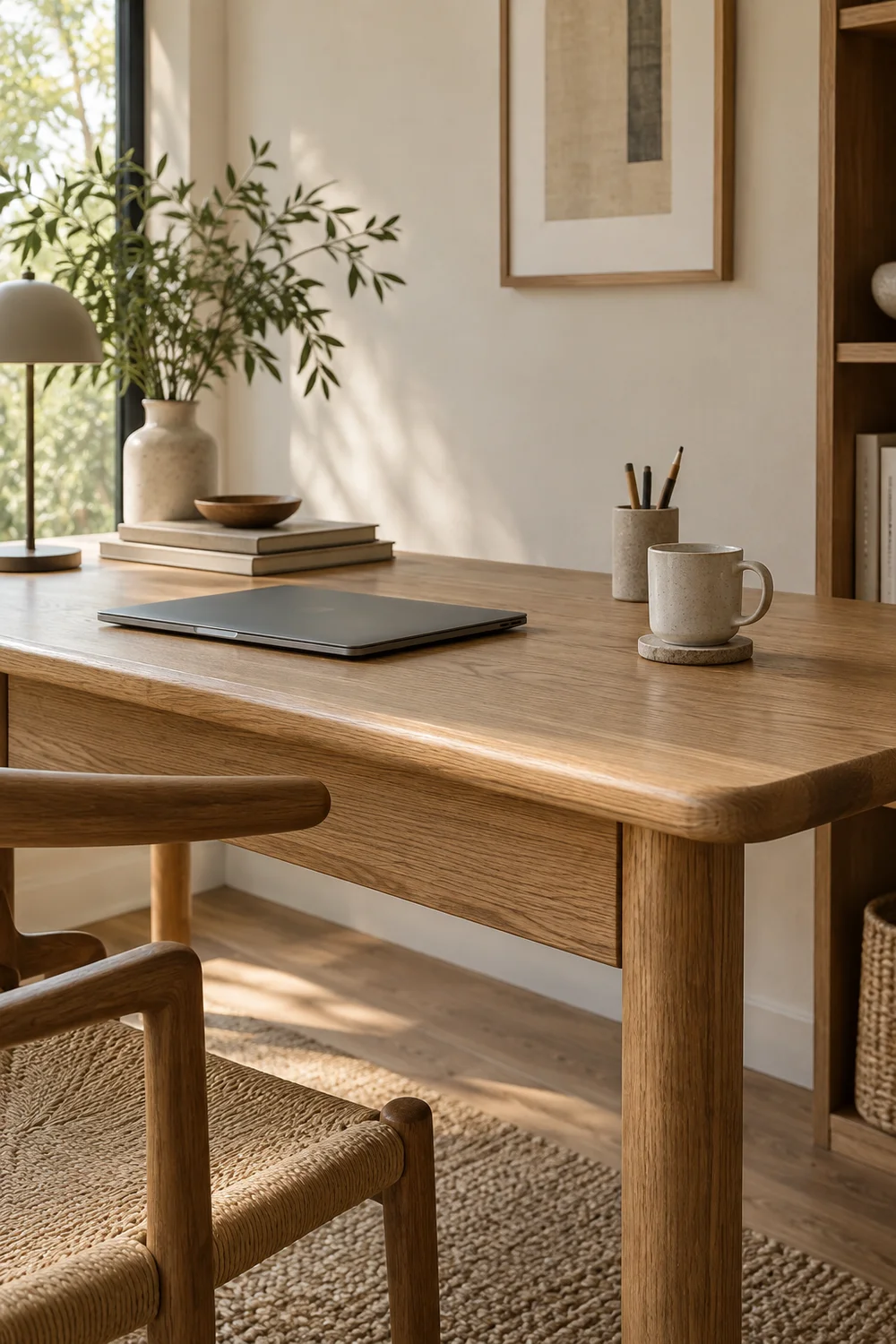
Timber gives a Japandi desk warmth and visible character. Pale oak creates an airy relationship with warm plaster and linen. Walnut adds depth and can suit a larger room or a scheme with darker accents. Ash and beech can also work when their tone relates to the floor and joinery.
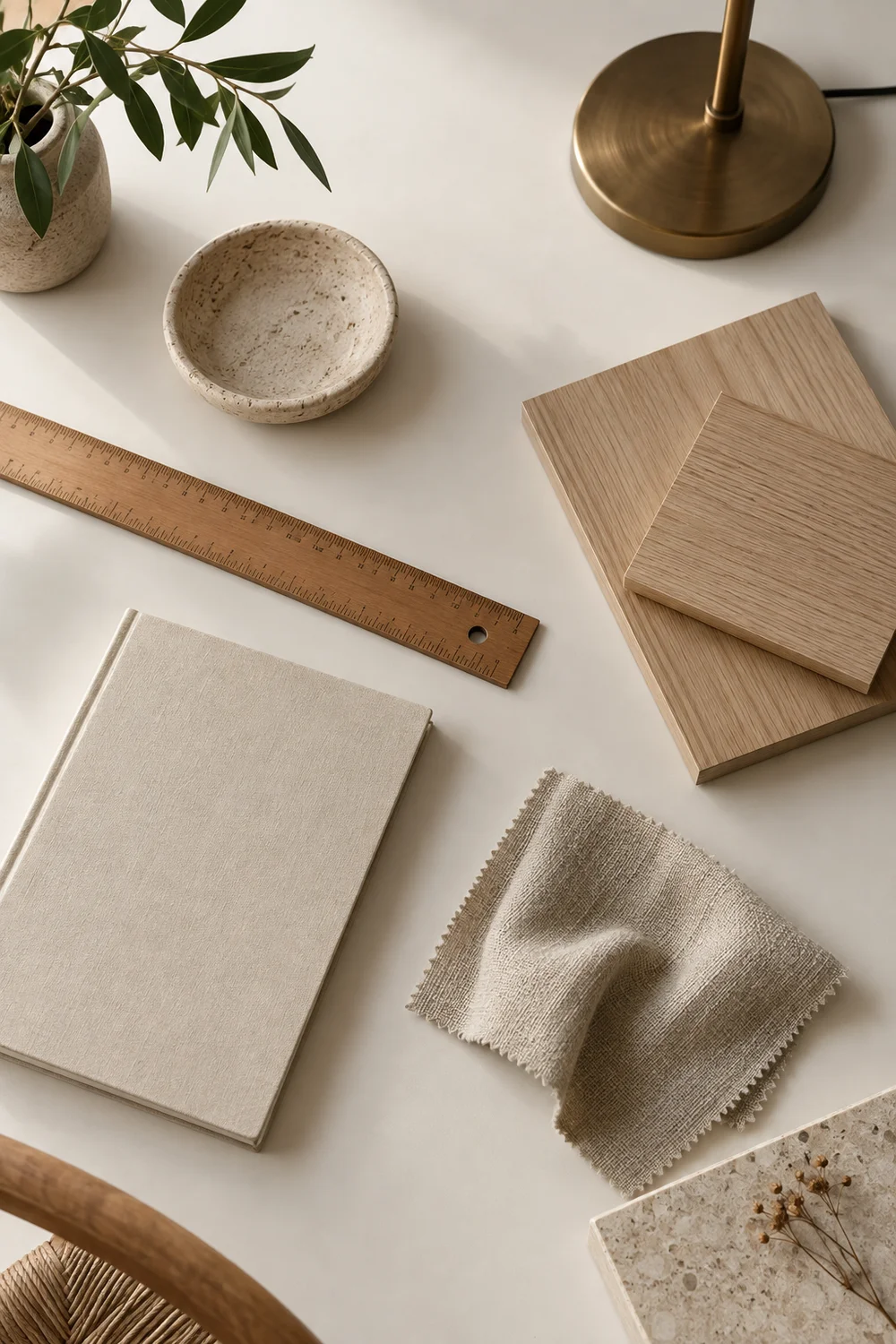
Compare samples in the room. View them beside the floor, wall and chair in morning and evening light. Exact matching is rarely necessary, but undertones should feel intentional. A slightly darker desk can create useful contrast against a pale timber floor. Several almost matching timbers can feel less resolved than one clear relationship.
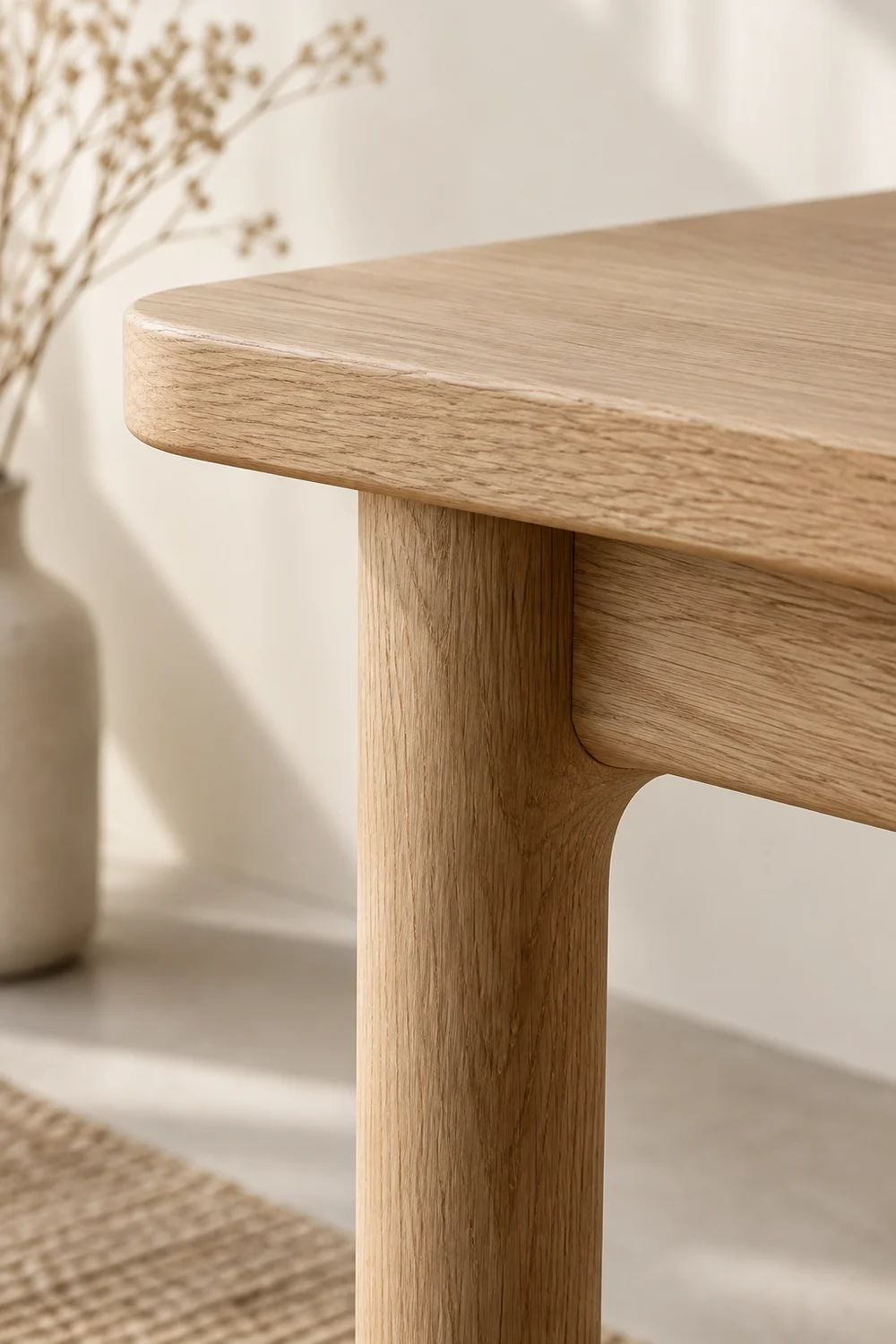
Look closely at the surface finish. A very glossy coating may reflect light and feel visually hard. A matte or softly sealed finish often reveals grain more naturally, but it still needs to tolerate the way the desk will be used. Check the maker’s care instructions, resistance claims and repair guidance rather than assuming every natural finish behaves the same.
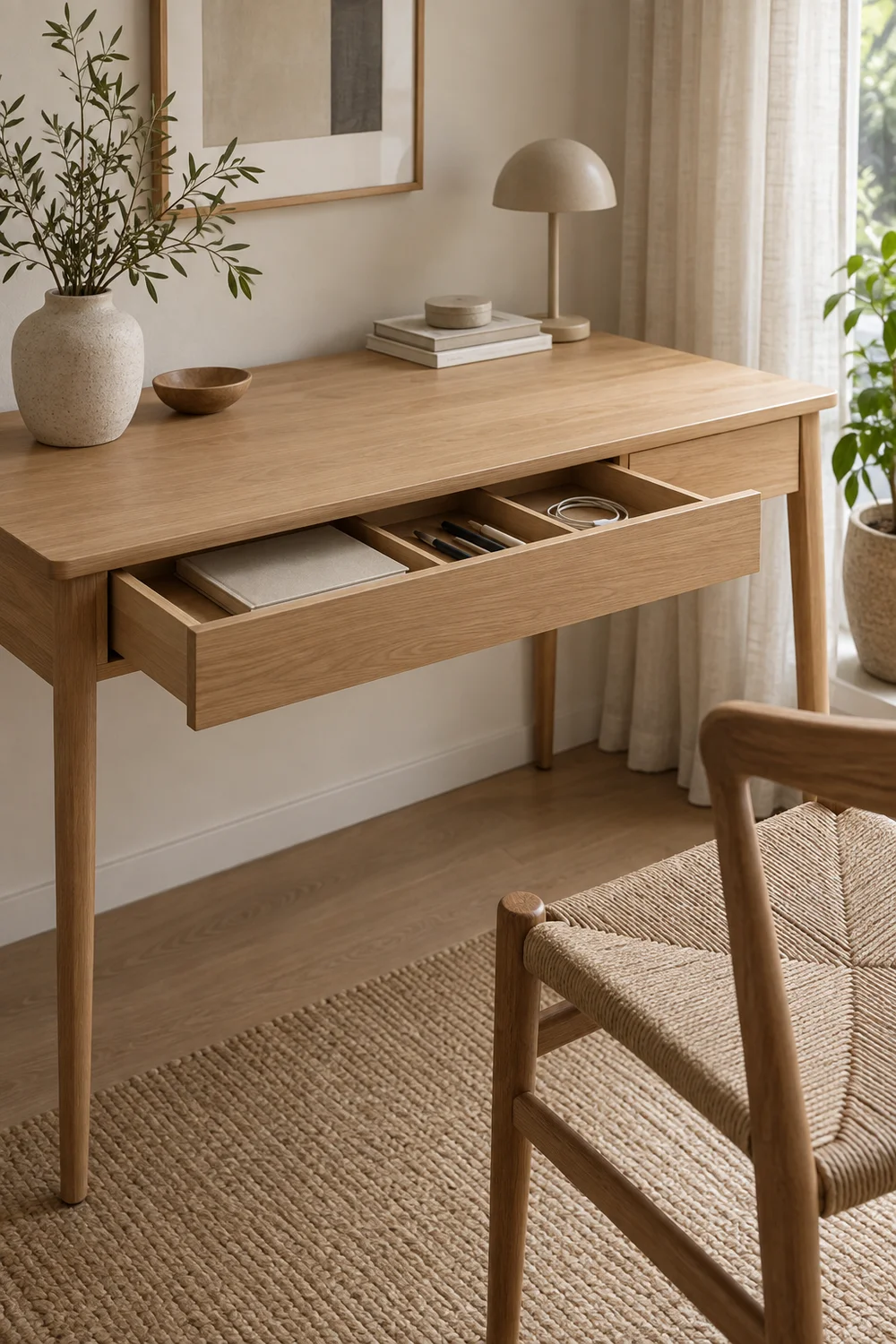
Inspect edges and corners. A gently softened edge can feel comfortable against the forearm, while a deep decorative profile may reduce usable space beneath. Rounded corners can ease movement in a tight room, especially when the desk sits near a route.
If choosing veneer, assess the construction rather than treating it as automatically inferior. A well made veneered surface can use timber efficiently and remain visually consistent. Solid timber can offer repair potential and weight, but quality varies. Joinery, substrate, finish and warranty all deserve attention.
A completely open desk feels light, yet it can force every small object onto the surface. A desk with many drawers may solve clutter but become visually heavy and restrict chair movement. Choose storage according to the items used during active work.
One shallow drawer can hold pens, a notebook and charging leads. A narrow side drawer may suit files. Deeper storage is often better placed in a separate cabinet, where it does not thicken the whole desk or reduce knee space.
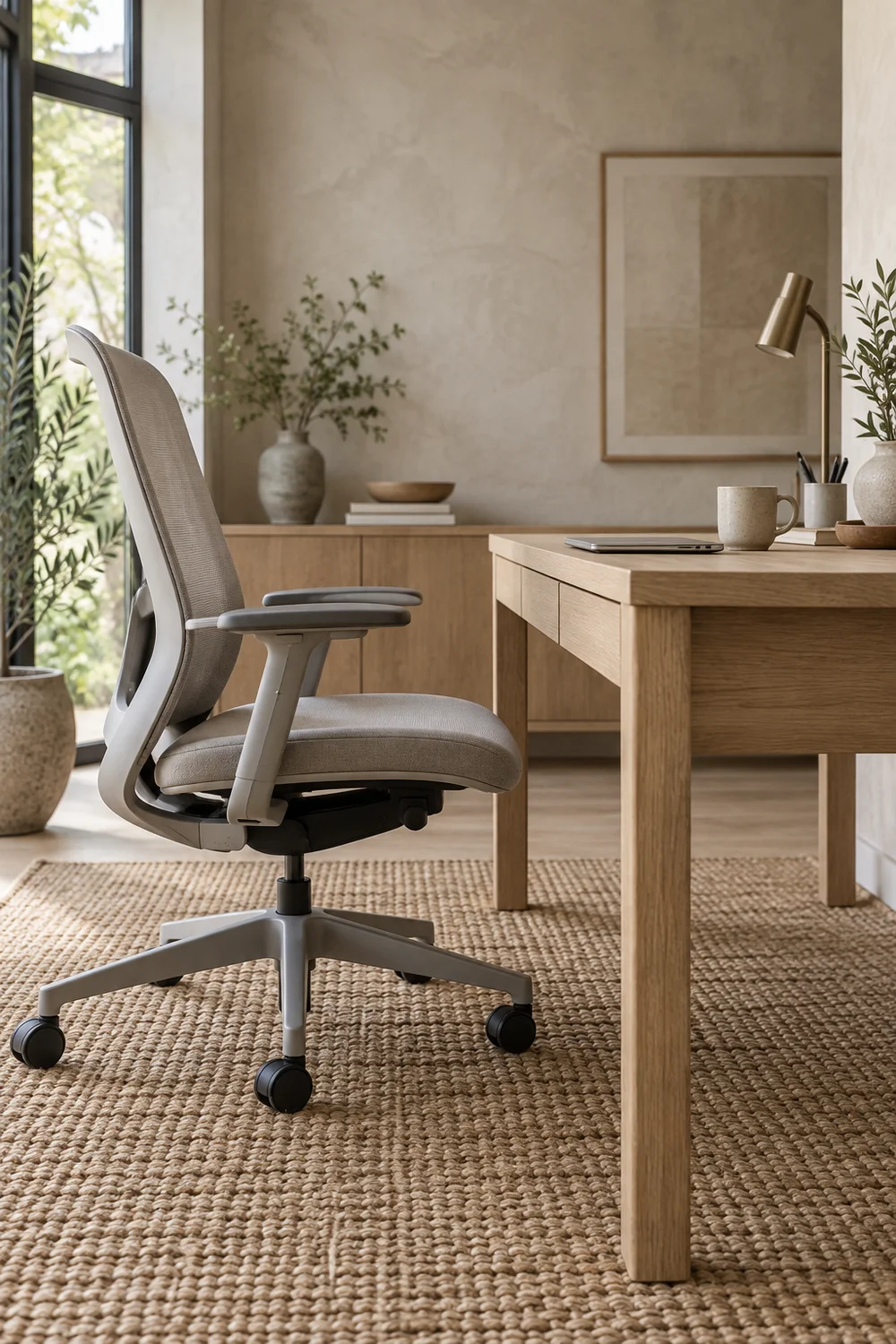
Check internal dimensions, not only the drawer front. Slides and construction reduce usable space. Make sure the drawer opens without meeting the chair arms or nearby wall. If the desk is used by more than one person, avoid a fixed pedestal that prevents the chair moving to the required position.
A small mobile cabinet can offer flexibility, but its castors and handles should be quiet in the composition. It must also have a planned parking place. Otherwise it becomes an obstacle beside the desk.
Open shelves built into the desk can display books, yet they often collect cables and loose paper. Use them only when the items are genuinely suited to being visible. For a broader storage strategy, return to the Japandi home office guide, which explains how closed cabinetry and selective shelves can balance the whole room.
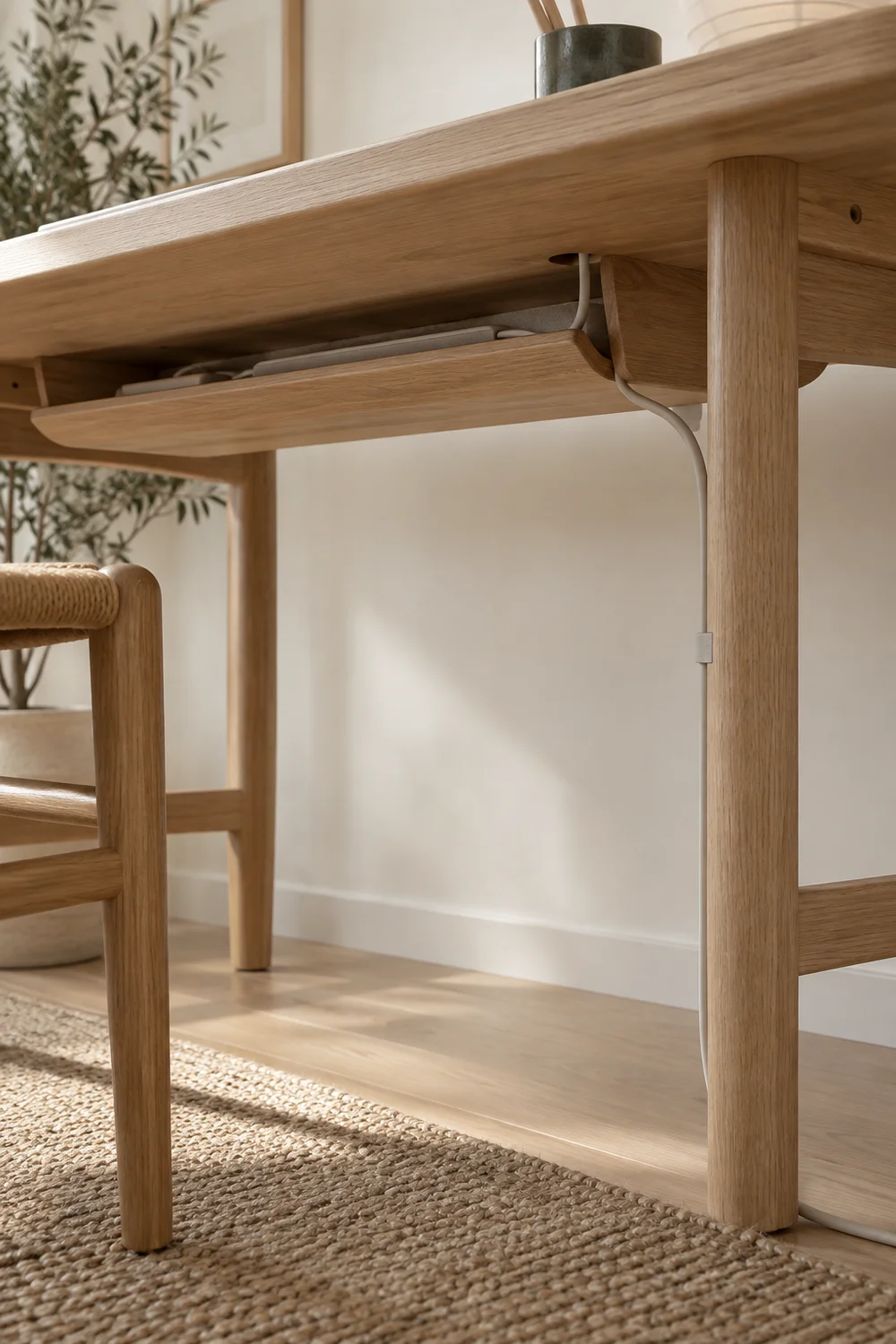
Study the area beneath the desktop. A deep apron, central drawer or cross brace can stop the chair moving close enough. Desk legs may also conflict with chair arms or the user’s knees. Product photographs rarely show these relationships clearly, so request full dimensions or inspect the desk in person.
Place the intended chair beside the measurements. Check its width, arm height, base and movement. The most beautiful desk will fail if the chair cannot approach it naturally. A supportive office chair can still belong in a Japandi room when its scale, upholstery and colour are chosen carefully.
Plan cables before purchase. Identify where power enters the room and where each device connects. A discreet tray beneath the back of the desk can hold adapters, while a simple route down one leg can keep wires away from feet. Avoid attaching a complex system until the equipment positions are final.
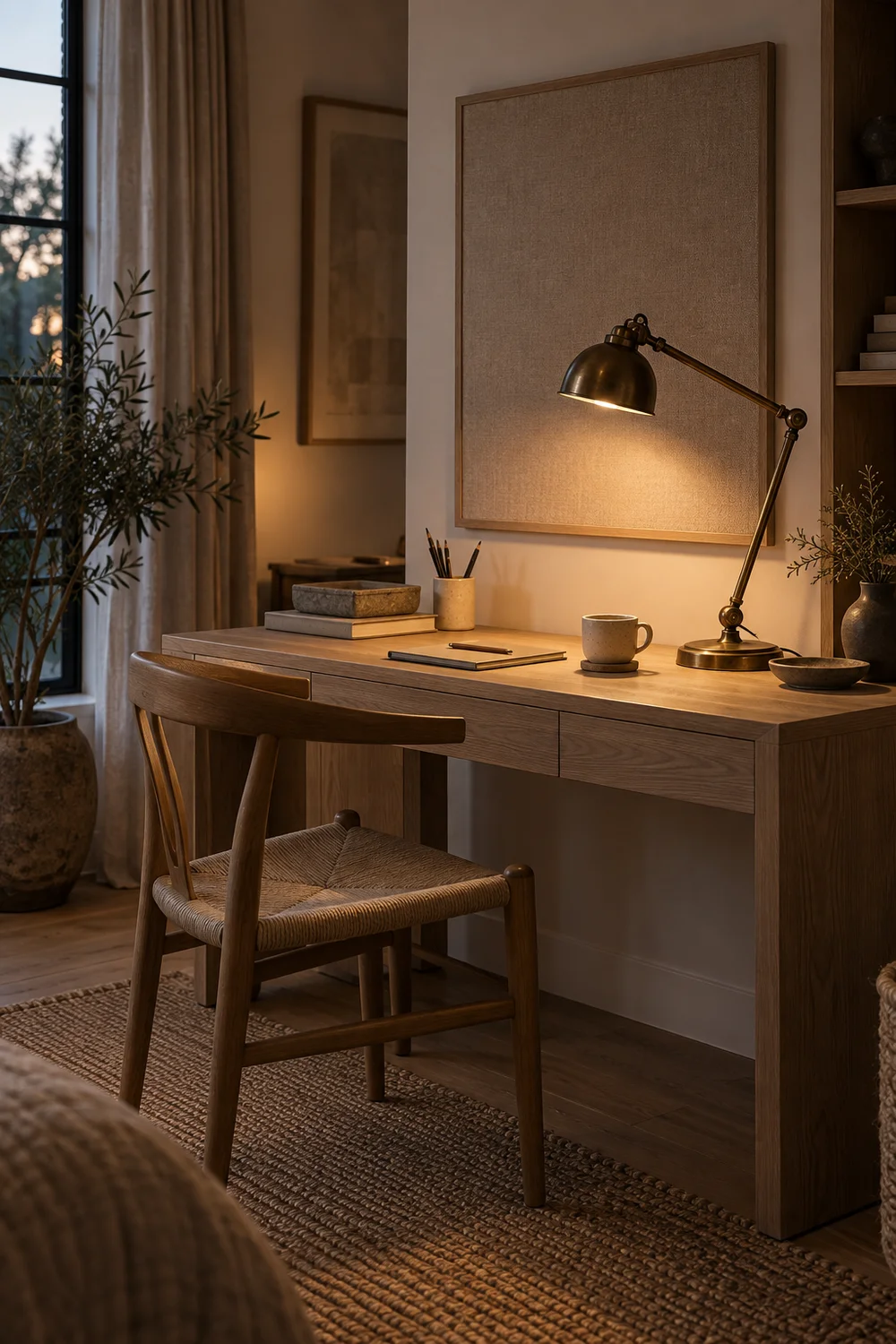
If the desk floats in the room, cable visibility becomes part of the design. A floor outlet may be possible during renovation, but it requires proper professional planning. In an existing room, a wall based desk or a planned route along the floor edge may be more honest and practical.
Leave ventilation and manufacturer clearances around powered equipment. Do not enclose adapters or devices simply to hide them. Calm design should make services orderly and safe, not invisible at any cost.
Choose the task lamp after establishing the desk and screen positions. The lamp should direct light onto reading and writing areas without creating glare on the display. An adjustable head and arm make it easier to respond to different tasks. The Health and Safety Executive lighting guidance advises controlling glare through position, blinds and suitable local lighting.
Use the lamp as a controlled accent. A dark bronze, charcoal or ceramic base can define a pale oak desk. Avoid an oversized shade that blocks the view or occupies the writing area.
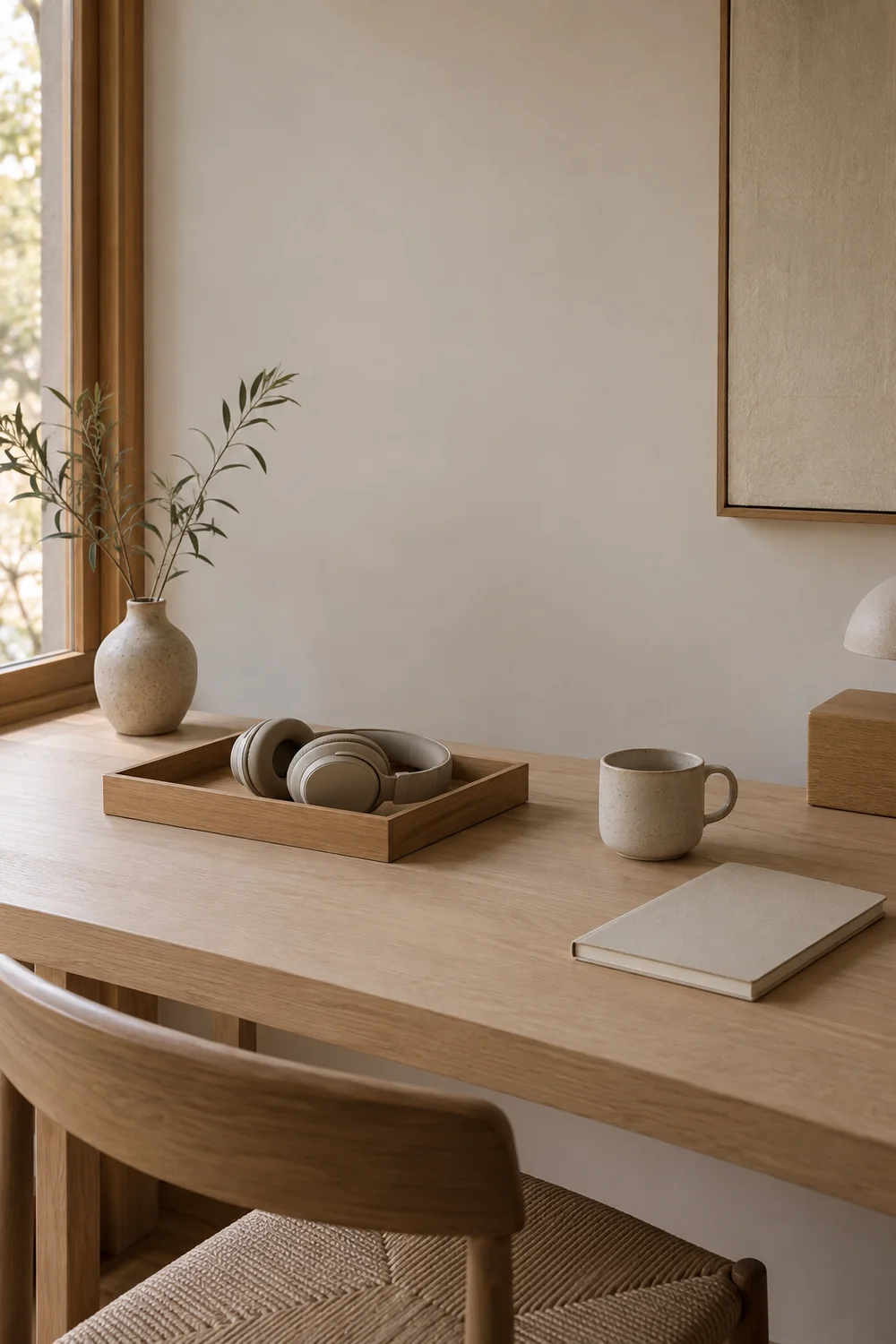
Keep the everyday setup limited. A tray can group a notebook and headphones. A ceramic cup can hold essential pens. One small object or branch can add life, but the central work area should remain open. If accessories continuously migrate onto the desk, the storage plan needs adjustment.
Position art in relation to the seated view. A single calm piece can provide a visual resting point without filling the wall. Shelves above the desk should be high and secure enough not to feel oppressive, and their contents should remain easy to reach safely.
For a whole room plan that resolves desk position, circulation and storage before buying, use the Japandi study room guide. The desk setup should complete that plan rather than compensate for an unresolved layout.
Before ordering, review how the desk is built and delivered. Check overall weight, access through doors and stairs, assembly requirements and whether the top separates from the base. A large solid desk is not useful if it cannot reach the room.
Look for clear information about materials, finish and care. Ask how spills should be treated, whether the surface can be repaired and what the warranty covers. If sustainability claims matter to you, look for specific evidence from the maker rather than relying on broad natural or eco language.
Inspect stability. Long spans may need support, and slim legs must still resist movement during typing or drawing. Reviews can reveal repeated issues, but direct testing is better when possible. Lean gently, open drawers and sit with the intended equipment arrangement.
Confirm returns and damage procedures before delivery. Timber tone and grain vary, and a desk can feel different in scale once it enters the room. Photograph packaging and any damage immediately, following the retailer’s process.
Budget for the complete working setup, not only the desk. Chair, lamp, cable control and nearby storage may affect comfort more than a decorative upgrade to the desktop. Protect funds for the elements that support daily use.
Ask how the desk will be carried into its final position and who is responsible for assembly. Measure the narrowest doorway, stair turn and landing, then compare those dimensions with every packaged component. If the top is especially heavy, confirm that two people can lift it without risking the walls or floor. Check whether adjustments can be made after assembly, since an uneven floor may require discreet levelling. A sample return policy is also useful when timber colour is central to the room. Keep the order confirmation, finish name and care instructions together so future repairs or matching storage do not depend on memory. These practical checks protect the calm result because the desk arrives, fits and settles into the room as intended.
Return to the original task list and verify that the desk supports every frequent activity. Confirm width, depth, height relationship, chair approach, knee space, drawer movement and cable route. Check the marked footprint in the room one final time.
Compare the timber and finish with physical samples where possible. View them under the room’s daylight and evening light. Confirm that the surface care suits your habits and that delivery access is realistic.
Then edit the accessories before buying them. Select only the task lamp, tray and organiser that solve known needs. Leave space for the room to develop through use. A calm setup is easier to maintain when every object has a purpose and a home.
The right Japandi desk does not need to be visually dramatic. It should fit the work, protect circulation, relate naturally to the room and make a clear surface easy to restore. When those conditions are met, timber, restrained detail and thoughtful lighting can provide the quiet character associated with Japandi design. Choose slowly, test the relationships and let function create the calm.