Newsletter Subscribe
Enter your email address below and subscribe to our newsletter

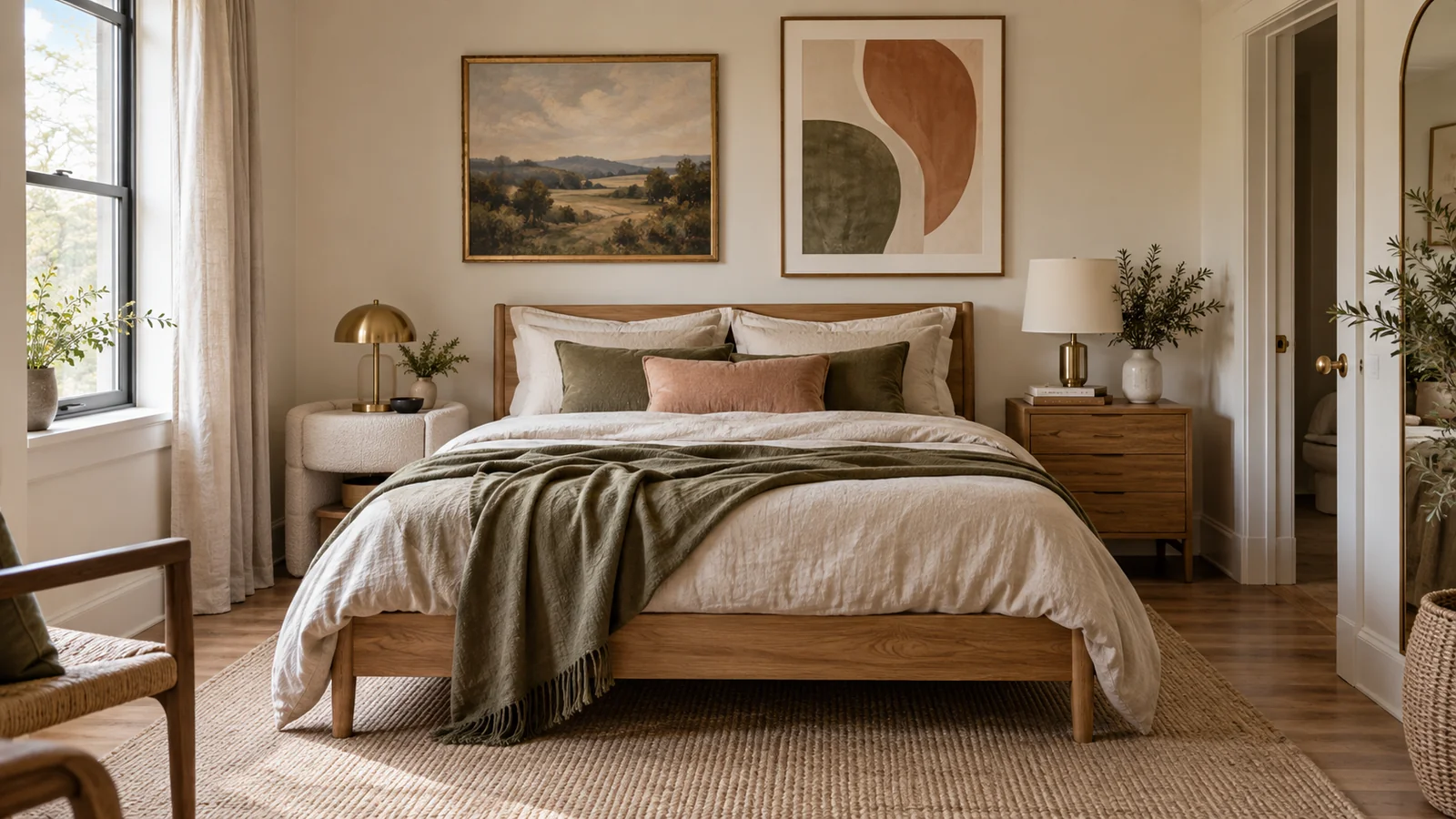
Modern bedroom ideas for newlyweds are most useful when they help two people make one room together. You may already own a bed, lamps, drawers and textiles that worked perfectly well in separate spaces. Bringing them into one bedroom changes the question from what looks good on its own to what deserves space now. Before buying a matching set, decide what each person needs to do beside the bed, what both people want to keep and which pieces make the room feel shared. This guide gives you a practical way to combine two tastes, edit the furniture and test the result. It assumes a compact room as a useful planning exercise, but the same decisions work in a larger bedroom.
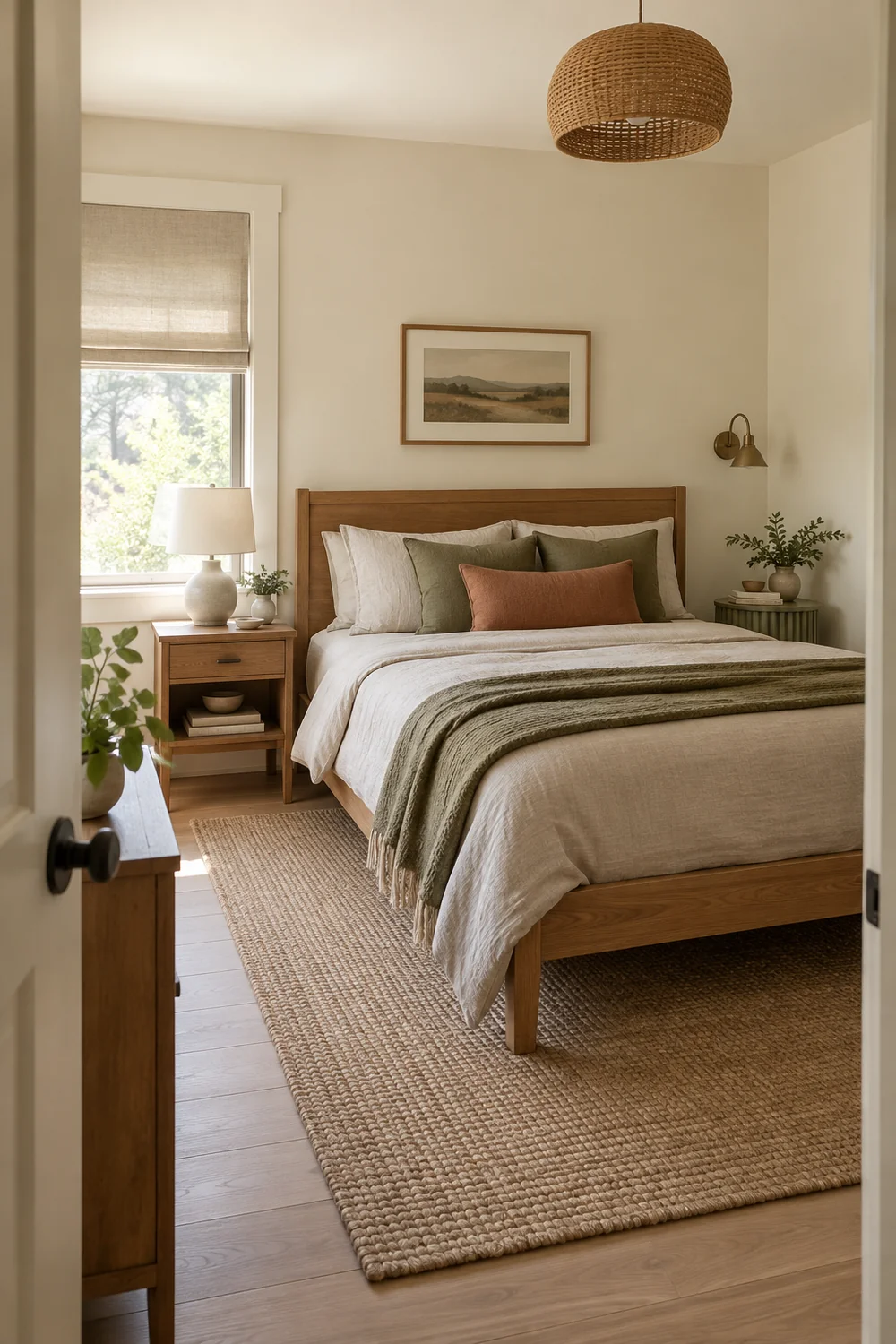
Begin with two independent lists rather than a shared inspiration board. Each person should write down three things they like seeing in a bedroom, three things they use every day and one thing they do not want to repeat from a previous room. Keep the answers concrete. Warm timber, an uncluttered floor, a reading light and a place for a water glass can be discussed. Words such as luxurious or cozy need a visual example before they can guide a purchase. If your starting points feel far apart, use modern bedroom ideas to identify actual shapes, materials and arrangements you can both point to.
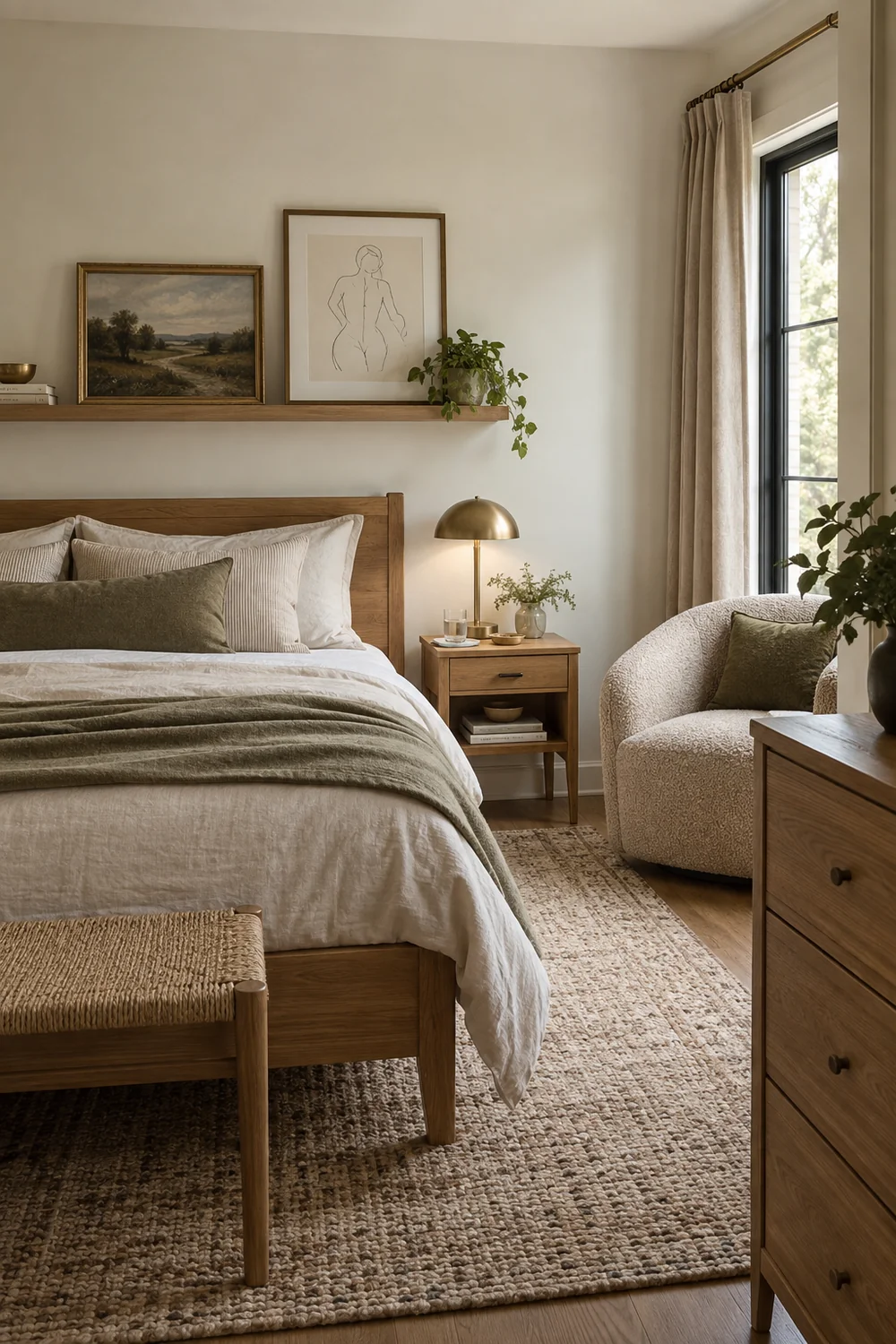
Compare the lists by function first. One person may like a tall upholstered headboard for softness while the other wants clean modern lines. A simple bed with a padded headboard could satisfy both needs without copying either previous room. The object is to find the shared reason behind a preference, then make a new choice. Do not ask one person to approve a complete scheme invented by the other. Instead, give each person ownership of one decision and make the decisions together where they affect both sides of the room.
Take photographs of the existing room and the pieces you own. Put the images next to a rough room sketch and circle what you both want to retain. A disagreement that sounds like a colour argument may really concern scale or storage. For example, a dark chest may seem too heavy only because it sits next to a low bed under a short window. Moving it to a different wall or replacing its handles can change the effect. Record the specific objection before discarding something useful.
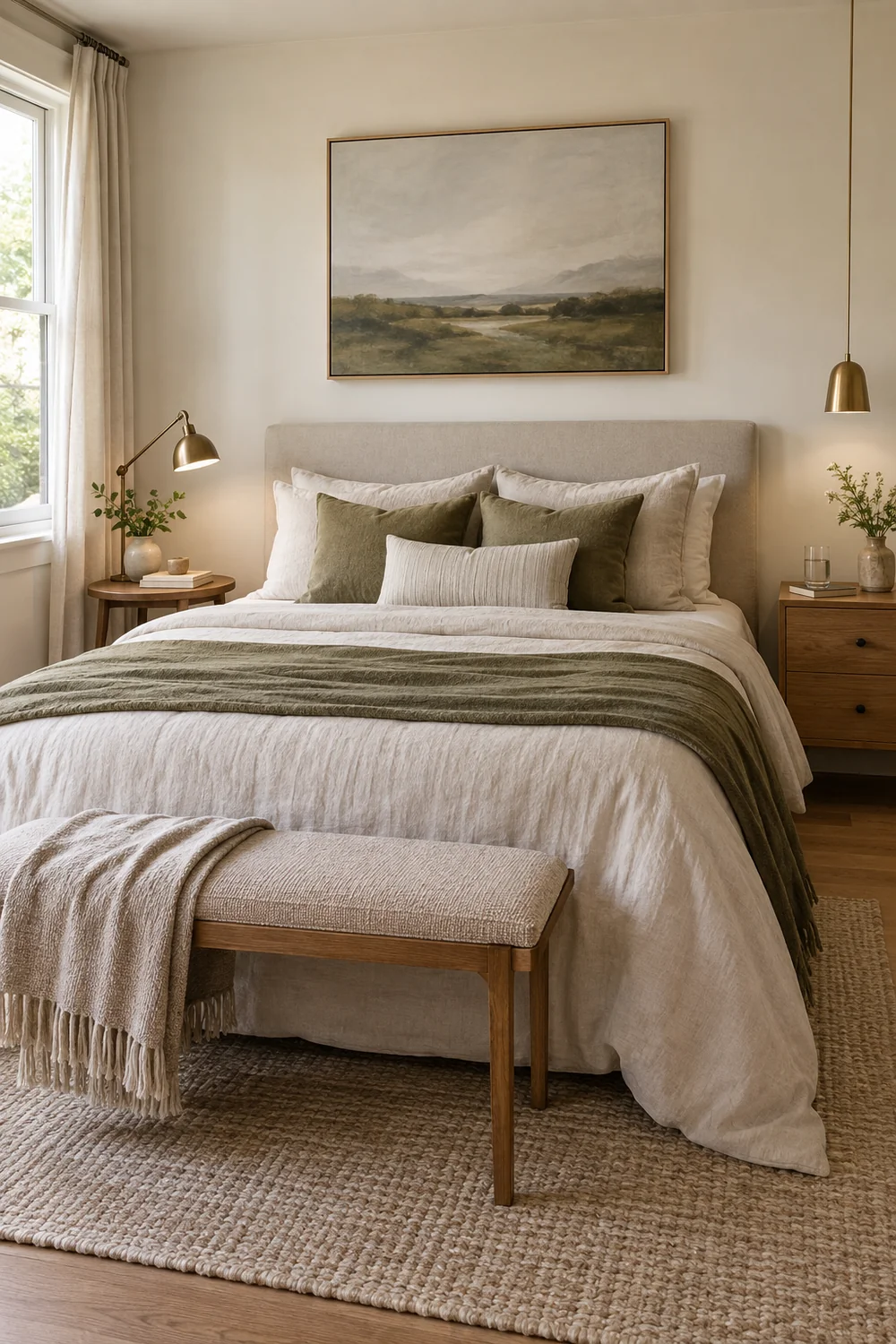
End this first conversation with a short written brief: the room should feel light in daylight, the bed should be easy to reach from both sides, and both people need a useful bedside surface. Your brief can be different, but it must describe observable outcomes. Keep it visible while planning. It gives you a fair way to judge later choices when an attractive photograph or sale tempts you away from the shared goal.
List every substantial piece either person wants to bring in. Mark it keep, trial or release. Keep means the item has a clear job, a plausible position and an owner who still likes it. Trial means the function is useful but the dimensions or finish may not work in the combined room. Release means the piece duplicates another or blocks a better use of space. Make these labels provisional until you have measured the room. The decision is about what works now, not whose original purchase was more valuable.
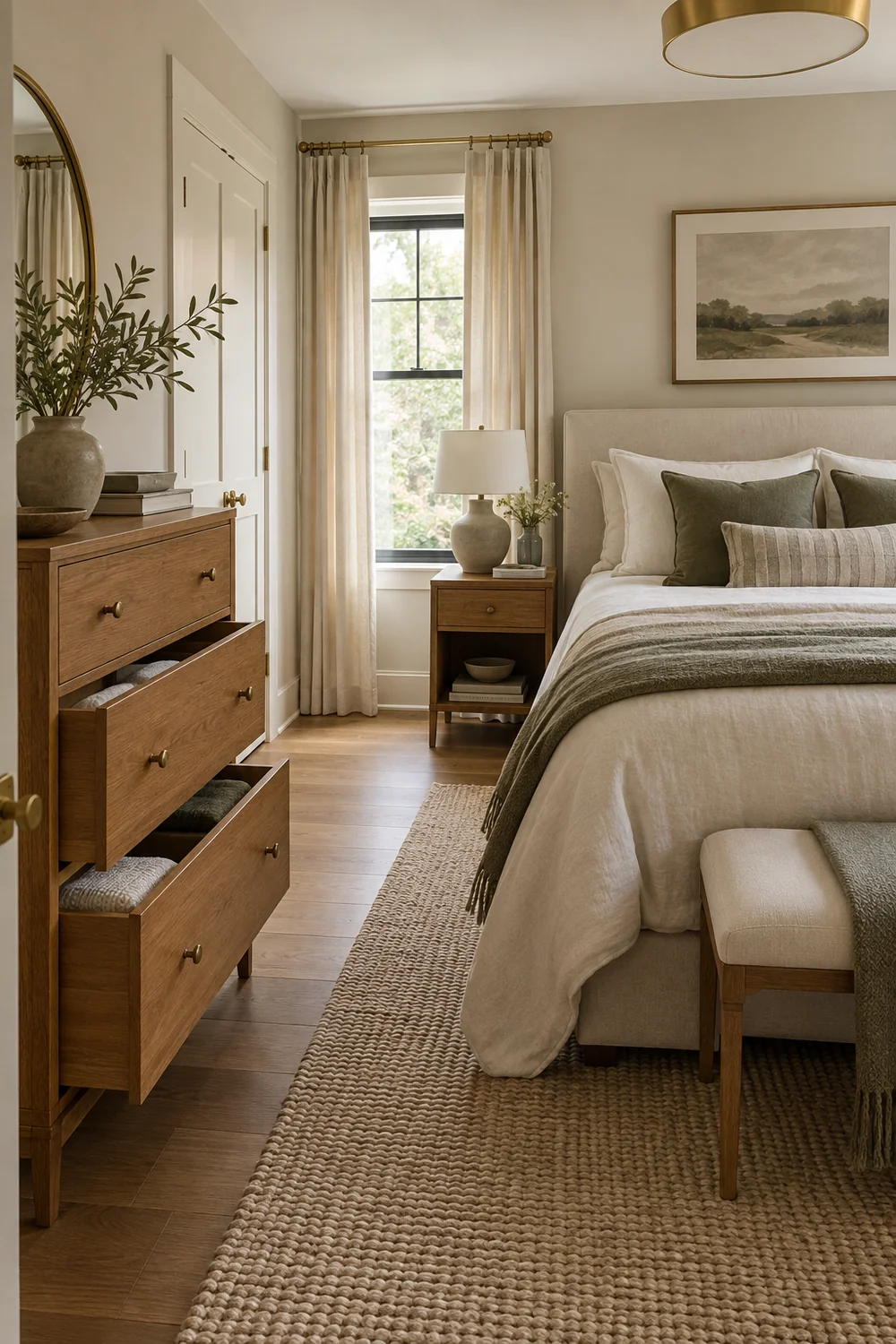
Treat duplicates as alternatives, not automatic waste. Two bedside tables may both be useful even if they do not match. Two wide chests may leave no room for a comfortable route to the bed. Compare capacity, footprint, drawer travel and condition before choosing. If a tall narrow chest stores the same daily clothing as a wide low one while leaving more floor clear, it might serve the shared room better. The small bedroom ideas for couples layout guide shows how to test kept furniture with both walking routes and open drawers.
Do not buy a replacement merely because the pieces are visually different. First put the chosen items in the room or outline their footprints on the floor. Live with the arrangement for several ordinary mornings and evenings. Notice whether one person can reach a drawer while the other passes, where clothes collect and whether a table needs a different height. Those observations are a better buying brief than a product photograph. If a piece fails, write down the exact dimension or feature that would solve the problem.
Be careful with sentimental pieces. A lamp, photograph or blanket may matter to one person far more than its size suggests. Give it a deliberate place if it belongs in the room, rather than hiding it in a crowded corner. If both people bring meaningful objects, choose a limited number to display now and store or rotate the rest. A shared room should show both histories while still leaving space for new experiences together.
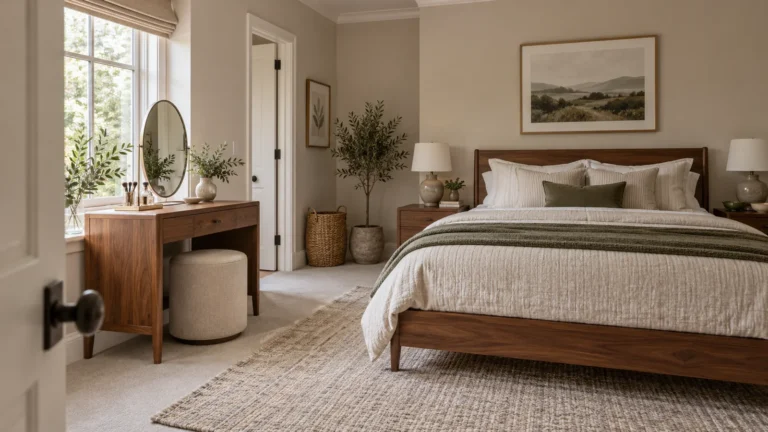
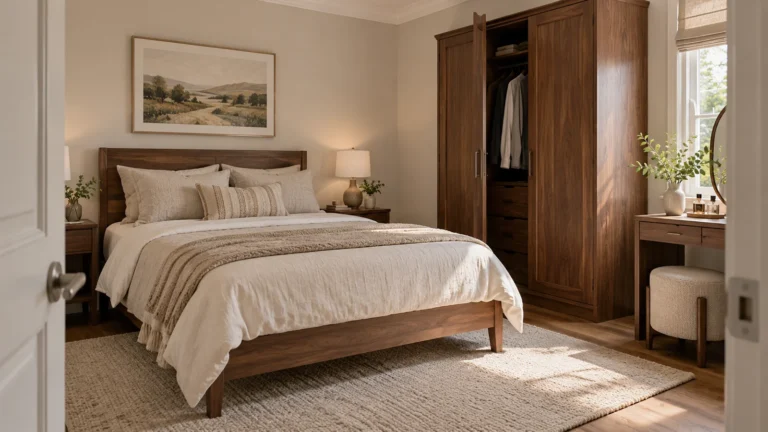
Build the colour direction from the pieces you have decided to keep. Lay a sample of the dominant timber, upholstery or rug beside two base colours and one small accent. In a compact room, a warm ivory wall and stone coloured bedding can make different furniture feel related without requiring every finish to match. Clay or muted olive can appear in cushions, a print or a small chair rather than on every surface. This is a design suggestion, not a rule about what newlyweds should like.
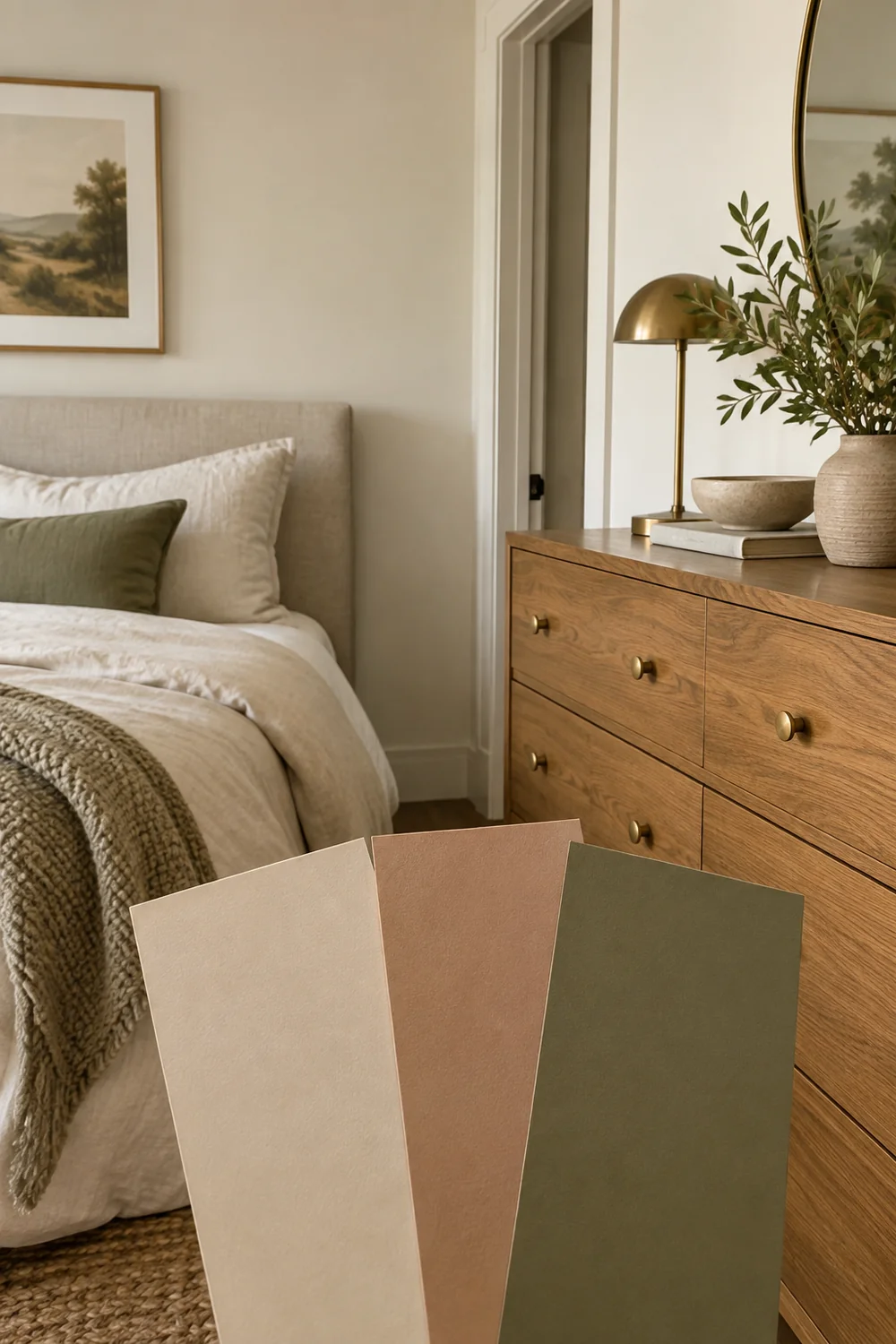
Choose a palette by daylight and by the lamps you actually use. A paint card can look very different beside a warm wooden chest than it does on a phone screen. Move sample boards between the bed wall and the window wall and look at them at the hours when you use the room. If you decide that quiet neutrals are your shared language, modern neutral bedroom ideas show how wood tones and tactile layers can give that choice warmth. Keep the next decision here focused on what both of you want to see.
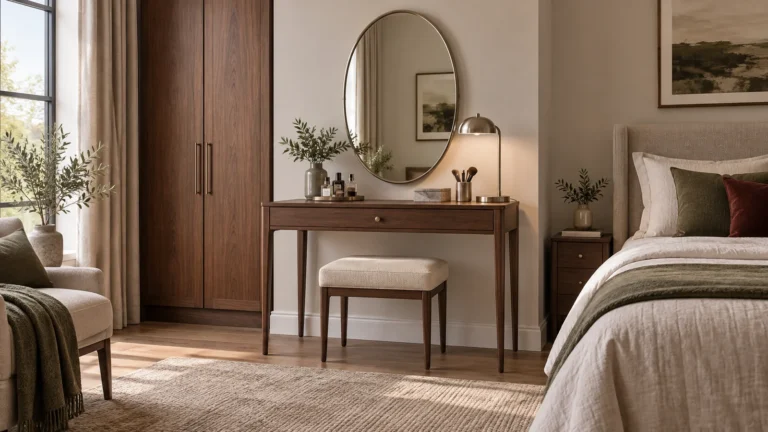
Let one person introduce a strong accent and the other choose where it goes. A favourite deep green may work beautifully in a framed print or throw without dominating the wall colour. The same method works for a patterned textile. Test the print with the existing furniture and the bed linen, then repeat one of its quieter colours elsewhere. That repetition makes two different tastes look intentional. It also creates a clear stopping point: when the accent is already visible in two places, you do not need another object in the same colour.
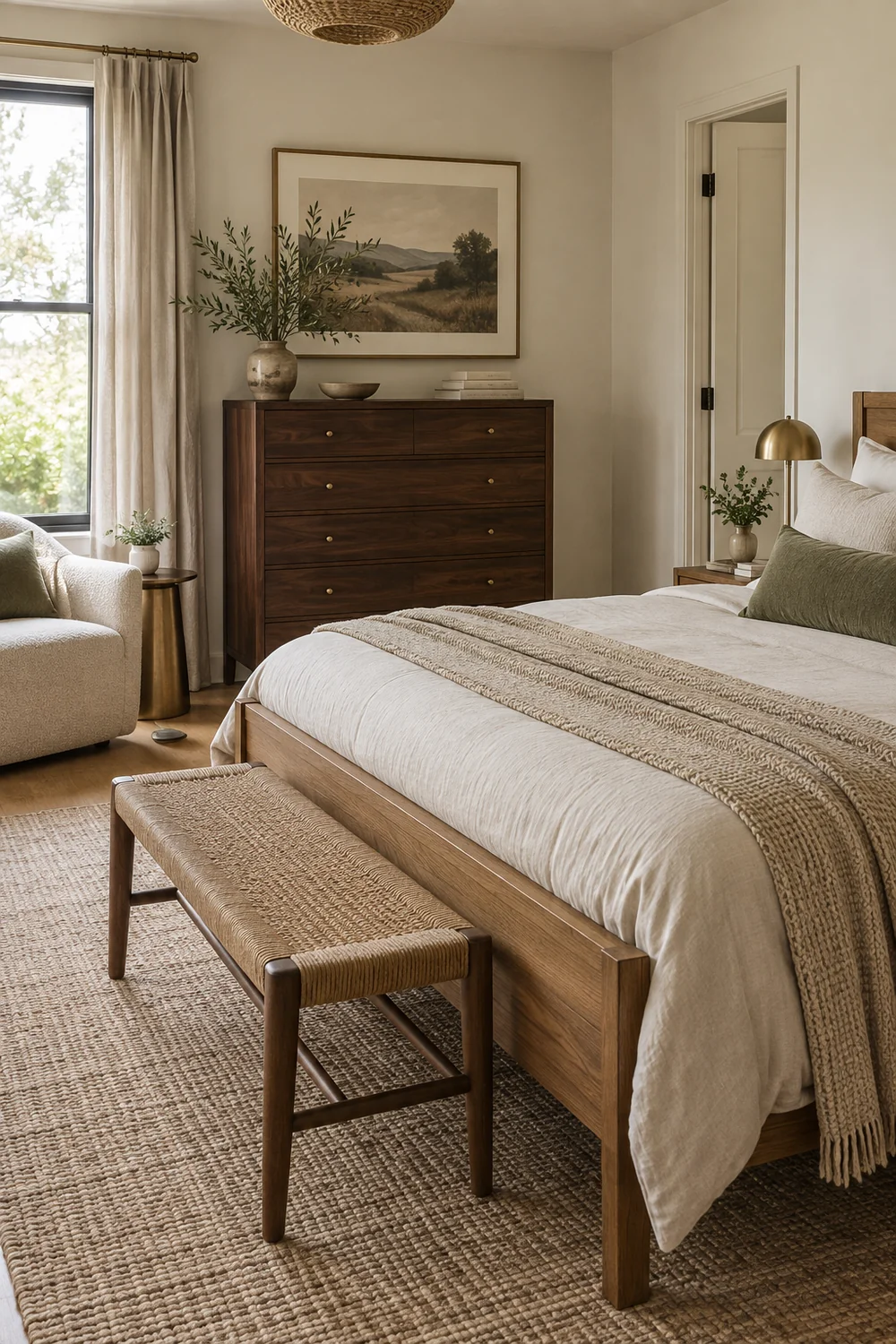
Avoid settling a disagreement by defaulting to plain white everywhere. A white room can be lovely when both people choose it; as a truce, it often postpones the real choices. Ask which textures, contrasts and materials each person wants to touch and live with. A pale wall, oak, woven linen and a single clay vessel make a more specific proposal than an instruction to make the room neutral. Photograph the samples together before ordering any large finish.
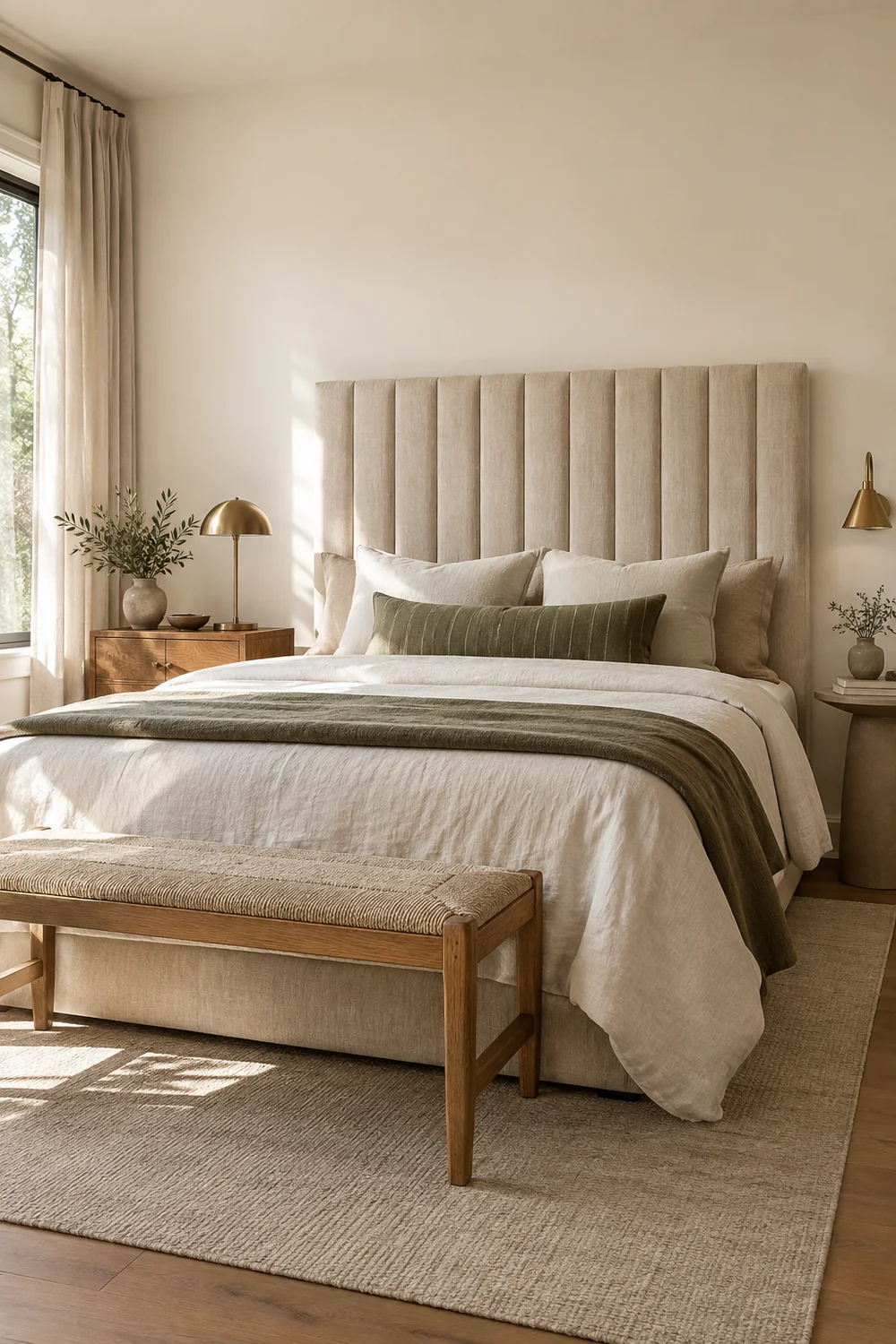
The bed wall is usually the first place where the two styles meet. Decide whether the main statement will be the headboard, art, wall colour or lighting. Choosing one focal point helps you avoid buying a prominent version of all four. If you already own a substantial headboard, let it lead and keep the surrounding wall quiet. If the bed is visually simple, a larger work of art or restrained wall treatment can provide the missing structure.
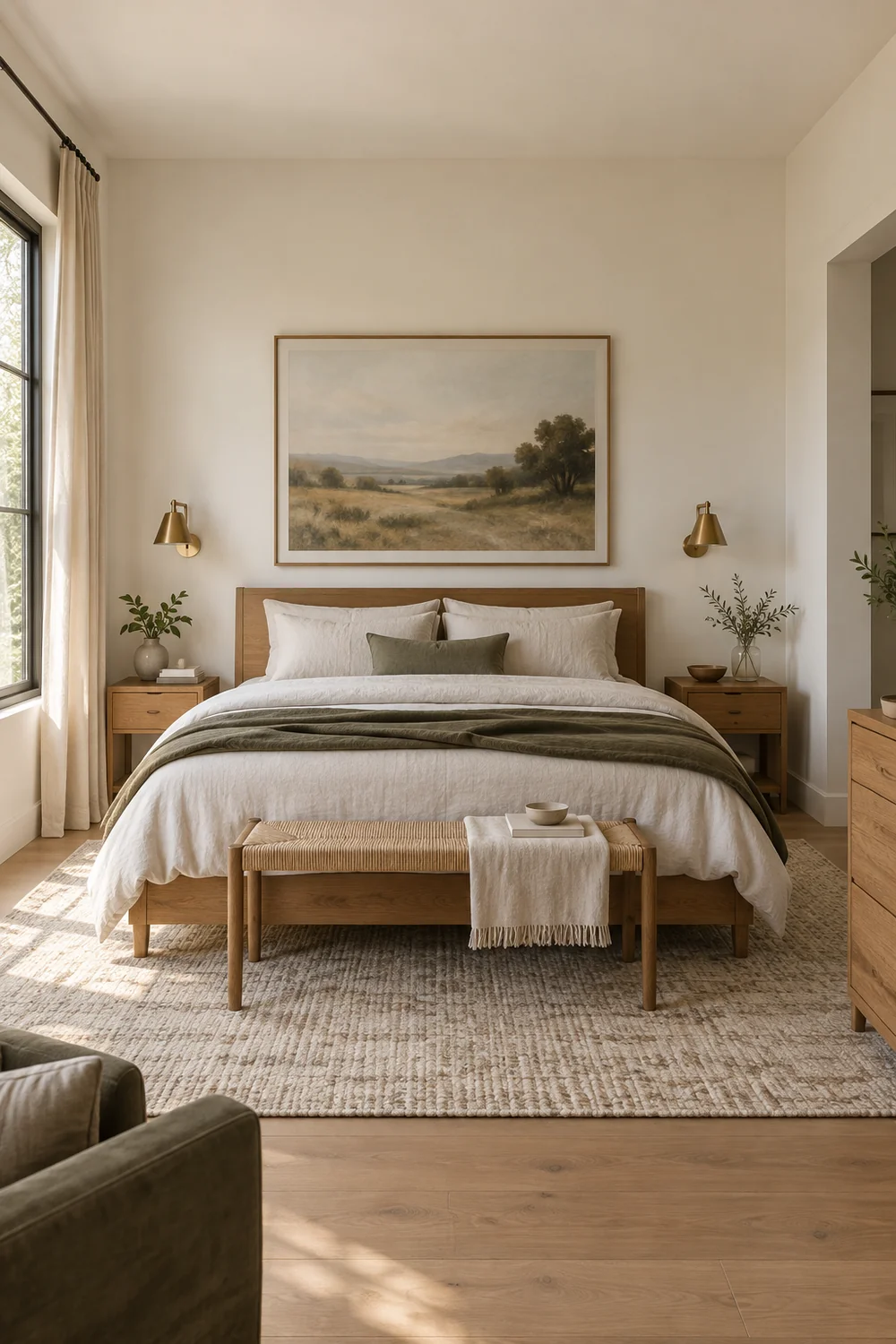
Use the focal point to connect the retained pieces. A warm oak bed with a darker chest can be tied together by art that contains both tones. Two mismatched lamps may look purposeful if the bed wall has a simple repeated line or colour behind them. You need not manufacture symmetry when the room is asymmetric. The eye reads balance through height, weight and repeated materials as much as through identical objects. For more options that keep the wall purposeful, compare bedroom accent wall ideas after you have chosen the bed and major storage.
Mock up the scale before installation. Tape the outline of a proposed picture or headboard to the wall. Stand in the doorway and sit on the bed to check what it hides or crowds. Leave room for the actual lamp positions and any controls. A wall feature that looks elegant in a product image can compete with a nearby wardrobe door or low window. The mockup makes the tradeoff visible to both people and can prevent an expensive revision.
If both people want to display separate art, make the grouping deliberate. Align frames by a common edge or keep similar spacing between them. Two different works can share a frame finish, mat colour or visual scale without losing their individual character. Keep the rest of the wall calm so the room does not turn into a negotiation displayed in every corner. The aim is a shared composition rather than proof that every preference has received exactly half the wall.
Ask each person to describe the last ten minutes before sleep and the first ten minutes after waking. One may read while the other puts away a device. One may need a water glass near the bed, while the other needs a place for a book and glasses. Plan for those actions before choosing matched bedside furniture. The side with a wardrobe door may need a narrower surface; the other can take a deeper drawer. Equal usefulness matters more than identical dimensions.
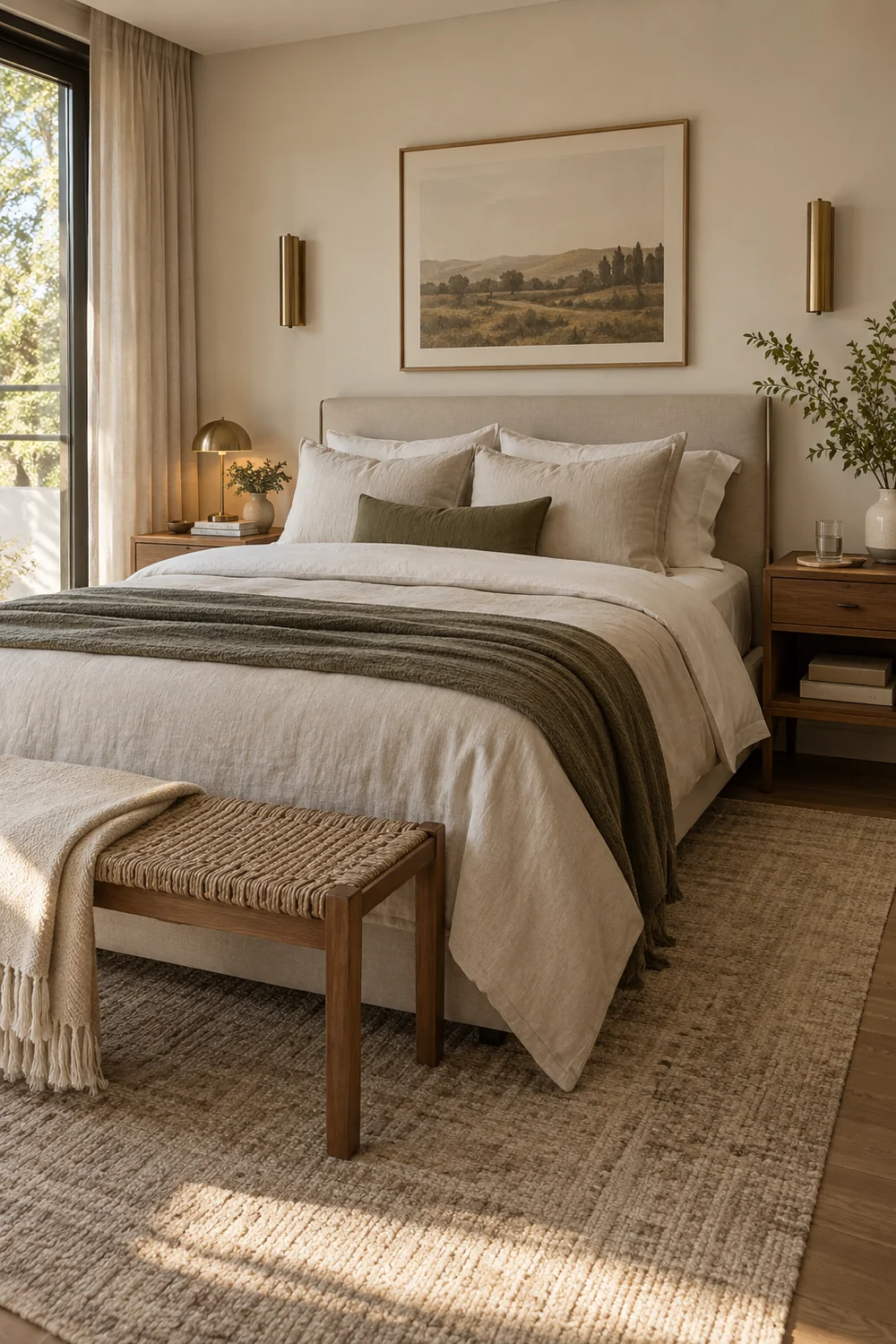
Place a temporary table or box on each side and test reach from the pillow. Check whether the lamp can be controlled without leaning across the bed. Check where a charging lead lands and whether it crosses a walking path. If a ceiling pendant is proposed, decide whether it truly frees surface area or merely makes the controls harder to reach. For broader ideas about a restful room, see bedroom lighting ideas and then bring those ideas back to your own two routines.
Write a small personal zone list for each side: essential items that must stay within reach, items that can live in shared storage and items that do not need to be in the bedroom. This prevents the room from acquiring two full sets of everything. It also reveals when a shared drawer would create friction. The answer might be two small drawers, one shelf and one wall light, or a completely different combination. Let the actual routine specify the furniture.
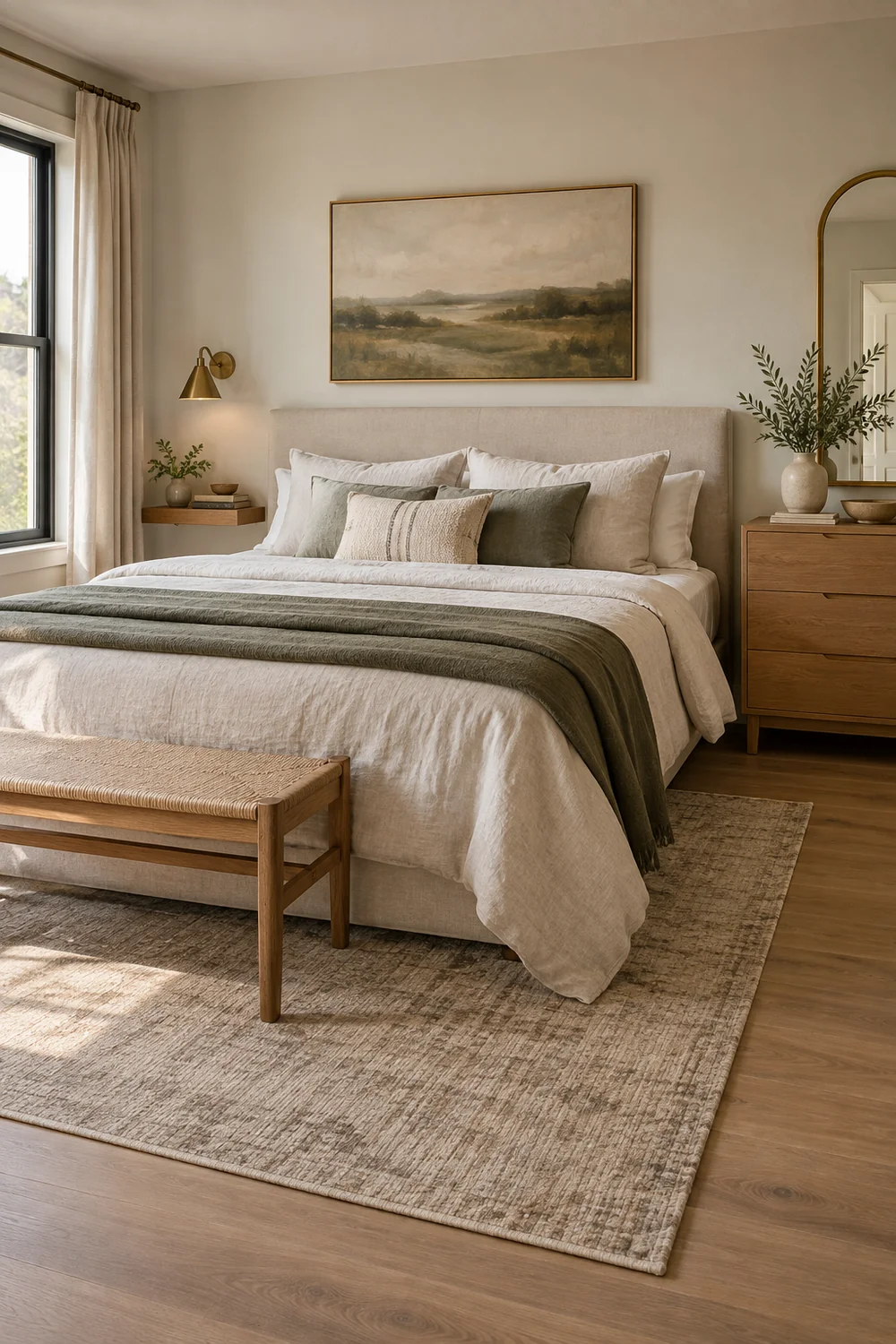
If one person likes a visually clear side and the other keeps several things close, do not make either routine a moral question about tidiness. Choose closed storage where it helps, a small tray for loose items and a regular reset for the surfaces. Your shared brief should state how the room should work, not dictate identical habits. The details can differ while the overall room remains composed.
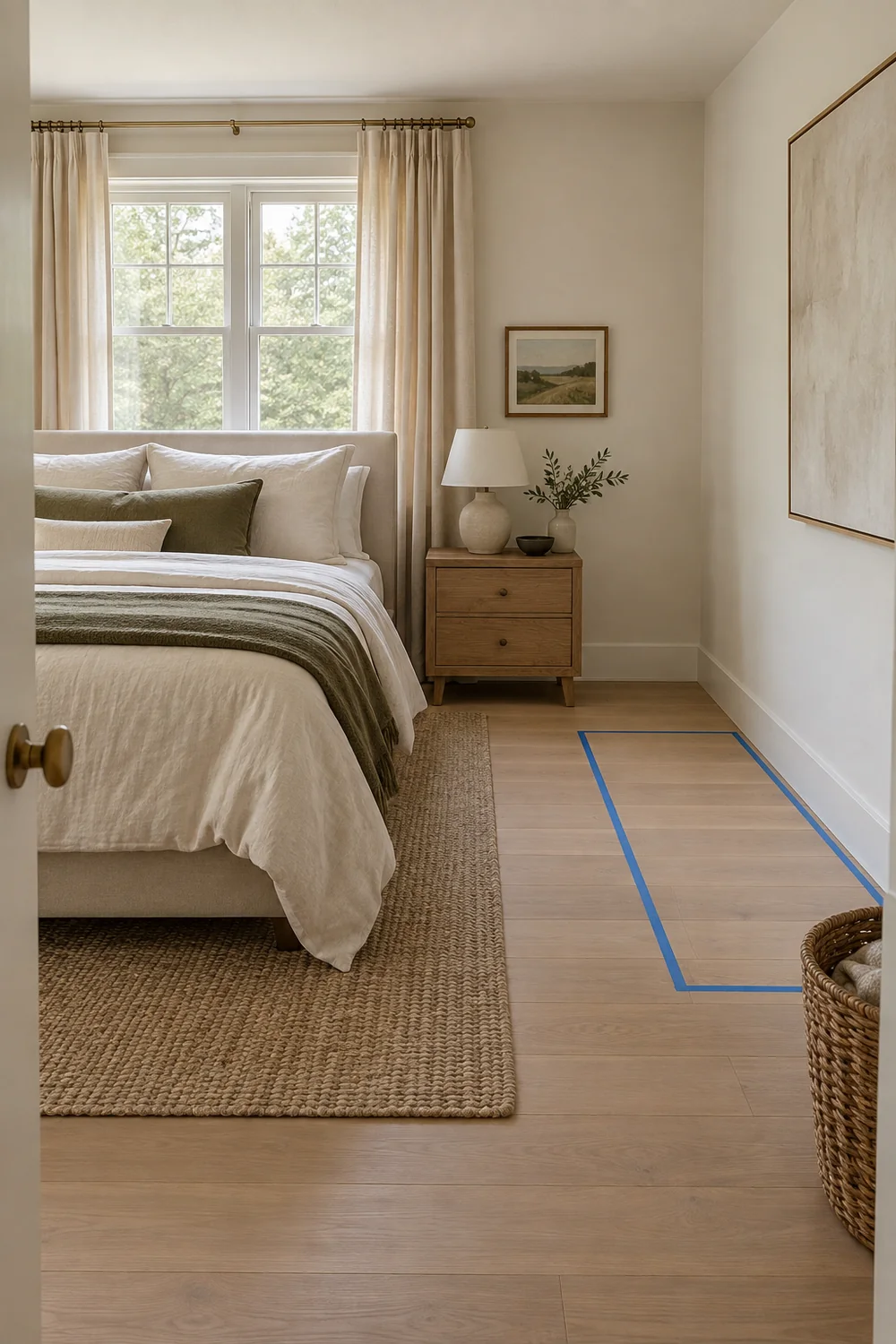
Set out the kept furniture before selecting a new bed, dresser or rug. If you cannot move heavy items yet, mark their full footprints with paper or low tack tape and draw the door swing. Walk into the room together while one person stands at each side of the proposed bed. Open every drawer and door you expect to use. The furniture must work in motion, not only in a still photograph. Use the small bedroom ideas for couples layout sequence to record these routes and the measurements that matter.
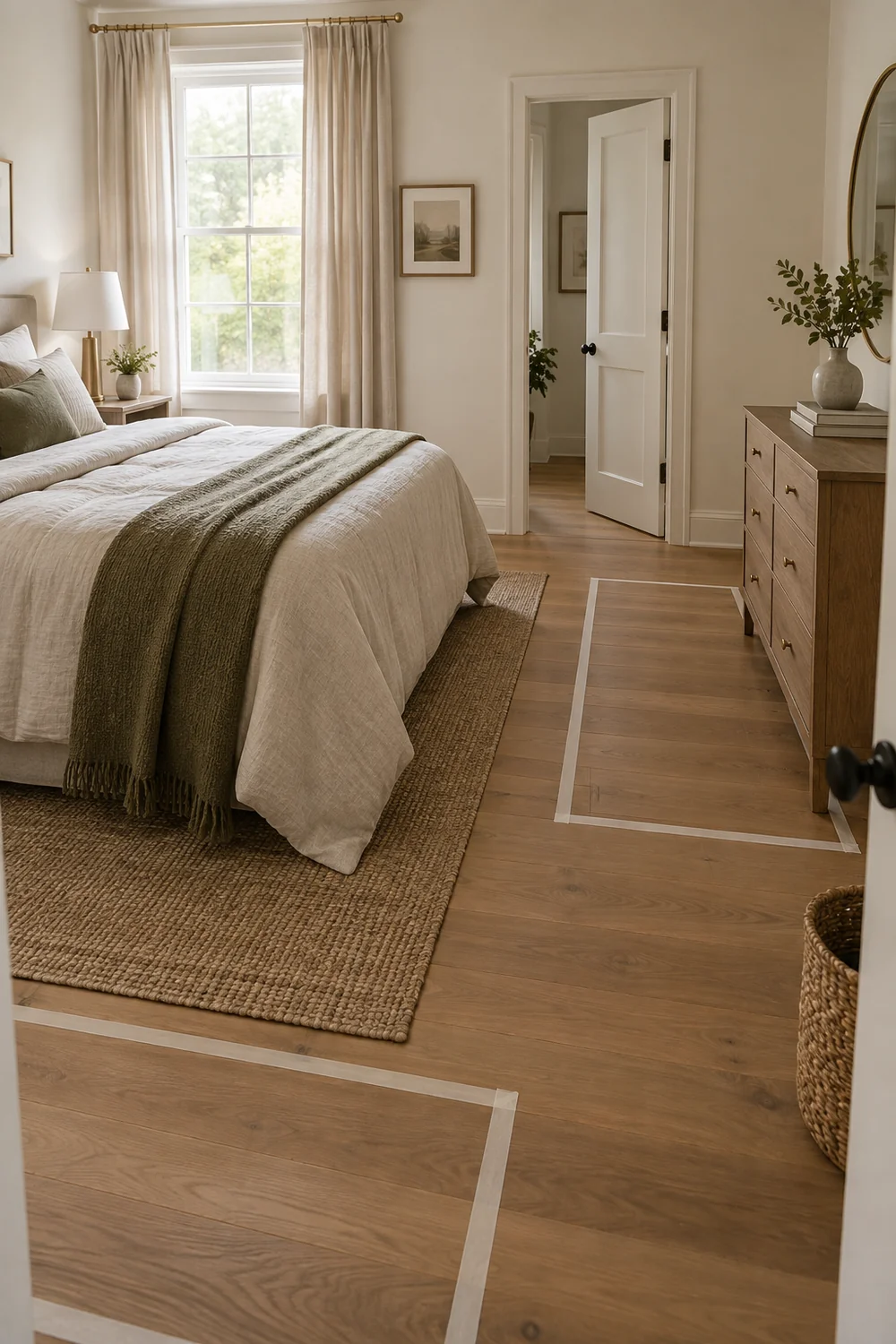
Test at least two realistic layouts. The first can use the existing bed position; the second should challenge one assumption, perhaps by moving storage to another wall or turning the bed. Photograph each from the doorway and from both bedside positions. Compare daily access, daylight and where the room feels crowded. Do not choose a layout solely because one camera angle looks larger. The winning layout should let both people repeat the routines they described without making a detour around furniture.
Turn the test into a shopping list only after a week of normal use. Note the gap a purchase must fill, its maximum footprint and the finish that belongs with your chosen palette. You might discover that the room needs a narrower cabinet rather than a new bed, or a wall light rather than another table. Buy the piece that solves the observed problem. Leave decorative finishing purchases until the practical arrangement has proven itself.
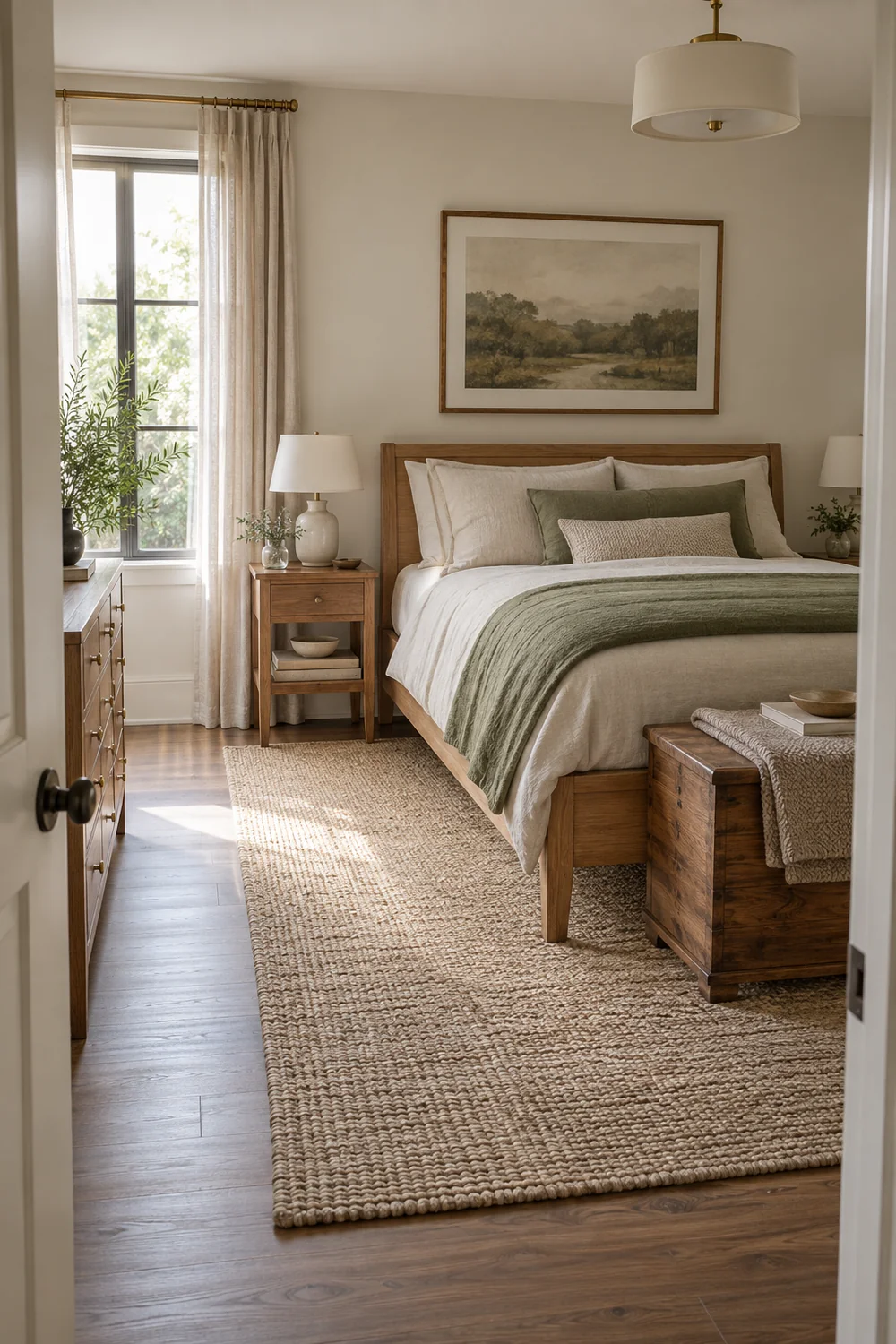
When you cannot test the full setup because a move is still in progress, make the plan reversible. Keep the first purchase limited to something you already know fits and need. Use a floor sketch for the remaining items, and wait to confirm door clearance and natural light in the real room. An incomplete but measurable plan is more useful than a complete shopping list based on guessed dimensions.
Once the layout works, choose a small set of finishing details together. One piece can hold a shared memory; another can be a new choice that belongs to this room alone. Keep the palette brief in view while selecting bedding, curtains and art. A good finish connects the existing and new pieces through repeated texture or tone, but it does not require every object to come from one collection. The room should feel lived in by two people rather than staged as a matching furniture display.
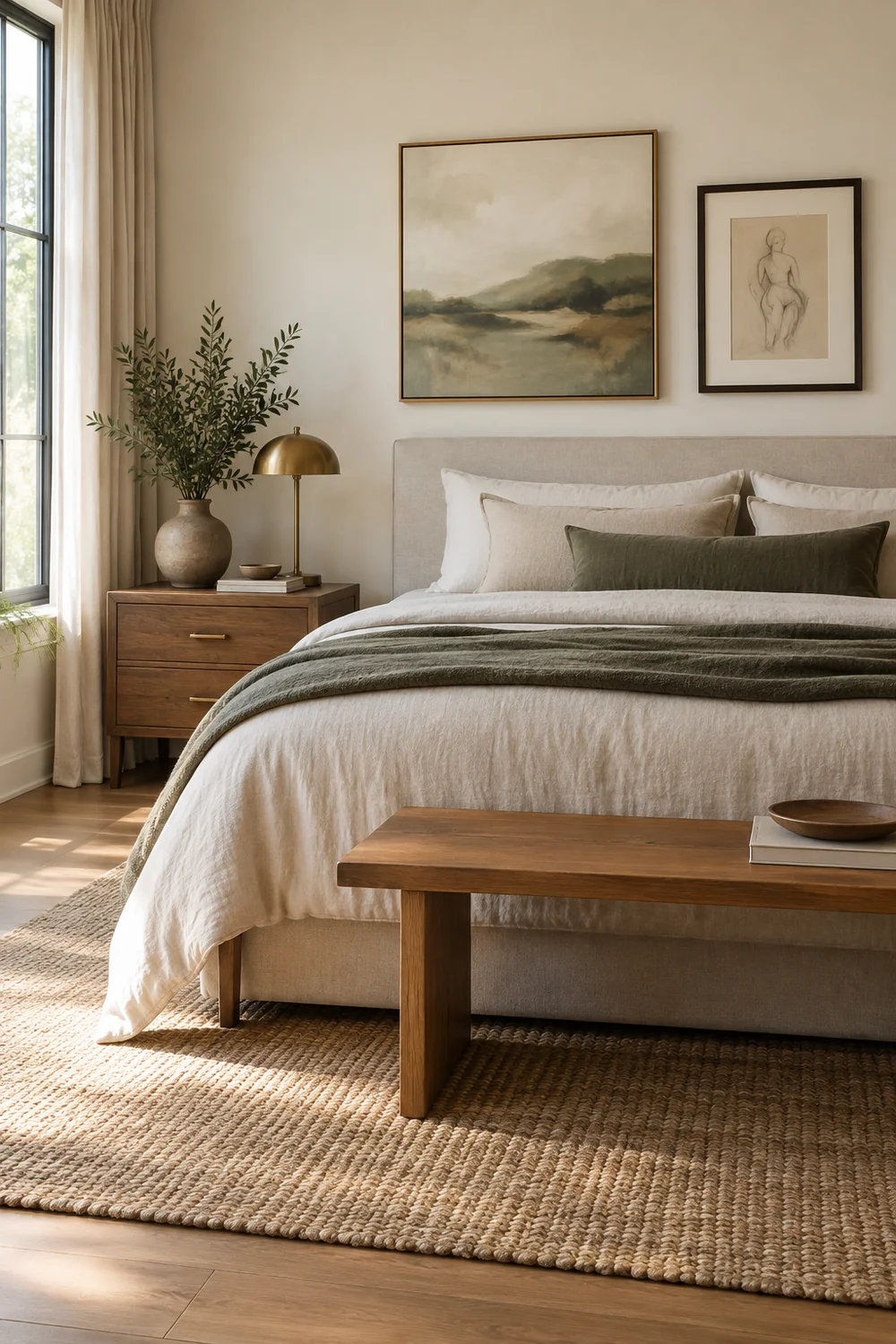
Photograph the completed arrangement and compare it with the original brief. Can both people reach the bed and their essential storage? Does each side have usable light? Are the pieces you deliberately kept visible and comfortable in their new setting? Invite each person to identify one thing that works and one thing they would still change. A practical shared room can continue to evolve after the first styling day.
Leave some visual and physical space for that evolution. An empty patch of wall or an unfilled shelf is not necessarily a failure. It gives you room to add a new photograph, art or object when it genuinely belongs. Resist buying a final accessory merely to make the room look complete on the first weekend. In a compact bedroom, the ability to move and rest comfortably is itself a strong design choice.
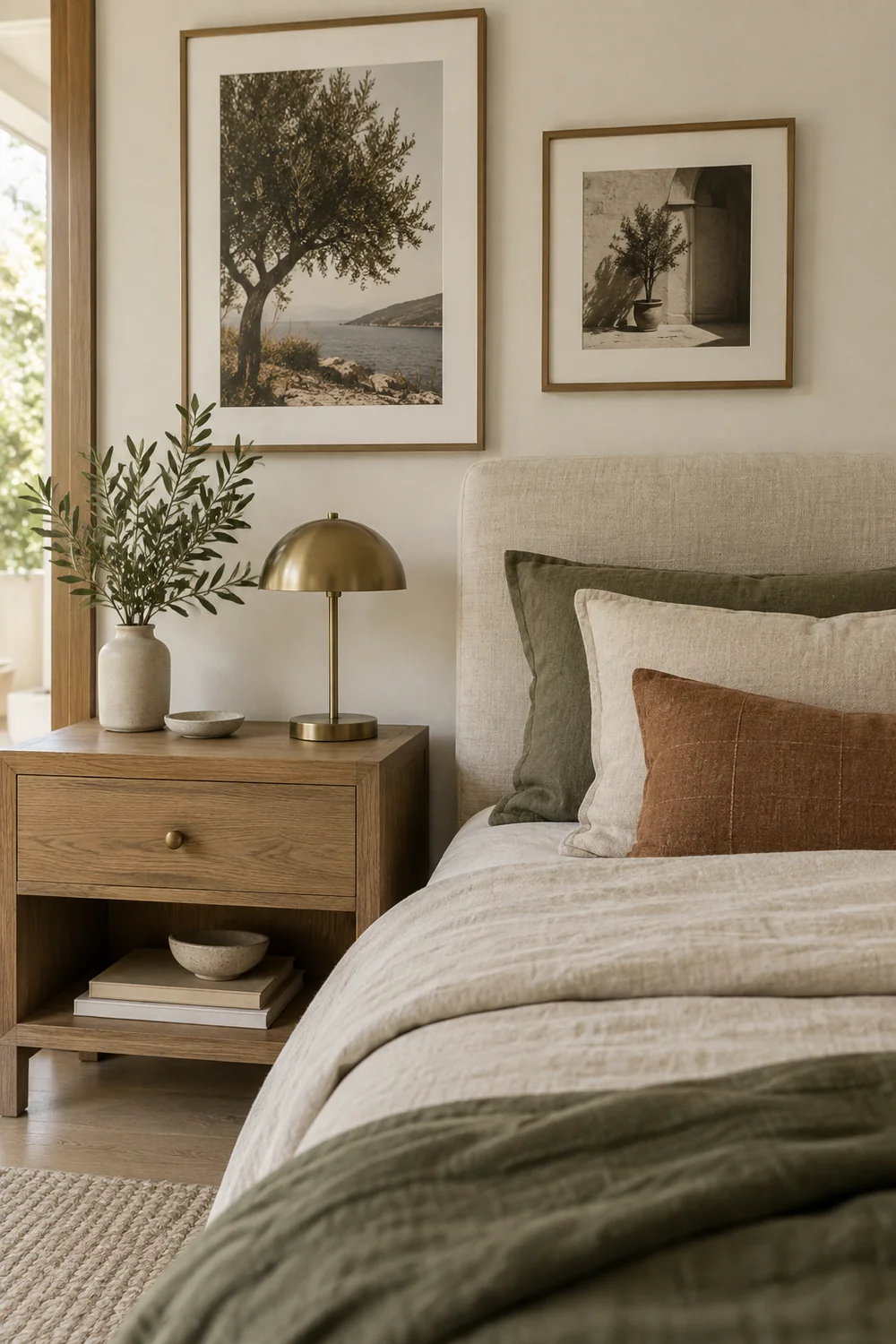
The best modern bedroom ideas for newlyweds give both people a voice and then make those decisions work in the room. Keep what earns its place, choose one coherent palette and focal point, test daily routines, and delay new purchases until you know the precise gap. Your next step is the measured layout: mark the bed, routes and storage in the actual room, then adjust the plan together after you have lived with it.